Greetings from the Veg IPM team! Things are ramping up, and we have some important updates on diseases in tomatoes and peppers.
Fruit IPM Report for Week of 5/18/2026
Temperatures early in the week were hot, with highs in the low to mid 90s °F, before cooling later in the week and into the weekend, when temperatures hung in the mid to upper 50s °F. Cooler temperatures over the weekend were accompanied by approximately 1-2 inches of rain.
At this stage, surviving fruitlets are becoming easier to identify, although some additional drop is still expected in the next month. Growers are encouraged to continue evaluating blocks carefully before making management decisions throughout the season.
Despite reduced crop potential, continued monitoring and management remain important, particularly in blocks with surviving fruit or where maintaining tree health and supporting return bloom for the 2027 season are priorities. See the recent post from Rutgers Extension Specialists and Cooperative Extension on Managing orchards with through a season with limited yields.




May 22, 2026 Amanda Quadrel and Maria Cramer
Vegetable IPM Update 5/22/26
Greetings from the Veg IPM team! Here are the most recent pest and disease issues we’re seeing in various vegetable crops.


May 8, 2026 Kaitlin Quinn, Janine Spies, Anne Nielsen, Thierry Besancon, Megan Muehlbauer, Joseph Heckman, Katrina DeWitt, Hemant Gohil, Daniel Ward and Nancy Sharma
Managing Orchards Through a Season With Limited Yields
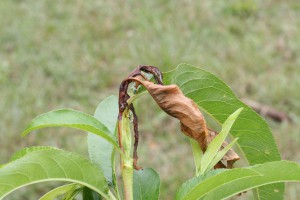
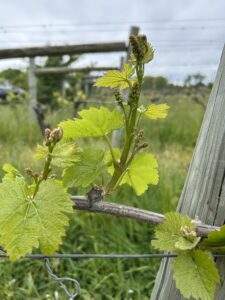
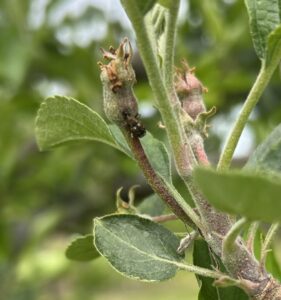
The recent freeze event April 20-21, 2026, has had wide ranging impacts on fruit crops statewide, including but not limited to peaches, nectarines, cherries, apples, pears, and plums. Across the state, significant injury to blossoms and young fruit has been confirmed, with many orchards reporting substantial crop loss. The extent of damage remains highly variable by location, elevation, crop, cultivar, and ultimately phenological stage at the time of the freeze, with the most severe injury observed in low-lying areas and orchard blocks that were at full bloom or petal fall.
Despite the reduced crop potential, continued pest monitoring and management remain important, particularly in blocks producing some fruit. Even where no fruit will be harvested, we need to adjust our approach to insect and disease management with a focus on maintaining healthy orchards for the next crop. Promoting tree health, maintaining low pest and disease inoculum, and supporting return bloom for the next season should be priorities for the remainder of this season.
Orchard Tree Care
Managing Crop Load in Apples
- If fruitlets are expanding, there is a good chance they will set fruit.
- Assessing internal browning of fruitlets shortly after a frost typically results in over estimation of damage; more time will be needed to determine both cropload and whether thinners will be warranted.
- If you saw damage to the fruitlets but they are holding on and growing you will likely have misshapen fruit.
- The most precise way to measure crop load THIS YEAR is to measure fruitlet diameter and input that data into the Cornell growth model (Malusim app).
- The website can be found here: https://malusim.org and instructions on using Malusim can be found here: Clements-Malusim-app
- The best way to assess how many fruits you will have per tree is by using the fruit growth rate model (measuring diameters twice over a 5-day period).
- You should wait until fruits are 7mm before making the first measurement and then make a second measurement 5 days later and the model will predict what percentage of fruitlets are growing.
- When you make the first measurement, tag 15 spurs on each of 5 trees for a total of 75 spurs.
- When you enter the data in the Malusism app enter numbers for 5 fruits per spur even if the spur only has 1 or 2 fruits. For the missing fruits enter a value of 0.1.
- The result after the second measurement will be a % fruit set. To estimate how many actual fruits will be on the tree you need to do whole tree counts of flower clusters on 5 trees.
- If most of the spur flowers are killed and not growing, the bloom on one-year-wood should be preserved. This is accomplished by waiting to apply thinners until the king fruit of those clusters is at least 12mm. (By that time the fruits on spurs will be rather large, 16mm). When the king fruits on the clusters from one-year-wood are 12mm, they are set well and will not thin off easily, but the lateral fruitlets on those clusters can still be thinned off.
- If by the time fruits are 16mm on spurs and 12mm on lateral bloom you determine that thinning is needed, you should thin according to the carbohydrate balance at that point in time. Damaged fruits set with Promalin can be just as hard to thin off as undamaged fruits in a normal year. However, it is likely you will apply a reduced dose to make sure you do not overthin and then finish the thinning job with hand thinning in June and early July.
- There may be many fruits that have frost ring or russet or are misshapen. These do not thin off easily. They can only be removed by hand thinning.
- Another Plant and Pest Advisory post with more in depth thinning and return bloom spray recommendations will be coming in the next few weeks so keep an eye out!
Managing Foliar Growth in Trees with Little to no Crop Load
- If your crop was significantly damaged do not apply anymore nitrogen to your orchard this year.
- In a normal year a portion of the nitrogen fertilizer is applied for fruit trees pre-bloom and a second portion applied post-bloom or after the level of fruit set is known
- The 2026 season is not a typical year. With fruit set in some orchards ranging from a normal load or towards a near total fruit loss due to frost damage, growers should reassess on a case-by-case basis to apply the normal amount or a reduced amount of recommended nitrogen fertilizer.
- For orchards where some nitrogen fertilizer was already applied pre-bloom and where there has been a total crop fruit loss due to frost, no further nitrogen fertilizer is recommended for the 2026 growing season.
- For orchards with good fruit set, apply nitrogen fertilizer as one would in a normal growing season.
- Perform leaf tissue analysis in July to assess nutrient levels (specifically nitrogen status), though do not apply anymore until 2027.
- The information provided by the analysis will be useful for guiding nutrient applications in the 2027 fruit growing season.
- There is likely to be significant shoot vigor this growing season if there is little to no crop load.
- In apples, Kudos/Apogee (Prohexadione-calcium) can be applied to suppress excessive shoot growth. Beginning at 1-3 inches of growth apply 8 oz/100 gal once a week for three consecutive weeks. This can also help manage insects like aphids that feed on succulent new growth and diseases like the shoot blight phase of fire blight.
- In peaches, consider summer pruning this year to help maintain tree shape and prevent excessive growth.
Orchard Disease Management
- As development continues into petal fall and early fruit set, this remains a critical period for disease management, particularly for diseases like fire blight, bacterial spot, scab, powdery mildew, and cedar apple rust.
- Diseases that negatively impact and damage fruit, including rusty spot, brown rot, white rot, sooty blotch and flyspeck should not be a priority this season. However, diseases that can cause severe defoliation still need to be managed effectively. Orchards with low to no crop can use conservative spray programs with focus on using broad spectrum fungicides.
- For fire blight, infection can still occur through blossoms even if they are freeze damaged.
- Keep an eye on disease prediction models and apply antibiotics prior to infection periods when bloom is present
- Actigard and Apogee/Kudos can be included for additional defense against shoot blight, especially in young blocks
- For bacterial spot, maintain coverage with low levels of copper to reduce inoculum building up on leaves and reduce the risk for infections for the following season.
- Avoid combining copper with captan especially if it has been overcast for several days.
- Refer to this guide published by Dr. Norm Lalancette for copper applications in early covers.
- Apple scab infections can persist on leaves in the orchards even without fruit, so it could be a good opportunity to knock down inoculum
- To manage apple scab continue applications of Manzate at 6 lb/A or Microthiol Disperss at 10 lb/A prior to predicted infection periods to lower inoculum for the next season
- If both powdery mildew and cedar apple rust are a concern, Manzate at 3 lb/A should be tank mixed with Microthiol Disperss at 10 lb/A. Manzate is effective on apple scab and cedar apple rust but not powdery mildew. Microthiol Disperss is effective on apple scab and powdery mildew but not cedar apple rust.
- Peach scab should not be a concern unless there is a history of high disease pressure – lesions can form on this year’s fruiting shoots which will provide a source of inoculum next season. In this situation management is necessary, and Captan should be applied before a heavy rainfall event at 2.5 lb/A.
- Management of fungal diseases is still needed to prevent a buildup of rot and leaf pathogens for next season.
- Pear Scab and Fabraea Leaf Spot should be managed through applications of Manzate or Ziram through may and early summer to prevent defoliation and inoculum build up. Severe infections can weaken trees and impact return bloom.
- Marssonina Blotch, Glomerella Leaf Spot, and Frogeye Leaf Spot should be managed as these diseases will cause defoliation and provide a source of inoculum for black rot and bitter rot next season. Maintain coverage of Captan, Manzate, or Ziram prior to rain events through the growing season according to the cover spray rule of applications every 2” of rain or 14 days, whichever comes first.
- Cedar apple rust and powdery mildew should be managed in orchards with a history of disease as severe infestations can cause stunted growth and stress.
- For cedar apple rust, continue applying Manzate at 6 lb/A until the end of May
- If conditions are optimal for cedar apple rust and powdery mildew, apply Manzate at 3 lb/A and Microthiol Disperss at 10 lb/A through July
- The pathogen causing powdery mildew of apple also causes rusty spot on peaches so it is especially important to control this disease to keep inoculum levels down for next year if apples are grown next to peaches
Orchard Insect Management
- Any fruit remaining on trees will attract insects which will cause damage and continue to maintain populations in the orchards.
- Due to the reduced crop load, there may be more insects competing for individual fruit to complete their lifecycle so there may be more damage on a fruit by fruit basis
- If you are planning to retain a crop, you must continue to intensively manage insect pests as you would in a normal season
- In the event you choose not to harvest fruit this season, there are several insects that will only be targeting the developing fruit and therefore do not need to be managed including plum curculio, tarnished plant bug, brown marmorated stinkbug, native stink bugs, tufted apple bud moth, oblique banded leafroller, and thrips.
- Aphids, leafhoppers, and mites can feed extensively on foliage and terminals, causing leaf curling and stunting. This can impact next year’s fruit that will be set in this season. Without fruit, the trees may tolerate a higher threshold of these pests, but they should still be managed.
- Beneficial insects may help reduce populations of these pests this season, making insecticides targeting them unnecessary.
- Pear Psylla can feed extensively on foliage and terminals causing defoliation. In heavy infestations this pest can cause stunting of the tree referred to as “psylla shock” which can reduce next season’s fruit set.
- Intensive management should be continued in orchards with a history of this pest.
- Scale insects are generally controlled with a dormant oil or delayed dormant application; however, in severe infestations you can monitor using double-sided sticky tape on trunks and apply Esteem or Centaur at the crawler stage.
- Beneficial insects including lady beetles and parasitoid wasps may control pest populations better in reduced spray programs.
- Oriental fruit moth larvae do not require fruit to cause damage and should be managed in orchards without a crop. The first- and second-generation moths will lay their eggs in terminals and as the larvae develop, they will cause noticeable “flagging” damage. This “flagging” damage can be particularly detrimental in young orchards.
- This pest can be managed via mating disruption or well-timed insecticides for the first and second generations to knock populations down particularly in young blocks if there are high trap counts. If you have a history of high OFM pressure, mating disruption may be a more cost-effective option at ~$100/A versus a rotational insecticide program for the first- and second-generation degree day timings averaging ~$150-$200/A. If your orchard typically has low OFM pressure and you have not applied your mating disruption dispensers, it may be more cost effective to save your mating disruption in the freezer for next year and monitor populations. If your populations become higher than normal, one well timed insecticide application to target this pest can range from ~$8-$50/A.
- Refer to this Plant & Pest Advisory post from Dr. Anne Nielsen on targeted pest management considerations for OFM and other key pests.
- Codling moth require fruit to complete their lifecycle so it is possible that a season without fruit may be detrimental to their populations. However, this pest may be able to find fruit in the surrounding woodlot and then move back into the orchard the following season.
- It will be important to monitor this pest via pheromone traps and apply a well-timed insecticide if populations are getting higher than usual.
- If you have had trouble with this pest in the past, it may be a good year to reduce populations via mating disruption.
- Borers such as dogwood borer (DWB), lesser peach tree borer (LPTB), greater peach tree borer (GPTB), and ambrosia beetle are indirect pests of tree fruit and will attack the tree regardless of the fruit load.
- Continue monitoring with pheromone traps to determine if populations are present and time applications around peak flight activity.
- Mating disruption is an effective strategy for managing DWB, LPTB, and GPTB.
- Trunk sprays can be applied at well-timed intervals throughout the year.
Orchard Weed Management During a Low Crop Year
Low crop production years in tree fruit present a different set of weed management priorities compared to typical seasons. While reduced yield may lessen immediate concerns about weed–crop competition, these seasons offer an important opportunity to reset weed pressure and improve long-term orchard floor management.
Shift in Management Objectives
In a low crop year, the focus should shift from protecting current yield to reducing weed populations and preventing future infestations. With fewer fruit sinks, trees often allocate more resources to vegetative growth, which can influence both competitive dynamics with weeds and crop sensitivity to herbicide injury. This is also an ideal time to scout and map weed populations across the orchard, documenting dominant species and problem areas. These records directly inform preemergence (PRE) herbicide selection and placement in the following season.
Strengthening Residual Programs
PRE herbicides should play a central role in weed management during low production years. Maintaining a clean herbicide strip beneath the tree canopy throughout the season helps reduce weed seed production, limits early-season competition, and improves control consistency going into the following year. Where appropriate, consider using full labeled rates and tank mixtures of PRE herbicides with different sites of action to extend residual activity and manage resistance. Always read and follow the full label before use.
Postemergence Applications and Crop Safety
Timely postemergence (POST) applications remain important to prevent escapes and seed production, even in low crop years. Registered POST options include glyphosate and glufosinate for directed applications, and clethodim for grass control. However, caution is warranted:
- Trees may exhibit altered physiological responses due to reduced crop load
- Stone fruits (peach, sweet cherry, tart cherry) are generally more sensitive to herbicide contact and root uptake of certain residuals than pome fruits (apple, pear)
- Young plantings and thin-barked trees are at greater risk of injury from bark contact
- Directed or shielded applications are strongly recommended to minimize contact with trunks, scaffold branches, and foliage
Resistance Management
Herbicide-resistant weed populations are an increasing concern in Mid-Atlantic and Northeastern orchards. Glyphosate- and paraquat-resistant horseweed (Erigeron canadensis) is well-documented in the region, and common lambsquarters (Chenopodium album) has shown reduced sensitivity to certain herbicide classes. To reduce selection pressure, rotate herbicide sites of action across seasons, not only within a single season, and avoid exclusive reliance on any single POST chemistry for escapes and patch control.
Opportunities for Targeting Perennial Weeds
Perennial species should be prioritized during low crop years. With reduced concern about fruit loss, growers can target optimal application timing for systemic postemergence herbicides when weeds are actively growing and most susceptible. Key perennial species of concern in NJ and NY orchards include:
- Mugwort (Artemisia vulgaris)
- Japanese knotweed (Reynoutria japonica)
- Multiflora rose (Rosa multiflora)
- Poison ivy (Toxicodendron radicans)
- Field bindweed (Convolvulus arvensis)
- Yellow nutsedge (Cyperus esculentus)
- Goldenrod (Solidago spp.)
- Canada thistle (Cirsium arvense)
Sequential applications or integration with mechanical tactics may be necessary to effectively reduce belowground reserves. Note that many of these species may require multi-year management programs and, in some cases, mechanical removal prior to herbicide application.
Managing Tree Vigor
Reduced crop load commonly results in increased vegetative growth. A clean orchard floor combined with reduced weed competition can further enhance vigor, which is not always desirable. Excessive shoot growth can complicate canopy management and increase disease pressure. Growers should monitor nitrogen inputs carefully, adjust irrigation to avoid overstimulating growth, and manage watersprouts and excessive shoot development through summer pruning as needed. Competitive cover crops in the alleyway can serve a dual role: suppressing weeds while moderating overall tree vigor through resource competition.
Environmental and Regulatory Considerations
Applicators should be familiar with required buffer zones and consult the NJDEP Pesticide Control Program as well as Registrant database for current restrictions and state-specific requirements. Herbicide applications should always be timed to avoid bloom periods when pollinators are active in the orchard.
Looking Ahead
Effective weed management during a low crop year can significantly improve conditions for the following season. Reducing the weed seedbank, targeting difficult perennial species, and scouting to map problem areas positions growers to enter the next production cycle with lower pressure and potentially reduced input needs.
Bottom line: Low production years should be viewed as an opportunity—not a setback—for improving weed management. Strategic use of residual herbicides, targeted control of perennial species, integration of alternative tactics, and thorough scouting can provide lasting benefits for orchard productivity and long-term sustainability.
Always read and follow pesticide label directions. The label is the law. Herbicide registrations are subject to change; verify current registration status in New Jersey and New York before use.
