Scale crawlers, updated 2026 scouting guide, IPM webinars, Box tree moth

Educational Resource Update: 

Stay informed

  • Sign up for the 2026 – Rutgers Ornamental IPM Program – click here to sign up
  • Program is free, but registration is required – Registration includes:
    • Site visit to your ornamental nursery/farm from Rutgers agents
    • Delivered printed IPM resources (Guides, factsheets, bulletins)
    • Free pheromone & sticky trap kit + guidance on setup/monitoring (for commercial nursery/greenhouse and Christmas tree farms)
    • Access to live bi-weekly webinars (Zoom)
    • (Next session – TUESDAY 6/9 @ 12PM) – Guest Speaker Dr. Richard Cowles – Connecticut Ag Exp. Station – Scale Management 
    • Every Second and Fourth, Tuesday, April through September
  • Visit the Rutgers Ornamental IPM Website Rutgers Ornamental IPM Website (click here) for updated webinar videos.

Scale crawler emergence predictions throughout NJ. 

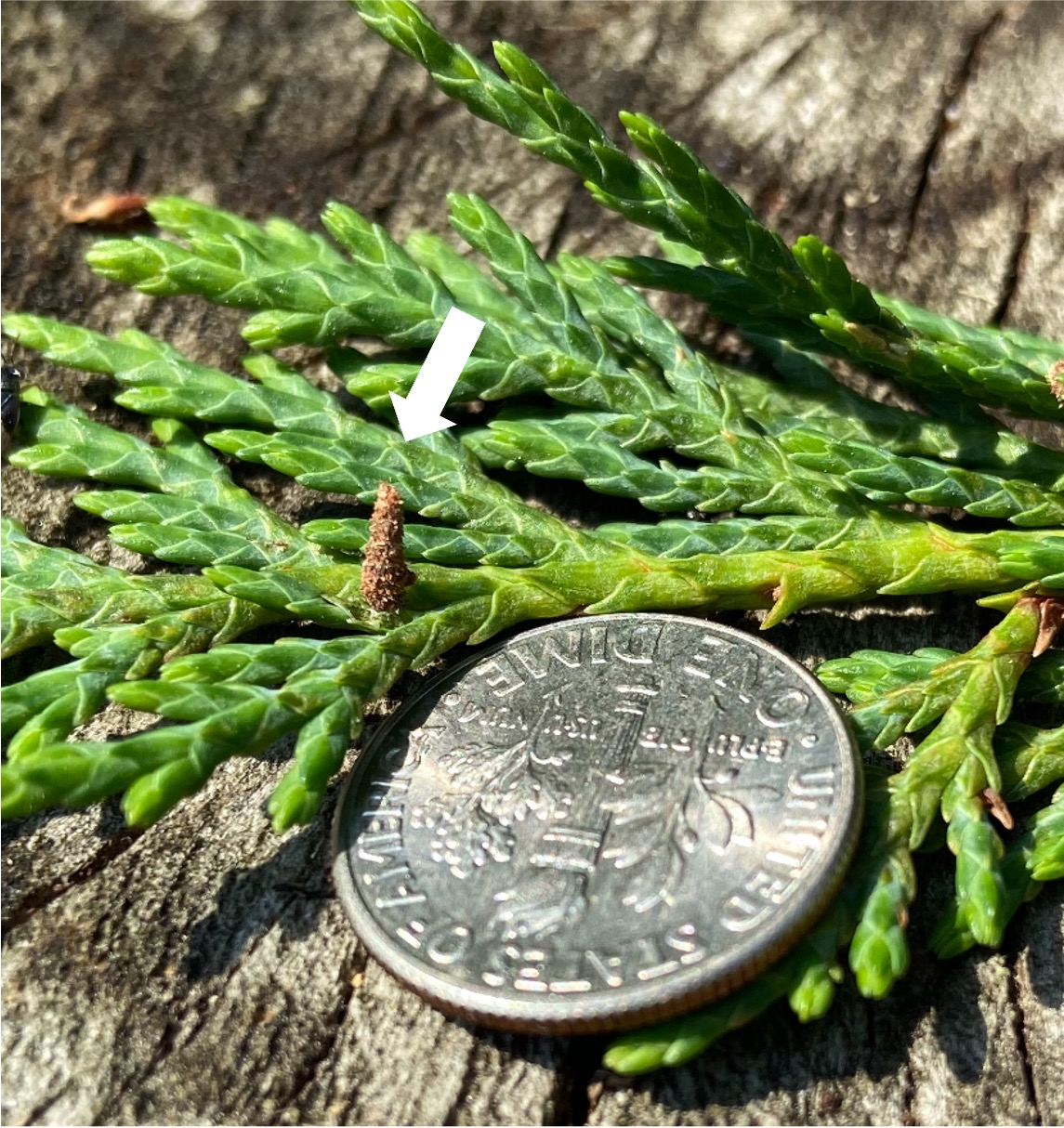
Now is an excellent time to be scouting for crawler emergence using double sided (or doubled over – sticky side out) tape. Targeting scale insects is most successful during their crawler periods, however this should be visually confirmed for greatest efficacy. For more information on installing this type of IPM trap and others please see – Setting up and deploying IPM traps – Tutorial Video 2026 (click here).

Common Name GDD RANGE Target Stage SOUTH – Upper Deerfield (NJ50) CENTRAL – Howell (NJ10) NORTH – Randolph NJ (AU137)
MIN MAX START STOP START STOP START STOP
Cottony camellia / taxus scale (soft) 520 Crawlers (only) 17-May 20-May 18-May
Euonymus scale 533 820 Crawlers (Gen 1) 18-May 3-Jun 21-May 8-Jun 18-May 7-Jun
*Cryptomeria scale 600 800 Crawlers (Gen 1) 20-May 2-Jun 27-May 7-Jun 24-May 6-Jun
*Sprucebud scale (soft) 700 1150 Crawlers (only) 27-May 18-Jun 2-Jun 24-Jun 30-May 25-Jun
White prunicola scale 707 1151 Crawlers (Gen 1) 28-May 18-Jun 2-Jun 24-Jun 30-May 25-Jun
*Juniper scale 707 1260 Crawlers (Gen 1) 28-May 18-Jun 2-Jun 24-Jun 30-May 25-Jun
Calico scale (soft) 714 Crawlers (only) 28-May 2-Jun 31-May
Striped pine scale (soft) 750 800 Crawlers (only) 30-May 2-Jun 4-Jun 7-Jun 2-Jun 6-Jun
Oak lecanium scale (soft) 789 Crawlers (only) 1-Jun 6-Jun 5-Jun
Cottony maple leaf scale (soft) 802 1265 Crawlers (only) 2-Jun 23-Jun 7-Jun 29-Jun 6-Jun 30-Jun
Cottony maple scale (soft) 802 1265 Crawlers (only) 2-Jun 23-Jun 7-Jun 29-Jun 6-Jun 30-Jun
Golden oak scale (Pit) 802 1266 Crawlers (only) 2-Jun 23-Jun 7-Jun 29-Jun 6-Jun 30-Jun
Japanese maple scale 829 Crawlers (Gen 1) 3-Jun 9-Jun 7-Jun
European elm scale (soft) 831 1388 Crawlers (only) 4-Jun 27-Jun 9-Jun 4-Jul 8-Jun 6-Jul
European fruit lecanium scale (soft) 932 1645 Crawlers (only) 9-Jun 7-Jul 14-Jun 14-Jul 14-Jun 17-Jul

*Conifer / Christmas Tree scales

Please visit the Rutgers Ornamental IPM Website – Pest and Disease Index (click here) for more detailed information on specific scale species management and pesticide considerations.

Box tree moth – stay vigilant looking for this pest

Box Tree Moth (Cydalima perspectalis) is alive and well in MD, DE, VA, WV, NY, OH, MI, MA. Please report this pest to twaller@njaes.rutgers.edu

If this pest does make its way into New Jersey, and quarantines are established, nurseries will be required to comply with a federal compliance agreement if shipping out of potential quarantine areas. Please review this document if boxwoods are an important crop for you. Compliance Agreement for Production Nurseries in BTM Regulated Nurseries (click here)
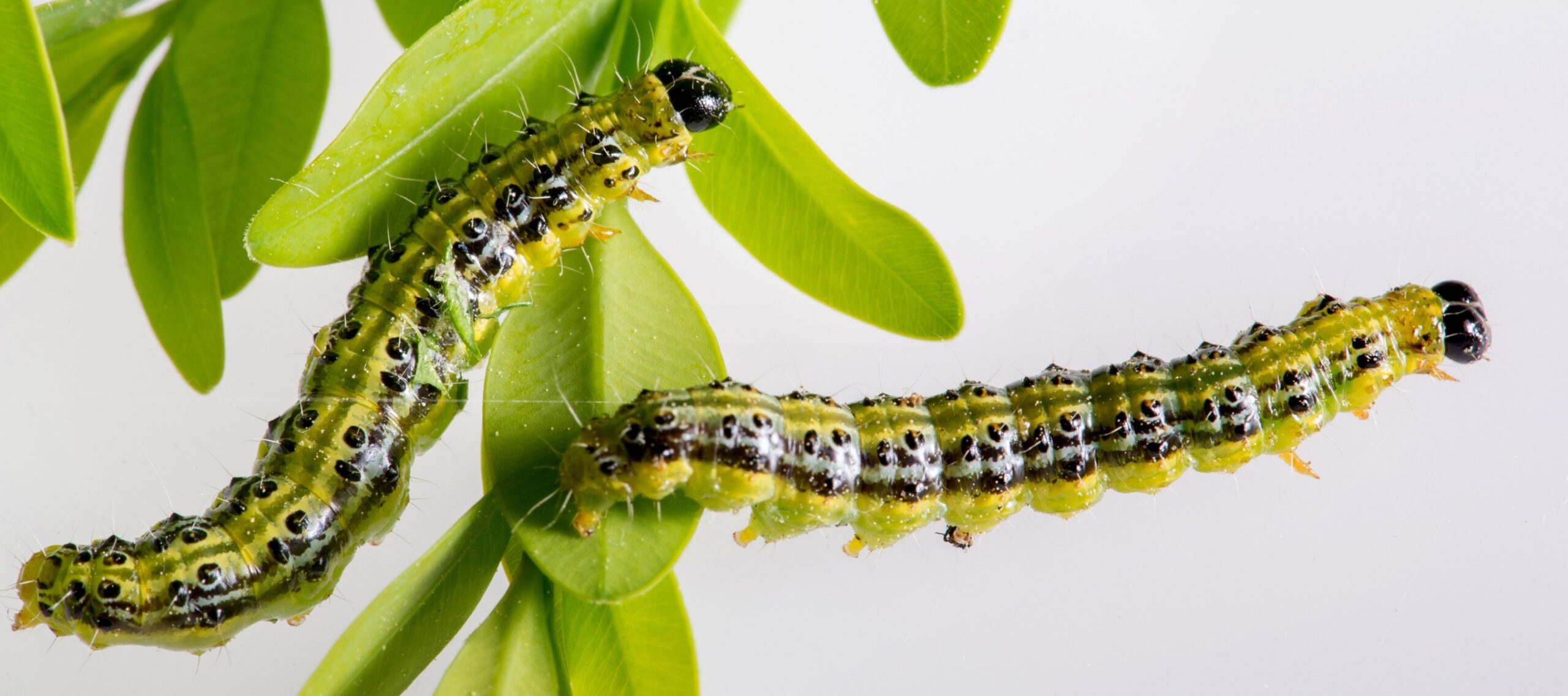

Box tree moth caterpillars. Photo credit: USDA.

ALERT: Be prepared to manage White Pine Weevil in conifers early next week

With increasing temperatures, it is plausible that a critical treatment window for controlling White Pine Weevil (WPW) will be present early next week, throughout many areas of NJ. Factors leading to this post include increased air temperatures and climbing growing degree-days (WPW adult movement and egg laying is around 7-58 growing degree-days (GDD50)), and most importantly rising soil temperatures as this pest typically begins movement with soils hovering around 50F. All of these factors lead to the possibility of WPW movement early next week and growers may wish to utilize a preventative, long lasting residual spray (pyrethroids) to target adults before they begin egg laying.

So we have: 

  • NJ will be within the GDD window for adult movement and approaching egg laying (7-58 GDD50)
  • Soil temperatures in some areas may be close to 50F.
  • Increased air temperatures and insect mobility
White Pine Weevil (Pissodes strobi)potential for emergence as of 3/6/2026 
Region Location CODE METRIC FRI SAT SUN MON TUES WEDS
6-Mar 7-Mar 8-Mar 9-Mar 10-Mar 11-Mar
Southern Upper Deerfield NJ50 GDD50 0 0 9 13 18 31
High Temp [ºF]  (Average) 49 (43.5) 52 (50.5) 63 (52) 67 (45) 71 (62) 71 (60.5)
24hr Average –       Soil TEMP [ºF] 47.1 <- (This will change over time / no prediction available)
Central Freehold / Howell NJ50 GDD50 0 0 4 6 9 17
High Temp [ºF]  (Average) 42(39) 49(48) 62(51.5) 69(56.5) 74(63) 70(59)
24hr Average –       Soil TEMP [ºF] 40.7 <- (This will change over time / no prediction available)
Northern HACKETTSTOWN G5633 GDD50 0 0 3 3 6 17
High Temp [ºF]  (Average) 41(37.5) 47(45.5) 61(49.5) 69(55) 76(63) 68(55)
24hr Average –       Soil TEMP [ºF] 34.1 <- (This will change over time / no prediction available)
USPEST.ORG – Model: simple average/growing degree-day, Min: 50F – Max: 95F, NMME forecast
Forecast:  7-month NMME based seasonal climate forecast (USPEST.ORG) – Subject to change regularly = Check Often
Air temperatures: Weather Underground (https://www.wunderground.com/) and NEWA: (https://newa.cornell.edu/)
Soil temperatures (10cm): https://www.greencastonline.com/tools/soil-temperature
Compiled by Waller. T. 3/6/2026 [twaller@njaes.rutgers.edu]


[Read more…]

Save the Dates – Sept. 23 (Final IPM webinar), Oct 7 (POSTPONED), Oct 22 (Core Credit, In-person)

Join us for the Final Ornamental IPM webinar Tuesday 9/23/25 

Still time to Sign up (click here) for the final remaining 2025 session

Topics to be covered:

  1. Beneficial insect: Preying mantids​
  2. Mums   ​
  3. White pine aphid​
  4. Eastern spruce gall adelgid​
  5. Cooley spruce gall adelgid​
  6. Hemlock woolly adelgid​
  7. Spruce spider mite​
  8. Southern red spider mite​
  9. Hemlock rust mite​
  10. Fall practices for sanitation
  11. Importance of fall irrigation in field ​settings​
  12. Using horticultural dormant oil​
  13. Questions to consider regarding​ your nursery IPM monitoring ​program

Please visit our new –Rutgers Ornamental IPM Program Website (click here)


More details and registration links to follow in the coming days – once CEUs and collaborators are finalized. NOTE: CEUs have been applied for but those listed below are not guaranteed. Both events are in-person in Cumberland County, NJ.   

Ornamental IPM Webinar – Next Session Tuesday 8/26 plus upload from 8/12 RU PDL guest

Still time to Sign up for the remaining 2025 sessions- Rutgers Ornamental IPM Program

Please visit our new –Rutgers Ornamental IPM Program Website (click here)

Join us for the next session Tuesday 8/26/25 

Topics covered:

  • 1.Beneficial insect: Dragonflies​
  • 2. Leafcutter bees                   ​
  • 3. Fleahopper​
  • 4. Nostoc​
  • 5. Nickel deficiency in River Birch​
  • 6. Tulip tree & Magnolia soft scales​
  • 7. Douglas-fir needle midge​
  • 8. Slugs/snails​
  • 9. Banded ash clearwing moth borer​
  • 10. Verticillium wilt

Previous webinars:


Bagworms + PEST ALERTS (SCALE crawlers) + Ornamental IPM 5/27 Recording Upload

Days old bagworm size

Bagworms should begin hatching NOW through – 4 weeks in NJ, beginning in the southern regions. Now is an optimal time to get this pest on your radar and prepare materials or approaches to attack first/second instar caterpillars. The control window for this pest is typically between 600-900 GDD50  when they begin to hatch and become airborne, i.e. the “ballooning” phase. It is important to check for egg-hatch prior to applications for greatest chemical efficacy, and to continue scouting as they often hatch and develop at asynchronous rates.

It is critical to target these insects EARLY! We need to target when they are as small as shown in the image. 

Bagworm management – mechanical: If eggs have not hatched: hand-remove sacs/bags. Typically female/egg filled sacs are higher in the canopy so keep that in mind while scouting. This removes the problem from the field or landscape.

Treatment options for Lepidoptera (caterpillars) to have at the ready – containing: B.t. (Bacillus thuringiensis), spinosad , bifenthrin ), cyfluthrin, carbaryl, chlorantraniliprole, cyclaniliprole, cyclaniliprole + flonicamid, Lambda-cyhalothrin, cyantraniliprole, Indoxacarb.  NOTE – Lethal pesticide doses are important, as sub-lethal doses can trigger early pupation, making the pest all but invincible to chemical or biological treatments. Follow label exactly.

Still time to Sign up for the 2025 – Rutgers Ornamental IPM Program

(Join us for the next Session Tuesday 6/10/25)

Note we have clearwing borer lures and wing or delta traps, scale crawler tape, and yellow sticky cards available to commercial grower program members at our Cumberland (twaller@njaes.rutgers.edu) and Monmouth (william.errickson@njaes.rutgers.edu) RCE offices.

ALERTS:

  1. Scale crawler emergence throughout the state
  2. Bronze Birch Borer (BBB) and Emerald Ash Borer approaching adult emergence
  3. Clearwing Borer adult flight – still capturing clearwings
  4. Red-headed flea beetle (RHFB) egg hatch – adult emergence
  5. Bagworm reminders – be vigilant

UPLOADS 5/27 SESSION: (contains information on flathead borers (Bronze Birch, Emerald Ash), Armored scales, bagworms, Volutella blight in Boxwoods, Mildews)

  1. Click here for a PDF of May 27, 2025 webinar
  2. Click here for VIDEO of May 27, 2025 webinar

Previous webinars:

(click the ‘Read More’ below for complete dates in S-C-Northern NJ per pest)


[Read more…]

Ornamental IPM 5/13 Recording Upload – NUMEROUS PEST ALERTS

Still time to Sign up for the 2025 – Rutgers Ornamental IPM Program

(Join us for the next Session Tuesday 5/27/25)

PREVIOUS SESSION: (contains information on boxwood pests, armored scales, needlecast diseases, oomycetes )

  1. Click here for a PDF of May 13, 2025 webinar
  2. Click here for VIDEO of May 13, 2025 webinar

Note we have clearwing borer lures and wing or delta traps, scale crawler tape, and yellow sticky cards available to commercial grower program members at our Cumberland (twaller@njaes.rutgers.edu) and Monmouth (william.errickson@njaes.rutgers.edu) RCE offices.

ALERTS:

  1. Scale crawler emergence throughout the state
  2. Spruce spider mite activity and damage
  3. Boxwood Blight Risk Model for next 7days
  4. Bronze Birch Borer (BBB) approaching adult emergence
  5. Clearwing Borer adult flight – time to monitor / treat
  6. Red-headed flea beetle (RHFB) egg hatch – adult emergence
  7. Oomycete material considerations

Previous webinars:


(click the ‘Read More’ below for complete dates in S-C-Northern NJ per pest)


[Read more…]