Peach:
Bacterial Spot: Generally we recommend starting at 0.5 ozs metallic copper and gradually lowering the rate as the season progresses. The rate applied will depend on the formulation. Dr. Lalancette published a chart listing common copper formulations and rates for peach and nectarine applications. Avoid combining copper with captan especially if it has been overcast for several days. Also avoid acidic spray solutions when applying copper. Dr. Lalancette has published a handy guide for copper applications in early covers. Antibiotics such as Mycoshield or Fireline may also be used and may offer slightly more residual activity during long wetting periods. Bacterial leaf spot symptoms were observed in one orchard in Gloucester county this week. Leaf spotting that is very similar to bacterial spot has been observed in many orchards in southern counties. The symptoms, while strongly resembling bacterial spot, are not typical. Growers should continue to manage as they have, and we will know in the next week or two if we have fruit lesions appear. Trees are dropping leaves as they usually do in May as we have finally gotten some heat and the trees are growing. This year, because of the weather extremes and the unusual leaf spotting, more leaves than normal are coming off.
Peach Scab: In addition to Rusty Spot and Bacterial Spot, Peach Scab requires protective applications starting at petal fall. Peach scab cankers (Fig. 2) begin to expand at bloom and by shuck split begin to shed spores during wetting periods. Topsin, Topsin/Captan combinations, Flint Extra, Inspire Super, and especially Quadris Top applied at petal fall are the best materials for blocks that had scab last year. Quadris Top, Flint Extra or Topsin should be used at the high rate to suppress overwintering lesions on the wood. Quadris Top contains azoxystrobin which is phytotoxic to many apple varieties. Phytotoxic residues can remain in the tank for long periods after an application is made, even if a tank cleaner is used. Do not use Quadris Top or Abound in the same sprayer used for apples. Bravo (chlorothalonil) is also a good protectant that may be applied no later than shuck split. Captan is also helpful in cover sprays after shuck split where scab was troublesome last year.
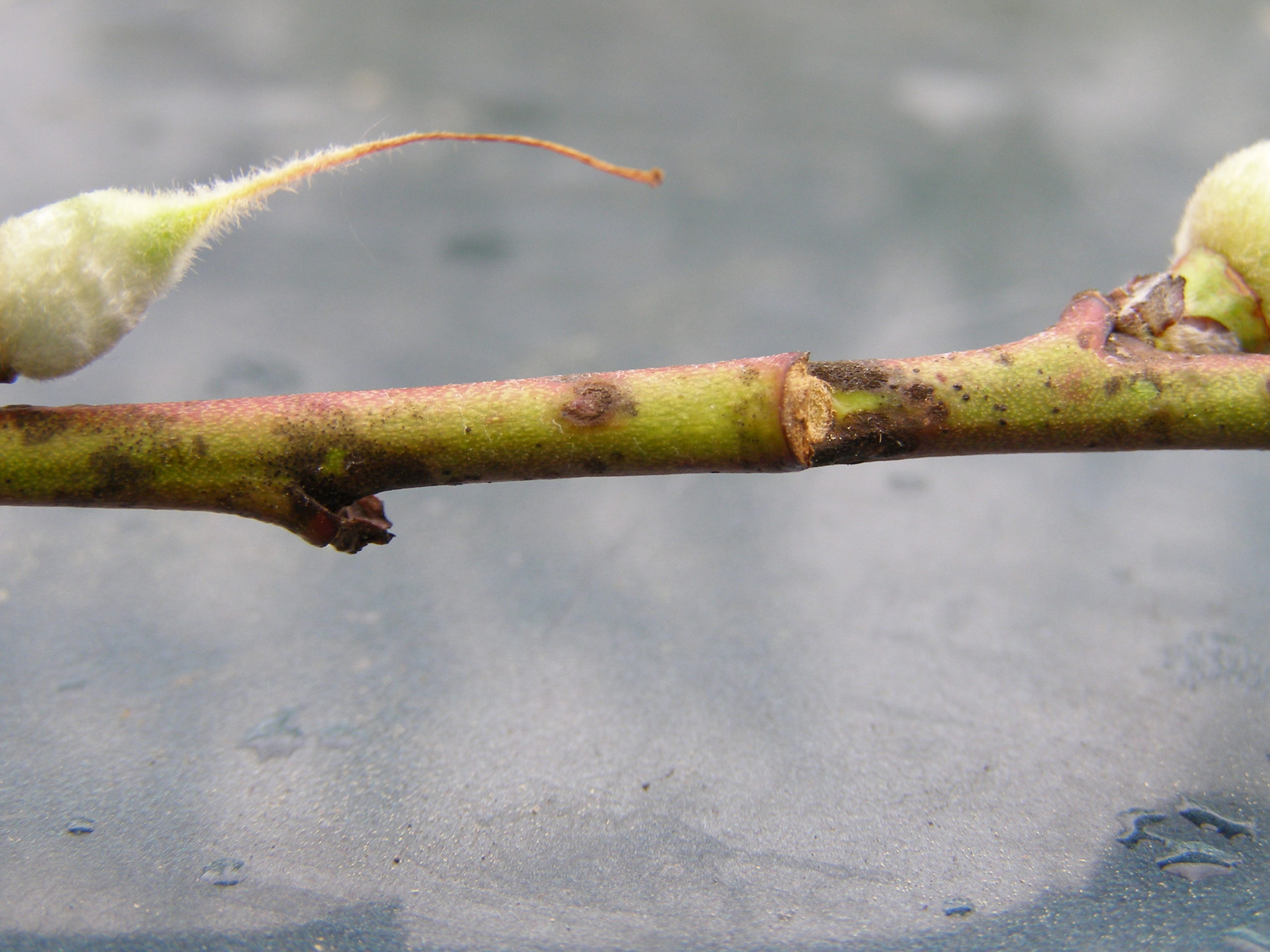
Fig. 2 Peach Scab lesions on peach twig.
Oriental Fruit Moth: A biofix point for OFM was set on 4/11 in southern counties, and on 4/14 in northern counties. The first generation timings are past for all regions of the state.
| Insecticide Type | |||
| County/Region | Degree Days by 4/27 base 45 | Conventional
170-200, 350-375 |
Diamide
100-150, 300-350 |
| Gloucester – Southern | 283 | 1st – past
2nd –past |
1st – past
2nd –past |
| Middlesex – Northern | 231 | 1st – past
2nd – 5/16-18 |
1st – past
2nd –past |
Green Peach Aphid: GPA colonies begin forming sometime during bloom. Examine trees for the presence of colonies from pink to shuck split. Count the number of colonies on ten trees and use a treatment threshold of 2 colonies/tree at petal fall for peach, and 1 colony/tree for nectarine. The best way to scout for aphids during bloom is with a beating tray. Blossoms may also be collected, opened, and examined for the presence of aphids using a hand lens. This is particularly important for nectarine blocks. Check 10 trees per block with the beating tray. Collect 50 blossoms per block and examine for the presence of aphids. If more than 1 colony of aphids are found in nectarines, or 2-3 colonies are found in peaches, an insecticide for aphids will be needed when all petals are off. See the NJ Commercial Tree Fruit Production Guide for recommended materials and rates. Aphid colonies are now visible in southern county orchards.
Plum Curculio; Tarnished Plant Bugs; and Other Catfacing Insects: Plum Curculio start to move into orchards at about 88-100 degree days base 50 after January 1. Applications for PC should be initiated once all petals are off, with a second application made with ovicidal materials at 379-402 DD. Growers can monitor degree day development at their site by finding the nearest weather station and using the degree day development tool at NEWA. Catfacing insects are starting activity but cause little damage at this time of the year. Catfacing insects will become more of an issue as temperatures warm and mowing and other ground cover activities become more common after bloom. Insecticides for catfacing insects are not recommended until after all petals are off. PC activity should be peaking this week and next.
Scale Insects: White peach scale (WPS) crawlers are emerging in southern counties. San Jose scale (SJS) crawlers usually begin emergence about a week or ten days later, usually late May/Early June. If you have scale infestations on your trees, it is important to note if crawlers are present, even if you treated with oil in the early spring. If crawlers are present then treatment options include Esteem, Movento, Centaur, Venerate, and Diazinon. Esteem, Centaur, Venerate and Movento should be applied at the beginning of crawler emergence. Movento requires a penetrant as per the label. Venerate should be be applied at the low rate of 1 qt/A and may need more than one application. Diazinon is labeled for only one post bloom or foliar application on stone fruit (Rec = max. of 2 lb/acre of the 50W). The apple label allows up to 2 foliar applications per year as long as a prebloom application was not made. Foliar applications may cause russet on apples, but has worked in the field for scale crawlers as long as applications are made 1-2 weeks after the start of crawler emergence and again 2 weeks later. Belay and Assail are also effective against scale crawlers but may need more than one application during the emergence which typically lasts about 4 weeks for WPS and 6 weeks for SJS.
Lesser Peach Tree Borer and Peach Tree Borer: Lesser Borer adults began flying this week in in all growing regions. If you haven’t placed mating disruption dispensers yet there is still time to get them out before the greater peach tree borer flight which usually begins in June.
Apples and Pears:
Diseases: Fire Blight, Apple Scab, Rust diseases, and Powdery Mildew are the main targets at this stage. The NEWA apple scab model is estimating about Primary Scab is over in southern NJ with 100% of cumulative ascospores discharged. Northern counties will have less ascospore maturity. Growers can estimate primary scab development using the NEWA scab tool, and estimate fire blight infectionpotential using the Fire Blight tool. Remember to enter your green tip and first blossom date! Primary apple scab spores are released during any substantial infection period. More information can be found in this blogpost from Penn State.
Codling Moth (CM): The first codling moth flight has started. A biofix was set for CM on April 25th in southern counties, and May 6 in Northern counties (Middlesex County). No biofix has yet been set for northern counties.
| Codling Moth Degree Day Timing | ||||||||
| Application and Insecticide Type | ||||||||
| County Area | Biofix | Rimon:
75-100DD + 14-17 days later
|
Intrepid
150 + 450 DD Diamides – Altacor, Voliam mixes: (150-200 DD) + 14-21 days later |
Cyd-X, Madex
250 DD + every 7-9 days during brood hatch (later if first spray is an IGR) |
Standard Insecticides – Delegate, Avaunt, OP’s, carbamates, pyrethroids
250 DD + 550 DD
|
|||
| DD | 75 | 100 | 150 | 450 | 250 | 250 | 550 | |
| Southern | April 25 | 5/7 | 5/12 | 5/15 | Too far off | 5/21 | 5/21 | Too far off |
| Northern | May 6 | 5/14 | 5/16 | 5/18 | Too far off | 5/23 | 5/23 | |
Tufted Apple Budmoth (TABM): Tufted Apple Budmoth (TABM): A biofix was set statewide on May 6. The first alternate middle applications for TABM will be on or about June 1 in all counties. This has been considered a minor pest in recent years. With the exception of Assail and and granulosis virus formulations (e.g. Madex), most materials used for Codling Moth will control TABM.
Rosy Apple Aphid: If a pre-bloom application was not made, monitor for colonies during bloom and use a treatment threshold of 1 colony/tree at petal fall. Some orchards have colonies that require treatment in southern counties.
Tree Fruit Trap Counts – Southern Counties
| Weekending | STLM | TABM-A | CM | AM | OFM-A | DWB | OFM-P | TABM-P | LPTB | PTB |
| 4/9/2022 | 2 | 0 | 0 | |||||||
| 4/16/2022 | 0 | 2 | 3 | |||||||
| 4/23/2022 | 11 | 0 | 0 | 28 | 5 | 0 | 0 | |||
| 4/30/2022 | 5 | 0 | 1 | 31 | 4 | 0 | 0 | |||
| 5/7/2022 | 5 | 1 | 3 | 50 | 4 | 0 | 0 | |||
| 5/14/2022 | 8 | 5 | 3 | 19 | 2 | 0 | 0 |
Tree Fruit Trap Counts – Northern Counties
| Weekending | STLM | TABM-A | CM | AM | OFM-A | DWB | OFM-P | TABM-P | LPTB | PTB |
| 4/9/2022 | ||||||||||
| 4/16/2022 | 0 | 0 | 1 | |||||||
| 4/23/2022 | 0 | 0 | 2 | 0 | ||||||
| 4/30/2022 | 0 | 0 | 2.5 | 0 | ||||||
| 5/7/2022 | 0 | 1 | 4 | 0 | ||||||
| 5/14/2022 | 1 | 2 | 0 | 4.5 | 0 | 0 | 0 |
| Pest Event or Growth Stage | Approximate Date | 2022 Observed Date |
| Bud Swell (Redhaven) | March 23 +/- 15 Days | March 20 |
| 1/4″ Green Tip Red Delicious | March 31 +/- 13 Days | March 21 |
| Pink Peach (Redhaven) | April 4 +/- 15 Days | March 31 |
| Tight Cluster Red Delicious | April 9 +/- 13 Days | March 31 |
| Full Bloom Peach (Redhaven) | April 9 +/- 14 Days | April 10 |
| Pink Apple (Red Delicious) | April 14 +/- 12 Days | April 14 |
| Full Bloom Apple (Red Delicious) | April 22 +/- 11 Days | April 21 |
| Petal Fall (Redhaven) | April 22 +/- 10 Days | April 14 |
| Petal Fall (Red Delicious) | April 27 +/- 13 Days | May 3 |
| Shuck Split (Redhaven) | April 30 +/- 11 Days | April 26 |
| Pit Hardening | June 15 +/- 9 Days |
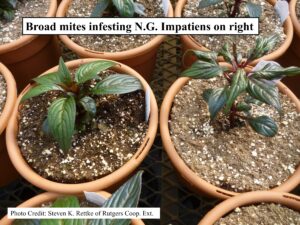 Dealing with Broad Mite, Greenhouse Product News