Search Results for: spotted lanternfly

Fruit IPM Report August 5, 2026

It has been a wet start to the month, with parts of New Jersey receiving more than 4 inches of rainfall on Monday alone. On average, 4 inches of rainfall is typical for the whole month of August. With wet and hot conditions this week, the potential for disease pressure will be high and will be a driver in maintaining fungicide coverage in orchards as we approach harvest. Even in orchards without fruit, a minimal fungicide program is recommended to reduce inoculum for the next season.

Apples
Disease Management Considerations

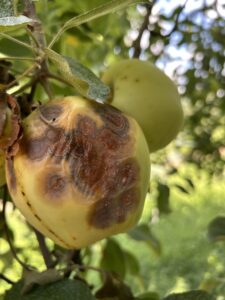
Summer scab, rots, sooty blotch, and flyspeck are the main targets at this time and are present in orchards throughout the state (Figure 1). Captan plus a phosphonate-based acid like Prophyt can slow scab development and provide good summer disease control. Add FRAC 7 and 11 single-site products, such as Merivon, Luna Sensation, and Pristine, for improved control. Consider the pre-harvest interval as harvest approaches. Also, read labels and consider restrictions on the number of applications for FRAC 7 + 11 fungicides. Time applications before rain events through the growing season according to the cover spray rule of applications every 2” of rain or 14 days, whichever comes first.
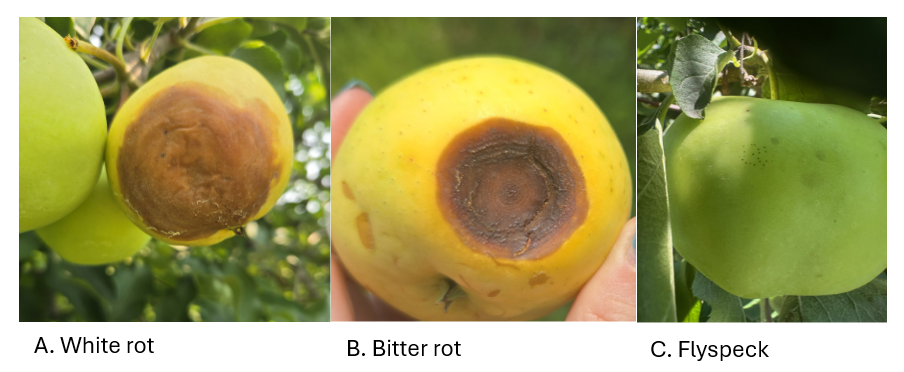
Diseases observed on developing apples a) white rot, b) bitter rot, and c) sooty blotch and fly speck.

Figure 1. Diseases observed on developing apples.

As terminal shoot growth sets, fire blight infection will slow. Pruning of blighted shoots should be done in dry weather, cutting 8 to 12 inches below diseased wood. Pruning tools should be sanitized after each cut by dipping them into a 10 percent bleach solution.

Insect Update

Codling Moth (CM) trap captures increased from the previous weeks. Additional treatments are not recommended unless there are more than 5 moths per trap.
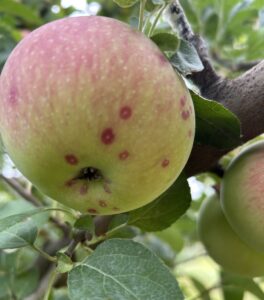
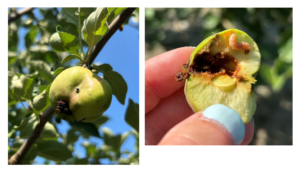
San Jose scale crawlers on maturing apple fruit.

Figure 2. San Jose scale crawlers on maturing apple fruit.

Scale crawlers are active and can be found feeding on fruit (Figure 2). Control options at this point include Assail, Belay, and Venerate (0-day PHI; Make two applications 7 days apart, starting a week after crawler emergence).

Aphid populations, on average, remain below treatment levels. A treatment threshold is set at 50% of the terminals infested with live colonies. Minimize the use of pyrethroids to manage insect pests, as they can knock down beneficial organisms and predators. Research from Dr. Monique Rivera at Cornell University has demonstrated good control from Sefina for Woolly Apple Aphid in late summer.

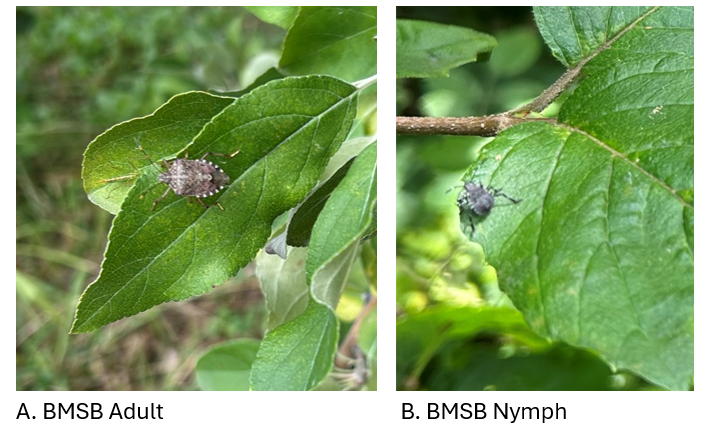
Brown Marmorated Stink Bug adults and nymphs are being captured in orchards statewide. See the NJ Tree Fruit Production guide for effective materials on harvesting fruit.

Dogwood borer continues to be caught in pheromone-baited traps in orchards. Chemical control is not recommended at this time. If trap counts have been high in your orchard blocks, consider mating disruption (i.e., Isomate DWB) for next season, which has been very effective in reducing larval infestations. NOTE: multiyear treatment is recommended for optimal efficacy.

Traps

Average Trap Captures in Apple – Southern Counties

  Week STLM TABM CM OFM DWB AMBROSIA BEETLE BMSB
5/11/2026 18  11  6 3   25   2
5/18/2026 16 21 3 10   54 13
5/25/2026 1.3 23 2 2   71 7
6/1/2026 378 33 3 2   49 6 0.4
6/8/2026 258 11 2 1   61 21 1.2
6/15/2026 355 4 0.6 1.5   57 13 0.8
6/22/2026 178 5 0.6 2   54 8 1.2
6/29/2026 504 0.3 0.1 0.5   27 12 0.8
7/6/2026 202 1.1 1.6 0.6   25 7.5 0.6
7/13/2026 226 0.9 1 1   33 1 1.6
7/20/2026 253 1.8 2 3   26 2.3 2.4
7/27/2026 246 1.5 5 1.6   38 2 1.6


Average Trap Captures in Apple – Northern Counties

  Week STLM TABM CM DWB AMBROSIA BEETLE BMSB
5/11/2026 13.7 1.5 1.8 12.8 1.1
5/18/2026 8.3 13.25 2.4 18.5 10.8
5/25/2026 2.2 13.75 1.2 24.5 5.1
6/1/2026 25.1 24.3 3.4 23.8 9.4 0.3
6/8/2026  94 22.3 0.3 24.6  18 1.4
6/15/2026 68 22.3 1 22.6 14 1.1
6/22/2026 105.9 35 0.7 27.2 8.2 0.5
6/29/2026 100 11.5 0.3 28.9 5.3 0.3
7/6/2026 50.2 7.3 0.6 26.4 5.2 0.2
7/13/2026 52.4 7 0.5 24.8 5.3 0.2
7/20/2026 69.7 2.5 0.7 27.4 4.3 0.1
7/27/2026 92.4 2 0.6 30.6 0.2

Pears
Disease Management

Foliar diseases, including Fabraea leaf spot and summer rots, should be managed to protect fruit as we approach harvest. FRAC 7 and 11 fungicides provide good control. Consider the pre-harvest interval (PHI) as we approach harvest. Also, read labels and consider restrictions on the number of applications for FRAC 7 and 11 fungicides. Topsin (FRAC 1) is also a good option for control with a 1-day PHI.

Where fire blight is present, it is appropriate to prune out infected shoots. Prune out strikes on dry, cooler days, cut back 8-12” back into healthy tissue, and sterilize pruners between cuts.

Insect Update

Pear psylla populations have decreased compared to previous weeks. If adult psylla are present, options for control include Actara, Assail, and Belay (IRAC group 4A); Sivanto Prime (IRAC group 4D); Delegate (IRAC Group 5); and products containing abamectin (IRAC group 6).

Peaches
Disease Management

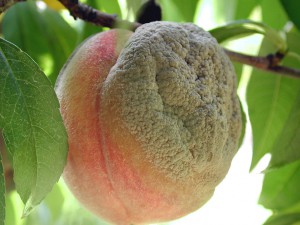
Brown rot incidence remains low, but where fruit is present, rot has been observed (Figure 3). If you are harvesting fruit, this would be a good week to use one of your stronger single-site materials with a low PHI: Indar, Cevya, Orius, Quash, and Tilt (FRAC group 3); and Merivon, Luna Sensation, Pristine, and Quadris Top (FRAC group 11).
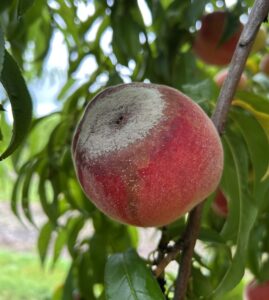
Figure 3. Brown rot on ripening peach fruit.

Insect Update

Oriental Fruit Moth (OFM) trap captures have decreased, and flight activity should be ending. Consider treatment if trap captures are above threshold (>8 moths per trap). A few options for late in the season with low PHIs would include Assail (7-day), Baythroid XL (7-day), Danitol (3-day), Delegate (1-day), and Sevin (3-day).

Japanese beetles are present in orchards and have been persistent this season, feeding in the tree canopy and on fruit. To prevent losses, include neonicotinoid materials such as Assail (7-day PHI), pyrethroids such as Baythroid (7-day), or premix products such as Leverage 360 (7-day). Verdepryn (IRAC 28, 7-day PHI) is also effective.

Lesser peachtree borer adult.

Figure 4. Lesser peachtree borer adult.

Scale crawlers are active in orchards. Options at this point include Assail, Belay (Group 4A), and the bioinsecticide Venerate. These products may provide some late-season suppression where fruit damage is observed. Venerate has a 0-day PHI, making it useful for blocks near or at harvest.

Brown Marmorated Stink Bug nymphs and adults are active and increasing in orchards. Late-season and pre-harvest control options include Assail (7-day PHI), Brigade (14-day), Danitol (3-day), Leverage 360 (7-day), and Venerate (0-day).

Lesser and greater peachtree borer trap captures continued to decline this week, although adults remain active, and egg laying is ongoing (Figure 4). Newly hatched larvae feed on the bark before boring into the lower trunk and root crown, where they overwinter and can weaken or kill trees. Growers should begin preparing for post-harvest trunk applications of pyrethroids (Asana or Pounce) or chlorpyrifos, with mid-August through early September generally providing the best timing to target young larvae before they enter the tree. Apply the insecticide thoroughly to the lower trunk, root flare, scaffold crotches, and any cankered areas, following label directions.

Traps

Average Trap Captures in Peach – Southern Counties

 Week OFM TABM LPTB PTB BMSB
5/11/2026 5 10
5/18/2026 4 20
5/25/2026 2 20 31 1
6/1/2026 4 46 28 3 0
6/8/2026 8 13 25 3 0.75
6/15/2026 5 6 13 3 0.75
6/22/2026 6 4 23 7 1
6/29/2026 3 0.2 16 6 2
7/6/2026 5 0.6 16 4 1.3
7/13/2026 9 1.4 18 7 3.5
7/20/2026 8 2.4 12 6 2.5
7/27/2026 6 2 6 6 8


Average Trap Captures in Peach – Northern Counties

  Week OFM LPTB PTB
5/11/2026 4.4 24 0
5/18/2026 2.4 16.5 0.2
5/25/2026 0.7 8.75 0.1
6/1/2026 1.8 11 0.5
6/8/2026  0.6  8.5 0.05
6/15/2026 3.5 9.7 1.2
6/22/2026 3.4 7.4 1.6
6/29/2026 2 4.6 1.1
7/6/2026 1.7 8.5 1.8
7/13/2026 0.5 2.8 3.7
7/20/2026 2.1 1.5 2.9
7/27/2026 4.3 0.9 1.7

Blueberries
Insect Update

Spotted-wing drosophila (SWD) adults continue to be captured in monitoring traps (Table 1). SWD remains the primary target for insecticide applications.

Blueberry maggot is present, but is managed when controlling for SWD (Table 1). For management recommendations for SWD in blueberry and other berry crops, reference Rutgers Cooperative Extension Factsheet FS1246 and SWD Insecticides for Berries.

Table 1. Spotted-Wing Drosophila and Blueberry Maggot traps

Spotted-wing Drosophila Blueberry Maggot
Atlantic County Burlington County Atlantic County Burlington County
Avg High Avg High Avg High Avg High
6/6 8.99 35 2.86 7 0.03 1 0 0
6/12 9.9 46 3.7 25 0 0 0 0
6/20 10.24 48 8.22 35 0 0 0 0
6/27 6.96 78 3.6 18 0 0 0 0
7/3 29.78 273 50.9 81 0.33 27 0 0
7/10 31.2 130 86.1 177 0.15 12 0 0
7/18 28.3 110 59.3 125 0.07 5 0.16 1
7/25 40.22 227 79.1 223 0.07 6 0.06 2
7/31 52.3 199 58.8 167 0.04 2 0.04 1


Sharp-nosed leafhopper trap counts remain low (Table 2).

Oriental beetle adult flight activity continues to decrease (Table 2).

Table 2. Sharp-nosed Leafhopper and Oriental Beetle traps

Sharp-nosed Leafhopper Oriental Beetle
Atlantic County Burlington County Atlantic County Burlington County
Avg High Avg High Avg High Avg High
6/6 1.42 16 1.25 7 5.78 35 2.57 14
6/12 0.56 12 4.8 46 62 340 47 170
6/20 0.88 6 1.44 12 411 2025 403 2025
6/27 0.77 9 0.37 2 243 2025 458 2025
7/3 1.5 15 0.55 2 466.7 2025 182.7 510
7/10 1.40 14 0.33 2 396 1970 393 2025
7/18 0.98 13 0 0 191.1 2025 235 1350
7/25 1.11 7 0.11 1 64.4 340 136.6 675
7/31 0.90 5 0.25 2 27.68 132 35.3 85


Scales crawler activity of both terrapin scale and Putnam scale slightly increased (Table 3). Monitoring will continue throughout the fall to detect the emergence of the second crawler generation and determine the appropriate timing for pesticide applications. Continued monitoring will help ensure that management recommendations are based on current pest activity and that insecticide applications are made when crawlers are most susceptible. Scale infestations on fruit remain low (Table 4).

Table 3. Scale Traps

Putnam Scale Terrapin Scale
Avg High Avg High
5/23 36.85 230 1.8 8
5/29 65.17 352 21.2 41
6/6 136.25 402 75.25 84
6/12 164 639 96 202
6/20 102 288 85 167
6/27 45 193 32 119
7/3 41.7 315 27.5 46
7/10 16.26 74 24.6 61
7/18 6.06 25 12 24
7/25 10.5 73 11 24
7/31 12.6 64 11.3 27


Table 4. Scale Infestation on Fruit

Scale % infestation on fruit
Avg High
6/12 0.13 2.1
6/20 0.19 5.7
6/27 0.06 1.5
7/3 0.06 1.8
7/10 0.07 3.1
7/18 0.02 0.9
7/25 0 0
7/31 0.006 0.1


Diseases

The IPM team continues to observe anthracnose and Alternaria. For recommendations on fungicide products, refer to the 2026 Commercial Blueberry Pest Control Recommendations for New Jersey or https://extension.rutgers.edu/sites/default/files/2026-03/bb-v42n01.pdf.

% Mummy Berry Infested Fruit % Anthracnose Infested Fruit % Alternaria Infested Fruit
Avg High Avg High Avg High
6/20 0.03 0.9 0.06 2.5 0.004 0.7
6/27 0.007 0.3 0.08 2.2 0.07 3
7/3 0.005 0.2 0.227 4.1 0.07 1.2
7/10 0.002 0.1 0.20 2.5 0.13 3
7/18 0.001 0.1 1.23 13.1 0.43 9.3
7/25 0 0 0.42 2 0.11 0.6
7/31 0 0 0.89 9.7 0.05 0.3


Weeds

Last week, the IPM team monitored 88 fields for weed pressure. The predominant weed species observed across production fields were nutsedge and goosegrass followed by marestail and barnyard grass. This was the last week for assessing weed pressure in the fields.  Based on current field conditions, postemergence herbicide selections should prioritize products with strong activity on annual grass species while considering the existing weed spectrum within individual fields. Refer to the 2026 Rutgers Blueberry Commercial Guide for management recommendations. 

Grapes
Insects

Grape berry moth (GBM) continues to be captured in pheromone-baited traps in vineyards. Where populations have been managed, no further treatment should be needed, particularly as insecticide management shifts to other pests. Monitor for damage to bunches and consider treatment when 10% or more of the bunches show berry webbing and GBM larval feeding injury. See the Commercial Grape Pest Control Recommendations for New Jersey for management options.

Spotted lanternfly (SLF) adults are present in vineyards. As we approach September, adult migration into vineyards will increase, at which point we consider applying materials with long residual efficacy. See this previous Plant & Pest Advisory post on Management of Spotted Lanternfly in New Jersey Vineyards.

Spotted-Wing Drosophila trap counts continue to remain high in blueberries in southern counties. Monitoring efforts have shifted to grapes as veraison progresses and ripe fruit becomes vulnerable to infestation.

Grape root borer (GRB) adults are active and flying in vineyards. Monitoring traps indicate the presence of GRB in the area, but only scouting around the bases of vines will indicate the presence of GRB in the vineyard. Adult moths will lay eggs July-August. Larvae will enter the soil and migrate to the roots, where they feed and cause damage. Dr. Anne Nielsen and the IPM team will be monitoring vineyards throughout the state to assess GRB population pressure in NJ.

Diseases

Grapes are beginning veraison in southern counties. Disease management continues to focus mainly on downy mildew (Figure 5), as well as powdery mildew, bunch rot, and black rot, but disease observations have been minimal. Refer to the NJ Commercial Grape Production Guide for more information on disease management options.

Figure 5. Downy mildew on the underside of a grape leaf.
Agri-Technology, Nursery, Agronomy, Fruit and Vegetable Research Twilight Meeting at RAREC: Wednesday August 26, 2026

 Agri-Technology, Nursery, Agronomy, Fruit and Vegetable Research Twilight Meeting at RAREC

Wednesday August 26th, 2026 (4 pm until dark)

Location: Rutgers Agricultural Research and Extension Center (RAREC), 121 Northville Road, Bridgeton, New Jersey 08302

Hosted by: Ramandeep Kumar Sharma, Patrick McMullen, and Andy Wyenandt

Questions? Contact: Andy Wyenandt (wyenandt@njaes.rutgers.edu)

This year’s twilight meeting at RAREC will showcase advances in crop production, integrated pest management, soil fertility, weed management, and innovative agricultural technologies for growers and stakeholders across the state.

  • Dan Ward, Director, RAREC. Welcome to RAREC
  • Wesley Kline, Cumberland County Agricultural Agent
    • ‘Impact of Cyclospora on fruit and vegetable production’ CORE: 30 minutes
  • Tim Waller, Cumberland County RCE Nursery Agent.
    • ‘Useful Nursery and Ornamental Crops and Considerations’
  • Raul Cabrera, Extension Specialist in Nursery Production and Management.
    • ‘Recent developments on substrates (for container-grown crops)’
  • Dan Ward, Director, RAREC; Rutgers Agrivoltiacs Program.
    • ‘Update on the agrivoltaics research program at Rutgers’
  • Ann Nielsen, Extension Specialist in Entomology
    • Emma Waltman, PhD candidate, ‘Land-use around farms impacts stink bug biological control’
    • Amanda Furuya, Post-Doctoral Associate, ‘Tackling Spotted Lanternfly in South Jersey Vineyards’
    • Octavio Menocal Sandoval, Post-Doctoral Associate, ‘Updating Monitoring and Management for Codling Moth in Apple’
  • Thierry Besancon, Extension Weed Specialist for Specialty Crops.
    • ‘Update on new technologies for weed management in vegetable crops’
  • Ramandeep Kumar Sharma, Salem County Agricultural Agent.
    • ‘Optimizing Nitrogen Rate and Application Timing for Corn Yield and Quality’
    • ‘Evaluation of Sulfur Fertilizer Sources and Application Rates for Optimizing Soybean Growth and Yield in Southern New Jersey’
  • Maria Cramer, Senior Program Coordinator, Vegetable IPM,
    • ‘Thrips management in tomatoes’
  • Patrick McMullen, Atlantic County Agricultural Agent.
    • ‘Wilts of cucurbits: Identification and management’
  • Andy Wyenandt, Extension Specialist in Vegetable Pathology.
    • ‘Updates on vegetable disease control’

NJDEP pesticide recertification credits are pending approval. Expected credits include CORE (1), PP2 (4), 1A (4), 3A (2), and Category 10 (3).

Fruit IPM Report July 29, 2026


Apples
Disease Management Considerations

Various rots, but mostly bitter rot, are present in orchards throughout the state (Figure 1). Broad-spectrum fungicides, such as captan and ziram, are effective. Captan alone may not adequately suppress severe summer disease pressure. Adding single-site products such as Merivon, Luna Sensation, Pristine, Omega, and Aprovia may improve control. The addition of phosphonate products such as ProPhyt or Rampart to captan sprays can improve control of rots and other summer diseases, including sooty blotch and flyspeck. Time applications before rain events through the growing season according to the cover spray rule of applications every 2” of rain or 14 days, whichever comes first.

Diseases observed on developing apples a) white rot, b) bitter rot, and c) sooty blotch and fly speck.

Figure 1. Diseases observed on developing apples a) white rot, b) bitter rot, and c) sooty blotch and fly speck.

Insect Update

Codling Moth (CM): Trap captures are increasing in some orchards, but on average, counts remain low for the second generation of codling moth. If you have applied your 2nd-generation insecticides and your trap counts are low (less than 5 moths per trap), additional treatments are not needed. 

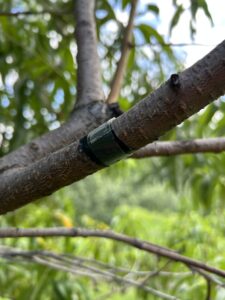
Scale: Crawlers are active and can be monitored by wrapping black electrical tape covered with double-sided sticky tape around branches with previous scale infestations. Use a hand lens to detect crawlers on the tape. Control options during crawler emergence include Esteem (2 applications/year; 45-day PHI); Centaur (1 application/year; 14-day PHI); Diazinon 50W (2 applications/year; 21-day PHI); and Venerate (0-day PHI; Make two applications 7 days apart starting a week after crawler emergence). Neonicotinoids will have some suppression.  

Woolly Apple Aphid (WAA); Green Apple (Spirea) Aphids (GAA): Populations on average remain below treatment levels. A treatment threshold is set at 50% of the terminals infested with live colonies. Predation by lady beetles and other predators and parasitoids has been observed and can help to maintain pest populations below damaging thresholds. Scout in known hotspots for WAA colonies now. Minimize the use of pyrethroids to manage insect pests, as they can knock down beneficial organisms and predators. Research from Dr. Monique Rivera at Cornell University has demonstrated good control from Sefina for WAA in late summer. 

Brown Marmorated Stink Bugs: Brown Marmorated Stink Bugs are being captured in orchards statewide. Both adults and nymphs are present (Figure 2). See the NJ Tree Fruit Production guide for effective materials on harvesting fruit.

Brown marmorated stink bug (BMSB) is a pest of ripening fruit.

Figure 2. Brown marmorated stink bug (BMSB) is a pest of ripening fruit.

Dogwood borer: On average, moth captures in pheromone traps continue to decrease. If trap captures remain high in your orchard blocks, consider a coarse trunk application of Assail before August.  

Traps

Average Trap Captures in Apple – Southern Counties

  Week   STLM   TABM   CM   OFM   DWB   AMBROSIA BEETLE   BMSB  
5/11/2026   18    11    6       25     2   –  
5/18/2026   16   21     10     54   13   –  
5/25/2026   1.3   23         71     –  
6/1/2026   378   33         49     0.4  
6/8/2026   258   11         61   21   1.2  
6/15/2026  355  4  0.6  1.5    57  13  0.8 
6/22/2026  178  5  0.6  2    54  8  1.2 
6/29/2026  504  0.3  0.1  0.5    27  12  0.8 
7/6/2026  202  1.1  1.6  0.6    25  7.5  0.6 
7/13/2026  226  0.9  1  1    33  1  1.6 
7/20/2026  253  1.8  2  3    26  2.3  2.4 

Average Trap Captures in Apple – Northern Counties

  Week   STLM   TABM   CM   DWB   AMBROSIA BEETLE   BMSB  
5/11/2026   13.7   1.5   1.8   12.8   1.1   –  
5/18/2026   8.3   13.25   2.4   18.5   10.8   –  
5/25/2026   2.2   13.75   1.2   24.5   5.1   –  
6/1/2026   25.1   24.3   3.4   23.8   9.4   0.3  
6/8/2026    94  22.3  0.3   24.6    18  1.4  
6/15/2026  68  22.3  1  22.6  14  1.1 
6/22/2026  105.9  35  0.7  27.2  8.2  0.5 
6/29/2026  100  11.5  0.3  28.9  5.3  0.3 
7/6/2026  50.2  7.3  0.6  26.4  5.2  0.2 
7/13/2026  52.4  7  0.5  24.8  5.3  0.2 
7/20/2026  69.7  2.5  0.7  27.4  4.3  0.1 

[Read more…]

Fruit IPM Report July 21, 2026


Apples
Disease Management Considerations
  • Rots have been observed on fruit in southern and northern NJ counties (Figure 1).

    Figure 1. Bitter rot infection on maturing apple fruit.

    Broad-spectrum fungicides, such as captan and ziram, are effective. Captan alone may not adequately suppress severe summer disease pressure. Adding single-site products such as Merivon, Luna Sensation, Pristine, Omega, and Aprovia may improve control. The addition of phosphonate products such as ProPhyt or Rampart to captan sprays can improve control of rots and other summer diseases, including sooty blotch and flyspeck.

  • Time applications ahead of the next rain event, where your fungicide coverage may be depleted.
  • Where fire blight is present, it is appropriate to prune out infected shoots. Do not cut out infections during wet weather, as bacteria can spread through water. The recommendation is to cut back to last year’s growth, at least 12” back into healthy tissue, and to sterilize pruners between cuttings.
  • Maintain coverage of captan, manzate, or ziram before rain events through the growing season according to the cover spray rule of applications every 2” of rain or 14 days, whichever comes first, to reduce the spread of foliar diseases, including Marssonina Blotch, Glomerella Leaf Spot, and Frogeye Leaf Spot. Foliar diseases can contribute to inoculum build-up in the orchard and significant defoliation of the canopy if left untreated.


Insect Update

Codling Moth (CM): Trap captures are increasing in some orchards, but on average, counts remain low for the second generation of codling moth. If you have applied your 2nd-generation insecticides and your trap counts are low (less than 5 moths per trap), additional treatments are not needed.

Scale: Second-generation San Jose scale typically emerges about mid-July. We have observed an increase in crawler activity at some locations. Monitor crawler activity by wrapping black electrical tape covered with double-sided sticky tape around branches with previous scale infestations (Figure 2).

Monitoring San Jose scale crawlers using electrical tape and double-sided sticky tape on peach tree branch.

Figure 2. Monitoring San Jose scale crawlers using electrical tape and double-sided sticky tape on a peach tree branch.

Use a hand lens to detect crawlers on the tape. Control options during crawler emergence include Esteem (2 applications/year; 45-day PHI); Centaur (1 application/year; 14-day PHI); Diazinon 50W (2 applications/year; 21-day PHI); and Venerate (0-day PHI; Make two applications 7 days apart starting a week after crawler emergence). Neonicotinoids will have some suppression.

Woolly Apple Aphid (WAA); Green Apple (Spirea) Aphids (GAA): Populations on average remain below treatment levels. A treatment threshold is set at 50% of the terminals infested with live colonies. Predation by lady beetles and other predators and parasitoids has been observed and can help to maintain pest populations below damaging thresholds. Scout in known hotspots for WAA colonies now. Minimize the use of pyrethroids to manage insect pests, as they can knock down beneficial organisms and predators. Research from Dr. Monique Rivera at Cornell University has demonstrated good control of Sefina for WAA in late summer.

Brown Marmorated Stink Bugs: Brown Marmorated Stink Bugs are being captured in orchards statewide. Both adults and nymphs are present. See the NJ Tree Fruit Production guide for effective materials on harvesting fruit.

Dogwood borer: On average, moth captures in pheromone traps continue to decrease. If trap captures continue to be high in your orchard blocks, consider a coarse trunk application of Assail before August.

Traps

Average Trap Captures in Apple – Southern Counties

  Week STLM TABM CM OFM DWB AMBROSIA BEETLE BMSB
5/11/2026 18  11  6 3   25   2
5/18/2026 16 21 3 10   54 13
5/25/2026 1.3 23 2 2   71 7
6/1/2026 378 33 3 2   49 6 0.4
6/8/2026 258 11 2 1   61 21 1.2
6/15/2026 355 4 0.6 1.5   57 13 0.8
6/22/2026 178 5 0.6 2   54 8 1.2
6/29/2026 504 0.3 0.1 0.5   27 12 0.8
7/6/2026 202 1.1 1.6 0.6   25 7.5 0.6
7/13/2026 226 0.9 1 1   33 1 1.6


Average Trap Captures in Apple – Northern Counties

  Week STLM TABM CM DWB AMBROSIA BEETLE BMSB
5/11/2026 13.7 1.5 1.8 12.8 1.1
5/18/2026 8.3 13.25 2.4 18.5 10.8
5/25/2026 2.2 13.75 1.2 24.5 5.1
6/1/2026 25.1 24.3 3.4 23.8 9.4 0.3
6/8/2026  94 22.3 0.3 24.6  18 1.4
6/15/2026 68 22.3 1 22.6 14 1.1
6/22/2026 105.9 35 0.7 27.2 8.2 0.5
6/29/2026 100 11.5 0.3 28.9 5.3 0.3
7/6/2026 50.2 7.3 0.6 26.4 5.2 0.2
7/13/2026 52.4 7 0.5 24.8 5.3 0.2


Pears
Disease Management
  • Foliar diseases should be managed with Mancozeb or Ziram, plus a single-site fungicide, to maintain pressure and inoculum at low levels, protecting fruit and maintaining a healthy orchard going into the next season.
  • Where fire blight is present, it is appropriate to prune out infected shoots. Prune out strikes on dry, cooler days, cut back 8-12” back into healthy tissue, and sterilize pruners between cuts.
Insect Update

Pear psylla: Adult populations have decreased compared to previous weeks. If adult psylla are present, options for control include Actara, Assail, and Belay (IRAC group 4A); Sivanto Prime (IRAC group 4D); Delegate (IRAC Group 5); and products containing abamectin (IRAC group 6).

Peaches
Disease Management
  • Declining peach trees due to environmental stress.

    Figure 3. Declining peach trees due to environmental stress.


    Brown rot is appearing in ripening fruit throughout the state. Highly effective rot materials include DMI’s Indar, Cevya, Orius, Quash, and Tilt (FRAC group 3), and Strobilurin materials including Merivon, Luna Sensation, Pristine, and Quadris Top (FRAC group 11), which should be applied beginning 3 – 4 weeks prior to harvest.

  • There have been reports of declining peach trees exhibiting yellowing foliage, gummosis, and bark splitting. Several samples have been submitted to the Rutgers Plant Diagnostic Laboratory. There has been one report of Cytospora canker and some insect borer injury observed, but overall the damage and decline have been attributed to weather extremes, including drought and significant fluctuations in temperature that have made certain varieties or trees in certain low-lying locations more vulnerable to abiotic stress, and insect and disease injury (Figure 3). The recommendation is to maintain proper irrigation and fertilization and prune out any visible cankers. Be mindful of pruning practices and avoid mechanical damage to trees to minimize injury.
Insect Update

Oriental Fruit Moth (OFM): A biofix point for OFM was set on 4/2 for southern counties and 4/15 in northern counties. See below for timings for the third generation. Consider treatment if trap captures are above threshold (>8 moths per trap).

OFM 3rd Generation Timing
Insecticide Type
County/Region Degree Days by  7/20 base 45 Conventional

2100-2200

2450-2500

Intrepid/Rimon

2000-2100

2350-2450

Diamides/Virus

2025-2150

2375-2450

Gloucester – Southern 2406 1st –past

2nd – 7/22-7/24

1st –past

2nd – 7/18-7/22

1st –past

2nd – 7/19-7/22

Middlesex – Northern 2201 1st – 7/16-7/20

2nd – 7/28-7/30

1st – past

2nd – 7/25-7/28

1st – 7/15-7/18

2nd – 7/26-7/28

Japanese Beetles: Japanese beetles have been observed feeding significantly on foliage and fruit. Products containing imidacloprid (Admire Pro, Leverage 360) are effective and may be warranted to protect fruit through to harvest.

Scale: Second-generation White Peach Scale crawlers should emerge sometime this week or next. Second-generation San Jose Scale crawlers emerge about 7/17 +/- 8 days. Esteem is a good scale material that has a 14-day PHI for stone fruit. Centaur is also effective, has a 14-day PHI, and can be used only once during the growing season. Venerate has shown efficacy as a pre-harvest treatment against scale and has a 0-day PHI. If using Venerate to control scale insects, make 2 applications 7 days apart, starting a week after crawler emergence.

Tarnished plant bugs and other catfacing insects: Insects are active, but new fruit feeding injury has been minimal.

Brown Marmorated Stink Bugs: Nymphs are active, and numbers continue to increase in orchards statewide. See the NJ Tree Fruit Production guide for effective materials.

Mites: Outbreaks of mites have been observed in a few orchards as a result of hot and dry weather from the previous week. If left unchecked, mites can build up to the point where leaf bronzing is visible by mid- to late July. If leaf damage is heavy enough, next year‘s crop can even be affected. Consider treatment if more than 10 mites per leaf are observed. Control options include Apollo, Savey, Envidor, Nealta, and Nexter. Try to limit miticide use to one application per material class per season.

Traps

Average Trap Captures in Peach – Southern Counties

  Week OFM TABM LPTB PTB BMSB
5/11/2026 5 10
5/18/2026 4 20
5/25/2026 2 20 31 1
6/1/2026 4 46 28 3 0
6/8/2026 8 13 25 3 0.75
6/15/2026 5 6 13 3 0.75
6/22/2026 6 4 23 7 1
6/29/2026 3 0.2 16 6 2
7/6/2026 5 0.6 16 4 1.3
7/13/2026 9 1.4 18 7 3.5


Average Trap Captures in Peach – Northern Counties

  Week OFM LPTB PTB
5/11/2026 4.4 24 0
5/18/2026 2.4 16.5 0.2
5/25/2026 0.7 8.75 0.1
6/1/2026 1.8 11 0.5
6/8/2026  0.6  8.5 0.05
6/15/2026 3.5 9.7 1.2
6/22/2026 3.4 7.4 1.6
6/29/2026 2 4.6 1.1
7/6/2026 1.7 8.5 1.8
7/13/2026 0.5 2.8 3.7


Blueberries
Insect Update

Scouting was conducted last week across 75 conventional and organic blueberry fields in Burlington and Atlantic Counties. Monitoring of developing fruit indicated an overall decrease in pest activity, including feeding and oviposition by leafrollers, plum curculio, and cherry and cranberry fruitworms.

Aphids: Populations have declined significantly compared with previous weeks, likely due to recent weather conditions and the hardening of new shoot growth.

Spotted-wing drosophila: Trap captures slightly decreased in both Atlantic and Burlington Counties. SWD remains the primary target for insecticide applications (Table 1). For management recommendations for SWD in blueberry and other berry crops, reference Rutgers Cooperative Extension Factsheet FS1246 and SWD Insecticides for Berries.

Blueberry maggot: Adults are also present at low numbers, particularly in fields where picking and pesticide applications have slowed down.

Table 1. Spotted-Wing Drosophila and Blueberry Maggot traps

Spotted-Wing Drosophila Blueberry Maggot
Atlantic County Burlington County Atlantic County Burlington County
Avg High Avg High Avg High Avg High
6/6 8.99 35 2.86 7 0.03 1 0 0
6/12 9.9 46 3.7 25 0 0 0 0
6/20 10.24 48 8.22 35 0 0 0 0
6/27 6.96 78 3.6 18 0 0 0 0
7/3 29.78 273 50.9 81 0.33 27 0 0
7/10 31.2 130 86.1 177 0.15 12 0 0
7/18 28.3 110 59.3 125 0.07 5 0.16 1


Sharp-nosed leafhopper: Trap counts remain low (Table 2). 

Oriental beetle: Adults are actively in flight (Table 2).

Table 2. Sharp-nosed Leafhopper and Oriental Beetle traps

Sharp-nosed Leafhopper Oriental Beetle
Atlantic County Burlington County Atlantic County Burlington County
Avg High Avg High Avg High Avg High
6/6 1.42 16 1.25 7 5.78 35 2.57 14
6/12 0.56 12 4.8 46 62 340 47 170
6/20 0.88 6 1.44 12 411 2025 403 2025
6/27 0.77 9 0.37 2 243 2025 458 2025
7/3 1.5 15 0.55 2 466.7 2025 182.7 510
7/10 1.40 14 0.33 2 396 1970 393 2025
7/18 0.98 13 0 0 191.1 2025 235 1350


Scales: Crawler activity of both terrapin scale and Putnam scale declined over the past week (Table 3). Monitoring will continue throughout the fall to detect the emergence of the second crawler generation and determine the appropriate timing for pesticide applications. Continued monitoring will help ensure that management recommendations are based on current pest activity and that insecticide applications are made when crawlers are most susceptible. Scale infestations on fruit also decreased last week (Table 4). For scale management, target the second generation of crawlers with post-harvest applications of diazinon or pyriproxyfen (Esteem).


Table 3. Scale Traps

Putnam Scale Terrapin Scale
Avg High Avg High
5/23 36.85 230 1.8 8
5/29 65.17 352 21.2 41
6/6 136.25 402 75.25 84
6/12 164 639 96 202
6/20 102 288 85 167
6/27 45 193 32 119
7/3 41.7 315 27.5 46
7/10 16.26 74 24.6 61
7/18 6.06 25 12 24


Table 4. Scale Infestation on Fruit

Scale % infestation on fruit
Avg High
6/12 0.13 2.1
6/20 0.19 5.7
6/27 0.06 1.5
7/3 0.06 1.8
7/10 0.07 3.1
7/18 0.02 0.9


Diseases

The IPM team continues to observe anthracnose and Alternaria, likely associated with mechanical damage caused by picking machine activity.

For recommendations on fungicide products, refer to:

% Mummy Berry Infested Fruit % Anthracnose Infested Fruit % Alternaria Infested Fruit
Avg High Avg High Avg High
6/20 0.03 0.9 0.06 2.5 0.004 0.7
6/27 0.007 0.3 0.08 2.2 0.07 3
7/3 0.005 0.2 0.227 4.1 0.07 1.2
7/10 0.002 0.1 0.20 2.5 0.13 3
7/18 0.001 0.1 1.23 13.1 0.43 9.3


Grapes
Insects

Grape berry moth (GBM): Third-generation GBM is actively flying and laying eggs. The next timing to apply control for GBM is 1620-1710 DD from the biofix date of wild grape bloom (5/19 for Gloucester County). As of July 20, we are currently at 1659 DD (base 47.14°F) in Gloucester County. Consult the Grape berry moth NEWA model for the most accurate forecasting for your area. Consider treatment when 10% or more of the bunches show berry webbing and GBM larval feeding injury. To determine the percent injury, examine 10 bunches on 5 vines in 4 locations. Often, the greenish-brown larvae can be found inside the berry. See the Commercial Grape Pest Control Recommendations for New Jersey for management options.

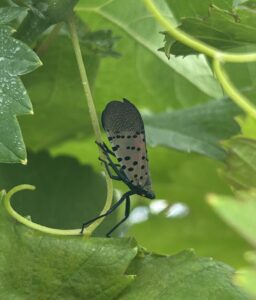
Spotted lanternfly (SLF): Adult SLF were observed in southern county vineyards this week (Figure 4).

Figure 4. Spotted lanternfly adult in vineyards in South NJ.

See this previous Plant & Pest Advisory post on Management of Spotted Lanternfly in New Jersey Vineyards.

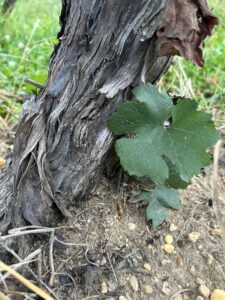
Grape root borer pupal case at the base of a grape vine where the adult moth emerged.

Figure 5. Grape root borer pupal case at the base of a grape vine where the adult moth emerged.

Japanese beetle (JB): Pressure remains high throughout the state with considerable defoliation at some vineyards. See the NJ Commercial Grape Production Guide for more information on insecticides effective for JB.

Grape root borer (GRB): Adults are active and flying in vineyards. Monitoring traps indicate the presence of GRB in the area, but only scouting around the bases of vines will indicate the presence of GRB in the vineyard (Figure 5).

Adult moths will lay eggs July-August. Larvae will enter the soil and migrate to the roots, where they feed and cause damage. Dr. Anne Nielsen and the IPM team will be monitoring vineyards throughout the state to assess GRB population pressure in NJ.


Diseases
  • Botrytis has been observed in developing bunches.
  • Incidence of downy mildew and powdery mildew has been low in NJ vineyards.
  • See the NJ Commercial Grape Production Guide for more information on disease management options.

Fruit IPM Report for Week of 6/29/2026


Apples
Disease Management Considerations
  • Bitter rot symptoms observed in southern and northern counties.
  • Hot, humid weather will increase the risk of fruit rots, including white rot, bitter rot, black rot, sooty blotch, and flyspeck.
  • Cultural control practices will help to minimize impact from disease in orchards: prune for improved air circulation, thin fruit clusters to reduce humidity and inoculum buildup, and cut out cankers that serve as inoculum sources.
  • Broad-spectrum fungicides, such as captan and ziram, are effective. Captan alone may not adequately suppress severe summer disease pressure.
  • Adding single-site products such as Merivon, Luna Sensation, Pristine, Omega, and Aprovia may improve control. The addition of phosphonate products such as ProPhyt or Rampart to captan sprays can improve control of rots and other summer diseases, including sooty blotch and flyspeck. It may help suppress scab infections when present.
  • Where fire blight is present, it is appropriate to prune out infected shoots. Do not cut out infections during wet weather, as bacteria can spread through water. The recommendation is to cut back to last year’s growth, at least 12” back into healthy tissue, and to sterilize pruners between cuttings.
  • Maintain coverage of captan, manzate, or ziram before rain events through the growing season according to the cover spray rule of applications every 2” of rain or 14 days, whichever comes first, to reduce the spread of foliar diseases, including Marssonina Blotch, Glomerella Leaf Spot, and Frogeye Leaf Spot. Foliar diseases can contribute to inoculum build-up in the orchard and significant defoliation of the canopy if left untreated.
  • Rainy seasons require tighter fungicide intervals to maintain coverage. Consider refreshing fungicide protection before major rain events.
Insect Update

Codling Moth (CM): On average, trap counts remain low in orchards across the state, with some numbers increasing at a few sites. Second-generation timings are updated below. Consider management if >5 moths are caught per trap or if fruit injury is observed (Figure 1).

Codling moth injury and larva in developing fruit.

Figure 1. Codling moth injury and larva in developing fruit.

Codling Moth Degree Day Timing – Second Generation
Application and Insecticide Type
County Area Biofix Rimon:

75-100DD + 14-17 days later


Intrepid

1150 + 1450 DD

Diamides – Altacor, Voliam mixes: (150-200 DD)

Madex

1250 DD + every 7-9 days during brood hatch (later if first spray is an IGR)

Standard Insecticides –  Delegate, Avaunt, OP’s, carbamates, pyrethroids

1250 DD + 1550 DD


DD 1150 1450 1250 1250 1550
Southern April 20 N/A N/A past 7/10 past past 7/13
Northern  May 5 N/A N/A past 7/13 7/6 7/6 7/17

Scale: Crawler emergence continues, and injury has been observed on fruit in some orchards (Figure 2).

San Jose scale crawlers on apple.

Figure 2. San Jose scale crawlers on apple.

Control options during crawler emergence include Neonicotinoids (suppression only), Sivanto, Esteem, and Centaur. See also the scale discussion under the peach section.

Woolly Apple Aphid (WAA); Green Apple (Spirea) Aphids (GAA): Populations continue to build in some orchards statewide, but on average remain below treatment levels. A treatment threshold is set at 50% of the terminals infested with live colonies. Predation by lady beetles and other predators and parasitoids has been observed and can help to maintain pest populations below damaging thresholds. Scout in known hotspots for WAA colonies now. Minimize use of pyrethroids to manage insect pests, including Brigade and Mustang Max, which can flare pest populations and knock down beneficial organisms and predators. Movento will control WAA and GAA and can suppress scale when crawlers are active. Research from Dr. Monique Rivera at Cornell University has demonstrated good control from Sefina for WAA and can be considered instead of late Movento applications.

Potato leafhopper injury in new apple shoots.

Figure 3. Potato leafhopper injury in new apple shoots.

Potato leafhopper (PLH): Adults and nymphs are present and increasing in apple orchards throughout the state. Feeding damage from PLH results in “hopperburn” symptoms, which include browning & necrosis along leaf margins, along with leaf curling and stunting (Figure 3).

Consider treatment, particularly on young, non-bearing fruit trees. The preferred materials for leafhopper control include Actara, Admire, Assail, Belay, Endigo, and Voliam Flexi.

Ambrosia Beetle: Trap captures have been low in orchards across the state. Monitor for signs of stress or infested trees with “toothpicks” from boring activity and consider trunk sprays if needed.

Dogwood borer: Adult male moths caught in pheromone traps decreased significantly from previous weeks, indicating peak flight activity is coming to an end.

Traps

Average Trap Captures in Apple – Southern Counties

  Week STLM TABM CM OFM DWB AMBROSIA BEETLE BMSB
5/11/2026 18  11  6 3   25   2
5/18/2026 16 21 3 10   54 13
5/25/2026 1.3 23 2 2   71 7
6/1/2026 378 33 3 2   49 6 0.4
6/8/2026 258 11 2 1   61 21 1.2
6/15/2026 355 4 0.6 1.5   57 13 0.8
6/22/2026 178 5 0.6 2   54 8 1.2
6/29/2026 504 0.3 0.1 0.5   27 12 0.8


Average Trap Captures in Apple – Northern Counties

  Week STLM TABM CM DWB AMBROSIA BEETLE BMSB
5/11/2026 13.7 1.5 1.8 12.8 1.1
5/18/2026 8.3 13.25 2.4 18.5 10.8
5/25/2026 2.2 13.75 1.2 24.5 5.1
6/1/2026 25.1 24.3 3.4 23.8 9.4 0.3
6/8/2026  94 22.3 0.3 24.6  18 1.4
6/15/2026 68 22.3 1 22.6 14 1.1
6/22/2026 105.9 35 0.7 27.2 8.2 0.5
6/29/2026 100 11.5 0.3 28.9 5.3 0.3
Pears
Disease Management
  • Foliar diseases should be managed with Mancozeb or Ziram, plus a single-site fungicide, to maintain pressure and inoculum at low levels, protecting fruit and maintaining a healthy orchard going into the next season.
  • Where fire blight is present, it is appropriate to prune out infected shoots. Prune out strikes on dry, cooler days, cut back 8-12” back into healthy tissue, and sterilize pruners between cuts.
Insect Update
  • Pear psylla adult and egg stages are present in orchards where populations persist.
  • Options for control include Actara, Assail, and Belay (IRAC group 4A); Sivanto Prime (IRAC group 4D); Delegate (IRAC Group 5); and products containing abamectin (IRAC group 6). Other options include Movento (IRAC Group 23). The addition of 0.25-1 gal of summer oil may improve control. Avoid applying oil at high temperatures, and do not mix with captan. Be sure to read and follow the label instructions for adding penetrants to products.

Peaches
Disease Management
  • Brown rot can be found on developing fruit in southern NJ orchards (Figure 4).
    Brown rot on mature fruit.

    Figure 4. Brown rot on mature fruit.

    Growers should rely on a captan-based program for mid-season covers, followed by better materials during the last 3 weeks’ pre-harvest, where fruit is present and being harvested. See the New Jersey Commercial Tree Fruit Production Guide for more information.   

Insect Update

Oriental Fruit Moth (OFM): We are past the window to target the second generation.

Japanese Beetles: Japanese beetles have been observed feeding in orchards. Products containing imidacloprid (Admire Pro, Leverage 360) are effective and have a short preharvest interval.

Scale: Crawler emergence is active in orchards across the state. If crawlers are present, treatment options include Movento, Esteem, Centaur, Sivanto, and neonicotinoids (for suppression only). Movento and Esteem should be applied a week before or at the start of crawler emergence.

Thrips: Thrips injury has been found in orchards throughout the state (Figure 5).

Russeting on peach from early thrips feeding injury.

Figure 5. Russeting on peach from early thrips feeding injury.

Delegate or Entrust at the highest labeled rate are the usual recommended materials for thrips present in stone fruit. Time applications starting at petal fall to reduce injury. Lannate also has activity on thrips. These materials all have short PHI’s and may be applied close to harvest where thrips are observed.

Tarnished plant bugs and other catfacing insects: Insects are active, but new fruit feeding injury has been minimal.

Brown Marmorated Stink Bugs: Brown Marmorated Stink bugs are present at low to moderate levels and numbers are increasing from previous weeks in orchards statewide. Eggs are hatching and nymphs are present (Figure 6). See the NJ Tree Fruit Production guide for effective materials.

Lesser and Greater Peach Tree Borers: Male moth captures in pheromone traps decreased in number from previous weeks. Mating disruption is recommended to maintain low populations in your orchards.

Traps

Average Trap Captures in Peach – Southern Counties

  Week OFM TABM LPTB PTB BMSB
5/11/2026 5 10
5/18/2026 4 20
5/25/2026 2 20 31 1
6/1/2026 4 46 28 3 0
6/8/2026 8 13 25 3 0.75
6/15/2026 5 6 13 3 0.75
6/22/2026 6 4 23 7 1
6/29/2026 3 0.2 16 6 2


Average Trap Captures in Peach – Northern Counties

  Week OFM LPTB PTB
5/11/2026 4.4 24 0
5/18/2026 2.4 16.5 0.2
5/25/2026 0.7 8.75 0.1
6/1/2026 1.8 11 0.5
6/8/2026  0.6  8.5 0.05
6/15/2026 3.5 9.7 1.2
6/22/2026 3.4 7.4 1.6
6/29/2026 2 4.6 1.1


Blueberries
Insect Update

Scouting was conducted last week across 119 conventional and organic blueberry fields in Burlington and Atlantic Counties.

This week, the IPM monitoring team observed signs of cherry fruitworm infestation in developing fruit, although infestation levels remain low.

Aphids: Aphid populations remain low at an average of 1–5 aphids per shoot.

Spotted-wing drosophila & Blueberry maggot: Trap captures increased in both Atlantic and Burlington Counties for spotted-wing drosophila. An increase in blueberry maggot trap captures were observed in Atlantic County (Table 1).

Table 1. Spotted-Wing Drosophila and Blueberry Maggot Traps

Spotted-Wing Drosophila Blueberry Maggot
Atlantic County Burlington County Atlantic County Burlington County
Avg High Avg High Avg High Avg High
6/6 8.99 35 2.86 7 0.03 1 0 0
6/12 9.9 46 3.7 25 0 0 0 0
6/20 10.24 48 8.22 35 0 0 0 0
6/27 6.96 78 3.6 18 0 0 0 0
7/3 29.78 273 50.9 81 0.33 27 0 0


SWD remains the primary target for insect management. When selecting insecticides, special consideration should be given to products with shorter pre-harvest intervals (PHIs) that provide effective control of these pests while also helping suppress scale crawlers, aphids, and other pest populations above threshold levels. For more information, see the Blueberry Bulletin or Commercial Blueberry Pest Control Recommendations for New Jersey for recommendations.

Diseases

The IPM team continues to observe higher levels of anthracnose than in the previous week. The recent wet weather is conducive for anthracnose development on berries. Fungicide applications are still merited in fields where anthracnose has been reported. Phosphite materials are effective and have a 0-day PHI.

Additionally, mummy berry and Alternaria have been observed during scouting. The increased incidence of Alternaria is most likely associated with fruit injury caused by mechanical harvesting.

For fungicide recommendations, refer to the Rutgers Blueberry Commercial Production Guide or  https://extension.rutgers.edu/sites/default/files/2026-03/bb-v42n01.pdf

% Mummy Berry Infested Fruit % Anthracnose Infested Fruit % Alternaria Infested Fruit
Avg High Avg High Avg High
6/20 0.03 0.9 0.06 2.5 0.004 0.7
6/27 0.007 0.3 0.08 2.2 0.07 3
7/3 0.005 0.2 0.227 4.1 0.07 1.2

Grapes
Insects

Grape Berry Moth (GBM): Second generation adult GBM continue to be captured in pheromone traps and larval activity in bunches has been observed. The degree day timing to treat the second generation has passed. Second generation grape berry moth is not an automatic pest problem in New Jersey vineyards. The need for control is determined by examining bunches for larval activity, beginning in early‐July. An insecticide application is warranted when 5% of the bunches display larval feeding signs.

Japanese beetle: Japanese beetles are present in vineyards feeding on foliage. While established vines can tolerate some foliar injury, young or stressed vines are more susceptible to damage. If damage is severe, Assail, Baythroid, Belay, Danitol, or Sevin should provide the necessary control.

Spotted lanternfly: Population levels have been variable across the state, with average counts of nymphs remaining low compared to previous years. Fourth instars have been recently observed.

Diseases

Reports of disease incidence of downy mildew, powdery mildew, black rot, Botrytis bunch rot, and ripe rot have been minimal. Recommended materials can be found in the New Jersey Commercial Grape Production Guide.

Vineyard Pest and Disease Management Considerations Following Freeze Injury

Vineyard Management Following Freeze Injury and Reduced Crop Potential
Reminders

Management programs this season should focus on preserving healthy foliage, minimizing inoculum buildup, and protecting any remaining harvestable crop. In New Jersey vineyards recovering from freeze injury, timing sprays appropriately and maintaining good canopy coverage will be especially important. 

Recommendations should always be adjusted based on vineyard history, cultivar susceptibility, weather conditions, and local scouting observations. 

Disease Management Following Freeze Injury 

Although immediate concerns following freeze events often focus on crop loss, freeze injury can substantially alter disease risk throughout the growing season. Even when crop potential is limited, disease management remains important. 

Phomopsis Cane and Leaf Spot
Phomopsis infections are favored by cool, wet conditions early in the growing season and can become established on shoots, rachises, and leaves shortly after budbreak. The disease becomes particularly important once flower clusters become visible, and grapevine tissues remain susceptible through berry set. In New Jersey vineyards, it is important to maintain fungicide protection during these periods. Maintaining good canopy airflow can also help reduce prolonged leaf wetness and disease development.  Mancozeb products can be used during the early season, provided the 66-day pre-harvest interval (PHI) is observed. After bloom, growers can transition to Ziram products with a 21-day PHI. Captan products may also serve as an alternative option for disease management.

Black Rot
Black rot management remains important with the remaining crop potential. Despite the freeze, this overwintering inoculum remains active and ready to infect new growth. The most critical control period for black rot is around bloom. This is important because berries naturally become resistant to black rot 4 to 5 weeks after bloom, meaning your spray timing window is narrow and critical. The first and second post-bloom sprays are the most important applications for black rot control. These sprays cannot be skipped if you want to protect any crops. Mancozeb applied before bloom provides good protectant activity. FRAC 3 fungicides, such as Rally and Mettle, combined with Ziram, are effective options for post-bloom black rot control. FRAC 11 fungicides like Abound are also effective but require careful management.  

Powdery Mildew
Powdery mildew is the most important fungal disease of grapevines. In freeze-damaged vineyards with reduced crop load, the focus of disease management shifts from fruit protection to maintaining leaf health. Severe defoliation from uncontrolled powdery mildew compromises vine recovery, making disease control important but requiring a different strategy. Rather than intensive fruit protection, growers should focus on reducing infections and limiting the overwintering inoculum for next season.  This provides flexibility to reduce the spray program from its usual calendar-based schedule. However, lateral shoots from secondary buds can cause dense growth, creating a perfect microclimate for powdery mildew. 

Sulfur is an excellent option for powdery mildew control, providing both preventative and curative activity. FRAC 3 (Demethylation Inhibitors) such as Rally 40WSP, Mettle 125ME, Inspire Super, and Quadris Top can be a good option for application in mid- to late-season to reduce the inoculum for next year. Other fungicides such as FRAC 11 (Quinone outside Inhibitors: Abound, Flint) can also be used. Newer chemistry options such as Quintec (FRAC 13), Torino (FRAC U6), and Gatten (FRAC U13) are also viable alternatives. However, you can stick with affordable options this year to keep costs down. The key is to maintain leaf health throughout the season. 

Growers should use caution with sulfur applications during periods of high temperatures or on sulfur-sensitive cultivars. 

Downy Mildew
Management of downy mildew in New Jersey vineyards requires regular scouting, especially after rain events and during periods of high humidity. Once the bloom is established, management becomes critical. If lesions appear, applying Captan can eradicate the disease and stop its spread. Scout again after two to three weeks to monitor effectiveness. Improving airflow through shoot thinning and canopy management is equally important, as it directly reduces the humidity that favors downy mildew development. Continue monitoring even in low-crop vineyards to preserve canopy function and vine health. 

Multi-site fungicides such as Captan and Ziram are effective in managing this pathogen. Phosphorous acid products offer curative activity for early-stage infections but have limited residual protection. If using Phosphorous acid products, Ziram can be added for longer protection. Copper products are effective where varietal sensitivity allows. For systemic control, Revus and Zampro are available options. Always tank mix or rotate these materials with unrelated fungicide groups to maintain effectiveness. 

Botrytis Bunch Rot
Botrytis presents a special challenge in freeze-damaged vineyards. Freeze-damaged tissues may increase susceptibility to infection. The risk increases during wet conditions between bunch closure and harvest. Botrytis primarily affects tight-clustered Vitis vinifera and hybrid cultivars, dense canopies due to lateral shoots, and delayed-ripening fruits on freeze-damaged vines, which can elevate risk.  Consider using Botrytis fungicide from FRAC groups (9, 12, and 17) during the bloom period. Importantly, tank mix any Botrytis material with either Captan or fixed copper to maintain resistance management and provide broader disease protection. Veraison, when berries begin to soften and ripen, is critical for timing protection. Some important management considerations include improving airflow and reducing cluster-zone humidity, carefully monitoring late-season weather conditions, and prioritizing protection in tight-clustered vinifera cultivars.  

Re-timing Your Spray Schedule
A standard “calendar-based” fungicide program, or a program based on fixed phenological stages, does not work in freeze-damaged vineyards. The reason is simple: uneven vine recovery leads to staggered growth. New growth remains vulnerable longer than expected in traditional vineyards. Not all vines reach the same growth stage at the same time. The standard spray timing developed for uniform vineyards misses the peak-risk periods in freeze-damaged blocks. 

The solution is to shift to phenology-based programs. Scout your vineyard regularly, at least weekly, from May to June. Identify where new secondary and tertiary shoots are emerging. Time your fungicide applications are based on the growth stage of most of your new growth, not calendar weeks. This approach ensures you are protecting the most susceptible tissue at the right time. 


REMINDERS 

Fungicide  Key Precautions 
Sulfur  Do not apply during hot weather (>85°F-90°F) due to phytotoxicity risk. Avoid use of sulfur-sensitive cultivars. Do not apply within 14 days of oil sprays—maintain at least a 14-day separation. May cause leaf burn on stressed or freeze-damaged vines. 
Copper  Can cause phytotoxicity, especially on sensitive cultivars. Increased injury risk under slow drying conditions or with repeated applications. Avoid mixing copper with phosphorous acid products. Excessive copper use may accumulate in soil over time. 
Mancozeb  Observe seasonal maximum application limits and monitor total lb. a.i./acre/year applied. Restricted by a 66-day PHI if the crop will be harvested. If it is a no-crop season, this restriction does not apply. Primarily a protectant fungicide; good coverage is essential for effectiveness. 
Captan  Avoid application during very hot weather or in slow-drying conditions. Do not mix with oils or apply near oil sprays. Can cause phytotoxicity on stressed vines, so use extra caution in freeze-damaged vineyards. 
Phosphorous Acid  Do not tank-mix with copper products due to the risk of phytotoxicity. Limited residual activity; may require shorter intervals or tank-mixing with protectant fungicides to maintain adequate protection. 


Young Vineyards May Require Additional Attention
Young or recently established vineyards may be particularly vulnerable following freeze injury because they have not yet developed extensive carbohydrate reserves within trunks and cordons. These vines are often located closer to the ground, where temperatures may be colder during frost events and may require additional monitoring throughout the recovery period. Severely injured young vines may recover slowly or, in extreme cases, require replacement. 

Weed Management Following Freeze Injury 

The goal during a low- or no-crop year is not to maintain a completely weed-free vineyard floor, but to reduce perennial weed populations, prevent annual weed seed production, manage excessive vine vigor, and prepare for the following season. 

Low crop years provide a unique opportunity to address persistent weed problems that are often difficult to manage during seasons with normal fruit production. With reduced concerns about immediate crop losses, vineyard managers can shift their focus from protecting current yield to improving long-term vineyard floor management and reducing future weed pressure. 

Prioritizing Perennial Weed Management
Perennial weeds should be the primary target during low-production years. Effective suppression of species such as mugwort (Artemisia vulgaris), field bindweed (Convolvulus arvensis), poison ivy (Toxicodendron radicans), multiflora rose (Rosa multiflora), Canada thistle (Cirsium arvense), or goldenrod (Solidago spp.) typically requires a multi-year management approach. A season with little or no crop presents an ideal opportunity to target these species when they are actively growing and most susceptible to control measures. Directed applications of systemic herbicides or repeated mowing may help reduce underground reserves and limit re-establishment in subsequent years. 

Rethinking Annual Weed Management
Unlike perennial weeds, annual weeds may not require complete season-long suppression during a low crop year. Moderate levels of annual weed growth within the row can provide some competition for water and nutrients, potentially helping to moderate excessive vine vigor that frequently develops when crop load is substantially reduced or absent. Excessive vegetative growth can increase canopy management requirements, reduce spray penetration, and create favorable conditions for disease development. For this reason, vineyard managers may be able to tolerate greater annual weed presence than would normally be acceptable in a full-crop season, provided weeds are prevented from producing seed. Mowing and mechanical suppression may therefore become more important management tools than repeated postemergence herbicide applications, particularly where annual weed populations are not interfering with vineyard operations. 

Preparing for the Following Season
Although some annual weed competition may be acceptable during the growing season, vineyard floors should be as free of weeds as possible by late summer and early fall. Clean vineyard rows improve the effectiveness of fall weed management programs and allow timely application of residual herbicides where appropriate. Reducing existing vegetation before fall applications can improve soil coverage and help establish a cleaner vineyard floor entering the 2027 growing season. 

Scouting and Mapping Problem Areas
Low crop years also provide an excellent opportunity to scout vineyards and document the location of troublesome perennial weed infestations. Mapping species composition and problem areas can improve future management decisions, facilitate site-specific applications, and help prioritize areas requiring more intensive intervention in subsequent seasons. Investments made in weed management during a low-production year can provide benefits that extend well beyond a single season.

Insect Management Considerations Following Freeze Injury

Insect management decisions should be based on remaining crop potential, vineyard history, and scouting observations. 

Where harvestable fruit remains, cluster-feeding pests such as grape berry moth should still be prioritized to preserve fruit quality and reduce population buildup for future seasons. Grape berry moth remains one of the most important cluster-feeding pests in New Jersey vineyards and may become concentrated on fewer remaining clusters in reduced-crop situations. 

Growers should continue monitoring for: 

  • Grape berry moth 
  • Japanese beetle 
  • Spotted lanternfly 
  • Mites 
  • Grape root borer where historically problematic 
  • Leafhoppers, mealybugs, and scale insects where historically problematic 


Regular scouting remains critical for identifying developing pest populations and determining whether treatment thresholds are exceeded. Recommendations emphasize the importance of local scouting information when making insecticide and fungicide decisions. 


Grape Berry Moth
Grape berry moth (GBM) pressure may vary considerably across New Jersey vineyards depending on surrounding wooded habitat, vineyard history, cultivar susceptibility, and remaining crop levels following freeze injury. Vineyards bordering wooded areas often experience greater pressure, particularly where wild grape hosts are present. In vineyards with reduced crop loads following freeze injury, clusters that remain may warrant protection to preserve fruit quality. 

Management considerations for New Jersey vineyards: 

  • Continue scouting vineyards and using pheromone traps to determine relative pest pressure and adult flight timings. Vineyards adjacent to wooded habitats are often at greater risk. 
  • Monitor clusters for webbing, frass, and larval feeding injury, particularly after peak moth flight periods. 
  • Time insecticide applications around egg hatch and early larval activity using regional degree-day models, scouting observations, and vineyard history. 
  • Using January 1 as a biofix, target the second generation at 1200–1400 degree days and third generation at 2100–2300 degree days (base temperature 47°F) when larval activity in bunches exceeds thresholds. 
  • Insecticides labeled in New Jersey grapes include products containing chlorantraniliprole (Altacor and generics), methoxyfenozide (Intrepid), indoxacarb (Avaunt), spinetoram/spinosad (Delegate, Entrust), Bacillus thuringiensis products, and pyrethroids such as bifenthrin and zeta-cypermethrin. Rotate modes of action to reduce resistance risk and always consult product labels for rates, timing, PHIs, and restrictions. 


Japanese Beetle
Japanese beetles can skeletonize grape leaves and may be especially problematic in young, newly planted, or freeze-stressed New Jersey vineyards during mid- to late summer. While established vines can tolerate some feeding, excessive defoliation may reduce vine vigor and limit canopy development needed for vine recovery and carbohydrate storage. 

Management considerations: 

  • Monitor vineyards from June through late summer, particularly along vineyard edges and in historically infested areas. 
  • Focus protection efforts on young vineyards, replants, and highly stressed vines, which are more vulnerable to excessive defoliation. 
  • Preserve canopy leaf area needed for vine recovery, particularly in vineyards affected by winter injury or freeze stress. 
  • Avoid placing Japanese beetle traps near vineyards, as traps may attract additional beetles and increase localized feeding pressure. 
  • Insecticide applications may be warranted when populations are high and defoliation threatens vine health. Products labeled in New Jersey grapes include materials containing acetamiprid (Assail), bifenthrin, zeta-cypermethrin (Mustang Maxx), carbaryl (Sevin), chlorantraniliprole (Altacor and generics), and imidacloprid. Always consult the product label for rates, timing, PHIs, and restrictions. 


Spotted Lanternfly
Spotted lanternfly (SLF) continues to be an important concern in many New Jersey vineyards. Heavy feeding by SLF can stress vines, reduce winter hardiness, and contribute to reduced vine vigor. Following the 2025–2026 freeze events, vines experiencing crop loss or environmental stress may be more vulnerable to additional injury from high SLF populations. While SLF can be found throughout vineyards, populations often begin along vineyard borders adjacent to wooded edges or preferred host plants. 

Management considerations for New Jersey vineyards: 

  • Continue monitoring vineyard borders and interior rows throughout the growing season, particularly near wooded edges and areas with known infestations. 
  • Scout regularly for nymphs and adults on trunks, cordons, and shoots, as well as honeydew accumulation and sooty mold. 
  • Remove or manage nearby tree-of-heaven (Ailanthus altissima) where practical, as it is a preferred host that can support local populations. 
  • Well-timed insecticide applications targeting other vineyard pests may also help suppress SLF populations. Products labeled in New Jersey grapes include materials containing bifenthrin, dinotefuran (Venom), thiamethoxam (Actara), carbaryl (Sevin XLR Plus), zeta-cypermethrin (Mustang Maxx), and phosmet (Imidan). Always consult the product label for rates, timing, PHIs, and restrictions. 
  • In vineyards with a history of high pressure, prioritize management when large numbers of SLF are present on vines to reduce additional vine stress. 


Spider Mites
Mite outbreaks are often associated with hot, dry conditions and may worsen in stressed New Jersey vineyards later in the season. 

Management considerations for New Jersey vineyards: 

  • Monitor leaves for bronzing and stippling 
  • Preserve predatory mites whenever possible and limit use of pyrethroids 
  • Avoid unnecessary insecticide applications that disrupt biological control 
  • Pay particular attention during hot, dry periods later in the season 

Regular scouting and preservation of beneficial arthropods remain key components of mite management in New Jersey vineyards. 


Grape Root Borer
Grape root borer is a variable pest across New Jersey vineyards, with some vineyards requiring yearly management while others experience little pressure. Vineyards with a history of grape root borer infestations may be at greater risk for winter injury and vine decline, as larval feeding on roots weakens vines and can increase susceptibility to environmental stress, including freeze damage. Larvae feed on grapevine roots, reducing vine vigor and, in severe infestations, may contribute to vine decline or death. 

Management considerations: 

  • Monitor vines for symptoms including reduced vigor, shortened shoot growth, small leaves, yellowing or wilting foliage, and reduced fruit production. 
  • Scout for empty pupal cases protruding from the soil around the base of vines from July through September, which indicate adult emergence. 
  • Eliminate weeds and excessive vegetation around the vine base to reduce favorable egg-laying sites and improve monitoring. 
  • Use mating disruption in vineyards with a history of infestations. Isomate GRB can help disrupt adult mating and reduce populations. 
  • In vineyards under chronic pressure, insecticides used on New Jersey grapes include products containing bifenthrin and chlorpyrifos. Applications should be timed to target adults and newly hatched larvae according to label directions and local emergence timing. Always consult the product label for rates, timing, PHIs, and restrictions. 


Mealybugs
Three mealybug species may be found in New Jersey vineyards: grape mealybug (Pseudococcus maritimus), obscure mealybug (Pseudococcus viburni), and Gill’s mealybug (Ferrisia gilli). Mealybugs feed on grapevines and excrete honeydew, which can lead to the development of sooty mold on leaves and clusters. More importantly, mealybugs are an important vector of Grapevine Leafroll–Associated Viruses (GLRaVs), which can reduce vine vigor, delay fruit ripening, and decrease fruit quality and yield. 

Management considerations for New Jersey vineyards: 

  • Monitor vines for white cottony masses under bark, at nodes, and around clusters, as well as honeydew and associated sooty mold. 
  • Scout for crawler activity, as crawlers are the most susceptible life stage for management. 
  • Remove and destroy heavily infested vines when practical to reduce virus spread. 
  • Manage ants when present, as they protect mealybugs from natural enemies. 
  • Avoid unnecessary broad-spectrum insecticide applications that disrupt biological control by predators and parasitoids. 
  • Preserve natural enemies, including lady beetles, lacewings, and parasitoid wasps, which can help suppress populations. 
  • When treatment is warranted, target the crawler stage for best efficacy. Products labeled for mealybug management in New Jersey include Movento, Applaud (buprofezin), Assail and generics (acetamiprid), Scorpion/Certador (dinotefuran), and azadirachtin products. Always consult the product label for rates, timing, PHIs, and restrictions. 


Continue Scouting and Targeting Inputs Carefully
Regular scouting remains especially important this season, as pest pressure and vine recovery may vary significantly between vineyards and even between blocks within the same operation. 

Careful monitoring can help growers: 

  • Identify developing disease outbreaks early 
  • Determine whether insect populations exceed treatment thresholds 
  • Prioritize sprays where crop remains 
  • Reduce unnecessary pesticide applications 
  • Improve timing and efficacy of needed treatments 


When sprays are necessary, maximizing coverage and application timing will be especially important to ensure each input provides the greatest benefit possible.