Fruit IPM Report for Week of 6/1/2026

Across the state, daytime temperatures ranged from the upper 60s to the mid-70s until mid-week, when temperatures increased into the low 90s. 

Fruitlets that did not develop continue to drop, and additional drops are expected throughout this month. Growers are encouraged to continue evaluating blocks carefully before making management decisions throughout the season. 

Despite reduced crop potential, continued monitoring and management remain important, particularly in blocks with surviving fruit or where maintaining tree health and supporting return bloom for the 2027 season are priorities. See the recent post from Rutgers Extension Specialists and Cooperative Extension on Managing orchards with through a season with limited yields. 

Apples
Disease Management Considerations

Powdery mildew: Warm days followed by cool, humid nights are ideal conditions for powdery mildew infections in orchards, and powdery mildew has been observed on leaves. Mancozeb is not effective. In periods of hot days with high humidity and no rain, sulfur (e.g., Microthiol Disperss at 10 lb./A) can be applied. Powdery mildew needs to be managed through July. Do not tank mix captan and sulfur.

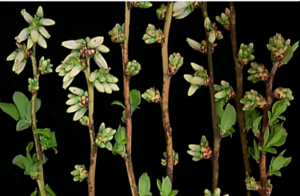
Fire blight: The shoot blight phase of the disease is present in a few areas throughout the state (Figure 1).

Where blight is present, it is an appropriate time to prune out infected shoots. Do not cut out infections during wet weather, as bacteria can spread through water.

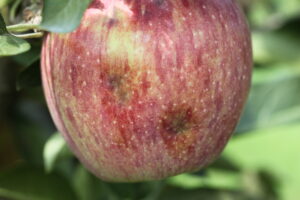
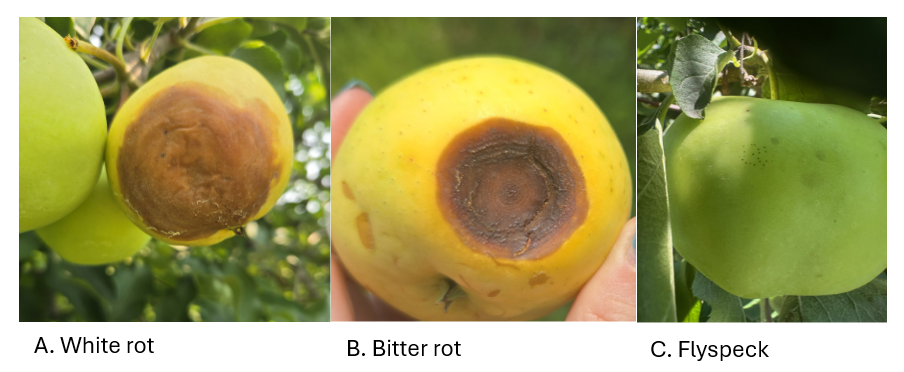
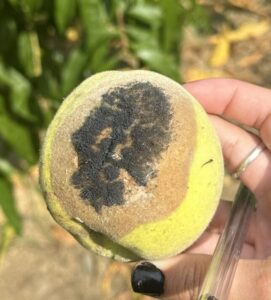
Rots: In orchards with fruit, management moving forward will focus on summer diseases, including fruit rots like bitter rot, sooty blotch, and fly speck. Broad-spectrum fungicides captan and ziram are effective, and adding single-site products such as Merivon, Luna Sensation, Pristine, Omega, and Aprovia may improve controlThe addition of phosphorous acid products such as Prophyt or Rampart to captan sprays can improve control of rots and other summer diseases, such as sooty blotch and flyspeck. It may help suppress scab infections when present.

Fire blight strike in apple. Photo by Karlton Raines-Neidigh.

Figure 1. Fire blight strike in apple. Photo by Karlton Raines-Neidigh.

Frogeye leaf spot on apple.

Figure 2. Frogeye leaf spot on apple.

Marssonina Blotch, Glomerella Leaf Spot, and Frogeye Leaf Spot: We continue to see frogeye leaf spot in apple orchards throughout the state (Figure 2). These diseases should be managed, as they will cause defoliation and provide a source of inoculum for black rot and bitter rot next season.  Maintain coverage of captan, manzate, or ziram before rain events through the growing season according to the cover spray rule of applications every 2” of rain or 14 days, whichever comes first.

Insect Update

Insect management programs should be adjusted this season to account for reduced crop load in many orchards. In blocks with little to no fruit, many insect pests will not require treatment; however, monitoring should continue, and management should be maintained where pests threaten tree health or next year’s crop. 

Codling Moth (CM): Biofix has been set for southern counties as of April 20 and in northern counties as of May 5. The second of two treatments can be applied in northern counties. All timed treatments in other areas of the state should be applied. Growers should rely on a 5-month-per-trap threshold; if counts exceed this level, further treatments are needed. 

  Codling Moth Degree Day Timing 
    Application and Insecticide Type 
County Area  Biofix  Rimon: 

75-100DD + 14-17 days later 


Intrepid 

150 + 450 DD 

Diamides – Altacor, Voliam mixes: (150-200 DD) 

Madex 

250 DD + every 7-9 days during brood hatch (later if first spray is an IGR) 

Standard Insecticides -  Delegate, Avaunt, OP’s, carbamates, pyrethroids 

250 DD + 550 DD 


DD    75  100  150  450  250  250  550 
Southern  April 20  Past  Past  Past  Past  Past  Past  Past 
Northern   May 5  Past  Past  Past  Past  Past  Past  6/9 


Tufted Apple Bud Moth (TABM): A biofix for TABM was set in southern county orchards on 4/28. Trap counts are higher on individual farms this year compared to recent years, either due to a higher population or a reduced insecticide spray program. Consider management when pheromone trap counts are high, if injury was noted last year, or if leaf shelters and fruit feeding are easily found. Many materials used for codling moth will also control TABM, including Lannate, Delegate, diamides, and Intrepid. Timing for management of first generation is best timed for 500-650 DD and 805-850 DD base 45°F. As of 6/8, Gloucester County is at 788 DD base 45°F. 

Woolly Apple Aphid (WAA); Green Apple (Spirea) Aphids (GAA): Populations continue to build in some orchards statewide, but on average remain below treatment levels. A treatment threshold is set at 50% of the terminals infested with live colonies. Predation by lady beetles and other predators has been observed and can help to maintain pest populations below damaging thresholds. As the terminals stop growing and harden, aphid populations should decrease. Movento will control WAA and GAA and can suppress scale when applied in late May or early June when crawlers are active. 

Dogwood borer adult moth on apple.

Figure 3. Dogwood borer adult moth on apple.

Dogwood borer: The number of males captured in traps has decreased from last week, but trap captures remain high, particularly in orchards with a history of the pest (Figure 3). Mating disruption is recommended and effective for this pest. Manage as needed in blocks with a history of infestation. Assail has demonstrated activity when targeting adults to reduce egg laying. See the 2026 Integrated Orchard Management Guide for Commercial Apples in the Southeast.

Traps

Average Trap Captures in Apple – Southern Counties 

  Week  STLM  TABM  CM  OFM  DWB  AMBROSIA BEETLE  BMSB 
5/11/2026  18   11   6  3    25    2 


5/18/2026  16  21  3  10    54  13   
5/25/2026  1.3  23  2  2    71  7   
6/1/2026  378  33  3  2    49  6  0.4 


Average Trap Captures in Apple – Northern Counties 

  Week  STLM  TABM  CM  DWB  AMBROSIA BEETLE  BMSB 
5/11/2026  13.7  1.5  1.8  12.8  1.1   
5/18/2026  8.3  13.25  2.4  18.5  10.8   
5/25/2026  2.2  13.75  1.2  24.5  5.1   
6/1/2026  25.1  24.3  3.4  23.8  9.4  0.3 

Pears
Disease Management

Foliar diseases should be managed with Mancozeb or Ziram, plus a single-site fungicide, to maintain pressure and inoculum at low levels, protecting fruit and maintaining a healthy orchard going into the next season (Figure 4). See the New Jersey Commercial Tree Fruit Production Guide for more information. 

Fabraea leaf spot on foliage in pear. Photo by Katrina DeWitt.

Figure 4. Fabraea leaf spot on foliage in pear. Photo by Katrina DeWitt.

Insect Update

Pear psylla: Psylla adults are still actively laying eggs, and nymphs continue to hatch. Options for control include Actara, Assail, and Belay (IRAC group 4A); Sivanto Prime (IRAC group 4D); Delegate (IRAC Group 5); and products containing abamectin (IRAC group 6). Other options include Movento (IRAC Group 23). The addition of 0.25-1 gal of summer oil may improve control. Be sure to read and follow the label instructions for adding penetrants to these products.

Peaches
Disease Management

Given the widespread crop loss in many orchards, disease management programs should be adjusted accordingly. With little to no fruit present in most blocks, emphasis should shift away from fruit protection and toward maintaining tree health and reducing inoculum for next season. 

Bacterial spot: Growers should continue to manage symptoms with oxytetracycline and lower copper rates, particularly during rainy periods and severe weather. Fruit will become less susceptible to infection at pit hardening. Avoid combining copper with captan, especially following extended cloudy or slow-drying conditions. 

Rusty spot: Rusty spot infections are appearing on fruit across the state and are ongoing until pit hardening. Maintain coverage with effective materials such as Rally, Rhyme, or potassium bicarbonate products. Other choices include Flint Extra, Inspire Super, and Luna Sensation.  

Peach scab: Maintain good coverage with captan or other effective fungicides until July in orchards where scab was previously an issue.

Insect Update

Insect management programs for peaches and nectarines should be adjusted this season due to reduced crop load. In blocks with little to no fruit, many fruit-feeding pests will not require treatment; however, monitoring should continue, and management should focus on pests that impact tree health or future production. 

Oriental Fruit Moth (OFM): A biofix point for OFM was set on 4/7 for southern counties and 4/15 in northern counties. Treatment timings targeting the second generation are shown in the table below. 

OFM 2nd Generation Timing   
    Insecticide Type   
County/Region  Degree Days by 6/8 base 45  Conventional 

1150-1200 

1450-1500 

Intrepid/Rimon 

1050-1150 

1300-1400 

Diamides/Virus 

1075-1150 

1375-1450 

Gloucester – Southern  1026  1st –6/12-6/14 

2nd – too far off 

1st –6/9-6/12 

2nd – too far off 

1st –6/10-6/12 

2nd – too far off 

Middlesex – Northern  922  1st – 6/15-6/17 

2nd – too far off 

1st – 6/12-6/15 

2nd – too far off 

1st – 6/12-6/15 

2nd – too far off 


Scale: White peach scale and San Jose scale crawlers began emergence around May 27 and will continue for the next 6 weeks. Control options during crawler emergence include Neonicotinoids (suppression only), Sivanto, Esteem, and Centaur.  

Green Peach Aphid: We continue to observe reduced aphid populations across farm sites. If more than 1 colony of aphids per tree is found in nectarines, or 2-3 colonies are found in peaches, an insecticide for aphids is needed. Management options include Assail, Actara, Admire Pro, or Sivanto. 

Thrips: Thrips continue to be present in peach blocks. In dry conditions, flower thrips may become an issue in ripening fruit, especially in poorly managed ground covers that contain clover or other flowering weeds. Thrips damage appears as “silvering” and usually appears on fruit close to harvest. Delegate or Entrust at the highest labeled rate are the usual recommended materials for thrips in stone fruit. Lannate also has activity on thrips. These materials all have short PHI’s and may be applied close to harvest when damage typically appears.  

Plum Curculio: We continue to report on recent injuries to developing peaches and apples across the state. If recent injury is observed, management options include Avaunt and neonicotinoids (Actara, Belay). 

Tarnished plant bugs and other catfacing insects: Activity is increasing with dry weather and summer temperatures. Very little recent fruit feeding has been observed. In most blocks with little to no fruit, treatment is not necessary. 

Traps

Average Trap Captures in Peach – Southern Counties 

  Week  OFM  TABM  LPTB  PTB  BMSB 
5/11/2026  5  10       
5/18/2026  4  20       
5/25/2026  2  20  31  1   
6/1/2026  4  46  28  3  0 


Average Trap Captures in Peach – Northern Counties 

  Week  OFM  LPTB  PTB 
5/11/2026  4.4  24  0 
5/18/2026  2.4  16.5  0.2 
5/25/2026  0.7  8.75  0.1 
6/1/2026  1.8  11  0.5 


Blueberries
Insect Update

Scouting was conducted last week across 198 commercial and organic blueberry fields in Burlington and Atlantic Counties. Field evaluations focused primarily on fruit inspections for pest injury and on aphid infestations on new terminal growth. 

Monitoring of developing fruit indicated a decrease in feeding and/or oviposition activity by leafrollers and plum curculio, most likely due to recent insecticide applications (Table 1).  

 Table 1. Fruit Monitoring Data 

Date  % Leafroller Berry Infestation  % Plum Curculio Berry Infestation 
  Avg  High  Avg  High 
5/9  0.125  1  0.235  2.6 
5/16  0.22  1.5  0.67  6.5 
5/23  0.04  0.9  0.125  5.8 
5/29  0.03  0.8  0.01  0.6 
6/6  0.006  0.2  0.003  0.3 


Aphids: Aphid populations declined slightly compared to the previous week, with average colony sizes remaining low at approximately 1–5 aphids per shoot (Table 2). In fields where aphid infestations exceed the treatment threshold of 10%, management options include Assail, Sivanto, or Movento. 

 Table 2: Aphid Infestation on New Terminals 

Date  Aphids % Terminal Infestation 
  Avg  High 
5/23  1.5 A  14 
5/29  2.83 A  38 
6/6  2.189 A  30 
Aphid Colony Size: A: 1-5, B: 6-10, C: 11-15, D: >16 


Spotted-wing drosophila (SWD) & blueberry maggot: This week, the first blueberry maggot (Figure 5) and spotted-wing drosophila adults were detected in monitoring traps (Table 3). As the season progresses, insecticide selection should focus on managing these two key pests, which pose the greatest risk to fruit quality and marketability.

Blueberry maggot adult. Photo by Tina Maguire.

Figure 5. Blueberry maggot adult. Photo by Tina Maguire.

 Table 3. Spotted-wing drosophila and blueberry maggot traps 

  Spotted-Wing Drosophila  Blueberry Maggot 
Date  Atlantic County  Burlington County  Atlantic County  Burlington County 
  Avg  High  Avg  High  Avg  High  Avg  High 
6/6  8.99  35  2.86  7  0.03  1  0  0 


Sharp-nosed leafhopper and oriental beetle: Low numbers of oriental beetle adults and sharp-nosed leafhopper activity have been captured in traps (Table 4). 

 Table 4. Sharp-nosed leafhopper and oriental beetle traps 

  Sharp-nosed Leafhopper  Oriental Beetle 
Date  Atlantic County  Burlington County  Atlantic County  Burlington County 
  Avg  High  Avg  High  Avg  High  Avg  High 
6/6  1.42  16  1.25  7  5.78  35  2.57  14 


Cranberry fruitworm and cherry fruitworm: Trap captures indicate that the activity of both pests remains higher in Atlantic County than in Burlington County (Table 5). 

Table 5. Cranberry/Cherry Fruitworm Trap Data 

  Cranberry  Fruitworm (AC)  Cherry Fruitworm (AC)   Cranberry Fruitworm (BC)  Cherry Fruitworm (BC) 
Date  Avg  High  Avg  High  Avg  High  Avg  High 
5/1  0  0  2.5  5  0  0  3.5  7 
5/9  0  0  4.4  6  0  0  6.25  10 
5/16  0  0  7.7  11  0  0  9  15 
5/23  0.14  1  5.14  15  0.25  1  16  29 
5/29  0.14  1  1  3  0  0  1.5  6 
6/6  3.57  20  1.43  5  0  0  0.75  2 
AC: Atlantic County, BC: Burlington County 


Scale: Crawler activity on both the terrapin scale and the Putnam scale continues to increase (Table 6). Growers who observed scale infestations on fruit last season should begin considering management options now. See the previous post or Blueberry Bulletin for recommendations. 

Table 6. Scale Traps 

  Putnam  Terrapin 
Date  Avg  High  Avg  High 
5/23  36.85  230  1.8  8 
5/29  65.17  352  21.2  41 
6/6  136.25  402  75.25  84 


As harvest approaches, SWD remains the primary target for insect management. When selecting insecticides, special consideration should be given to products with shorter pre-harvest intervals (PHIs) that provide effective control of these pests while also helping suppress scale crawler populations and other pest populations above threshold levels. See the Blueberry Bulletin or Commercial Blueberry Pest Control Recommendations for New Jersey for recommendations.

Grapes
Grape Phenology

Grape development across New Jersey has progressed, with most vineyards in southern counties in bloom, depending on variety and site conditions. 

Diseases

Bloom is the critical time to protect against cluster infections from Downy and Powdery Mildew, Black rot, Botrytis, and ripe rot. More information on fungicide options at bloom can be found in this blog post by Dr. Mizuho Nita at Virginia Tech. Recommended materials can be found in the New Jersey Commercial Grape Production Guide. 

Insect Update

Grape berry moth (GBM): Adult GBM captures in pheromone traps remain low. Insecticide timings will target control of later generations of grape berry moth in vineyards infesting developing fruit bunches. Concords were at trace bloom on 5/19; a Grape Berry Moth biofix was set at 5/19 for southern counties. The NEWA Grape Berry Moth model works best when growers record their own bloom dates. Applications for GBM using Intrepid or Diamides should be made at 810 DD base 47°F. Other effective materials can be applied a few days later. As of 6/8, Gloucester County is at 430 DD base 47°F. 

Since bloom has been highly variable this season, you can also use January 1st as a biofix. If using January 1st insecticide timing to target second generation will be 1200-1400 DD base 47°F. Refer to the Commercial Grape Pest Control recommendations for New Jersey. 

Vineyard Pest and Disease Management Considerations Following Freeze Injury

Vineyard Management Following Freeze Injury and Reduced Crop Potential
Reminders

Management programs this season should focus on preserving healthy foliage, minimizing inoculum buildup, and protecting any remaining harvestable crop. In New Jersey vineyards recovering from freeze injury, timing sprays appropriately and maintaining good canopy coverage will be especially important. 

Recommendations should always be adjusted based on vineyard history, cultivar susceptibility, weather conditions, and local scouting observations. 

Disease Management Following Freeze Injury 

Although immediate concerns following freeze events often focus on crop loss, freeze injury can substantially alter disease risk throughout the growing season. Even when crop potential is limited, disease management remains important. 

Phomopsis Cane and Leaf Spot
Phomopsis infections are favored by cool, wet conditions early in the growing season and can become established on shoots, rachises, and leaves shortly after budbreak. The disease becomes particularly important once flower clusters become visible, and grapevine tissues remain susceptible through berry set. In New Jersey vineyards, it is important to maintain fungicide protection during these periods. Maintaining good canopy airflow can also help reduce prolonged leaf wetness and disease development.  Mancozeb products can be used during the early season, provided the 66-day pre-harvest interval (PHI) is observed. After bloom, growers can transition to Ziram products with a 21-day PHI. Captan products may also serve as an alternative option for disease management.

Black Rot
Black rot management remains important with the remaining crop potential. Despite the freeze, this overwintering inoculum remains active and ready to infect new growth. The most critical control period for black rot is around bloom. This is important because berries naturally become resistant to black rot 4 to 5 weeks after bloom, meaning your spray timing window is narrow and critical. The first and second post-bloom sprays are the most important applications for black rot control. These sprays cannot be skipped if you want to protect any crops. Mancozeb applied before bloom provides good protectant activity. FRAC 3 fungicides, such as Rally and Mettle, combined with Ziram, are effective options for post-bloom black rot control. FRAC 11 fungicides like Abound are also effective but require careful management.  

Powdery Mildew
Powdery mildew is the most important fungal disease of grapevines. In freeze-damaged vineyards with reduced crop load, the focus of disease management shifts from fruit protection to maintaining leaf health. Severe defoliation from uncontrolled powdery mildew compromises vine recovery, making disease control important but requiring a different strategy. Rather than intensive fruit protection, growers should focus on reducing infections and limiting the overwintering inoculum for next season.  This provides flexibility to reduce the spray program from its usual calendar-based schedule. However, lateral shoots from secondary buds can cause dense growth, creating a perfect microclimate for powdery mildew. 

Sulfur is an excellent option for powdery mildew control, providing both preventative and curative activity. FRAC 3 (Demethylation Inhibitors) such as Rally 40WSP, Mettle 125ME, Inspire Super, and Quadris Top can be a good option for application in mid- to late-season to reduce the inoculum for next year. Other fungicides such as FRAC 11 (Quinone outside Inhibitors: Abound, Flint) can also be used. Newer chemistry options such as Quintec (FRAC 13), Torino (FRAC U6), and Gatten (FRAC U13) are also viable alternatives. However, you can stick with affordable options this year to keep costs down. The key is to maintain leaf health throughout the season. 

Growers should use caution with sulfur applications during periods of high temperatures or on sulfur-sensitive cultivars. 

Downy Mildew
Management of downy mildew in New Jersey vineyards requires regular scouting, especially after rain events and during periods of high humidity. Once the bloom is established, management becomes critical. If lesions appear, applying Captan can eradicate the disease and stop its spread. Scout again after two to three weeks to monitor effectiveness. Improving airflow through shoot thinning and canopy management is equally important, as it directly reduces the humidity that favors downy mildew development. Continue monitoring even in low-crop vineyards to preserve canopy function and vine health. 

Multi-site fungicides such as Captan and Ziram are effective in managing this pathogen. Phosphorous acid products offer curative activity for early-stage infections but have limited residual protection. If using Phosphorous acid products, Ziram can be added for longer protection. Copper products are effective where varietal sensitivity allows. For systemic control, Revus and Zampro are available options. Always tank mix or rotate these materials with unrelated fungicide groups to maintain effectiveness. 

Botrytis Bunch Rot
Botrytis presents a special challenge in freeze-damaged vineyards. Freeze-damaged tissues may increase susceptibility to infection. The risk increases during wet conditions between bunch closure and harvest. Botrytis primarily affects tight-clustered Vitis vinifera and hybrid cultivars, dense canopies due to lateral shoots, and delayed-ripening fruits on freeze-damaged vines, which can elevate risk.  Consider using Botrytis fungicide from FRAC groups (9, 12, and 17) during the bloom period. Importantly, tank mix any Botrytis material with either Captan or fixed copper to maintain resistance management and provide broader disease protection. Veraison, when berries begin to soften and ripen, is critical for timing protection. Some important management considerations include improving airflow and reducing cluster-zone humidity, carefully monitoring late-season weather conditions, and prioritizing protection in tight-clustered vinifera cultivars.  

Re-timing Your Spray Schedule
A standard “calendar-based” fungicide program, or a program based on fixed phenological stages, does not work in freeze-damaged vineyards. The reason is simple: uneven vine recovery leads to staggered growth. New growth remains vulnerable longer than expected in traditional vineyards. Not all vines reach the same growth stage at the same time. The standard spray timing developed for uniform vineyards misses the peak-risk periods in freeze-damaged blocks. 

The solution is to shift to phenology-based programs. Scout your vineyard regularly, at least weekly, from May to June. Identify where new secondary and tertiary shoots are emerging. Time your fungicide applications are based on the growth stage of most of your new growth, not calendar weeks. This approach ensures you are protecting the most susceptible tissue at the right time. 


REMINDERS 

Fungicide  Key Precautions 
Sulfur  Do not apply during hot weather (>85°F-90°F) due to phytotoxicity risk. Avoid use of sulfur-sensitive cultivars. Do not apply within 14 days of oil sprays—maintain at least a 14-day separation. May cause leaf burn on stressed or freeze-damaged vines. 
Copper  Can cause phytotoxicity, especially on sensitive cultivars. Increased injury risk under slow drying conditions or with repeated applications. Avoid mixing copper with phosphorous acid products. Excessive copper use may accumulate in soil over time. 
Mancozeb  Observe seasonal maximum application limits and monitor total lb. a.i./acre/year applied. Restricted by a 66-day PHI if the crop will be harvested. If it is a no-crop season, this restriction does not apply. Primarily a protectant fungicide; good coverage is essential for effectiveness. 
Captan  Avoid application during very hot weather or in slow-drying conditions. Do not mix with oils or apply near oil sprays. Can cause phytotoxicity on stressed vines, so use extra caution in freeze-damaged vineyards. 
Phosphorous Acid  Do not tank-mix with copper products due to the risk of phytotoxicity. Limited residual activity; may require shorter intervals or tank-mixing with protectant fungicides to maintain adequate protection. 


Young Vineyards May Require Additional Attention
Young or recently established vineyards may be particularly vulnerable following freeze injury because they have not yet developed extensive carbohydrate reserves within trunks and cordons. These vines are often located closer to the ground, where temperatures may be colder during frost events and may require additional monitoring throughout the recovery period. Severely injured young vines may recover slowly or, in extreme cases, require replacement. 

Weed Management Following Freeze Injury 

The goal during a low- or no-crop year is not to maintain a completely weed-free vineyard floor, but to reduce perennial weed populations, prevent annual weed seed production, manage excessive vine vigor, and prepare for the following season. 

Low crop years provide a unique opportunity to address persistent weed problems that are often difficult to manage during seasons with normal fruit production. With reduced concerns about immediate crop losses, vineyard managers can shift their focus from protecting current yield to improving long-term vineyard floor management and reducing future weed pressure. 

Prioritizing Perennial Weed Management
Perennial weeds should be the primary target during low-production years. Effective suppression of species such as mugwort (Artemisia vulgaris), field bindweed (Convolvulus arvensis), poison ivy (Toxicodendron radicans), multiflora rose (Rosa multiflora), Canada thistle (Cirsium arvense), or goldenrod (Solidago spp.) typically requires a multi-year management approach. A season with little or no crop presents an ideal opportunity to target these species when they are actively growing and most susceptible to control measures. Directed applications of systemic herbicides or repeated mowing may help reduce underground reserves and limit re-establishment in subsequent years. 

Rethinking Annual Weed Management
Unlike perennial weeds, annual weeds may not require complete season-long suppression during a low crop year. Moderate levels of annual weed growth within the row can provide some competition for water and nutrients, potentially helping to moderate excessive vine vigor that frequently develops when crop load is substantially reduced or absent. Excessive vegetative growth can increase canopy management requirements, reduce spray penetration, and create favorable conditions for disease development. For this reason, vineyard managers may be able to tolerate greater annual weed presence than would normally be acceptable in a full-crop season, provided weeds are prevented from producing seed. Mowing and mechanical suppression may therefore become more important management tools than repeated postemergence herbicide applications, particularly where annual weed populations are not interfering with vineyard operations. 

Preparing for the Following Season
Although some annual weed competition may be acceptable during the growing season, vineyard floors should be as free of weeds as possible by late summer and early fall. Clean vineyard rows improve the effectiveness of fall weed management programs and allow timely application of residual herbicides where appropriate. Reducing existing vegetation before fall applications can improve soil coverage and help establish a cleaner vineyard floor entering the 2027 growing season. 

Scouting and Mapping Problem Areas
Low crop years also provide an excellent opportunity to scout vineyards and document the location of troublesome perennial weed infestations. Mapping species composition and problem areas can improve future management decisions, facilitate site-specific applications, and help prioritize areas requiring more intensive intervention in subsequent seasons. Investments made in weed management during a low-production year can provide benefits that extend well beyond a single season.

Insect Management Considerations Following Freeze Injury

Insect management decisions should be based on remaining crop potential, vineyard history, and scouting observations. 

Where harvestable fruit remains, cluster-feeding pests such as grape berry moth should still be prioritized to preserve fruit quality and reduce population buildup for future seasons. Grape berry moth remains one of the most important cluster-feeding pests in New Jersey vineyards and may become concentrated on fewer remaining clusters in reduced-crop situations. 

Growers should continue monitoring for: 

  • Grape berry moth 
  • Japanese beetle 
  • Spotted lanternfly 
  • Mites 
  • Grape root borer where historically problematic 
  • Leafhoppers, mealybugs, and scale insects where historically problematic 


Regular scouting remains critical for identifying developing pest populations and determining whether treatment thresholds are exceeded. Recommendations emphasize the importance of local scouting information when making insecticide and fungicide decisions. 


Grape Berry Moth
Grape berry moth (GBM) pressure may vary considerably across New Jersey vineyards depending on surrounding wooded habitat, vineyard history, cultivar susceptibility, and remaining crop levels following freeze injury. Vineyards bordering wooded areas often experience greater pressure, particularly where wild grape hosts are present. In vineyards with reduced crop loads following freeze injury, clusters that remain may warrant protection to preserve fruit quality. 

Management considerations for New Jersey vineyards: 

  • Continue scouting vineyards and using pheromone traps to determine relative pest pressure and adult flight timings. Vineyards adjacent to wooded habitats are often at greater risk. 
  • Monitor clusters for webbing, frass, and larval feeding injury, particularly after peak moth flight periods. 
  • Time insecticide applications around egg hatch and early larval activity using regional degree-day models, scouting observations, and vineyard history. 
  • Using January 1 as a biofix, target the second generation at 1200–1400 degree days and third generation at 2100–2300 degree days (base temperature 47°F) when larval activity in bunches exceeds thresholds. 
  • Insecticides labeled in New Jersey grapes include products containing chlorantraniliprole (Altacor and generics), methoxyfenozide (Intrepid), indoxacarb (Avaunt), spinetoram/spinosad (Delegate, Entrust), Bacillus thuringiensis products, and pyrethroids such as bifenthrin and zeta-cypermethrin. Rotate modes of action to reduce resistance risk and always consult product labels for rates, timing, PHIs, and restrictions. 


Japanese Beetle
Japanese beetles can skeletonize grape leaves and may be especially problematic in young, newly planted, or freeze-stressed New Jersey vineyards during mid- to late summer. While established vines can tolerate some feeding, excessive defoliation may reduce vine vigor and limit canopy development needed for vine recovery and carbohydrate storage. 

Management considerations: 

  • Monitor vineyards from June through late summer, particularly along vineyard edges and in historically infested areas. 
  • Focus protection efforts on young vineyards, replants, and highly stressed vines, which are more vulnerable to excessive defoliation. 
  • Preserve canopy leaf area needed for vine recovery, particularly in vineyards affected by winter injury or freeze stress. 
  • Avoid placing Japanese beetle traps near vineyards, as traps may attract additional beetles and increase localized feeding pressure. 
  • Insecticide applications may be warranted when populations are high and defoliation threatens vine health. Products labeled in New Jersey grapes include materials containing acetamiprid (Assail), bifenthrin, zeta-cypermethrin (Mustang Maxx), carbaryl (Sevin), chlorantraniliprole (Altacor and generics), and imidacloprid. Always consult the product label for rates, timing, PHIs, and restrictions. 


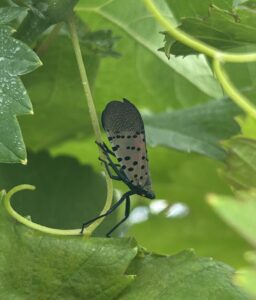
Spotted Lanternfly
Spotted lanternfly (SLF) continues to be an important concern in many New Jersey vineyards. Heavy feeding by SLF can stress vines, reduce winter hardiness, and contribute to reduced vine vigor. Following the 2025–2026 freeze events, vines experiencing crop loss or environmental stress may be more vulnerable to additional injury from high SLF populations. While SLF can be found throughout vineyards, populations often begin along vineyard borders adjacent to wooded edges or preferred host plants. 

Management considerations for New Jersey vineyards: 

  • Continue monitoring vineyard borders and interior rows throughout the growing season, particularly near wooded edges and areas with known infestations. 
  • Scout regularly for nymphs and adults on trunks, cordons, and shoots, as well as honeydew accumulation and sooty mold. 
  • Remove or manage nearby tree-of-heaven (Ailanthus altissima) where practical, as it is a preferred host that can support local populations. 
  • Well-timed insecticide applications targeting other vineyard pests may also help suppress SLF populations. Products labeled in New Jersey grapes include materials containing bifenthrin, dinotefuran (Venom), thiamethoxam (Actara), carbaryl (Sevin XLR Plus), zeta-cypermethrin (Mustang Maxx), and phosmet (Imidan). Always consult the product label for rates, timing, PHIs, and restrictions. 
  • In vineyards with a history of high pressure, prioritize management when large numbers of SLF are present on vines to reduce additional vine stress. 


Spider Mites
Mite outbreaks are often associated with hot, dry conditions and may worsen in stressed New Jersey vineyards later in the season. 

Management considerations for New Jersey vineyards: 

  • Monitor leaves for bronzing and stippling 
  • Preserve predatory mites whenever possible and limit use of pyrethroids 
  • Avoid unnecessary insecticide applications that disrupt biological control 
  • Pay particular attention during hot, dry periods later in the season 

Regular scouting and preservation of beneficial arthropods remain key components of mite management in New Jersey vineyards. 


Grape Root Borer
Grape root borer is a variable pest across New Jersey vineyards, with some vineyards requiring yearly management while others experience little pressure. Vineyards with a history of grape root borer infestations may be at greater risk for winter injury and vine decline, as larval feeding on roots weakens vines and can increase susceptibility to environmental stress, including freeze damage. Larvae feed on grapevine roots, reducing vine vigor and, in severe infestations, may contribute to vine decline or death. 

Management considerations: 

  • Monitor vines for symptoms including reduced vigor, shortened shoot growth, small leaves, yellowing or wilting foliage, and reduced fruit production. 
  • Scout for empty pupal cases protruding from the soil around the base of vines from July through September, which indicate adult emergence. 
  • Eliminate weeds and excessive vegetation around the vine base to reduce favorable egg-laying sites and improve monitoring. 
  • Use mating disruption in vineyards with a history of infestations. Isomate GRB can help disrupt adult mating and reduce populations. 
  • In vineyards under chronic pressure, insecticides used on New Jersey grapes include products containing bifenthrin and chlorpyrifos. Applications should be timed to target adults and newly hatched larvae according to label directions and local emergence timing. Always consult the product label for rates, timing, PHIs, and restrictions. 


Mealybugs
Three mealybug species may be found in New Jersey vineyards: grape mealybug (Pseudococcus maritimus), obscure mealybug (Pseudococcus viburni), and Gill’s mealybug (Ferrisia gilli). Mealybugs feed on grapevines and excrete honeydew, which can lead to the development of sooty mold on leaves and clusters. More importantly, mealybugs are an important vector of Grapevine Leafroll–Associated Viruses (GLRaVs), which can reduce vine vigor, delay fruit ripening, and decrease fruit quality and yield. 

Management considerations for New Jersey vineyards: 

  • Monitor vines for white cottony masses under bark, at nodes, and around clusters, as well as honeydew and associated sooty mold. 
  • Scout for crawler activity, as crawlers are the most susceptible life stage for management. 
  • Remove and destroy heavily infested vines when practical to reduce virus spread. 
  • Manage ants when present, as they protect mealybugs from natural enemies. 
  • Avoid unnecessary broad-spectrum insecticide applications that disrupt biological control by predators and parasitoids. 
  • Preserve natural enemies, including lady beetles, lacewings, and parasitoid wasps, which can help suppress populations. 
  • When treatment is warranted, target the crawler stage for best efficacy. Products labeled for mealybug management in New Jersey include Movento, Applaud (buprofezin), Assail and generics (acetamiprid), Scorpion/Certador (dinotefuran), and azadirachtin products. Always consult the product label for rates, timing, PHIs, and restrictions. 


Continue Scouting and Targeting Inputs Carefully
Regular scouting remains especially important this season, as pest pressure and vine recovery may vary significantly between vineyards and even between blocks within the same operation. 

Careful monitoring can help growers: 

  • Identify developing disease outbreaks early 
  • Determine whether insect populations exceed treatment thresholds 
  • Prioritize sprays where crop remains 
  • Reduce unnecessary pesticide applications 
  • Improve timing and efficacy of needed treatments 


When sprays are necessary, maximizing coverage and application timing will be especially important to ensure each input provides the greatest benefit possible. 

Fruit IPM Report for Week of 5/25/2026

Following a rainy and cool Memorial Day weekend, temperatures remained mild in the 60s and 70s for the remainder of the week. Temperatures gradually increased to the lower 80s by the weekend.

We are seeing fruitlets beginning to drop, and additional drops are still expected throughout this month. Growers are encouraged to continue evaluating blocks carefully before making management decisions throughout the season.

Despite reduced crop potential, continued monitoring and management remain important, particularly in blocks with surviving fruit or where maintaining tree health and supporting return bloom for the 2027 season are priorities. See the recent post from Rutgers Extension Specialists and Cooperative Extension on Managing orchards with through a season with limited yields.

Apples
Disease Management Considerations

Apple Scab: Primary scab period has ended. Wetting events can support disease spread where primary scab infection occurred, but the upcoming forecast is relatively dry, which should limit additional infection risk at this time. Growers should continue to monitor conditions and maintain coverage with Mancozeb or Captan plus a single-site fungicide, particularly where primary infections may have occurred. Keep in mind that Mancozeb has a 77-day pre-harvest interval (PHI).

Cedar apple rust: We have observed a few instances of cedar apple rust infections spreading into orchards. The period critical to maintaining coverage from infection has ended.

Powdery mildew developing on leaves in apple. Photo by Sophia Solewater.

Figure 1. Powdery mildew developing on leaves in apple. Photo by Sophia Solewater.

Powdery mildew: This week, we have had ideal conditions for powdery mildew infections in orchards, and powdery mildew has been observed on leaves (Figure 1). Mancozeb is not effective. In periods of hot days with high humidity and no rain, sulfur (e.g., Microthiol Disperss at 10 lb./A) can be applied. Powdery mildew needs to be managed through July. Do not tank mix captan and sulfur.

Fire blight: Symptoms began appearing in southern county apple orchards the week of 5/11 and continue to develop throughout the state. It is recommended to cut out infected limbs 6–12 inches below the margin of visible infection. Ideally, infected tissue should be removed from the orchard and burned. However, if pressed for time, prunings can be left in the row middles to dry out and subsequently chopped with a mower. Do not cut out infections during wet weather, as bacteria can spread through water.

Rots: In orchards with fruit, management moving forward will focus on summer diseases, including fruit rots like bitter rot, sooty blotch, and fly speck. Broad-spectrum fungicides captan and ziram are effective, and the addition of single-site products such as Merivon, Luna Sensation, Pristine, Omega, and Aprovia may improve control. The addition of phosphorous acid products such as Prophyt or Rampart to captan sprays can improve control of rots and other summer diseases, such as sooty blotch and flyspeck, and may help suppress scab infections where present.

Marssonina Blotch, Glomerella Leaf Spot, and Frogeye Leaf Spot: These diseases should be managed, as they will cause defoliation and provide a source of inoculum for black rot and bitter rot next season.  Maintain coverage of captan, manzate, or ziram prior to rain events through the growing season according to the cover spray rule of applications every 2” of rain or 14 days, whichever comes first.


Insect Update

Insect management programs should be adjusted this season based on reduced crop load in many orchards. In blocks with little to no fruit, many insect pests will not require treatment; however, monitoring should continue, and management should be maintained where pests threaten tree health or next year’s crop.

Codling Moth (CM): Biofix has been set for southern counties as of April 20 and in northern counties as of May 5. In blocks with little to no crop, CM management programs can often be reduced or delayed; however, monitoring should continue. Where mating disruption has been employed, or there is a reduced insecticide program, supplemental Madex applications can be made at the timings listed below if the threshold exceeds 5 or more moths per trap per week.

Codling Moth Degree Day Timing
Application and Insecticide Type
County Area Biofix Rimon:

75-100DD + 14-17 days later


Intrepid

150 + 450 DD

Diamides – Altacor, Voliam mixes: (150-200 DD)

Madex

250 DD + every 7-9 days during brood hatch (later if first spray is an IGR)

Standard Insecticides –  Delegate, Avaunt, OP’s, carbamates, pyrethroids

250 DD + 550 DD


DD 75 100 150 450 250 250 550
Southern April 20 Past Past Past Past Past Past 6/4
Northern  May 5 Past Past Past 6/4 Past Past 6/8

Tufted Apple Bud Moth (TABM): A biofix for TABM was set in southern county orchards on 4/28. This has been considered a minor pest in recent years; however, we have recorded high trap captures this season. Consider management when pheromone trap counts are high, if injury was noted last year, or if leaf shelters and fruit feeding are easily found. Many materials used for codling moth, including Lannate, Delegate, diamides, and Intrepid, will also control TABM. Timing for management of first generation is best timed for 500-650 DD and 805-850 DD base 45°F.

Woolly Apple Aphid (WAA); Green Apple (Spirea) Aphids (GAA): Aphid colonies are being observed in some apple blocks. WAA and GAA are generally pests that can be tolerated because they cause little direct damage. Treatment thresholds for WAA and GAA are met if 50% of the shoots are infested with no beneficial insects present. Movento will control WAA and GAA and can suppress scale when applied in late May or early June when crawlers are active.

Ambrosia Beetle: Trap captures have decreased, indicating peak flight has ended or is coming to an end. Infested trees should be showing signs of stress or will soon. If trees are showing significant decline, particularly smaller/younger trees in high-density plantings, we recommend removing the trees and inspecting infested trees for signs of other confounding factors that may be causing tree stress (fire blight, Phytophthora).

Leafhoppers: Adult leafhoppers typically begin appearing in apples at this time of year. They appear as small, light-green, soft-bodied insects and are often found on the new leaves at the growing tips. High densities should not be tolerated in non-bearing orchards because they can stunt the growth of new shoots. They should also not be tolerated in orchards where fire blight is present, as they have been shown to spread the disease. Neonicotinoids are generally recommended for control; however, there are other broad-spectrum materials that are effective.

Dogwood borer: Monitoring traps have captured high numbers of male dogwood borer adults, particularly in orchards with a history of the pest. Mating disruption is recommended and effective for this pest. Manage as needed in blocks with a history of infestation. Assail has demonstrated activity when targeting adults to reduce egg laying. See the 2026 Integrated Orchard Management Guide for Commercial Apples in the Southeast.

Traps

Average Trap Captures in Apple – Southern Counties

  Week STLM TABM CM OFM DWB AMBROSIA BEETLE
5/11/2026 18  11  6 3   25   2
5/18/2026 16 21 3 10   54 13
5/25/2026 1.3 23 2 2   71 7

Average Trap Captures in Apple – Northern Counties

  Week STLM TABM CM DWB AMBROSIA BEETLE
5/11/2026 13.7  1.5  1.8   12.8   1.1
5/18/2026 8.3 13.25 2.4 18.5 10.8
5/25/2026 2.2 13.75 1.2 24.5 5.1


Pears
Disease Management

Fabraea Leaf Spot: Spots have been observed on leaves in orchards (Figure 2). Infections can result in significant leaf spotting, defoliation, and unmarketable fruit. Foliar diseases should be managed with Mancozeb or Ziram, plus a single-site fungicide, to maintain pressure and inoculum at low levels, protecting fruit and maintaining a healthy orchard going into the next season. See the New Jersey Commercial Tree Fruit Production Guide for more information.

Fabraea leaf spot on foliage in pear. Photo by Katrina DeWitt.

Figure 2. Fabraea leaf spot on foliage in pear. Photo by Katrina DeWitt.

Insect Update

Pear psylla: Second generation pear psylla adults are actively laying eggs, and nymphs continue to hatch. Options for control include Actara, Assail, and Belay (IRAC group 4A); Sivanto Prime (IRAC group 4D); Delegate (IRAC Group 5); and products containing abamectin (IRAC group 6). Other options include Movento (IRAC Group 23). The addition of 0.25-1 gal of summer oil may improve control. Be sure to read and follow the label instructions for adding penetrants to these products.

Plum curculio; Stink bug; Tarnished plant bug: Activity during scouting has been low. Where high amounts of injury are observed, and you intend to harvest the crop, consider a well-timed application of an IRAC Group 4A (Actara, Assail, and Belay).

Peaches
Disease Management

Given the widespread crop loss in many orchards, disease management programs should be adjusted accordingly. With little to no fruit present in most blocks, emphasis should shift away from fruit protection and toward maintaining tree health and reducing inoculum for next season.

Peach scab: In orchards without a history of high disease pressure, scab is generally not a concern in the absence of fruit. In blocks with a history of scab, lesions can still develop on current-season shoots and serve as inoculum for next year. In these situations, maintain coverage with captan or other effective fungicides until July, timed to precede significant rainfall events.

Bacterial spot: Maintain low-rate copper programs to protect foliage and reduce inoculum for future seasons, particularly important in blocks with a history of bacterial spot or under warm, wet conditions. We recommend starting at 0.5 ozs metallic copper and gradually lowering the rate as the season progresses. The rate applied will depend on the formulation. Avoid combining copper with captan, especially following extended cloudy or slow-drying conditions.

Rusty spot on peach. Photo by Karlton Raines-Neidigh.

Figure 3. Rusty spot on peach. Photo by Karlton Raines-Neidigh.

Rusty spot: Rusty spot infections are appearing on fruit across the state and are ongoing until pit hardening (Figure 3). Maintain coverage with effective materials such as Rally, Rhyme, or potassium bicarbonate products. Other choices include Flint Extra, Inspire Super, and Luna Sensation.

Brown rot: This disease is not a concern in blocks with little to no fruit. Fungicide applications targeting this disease can be eliminated in most orchards this season unless there is a crop to protect. See the New Jersey Commercial Tree Fruit Production Guide for more information.

Insect Update

Insect management programs for peaches and nectarines should be adjusted this season due to reduced crop load. In blocks with little to no fruit, many fruit-feeding pests will not require treatment; however, monitoring should continue, and management should focus on pests that impact tree health or future production.

Oriental Fruit Moth (OFM): A biofix point for OFM was set on 4/7 for southern counties and 4/15 in northern counties. All treatments for the second generation have passed.

OFM 2nd Generation Timing
Insecticide Type
County/Region Degree Days by 6/2 base 45 Conventional

1150-1200

1450-1500

Intrepid/Rimon

1050-1150

1300-1400

Diamides/Virus

1075-1150

1375-1450

Gloucester – Southern 865 1st –June 12-14

2nd – too far off

1st –June 9-12

2nd – too far off

1st –June 10-12

2nd – too far off

Middlesex – Northern 762 1st – too far off

2nd – too far off

1st – too far off

2nd – too far off

1st – too far off

2nd – too far off

Scale: Crawler emergence has been observed and will continue for the next 6 weeks (Figure 4). Control options during crawler emergence include Neonicotinoids

San Jose scale crawlers on peach branch. Photo by Dave Schmitt.

Figure 4. San Jose scale crawlers on peach branch. Photo by Dave Schmitt.

(suppression only), Sivanto, Esteem, and Centaur.

Green Peach Aphid: Activity has been low to start this season, but is increasing with warmer temperatures. Examine trees for the presence of aphids by counting the number of colonies on ten trees and using a treatment threshold of 2 colonies/tree at petal fall for peach, and 1 colony/tree for nectarine. Management options include Assail, Actara, Admire Pro, or Sivanto.

Thrips: In dry conditions flower thrips may become an issue in ripening fruit, especially in poorly managed ground covers that contain clover or other flowering weeds. Thrips damage appears as “silvering” and usually appears on fruit close to harvest. If populations are high damage can be extensive. Presence of thrips may be scouted for using a beating tray to detect the presence of adults and nymphs in the tree or by shaking flowers in weeds and shrubs in the orchard onto a beating tray or a sheet of paper. Delegate or Entrust at the highest labeled rate are the usual recommended materials for thrips in stone fruit. Lannate also has activity on thrips. These materials all have short PHI’s and may be applied close to harvest when damage typically appears. Thrips have been seen in southern counties during scouting this past week.

Plum Curculio: Injury to developing peaches and apples has been observed across the state, with high infestation rates in orchards with a history of high pest pressure (Figure 5).

Plum curculio injury on peach.

Figure 5. Plum curculio injury on peach.

Management for PC is not recommended at this time, as adults are typically not active; however, in certain orchards with historically high pressure, we have seen recent activity. If a recent injury is observed, management options include Avaunt and neonicotinoids (Actara, Belay).

Tarnished plant bugs and other catfacing insects: Activity is increasing with dry weather and summer temperatures. Very little recent fruit feeding has been observed. In most blocks with little to no fruit, treatment is not necessary.

Lesser and Greater Peach Tree Borers: Even in orchards with little fruit, borers will need to be managed to maintain healthy tree stands for the next season. If this has been a historical pest in your orchard, mating disruption is recommended. Continue monitoring and managing as usual in problem blocks with mating disruption or trunk sprays.

Traps

Average Trap Captures in Peach – Southern Counties

  Week OFM TABM LPTB PTB
5/11/2026 5 10
5/18/2026 4 20
5/25/2026 2 20 31 1

Average Trap Captures in Peach – Northern Counties

  Week OFM LPTB PTB
5/11/2026 4.4 24 0
5/18/2026 2.4 16.5 0.2
5/25/2026 0.7 8.75 0.1

Blueberries
Insect Update

Scouting activities were conducted last week across 187 commercial and organic blueberry fields in Burlington and Atlantic Counties. Field evaluations focused primarily on inspecting fruit for pest injury and monitoring aphid infestations.

Monitoring of developing fruit indicated a decrease in feeding and/or oviposition by key pests (Table 1), most likely due to recent insecticide applications. Aphid activity has increased since last week; however, colony sizes remain small, averaging 1–5 aphids per shoot (Table 2). For fields with aphid infestations above threshold, management options include Assail, Sivanto, and Movento. When applied for aphid control, these products also have activity on scale. Assail has a 1-day pre-harvest interval (PHI). Sivanto and Movento have a 7-day PHI.

Table 1. Fruit Monitoring Data

% Leafroller Berry Infestation % Plum Curculio Berry Infestation
Date Avg High Avg High
5/9 0.125 1 0.235 2.6
5/16 0.22 1.5 0.67 6.5
5/23 0.04 0.9 0.125 5.8
5/29 0.03 0.8 0.01 0.6

Table 2: Aphid Infestation on new Terminals

Aphids % Terminal Infestation
Date Avg High
5/23 1.5 A 14
5/29 2.83 A 38
Aphid Colony Size: A: 1-5, B: 6-10, C: 11-15, D: >16

 Trap Monitoring

Cranberry fruitworm and cherry fruitworm traps were checked last week, and activity declined for both species (Table 3).

Table 3. Cranberry Fruitworm/Cherry Fruitworm Trap Data

Cranberry Fruitworm (AC) Cherry Fruitworm (AC) Cranberry Fruitworm (BC) Cherry Fruitworm (BC)
Avg High Avg High Avg High Avg High
5/1 0 0 2.5 5 0 0 3.5 7
5/9 0 0 4.4 6 0 0 6.25 10
5/16 0 0 7.7 11 0 0 9 15
5/23 0.14 1 5.14 15 0.25 1 16 29
5/29 0.14 1 1 3 0 0 1.5 6
AC: Atlantic County, BC: Burlington County

Scales: Scale traps have been checked, and crawler activity is increasing in both Terrapin and Putnam traps (Table 4). If scale was observed on sorting lines last year, this would be an appropriate time to consider management options.

Table 4. Scale Traps

Putnam Terrapin
Avg High Avg High
5/23 36.85 230 1.8 8
5/29 65.17 352 21.2 41

Traps have been placed for spotted-wing drosophila, blueberry maggot, and Oriental beetle. We will provide data in next week’s Blueberry Bulletin.

Grapes
Grape Phenology

Grape development across New Jersey has progressed, with most vineyards in southern counties in bloom, depending on variety and site conditions.

Diseases

Bloom is the critical time to protect against cluster infections from Downy and Powdery Mildew; Black rot; Botrytis; and ripe rot. More information on fungicide options at bloom can be found in this blog post by Dr. Mizuho Nita at Virginia Tech. Recommended materials can be found in the New Jersey Commercial Grape Production Guide.

Insect Update

Grape berry moth (GBM): Adult GBM captures in pheromone traps has been low in southern counties indicating the first generation flight has ended. Insecticide timings will target control of later generations of grape berry moth in vineyards infesting developing fruit bunches. Concords were at trace bloom on 5/19; a Grape Berry Moth biofix was set at 5/19 for southern counties. The NEWA Grape Berry Moth model works best when growers record their own bloom dates. Applications for GBM using Intrepid or Diamides should be made at 810 DD base 47 F, which for southern counties would be the third week in June. Other effective materials can be applied a few days later. Using January 1st as a biofix, insecticide timing to target second generation will be 1200-1400 DD base 47°F. Refer to the Commercial Grape Pest Control recommendations for New Jersey.

Fruit IPM Report for Week of 5/18/2026

Temperatures early in the week were hot, with highs in the low to mid 90s °F, before cooling later in the week and into the weekend, when temperatures hung in the mid to upper 50s °F. Cooler temperatures over the weekend were accompanied by approximately 1-2 inches of rain.

At this stage, surviving fruitlets are becoming easier to identify, although some additional drop is still expected in the next month. Growers are encouraged to continue evaluating blocks carefully before making management decisions throughout the season.

Despite reduced crop potential, continued monitoring and management remain important, particularly in blocks with surviving fruit or where maintaining tree health and supporting return bloom for the 2027 season are priorities. See the recent post from Rutgers Extension Specialists and Cooperative Extension on Managing orchards with through a season with limited yields.

Apples
Disease Management Considerations

Apple Scab: Primary scab season is approaching the end, or has ended. Any established lesions from the primary scab infection period can continue to drive secondary spread if not controlled. Recent wetting events can support disease spread, but the upcoming forecast is relatively dry, which should limit additional infection risk in the short term. Growers should continue to monitor conditions and maintain coverage with Mancozeb or Captan plus a single-site fungicide, particularly where primary infections may have occurred. Keep in mind that Mancozeb has a 77-day pre-harvest interval (PHI).

Cedar apple rust: Rust is active at this time. Even if you have a low to no apple crop, apple rust and scab still need to be managed. Maintain coverage with mancozeb until the end of May.

Powdery mildew: Leaves with powdery mildew were observed this week, and the risk for infection remains active under dry conditions (Figure 1). Mancozeb is not effective. In periods of hot days with high humidity and no rain, sulfur (e.g., Microthiol Dispers at 10 lb/A) can be applied. PM needs to be managed through July. Do not tank mix captan and sulfur.

Powdery mildew developing on leaves in apple. Photo by Sophia Solewater.

Figure 1. Powdery mildew is developing on the leaves of the apple. Photo by Sophia Solewater.

Fire blight: Symptoms began appearing in southern county apple orchards the week of 5/11. Products such as Apogee or Kudos are highly recommended to help slow the spread of infections. Repeated applications may be necessary to help control shoot blight from previous blossom infections or leftover cankers in the trees. It is recommended to cut out infected limbs 6–12 inches below the margin of visible infection. Ideally, infected tissue should be removed from the orchard and burned. However, if pressed for time, prunings can be left in the row middles to dry out and subsequently chopped with a mower. Do not cut out infections during wet weather, as bacteria can spread through water.

Rots: In orchards with fruit, management moving forward will focus on summer diseases, including fruit rots like bitter rot, sooty blotch, and fly speck. Broad-spectrum fungicides captan and ziram are effective, and adding single-site products such as Merivon, Luna Sensation, Pristine, Omega, and Aprovia may improve control. The addition of phosphorous acid products such as Prophyt or Rampart to captan sprays can improve control of rots and other summer diseases such as sooty blotch and flyspeck, and may help suppress scab infections where present.

Marssonina Blotch, Glomerella Leaf Spot, and Frogeye Leaf Spot: These diseases should be managed, as they will cause defoliation and provide a source of inoculum for black rot and bitter rot next season.  Maintain coverage of captan, manzate, or ziram prior to rain events through the growing season according to the cover spray rule of applications every 2” of rain or 14 days, whichever comes first.

Insect Update

Insect management programs should be adjusted this season to account for reduced crop load in many orchards. In blocks with little to no fruit, many early-season insect pests will not require treatment; however, monitoring should continue, and management should be maintained where pests threaten tree health or next year’s crop.

Rosy apple aphid: Activity has been very low to start this season. RAA can feed extensively on foliage and terminals, causing leaf curling and stunting. This can impact next year’s fruit that will be set this season. Without fruit, the trees may tolerate a higher threshold of these pests, but they should still be managed. Monitor for colonies during bloom and use a treatment threshold of 1 colony/tree at petal fall.

Woolly Apple Aphid (WAA); Green Apple (Spirea) Aphids (GAA): Aphid colonies are being observed in some apple blocks (Figure 2). WAA and GAA are generally pests that can be tolerated because they cause little direct damage. Treatment thresholds for WAA and GAA are met if 50% of the shoots are infested with no beneficial insects present. Movento will control WAA and GAA and should control scale when applied in mid-May, and suppress scale when applied in late May or early June.

Figure 2b. Green apple aphid colonies on younger branches.

Figure 2a. Woolly apple aphid colonizing pruned wood.

Ambrosia Beetle: Trap captures have decreased in southern NJ, indicating peak flight has ended or is coming to an end. In northern NJ counties, trap captures have been increasing with last week’s warm temperatures. Infested trees should be showing signs of stress or will soon. If you have had a history of this pest in your orchard, you should begin scouting for damage and flag any trees that have been attacked for continued monitoring.

Codling Moth (CM): Biofix has been set for southern counties as of April 20 and in northern counties as of 5/5. In blocks with little to no crop, CM management programs can often be reduced or delayed; however, monitoring should continue. Where mating disruption has been employed or there is a reduced insecticide program, supplemental Madex applications can be made at the timings listed below if the threshold exceeds 5 moths per trap per week.

Codling Moth Degree Day Timing
Application and Insecticide Type
County Area Biofix Rimon:

75-100DD + 14-17 days later


Intrepid

150 + 450 DD

Diamides – Altacor, Voliam mixes: (150-200 DD)

Madex

250 DD + every 7-9 days during brood hatch (later if first spray is an IGR)

Standard Insecticides –  Delegate, Avaunt, OP’s, carbamates, pyrethroids

250 DD + 550 DD


DD 75 100 150 450 250 250 550
Southern April 20 Past Past Past 5/29 past Past 6/4
Northern  May 5 Past Past Past 6/4 5/21 5/21 Too far off

Leafhoppers: Adult leafhoppers typically begin appearing in apples this time of year. They appear as small, light-green, soft-bodied insects and are often found on the new leaves at the growing tips. High densities should not be tolerated in non-bearing orchards because they can stunt the growth of new shoots. They should also not be tolerated in orchards where fire blight is present, as they have been shown to spread the disease. Neonicotinoids are generally recommended for control; however, other broad-spectrum materials are also effective. 

Dogwood borer: Monitoring traps have captured high numbers of male dogwood borer adults, particularly in orchards with a history of the pest. Mating disruption is recommended and effective for this pest. Manage as needed in blocks with a history of infestation. Assail has demonstrated activity when targeting adults to reduce egg laying. See the 2026 Integrated Orchard Management Guide for Commercial Apples in the Southeast.

Traps

Average Trap Captures in Apple – Southern Counties

  Week STLM TABM CM OFM DWB AMBROSIA BEETLE
5/11/2026 18  11  6 3   25   2
5/18/2026 16 22 3 10   54 13


Average Trap Captures in Apple – Northern Counties

  Week STLM TABM CM DWB AMBROSIA BEETLE
5/11/2026 13.7  1.5  1.8   12.8   1.1
5/18/2026 8.3 13.25  2.4   18.5 10.8

Pears
Disease Management

Fabraea Leaf Spot: Spots have been observed on leaves in orchards (Figure 3). Infections can result in significant leaf spotting, defoliation, and unmarketable fruit. Foliar diseases should be managed with Mancozeb or Ziram, plus a single-site fungicide, to maintain pressure and inoculum at low levels, protecting fruit and maintaining a healthy orchard going into the next season. See the New Jersey Commercial Tree Fruit Production Guide for more information.

Fabraea leaf spot on foliage in pear. Photo by Katrina DeWitt.

Figure 3. Fabraea leaf spot on foliage in pear. Photo by Katrina DeWitt.

Insect Update

Pear psylla: Second generation pear psylla adults and eggs have been observed in southern counties. Pear Psylla are still actively laying eggs, and nymphs continue to hatch. Options for control include Actara, Assail, and Belay (IRAC group 4A); Sivanto Prime (IRAC group 4D); Delegate (IRAC Group 5); and products containing abamectin (IRAC group 6). Other options include Movento (IRAC Group 23). The addition of 0.25-1 gal of summer oil may improve control. Be sure to read and follow the label instructions for adding penetrants to these products.

Plum curculio; Stink bug; Tarnished plant bug: While activity during scouting may appear low, injury is being observed and may be more pronounced in orchards where reduced crop load is present. If high amounts of injury are observed and you intend to harvest the crop, consider a well-timed application of an IRAC Group 4A (Actara, Assail, and Belay).

Peaches
Disease Management

Given the widespread crop loss in many orchards, disease management programs should be adjusted accordingly. With little to no fruit present in most blocks, emphasis should shift away from fruit protection and toward maintaining tree health and reducing inoculum for next season.

Peach scab: In orchards without a history of high disease pressure, scab is generally not a concern in the absence of fruit. In blocks with a history of scab, lesions can still develop on current-season shoots and serve as inoculum for next year. In these situations, a reduced program may be warranted, with Captan applications timed ahead of significant rainfall events.

Bacterial spot: Leaf symptoms began appearing in orchards earlier in May. Leaf infections appear water-soaked, stay within the leaf veins, and gradually darken. Eventually, the chlorotic tissue abscises from the leaf, leaving a “shot-hole”. Copper injury appears similar. The main differences are that copper injury often appears at the leaf base, where the spray collects as it runs off, and the shot-hole will cross leaf veins. Copper injury often appears red at the margins of the shot hole. Fruit injury from bacterial spot results in dark lesions that are often accompanied by gummosis. Maintain low-rate copper programs to protect foliage and reduce inoculum for future seasons. Particularly important in blocks with a history of bacterial spot or under warm, wet conditions. Avoid combining copper with captan, especially following extended cloudy or slow-drying conditions.

Rusty spot and brown rot: Not a concern in blocks with little to no fruit. Fungicide applications targeting these diseases can be eliminated in most orchards this season unless there is a crop to protect. See the New Jersey Commercial Tree Fruit Production Guide for more information.

Insect Update

Insect management programs for peaches and nectarines should be adjusted this season due to reduced crop load. In blocks with little to no fruit, many fruit-feeding pests will not require treatment; however, monitoring should continue, and management should focus on pests that impact tree health or future production.

Oriental Fruit Moth (OFM): A biofix point for OFM was set on 4/7 for southern counties and 4/15 in northern counties. All treatments for the second generation have passed. We have seen very little flagging in new leaf tissue where OFM larvae have bored into.

Scale: White peach scale and San Jose scale crawlers begin to emerge at this time and will continue to emerge for up to 6 weeks. Control options during crawler emergence include Neonicotinoids (suppression only), Sivanto, Esteem, and Centaur.

Green Peach Aphid: Activity has been low to start this season, but is increasing with warmer temperatures. Examine trees for the presence of aphids by counting the number of colonies on ten trees and use a treatment threshold of 2 colonies/tree at petal fall for peach, and 1 colony/tree for nectarine. Management options include Assail, Actara, Admire Pro, or Sivanto.

Plum Curculio: Injury to developing peaches and apples has been observed in southern counties, with high infestation rates in orchards with a history of high pest pressure. Management for PC is not recommended at this time since adults are not currently active.

Tarnished plant bugs and other catfacing insects: Activity is increasing with dry weather and summer temperatures. Very little recent fruit feeding has been observed. In most blocks with little to no fruit, treatment is not necessary.

Lesser and Greater Peach Tree Borers: Growers using mating disruption for borer control should have them in place by mid-May. Even in orchards with little fruit, borers will need to be managed to maintain healthy tree stands for the next season. If this has been a historical pest in your orchard, mating disruption is recommended. Continue monitoring and managing as usual in problem blocks with mating disruption or trunk sprays.

Traps

Average Trap Captures in Peach – Southern Counties

  Week OFM TABM LPTB PTB
5/11/2026 5 10
5/18/2026 4 20


Average Trap Captures in Peach – Northern Counties

  Week OFM LPTB PTB
5/11/2026 4.4 24 0
5/18/2026 2.4 16.5 0.2


Blueberries
Diseases
Infected corolla tissue attached to developing fruit. Photo by Karlton Neidigh.

Figure 4. Infected corolla tissue is attached to the developing fruit. Photo by Karlton Neidigh.

During scouting activities this past week, low levels of Alternaria and Botrytis were observed on corolla tissue (Figure 4). Although disease incidence remained low, both pathogens were present in the field. Moving forward, fungicide programs should include products with activity against Anthracnose, Alternaria, and Botrytis. Anthracnose remains the primary disease concern at this time; however, given the recent weather conditions, an increase in disease development on corolla tissue still attached to the fruit would not be unexpected.

For management recommendations, refer to the Rutgers Commercial Blueberry Guide: https://njaes.rutgers.edu/pubs/publication.php?pid=e265

Insect Update

Scouting activities were conducted last week across 165 commercial and organic blueberry fields in Burlington and Atlantic Counties. Monitoring of leafrollers, spongy moth, plum curculio, and thrips shows an overall decrease in insect activity (Table 1) and corresponding injury to developing fruit (Table 2), most likely due to recent insecticide applications after petal fall.


Table 1. Beating Tray Sampling Data

Leafrollers Spongy Moth Plum Curculio Thrips
Avg High Avg High Avg High Avg High
4/17 0.0649 2 0.0001 0.1 0.0686 2.5 0.5547 9
4/25 0.0801 0.8 0.0001 0.1 0.1156 3 1.0383 26
5/1 0.1 0.8 0.0007 0.1 0.15 3 2.38 39
5/9 0.08 0.7 0 0 0.245 4.5 1.89 37
5/16 0.04 0.7 0.0007 0.1 0.117 3.5 5.02 99
5/23 0.006 0.3 0.0006 0.1 0.016 0.5 3.43 142


Table 2. Fruit Sampling Data

% Injury of Fruit by Leafroller % Injury of Fruit by Plum Curculio
Avg High Avg High
5/9 0.125 1 0.235 2.6
5/16 0.22 1.5 0.67 6.5
5/23 0.04 0.9 0.125 5.8


Plum Curculio: On average, scouts found 0.125 fruit with plum curculio scars per 10 bushes, with some fields reaching as high as 5.8 injured fruit per 10 bushes.


Aphids: Aphid activity has been detected in some scouted fields; however, colony sizes remain small, averaging 1–5 aphids per shoot (Table 3).


Table 3: Aphid Infestation on New Terminals

Aphids % Terminal Infestation
Avg High
5/23 1.5 14


Cranberry fruitworm and cherry fruitworm: Traps were checked last week. Activity was detected for cranberry fruitworm, while cherry fruitworm activity continues to increase, indicating that adults are still in flight and mating (Table 4).


Table 4. Fruitworm Trap Data

Cranberry  Fruitworm (AC) Cherry Fruitworm (AC) Cranberry Fruitworm (BC) Cherry Fruitworm (BC)
Avg High Avg High Avg High Avg High
5/1 0 0 2.5 5 0 0 3.5 7
5/9 0 0 4.4 6 0 0 6.25 10
5/16 0 0 7.7 11 0 0 9 15
5/23 0.14 1 5.14 15 0.25 1 16 29
AC: Atlantic County, BC: Burlington County


Scale insects: Traps were set to monitor Putnam scale and terrapin scale. Scales in the crawler stage are beginning to become active (Table 5).


Table 5. Scale Insect Trap Data

Putnam Terrapin
Avg High Avg High
5/23 36.85 230 1.8 8

Management recommendations can be found on the current Blueberry Bulletin and Commercial Blueberry Pest Control Recommendations for New Jersey.

Grapes
Grape Phenology

Grape development across New Jersey has progressed, with most vineyards in southern counties moving through to pre-bloom, depending on variety and site conditions.

Damage is most apparent in low-lying or frost-prone sites, where primary shoots may have been injured or killed. In these situations, secondary buds are beginning to push and may help compensate for some crop loss, though overall yield may still be reduced depending on the extent of primary bud injury.

At this stage, vineyards should be assessed for primary and secondary bud viability and uniformity of growth. Blocks with uneven development may require adjustments in management timing over the coming weeks.

Concord grapes were recorded in bloom on 5/19.

Diseases

The most important diseases to manage at this time are Phomopsis, black rot, downy mildew, and powdery mildew. More information on early-season disease control can be found in this blog post by Dr. Mizuho Nita at Virginia Tech. Recommended materials can be found in the New Jersey Commercial Grape Production Guide.

Insect Update

Insect pests to monitor are the grape flea beetle and the climbing cutworms. Controls for these insects are rarely needed. Spotted lanternfly nymphs are emerging in southern counties and will continue to hatch over the next few weeks. Insecticide applications are generally not recommended to control SLF nymphs. Due to the April freeze, the vines are under stress; therefore, a well-timed insecticide application to manage other key pests can knock down nymph populations.

Grape berry moth: Adults continue to be trapped in pheromone traps in vineyards where there is surrounding pressure from wild grapes. Insecticide timings will target control of later generations of grape berry moth in vineyards infesting developing fruit bunches. Using January 1st as a biofix, insecticide timing to target second generation will be 1200-1400 DD base 47°F. Use the NEWA model for grape berry moth to inform management timing for local populations, and refer to the Commercial Grape Pest Control recommendations for New Jersey.

Vineyard Management Following Freeze Injury and Reduced Crop Potential 

Vineyard Management Following Freeze Injury and Reduced Crop Potential
What Caused the Widespread Freeze Injury?

The widespread freeze injury observed this spring followed several nights of below-freezing temperatures after unusually warm early-season conditions accelerated bud development throughout much of New Jersey. In many southern New Jersey production regions, temperatures dropped into the mid-20s°F, while in northern areas they were near or below 20°F. Clear skies and calm wind conditions likely intensified injury through radiational cooling and rapid heat loss from actively growing green tissue. Comparable freeze injury has been reported across much of the Northeast and Mid-Atlantic this season, particularly in vineyards.

Damage severity varied substantially across vineyards depending on location, topography, vine developmental stage, and cultivar. Low-lying frost pockets generally sustained more severe damage, while elevated sites and some coastal areas sustained less damage. Vineyards with vines still in earlier developmental stages often escaped damage more successfully than vineyards with actively expanding shoots and flower clusters. Even within the same vineyard block, damage may vary considerably depending on local elevation changes, air drainage, and cold-air movement patterns. Because of this, management decisions should be based on detailed observations and adjusted in light of remaining crop potential and vine recovery. Although crop loss is the immediate concern in many vineyards, freeze injury may also alter canopy development, nutrient demand, disease pressure, and long-term vine productivity.

Evaluating Freeze Injury and Vineyard Recovery

The full extent of freeze injury is not immediately apparent. Injured shoots and flower clusters may continue to deteriorate for several days after freezing temperatures, and growers should avoid making rapid assumptions about final crop loss immediately after injury. In many vineyards, much of the damage only becomes evident as secondary buds begin to emerge and fruit set progresses. Some vines that initially appeared heavily damaged may still yield partial crops through surviving secondary buds, while others may continue showing delayed injury symptoms over the coming weeks.

Fortunately, grapevines recover from freezes through shoot growth from secondary and tertiary buds within count buds, release from inhibition of basal buds, and development of adventitious shoots from latent buds. These features give vines the capacity for recovery after freeze events.

Primary buds are generally the most productive and account for the majority of crop production. When primary shoots are damaged or killed, secondary buds may emerge within days to weeks, depending on weather conditions and vine vigor. Although secondary shoots often produce smaller clusters and reduced yields, they may still contribute meaningfully to crop recovery in some cultivars. Figure 1 provides an example of freeze injury where a frost-killed shoot from the primary bud is accompanied by new development emerging from a surviving secondary bud.

Figure 1. The frost-killed young shoot (right) of Chambourcin and a new bud developing from the secondary bud (left).

Figure 1. The frost-killed young shoot (right) of Chambourcin and a new bud developing from the secondary bud (left). Photo by H. Gohil


In many Vitis vinifera cultivars, secondary shoots may support only a fraction of a normal crop. However, several hybrid cultivars may retain greater productivity following freeze injury.

When both primary and secondary buds are damaged, tertiary buds may still produce vegetative shoots. While tertiary growth and adventitious shoots generally contribute little or no fruit, they remain critically important for rebuilding the canopy and maintaining vine productivity for future seasons.

Vineyards may also contain both primary and secondary shoot-derived clusters on the same vine, contributing to uneven crop development and maturity (Figure 2).

Figure 2. Vidal Blanc, a shoot from the primary bud, had a typical cluster; on the same cordon, a shoot from the secondary bud had a smaller cluster.

Figure 2. Vidal Blanc, a shoot from the primary bud, had a typical cluster; on the same cordon, a shoot from the secondary bud had a smaller cluster. Photo by H. Gohil

As recovery continues, vineyards may contain a mixture of surviving primary shoots, secondary regrowth, and delayed vegetative growth. Uneven canopy development may complicate pest management, fungicide timing, canopy management, and harvest timing later in the season.

Growers should continue monitoring:

  • Primary and secondary shoot survival
  • Cluster development on secondary shoots
  • Variability within vineyard blocks
  • Low-lying frost pockets and delayed-growth areas
  • Trunk or cordon vascular injury
  • Sucker emergence and retraining potential
  • Overall vine vigor and canopy development

Management decisions may differ substantially among blocks depending on remaining crop potential.

Avoid Removing Frost-Damaged Shoots Prematurely

Although severely damaged shoots may appear unlikely to recover, removing frost-injured shoots too early often provides little benefit and may unintentionally reduce remaining crop potential.

In many situations, allowing vines time to recover naturally is the best approach, particularly when injury severity is still being assessed. Removal of damaged tissue too soon may eliminate secondary or latent buds capable of producing additional growth. Dead or injured tissues frequently dry and detach naturally over time without intervention.

Growers should therefore avoid making aggressive canopy removal decisions immediately after freeze injury unless tissue viability and recovery potential are clearly understood.

Vineyard Recovery Scenarios and Canopy Management Considerations

Primary Bud Loss with Secondary Regrowth

In vineyards where primary shoots were largely lost, growers should allow time for secondary buds to push before making major management decisions. Depending on temperatures and vine vigor, secondary shoots may emerge within days to weeks following injury.

Although crop potential will often be reduced, canopy development may still recover relatively uniformly. Delayed development should be expected, and management programs may need to be adjusted according to new growth stages rather than original seasonal timelines.

Dead tissues often fall naturally and may not require immediate removal unless they interfere with vineyard operations or pose a disease risk.

Partial Shoot Injury

Freeze injury is often uneven, even on the same vine. Some shoots may experience leaf injury while retaining healthy shoot tips and continue to grow normally. In these situations, little intervention may be necessary.

Figure 3. Epical meristem is actively growing (left) in Marquette and completely frost-damaged in Chardonnay (Right)

Figure 3. Epical meristem is actively growing (left) in Marquette and completely frost-damaged in Chardonnay (Right). Photos by H. Gohil

However, when shoot tips are killed, continued development may stop, and secondary buds near the base of shoots may begin to grow instead. Vineyard managers should carefully monitor which shoots remain viable and adjust canopy management accordingly. Careful evaluation of shoot tip survival can help determine whether shoots are likely to continue growing or whether regrowth from secondary buds should be expected (Figure 3).

Because vineyards frequently contain both surviving and injured shoots after freeze events, variability within rows and blocks should be expected.

Severe Injury and Cordon or Trunk Damage

In some vineyards, no primary, secondary, or tertiary growth may emerge from portions of the vine, indicating more substantial injury to cordons or vascular tissues. In these situations, strong suckers emerging from the trunk may offer opportunities for retraining vines for future production. Although current-season yields may be lost, maintaining healthy vegetative growth remains critical for long-term vineyard recovery and productivity.

Shoot Thinning Requires a Different Approach This Year

Canopy management recommendations following freeze injury may differ substantially from those of a normal season. Under normal conditions, shoot thinning improves airflow, reduces canopy density, and enhances fruit quality. However, in freeze-damaged vineyards, excessive shoot removal too early may unintentionally increase vine vigor and promote overly vegetative “bull cane” growth with limited fruitfulness. Retaining additional shoots may reduce excess vigor, help balance vine growth, and preserve vine structure for next season. Decisions regarding thinning should therefore be adjusted according to cultivar, remaining crop potential, pruning system, vine vigor, and recovery patterns.

Nitrogen Management Following Freeze Injury

One of the key management questions following widespread freeze injury is whether vineyard nitrogen (N) programs should be adjusted under reduced crop conditions.

In many New Jersey vineyards, nitrogen applications are not made annually and are often applied only every 3 to 5 years. Excessive vine vigor is frequently a greater concern than nitrogen deficiency, particularly in seasons with abundant precipitation. In addition, vineyard soils with moderate to high organic matter often provide substantial nitrogen through natural mineralization. As a general guideline, approximately 20 pounds of nitrogen per acre may become available annually for each 1% soil organic matter.

Following freeze injury, nitrogen demand may be substantially altered due to reduced fruit load. In vineyards where primary buds were lost and crop potential has been significantly reduced, nitrogen requirements are also likely lower than in a typical production year.

Excess nitrogen application under low-crop conditions may unintentionally stimulate excessive vegetative growth, resulting in overly vigorous canopies and increased management challenges later in the season. Excessive vigor may also reduce winter hardiness and negatively affect vine acclimation as vines enter dormancy.

Growers should therefore avoid making automatic nitrogen applications before crop potential becomes clearer.

Where petiole analysis from previous seasons indicated nitrogen deficiency, some nitrogen inputs may still be warranted. However, management decisions should be adjusted according to expected yield, vine vigor, and vineyard history.

It is also important to remember that much of the nitrogen supporting early-season growth from bud break through bloom originates from reserves already stored within the vine. Because of this, immediate nitrogen applications following freeze injury are generally unlikely to improve short-term recovery.

Nitrogen applications are typically timed from approximately two weeks before bloom through two weeks after bloom. In freeze-affected vineyards this season, delaying nitrogen decisions until bloom may allow growers to better evaluate secondary bud survival, crop recovery, and overall fruit potential before making fertility adjustments.

Reduced fruit load means reduced nitrogen demand. In many vineyards affected by freeze injury, a conservative nitrogen management approach may help avoid excessive vigor while supporting long-term vine health and winter hardiness.

Weed Management Following Freeze Injury 

The goal during a low- or no-crop year is not to maintain a completely weed-free vineyard floor, but to reduce perennial weed populations, prevent annual weed seed production, manage excessive vine vigor, and prepare for the following season. 

Low crop years provide a unique opportunity to address persistent weed problems that are often difficult to manage during seasons with normal fruit production. With reduced concerns about immediate crop losses, vineyard managers can shift their focus from protecting current yield to improving long-term vineyard floor management and reducing future weed pressure. 

Prioritizing Perennial Weed Management 

Perennial weeds should be the primary target during low-production years. Effective suppression of species such as mugwort (Artemisia vulgaris), field bindweed (Convolvulus arvensis), poison ivy (Toxicodendron radicans), multiflora rose (Rosa multiflora), Canada thistle (Cirsium arvense), or goldenrod (Solidago spp.) typically requires a multi-year management approach. A season with little or no crop presents an ideal opportunity to target these species when they are actively growing and most susceptible to control measures. Directed applications of systemic herbicides or repeated mowing may help reduce underground reserves and limit re-establishment in subsequent years. 

Rethinking Annual Weed Management 

Unlike perennial weeds, annual weeds may not require complete season-long suppression during a low crop year. Moderate levels of annual weed growth within the row can provide some competition for water and nutrients, potentially helping to moderate excessive vine vigor that frequently develops when crop load is substantially reduced or absent. Excessive vegetative growth can increase canopy management requirements, reduce spray penetration, and create favorable conditions for disease development. For this reason, vineyard managers may be able to tolerate greater annual weed presence than would normally be acceptable in a full-crop season, provided weeds are prevented from producing seed. Mowing and mechanical suppression may therefore become more important management tools than repeated postemergence herbicide applications, particularly where annual weed populations are not interfering with vineyard operations. 

Preparing for the Following Season 

Although some annual weed competition may be acceptable during the growing season, vineyard floors should be as free of weeds as possible by late summer and early fall. Clean vineyard rows improve the effectiveness of fall weed management programs and allow timely application of residual herbicides where appropriate. Reducing existing vegetation before fall applications can improve soil coverage and help establish a cleaner vineyard floor entering the 2027 growing season. 

Scouting and Mapping Problem Areas 

Low crop years also provide an excellent opportunity to scout vineyards and document the location of troublesome perennial weed infestations. Mapping species composition and problem areas can improve future management decisions, facilitate site-specific applications, and help prioritize areas requiring more intensive intervention in subsequent seasons. Investments made in weed management during a low-production year can provide benefits that extend well beyond a single season.

Disease Management Following Freeze Injury

Although immediate concerns following freeze events often focus on crop loss, freeze injury can substantially alter disease risk throughout the growing season. Damaged shoots and leaves are more vulnerable to infection once warm, wet conditions return, while wounds in shoots and permanent wood may provide entry points for pathogens such as Botrytis and grapevine trunk diseases.

Even when crop potential is limited, disease management remains important. Maintaining healthy foliage supports carbohydrate storage, winter hardiness, and next year’s productivity. Disease priorities may shift away from fruit protection and toward preserving canopy health and minimizing inoculum for future seasons.

Remember, long-term vineyard health is the goal this season. Managing diseases that cause defoliation and negatively affect grapevine health remains critical, even in vineyards with little or no harvestable crop.

Key diseases to continue monitoring include:

  • Downy mildew
  • Powdery mildew
  • Black rot
  • Botrytis bunch rot
  • Phomopsis cane and leaf spot
  • Anthracnose in susceptible cultivars

Dense regrowth following freeze injury may increase canopy humidity and prolong leaf wetness periods, creating favorable conditions for disease development. Good canopy airflow and spray penetration remain important, and practices such as shoot positioning and, if needed, selective thinning may help improve canopy conditions. Management decisions should continue to be guided by vineyard history, weather conditions, canopy density, and ongoing regrowth patterns rather than calendar timing alone.

Insect Management Considerations Following Freeze Injury

Although freeze injury may substantially reduce crop potential, insect management should not be abandoned entirely. Reduced fruit load does not necessarily reduce insect pressure, and some pests may still negatively affect vine health, vegetative growth, or future productivity.

In vineyards with limited or no crop, management priorities may shift away from fruit protection and toward preserving canopy health, minimizing vine stress, and maintaining productive vines for future seasons. Continued scouting remains essential, particularly as secondary and tertiary growth emerges following freeze injury.

Growers should continue monitoring for key vineyard pests, including:

  • Grape berry moth
  • Japanese beetle
  • Spotted lanternfly
  • Phylloxera in susceptible vineyards
  • Leafhoppers and other sap-feeding insects
  • Mites during hot, dry periods
  • Grape flea beetle and climbing cutworms where injury is present

Secondary shoots and delayed regrowth may remain susceptible to feeding injury throughout the season, particularly when vines are already stressed from freeze damage. Insect feeding on recovering canopies may further reduce photosynthetic capacity and negatively affect carbohydrate storage needed for winter survival and next season’s productivity.

At the same time, reduced crop potential may allow greater flexibility in treatment thresholds in some situations. Vineyard managers should continue making management decisions based on scouting observations, pest pressure, remaining crop potential, and overall vine recovery rather than relying solely on calendar-based schedules.

Spotted lanternfly (SLF) deserves particular attention in freeze-affected vineyards. Heavy feeding by large populations can place additional stress on vines already recovering from freeze injury. Vineyards with a history of SLF pressure should continue monitoring and management efforts where warranted.

Even in vineyards with little or no fruit, maintaining healthy foliage remains important. Protecting functional canopy growth throughout the season will help support carbohydrate storage, winter hardiness, and productive growth in future years.

Final Considerations

As vineyard recovery continues over the coming weeks, management programs will likely need to remain flexible. The full extent of freeze injury may not become apparent until secondary growth progresses and crop potential becomes clearer.

Management decisions should therefore be adjusted based on remaining crop potential, canopy recovery, vine vigor, and vineyard-specific conditions rather than standard seasonal assumptions. Different blocks within the same vineyard may require substantially different approaches depending on injury severity and remaining productivity.

Even in vineyards with severely reduced crop potential, maintaining healthy foliage and vine structure remains critical for long-term productivity. Continued attention to canopy management, nutrient decisions, disease prevention, and insect scouting will help support carbohydrate storage, winter hardiness, and productive growth in future seasons.

Growers are encouraged to continue closely monitoring vineyard recovery and adjust management programs as the season progresses.

Fruit IPM Report for Week of 5/11/2026


Apples
Disease Management Considerations
  • Apple scab symptoms are now appearing in some orchards as secondary infections (Figure 1).

    Early onset of scab symptoms on apple leaves. Photo by Kaitlin Quinn.

    Figure 1. Early onset of scab symptoms on apple leaves. Photo by Kaitlin Quinn.

  • Primary scab season is coming to an end or has ended.
  • Rust and powdery mildew infections are also a risk during this time.
  • These diseases need to be managed, even if you have little to no apple crop, to maintain healthy trees and keep inoculum low going into next season. A conservative spray program can focus on broad-spectrum fungicides, such as mancozeb, captan, ziram, and sulfur. Mancozeb is the only broad-spectrum product to control rust, while sulfur is the only broad-spectrum product to control powdery mildew.

    Fire blight strike in apple. Photo by Karlton Raines-Neidigh.

    Figure 2. Fire blight strike in apple. Photo by Karlton Raines-Neidigh.

  • Marssonina Blotch, Glomerella Leaf Spot, and Frogeye Leaf Spot should be managed, as they will cause defoliation and provide a source of inoculum for black rot and bitter rot next season.  Maintain coverage of captan, manzate, or ziram prior to rain events through the growing season according to the cover spray rule of applications every 2” of rain or 14 days, whichever comes first.
  • For those who have fruit on their trees, there are additional fungicide options to consider, particularly to manage bitter rot, sooty blotch & flyspeck. Products such as Merivon, Luna Sensation, Inspire Super, Omega, and Aprovia are effective and can be combined or rotated with broad-spectrum fungicides such as captan and ziram for sustained control.
  • Fire Blight:
    • Fire blight strikes are developing in orchards statewide (Figure 2).
    • Products such as Apogee or Kudos are highly recommended to help slow the spread of infections. Repeated applications may be necessary to help control shoot blight from previous blossom infections or leftover cankers in the trees.
    • If there is still some bloom, apply antibiotics when infection events are forecasted using the NEWA fire blight model.
    • Remember to rotate streptomycin and oxytetracycline products.
    • If symptoms appear, it is generally recommended to cut out infected limbs and remove them from the orchard when possible; however, this is a practical decision that must be made on a case-by-case basis.
Insect Update

Insect management programs should be adjusted this season to account for reduced crop load in many orchards. In blocks with little to no fruit, many early-season insect pests will not require treatment; however, monitoring should continue, and management should be maintained where pests threaten tree health or next year’s crop.

  • Rosy apple aphid activity has been very low to start this season. RAA can feed extensively on foliage and terminals, causing leaf curling and stunting. This can impact next year’s fruit that will be set this season. Without fruit, the trees may tolerate a higher threshold of these pests, but they should still be managed.
    • Monitor for colonies during bloom and use a treatment threshold of 1 colony/tree at petal fall.
  • Green Apple (Spirea) Aphids (GAA) colonies are being observed in some apple blocks. GAA is generally a pest that can be tolerated because it causes little direct damage.
    • Treatment thresholds for GAA are met if 50% of the shoots are infested with no beneficial insects present.
    • Movento will control GAA and should control scale when applied in mid-May, and suppress scale when applied in late May or early June.
  • Ambrosia Beetle
    • Trap captures have decreased across NJ, indicating peak flight has ended or is coming to an end.
    • Infested trees should be showing signs of stress or will soon.
    • If you have had a history of this pest in your orchard, you should begin scouting for damage and flag any trees that have been attacked for continued monitoring.
  • Codling Moth (CM)
    • A codling moth biofix was set in Southern counties on 4/20 and in Northern counties on 5/5. See the NJ Commercial Tree Fruit Production Guide for recommended materials and rates. Where Mating Disruption has been employed, supplemental Madex applications should be made at the timings listed below.
    • Codling Moth Degree Day Timing
      Application and Insecticide Type
      County Area Biofix Rimon:

      75-100DD + 14-17 days later


      Intrepid

      150 + 450 DD

      Diamides – Altacor, Voliam mixes: (150-200 DD)

      Madex

      250 DD + 7-10 days during brood hatch (later if first spray is an IGR)

      Standard Insecticides –  Delegate, Avaunt, OP’s, carbamates, pyrethroids

      250 DD + 550 DD


      DD 75 100 150 450 250 250 550
      Southern April 20 Past Past Past 6/1 5/18 5/18 Too far off
      Northern  May 5 5/12 5/14 5/17 Too far off 5/21 5/21 Too far off
  • Plum curculio, tarnished plant bug, stink bugs, BMSB, TABM, and OBLR:
    • In most blocks, treatment is not necessary where little to no fruit is present
    • The timing to treat plum curculio has passed.
  • Mites:
    • Continue to use standard thresholds through June
    • Maintaining healthy foliage is important for return bloom next season
Traps

Average Trap Captures in Apple – Southern Counties

  Week STLM TABM CM OFM DWB AMBROSIA BEETLE
5/11/2026 18  11  6 3   25   2


Average Trap Captures in Apple – Northern Counties

  Week STLM TABM CM DWB AMBROSIA BEETLE
5/11/2026 13.7  1.5  1.8   12.8   1.1

Pears
Disease Management
  • Fire blight remains a concern during warm and wet periods. Continue to protect actively growing shoots, particularly during warm, wet, or stormy conditions. In high-risk situations, oxytetracycline (e.g., Mycoshield, FireLine) may be used post-bloom to suppress shoot blight.
  • Maintain protectant fungicides (e.g., Mancozeb, Ziram) to control rust, scab, and Fabraea leaf spot, protecting foliage.
    • Use FRAC 3 and 7, and premix fungicides (e.g., Inspire Super, Merivon, Luna products) as needed for foliar disease control.
    • In blocks with little to no fruit, fungicide programs can often be reduced and focused on maintaining healthy foliage rather than fruit protection.
Insect Update
  • Second generation pear psylla adults and eggs have been observed in southern counties. Options for control include Actara, Assail, and Belay (IRAC group 4A); Sivanto Prime (IRAC group 4D); Delegate (IRAC Group 5); and products containing abamectin (IRAC group 6). Other options include Movento (IRAC Group 23). The addition of 0.25-1 gal of summer oil may improve control. Be sure to read and follow the label instructions for adding penetrants to these products.

Peaches
Disease Management

Given the widespread crop loss in many orchards, disease management programs should be adjusted accordingly. With little to no fruit present in most blocks, emphasis should

Bacterial leaf spot on peach

Figure 3. Bacterial leaf spot on peach

shift away from fruit protection and toward maintaining tree health and reducing inoculum for next season.

  • Peach scab:
    • In orchards without a history of high disease pressure, scab is generally not a concern in the absence of fruit
    • In blocks with a history of scab, lesions can still develop on current-season shoots and serve as inoculum for next year
    • In these situations, a reduced program may be warranted, with Captan applications timed ahead of significant rainfall events (e.g., ~2.5 lb/A)
  • Bacterial spot:
    • Leaf symptoms are showing in orchards (Figure 3).
    • Maintain low-rate copper programs to protect foliage and reduce inoculum for future seasons
    • Particularly important in blocks with a history of bacterial spot or under warm, wet conditions
    • Avoid combining copper with captan, especially following extended cloudy or slow-drying conditions
  • Rusty spot and brown rot:
    • Not a concern in blocks with little to no fruit
    • Fungicide applications targeting these diseases can be eliminated in most orchards this season unless there is a crop to protect.
Insect Update

Insect management programs for peaches and nectarines should be adjusted this season due to reduced crop load. In blocks with little to no fruit, many fruit-feeding pests will not require treatment; however, monitoring should continue, and management should focus on pests that impact tree health or future production.

Terminal flagging due to Oriental fruit moth.

Figure 4. Terminal flagging due to Oriental fruit moth.

Oriental Fruit Moth (OFM)

    • A biofix point for OFM was set on 4/7 for southern counties and 4/15 in northern counties.
    • The second insecticide timings for the first generation Oriental Fruit Moth have passed.
    • No insecticides are needed for OFM when mating disruption is implemented.
    • We have seen very few flagging in new leaf tissue where OFM larvae have bored into (Figure 4).
    OFM 1st Generation Timing
    Insecticide Type
    County/Region Degree Days by 5/18 base 45 Conventional

    170-200, 350-375

    Diamide

    100-150, 300-350

    Gloucester – Southern 556 1st –past

    2nd – past

    1st –past

    2nd –past

    Middlesex – Northern 456 1st –past

    2nd –5/13-5/15

     1st – past

    2nd –5/10-5/13

Scale

  • Beneficial insects may help suppress populations in many blocks
  • In orchards with a history of infestation, plan to target the crawler stage starting the third week of May and continue emergence until about the middle of June
  • Control options include materials such as Esteem or Centaur
  • Where scale is a recurring problem, Movento should be applied between petal fall and shuck split. A penetrant must be included with Movento as per the product label. Applications should be made at optimal temperature conditions. Movento will also control green peach aphid when used at this time.
  • Continue monitoring historically infested blocks and plan crawler management for later in the season if populations persist.

Green Peach Aphid

Plum Curculio

  • Injury to fruit has been observed on developing peaches and apples in southern counties.
  • Management in NJ typically requires weekly sprays for 3-4 weeks, beginning at petal-fall and continuing through approximately 300 DD50 after petal-fall.
  • Materials that cover PC and other key pests encountered at this time include Asana, Avaunt, Imidan, and Voliam Flexi.

Tarnished plant bugs and other catfacing insects

  • Activity has been low and is considered a low priority for management, where fruit is not present. If you plan to retain a crop, you must continue to manage insect pests intensively as you would in a normal season.

Lesser and Greater Peach Tree Borers

  • Growers using mating disruption for borer control should have them in place by mid-May.
  • Even in orchards with little fruit, borers will need to be managed to maintain healthy tree stands for the next season. If this has been a historical pest in your orchard, mating disruption is recommended.
  • Continue monitoring and managing as usual in problem blocks
Traps

Average Trap Captures in Peach – Southern Counties

  Week OFM TABM LPTB PTB
5/11/2026 5 10


Average Trap Captures in Peach – Northern Counties

  Week OFM LPTB PTB
5/11/2026 4.4 24 0

Blueberries
Blueberry Phenology

Early varieties are in the green fruit stage – the flowers have been pollinated, the petals are off, and the tiny green fruit are expanding.

Insect Update

Scouting activities were conducted last week across 139 commercial blueberry fields in Burlington and Atlantic Counties. Field evaluations focused on monitoring pest activity and crop development, including assessments of leafrollers, spongy moth, plum curculio, and thrips using beating tray samples, as well as fruit inspections for pest injury and developmental progress. All target pests were detected during scouting activities (Table 1).

Plum curculio numbers of adults on bushes has decreased over the past week, but some adults are still present. The average count was 0.117 per bush with a high of 3.5 adults per bush.

Thrips numbers increased from previous weeks. The main concern comes from the potential for thrips injury to flowers and developing fruit. After bloom, thrips can feed on young blueberry foliage causing curling of leaves; however, the risk of injury to developing leaves and fruit from thrips is low at this point.

In addition, monitoring of developing fruit indicated increasing feeding and/or oviposition activity by these pests (Table 2).

Table 1. Beating Tray Sampling Data

Leafrollers Spongy Moth Plum Curculio Thrips
Avg High Avg High Avg High Avg High
4/17 0.0649 2 0.0001 0.1 0.0686 2.5 0.5547 9
4/25 0.0801 0.8 0.0001 0.1 0.1156 3 1.0383 26
5/1 0.1 0.8 0.0007 0.1 0.15 3 2.38 39
5/9 0.08 0.7 0 0 0.245 4.5 1.89 37
5/16 0.04 0.7 0.0007 0.1 0.117 3.5 5.02 99

Table 2. Fruit Sampling Data

% Leafroller Berry Infestation % Plum Curculio Berry Infestation
Avg High Avg High
5/9 0.125 1 0.235 2.6
5/16 0.22 1.5 0.67 6.5

Trap Monitoring

Scale traps targeting Putnam and terrapin scale were monitored last week and captured very low numbers; therefore, no treatment is recommended at this time.

Cranberry and cherry fruitworm traps were also checked last week. No cranberry fruitworm activity was detected; however, captures of cherry fruitworm increased, indicating that adults are actively flying and mating (Table 3).

Table 3. Trap Sampling Data

Cranberry  Fruitworm (AC) Cherry Fruitworm (AC) Cranberry Fruitworm (BC) Cherry Fruitworm (BC)
Avg High Avg High Avg High Avg High
5/1 0 0 2.5 5 0 0 3.5 7
5/9 0 0 4.4 6 0 0 6.25 10
5/16 0 0 7.7 11 0 0 9 15
AC: Atlantic County, BC: Burlington County

Management recommendations can be found on the current Blueberry Bulletin and Commercial Blueberry Pest Control Recommendations for New Jersey.

Grapes
Grape Phenology

Grape development across New Jersey has progressed, with most vineyards in southern counties moving through to pre-bloom. In many areas, shoots are now between 1–6 inches, depending on variety and site conditions.

Damage is most apparent in low-lying or frost-prone sites, where primary shoots may have been injured or killed. In these situations, secondary buds are beginning to push (Figure 5) and may help compensate for some crop loss, though overall yield may still be reduced depending on the extent of primary bud injury.

At this stage, vineyards should be assessed for primary and secondary bud viability and uniformity of growth. Blocks with uneven development may require adjustments in management timing over the coming weeks.

Grapevines with secondary bud break.

Figure 5. Grapevines with secondary bud break.

Diseases
  • The most important diseases to manage at this time are Phomopsis, black rot, and powdery mildew.
  • More information on early-season disease control can be found in this blog post by Dr. Mizuho Nita at Virginia Tech.
Insect Update
  • Insect pests to monitor are the grape flea beetle and the climbing cutworms. Controls for these insects are rarely needed.
  • Spotted lanternfly nymphs are emerging in southern counties and will continue to hatch over the next few weeks (Figure 6).
    • Insecticide applications are generally not recommended to control SLF nymphs. Due to the April freeze, the vines are under stress; therefore, a well-timed insecticide application to manage other key pests can knock down nymph populations.

      Spotted lanternfly nymphs on grapevines.

      Figure 6. Spotted lanternfly nymphs on grapevines.

  • Grape berry moth adults continue to be trapped in pheromone traps in vineyards where there is surrounding pressure from wild grapes.