Vineyard Management Following Freeze Injury and Reduced Crop Potential
Reminders
Management programs this season should focus on preserving healthy foliage, minimizing inoculum buildup, and protecting any remaining harvestable crop. In New Jersey vineyards recovering from freeze injury, timing sprays appropriately and maintaining good canopy coverage will be especially important.
Recommendations should always be adjusted based on vineyard history, cultivar susceptibility, weather conditions, and local scouting observations.
Disease Management Following Freeze Injury
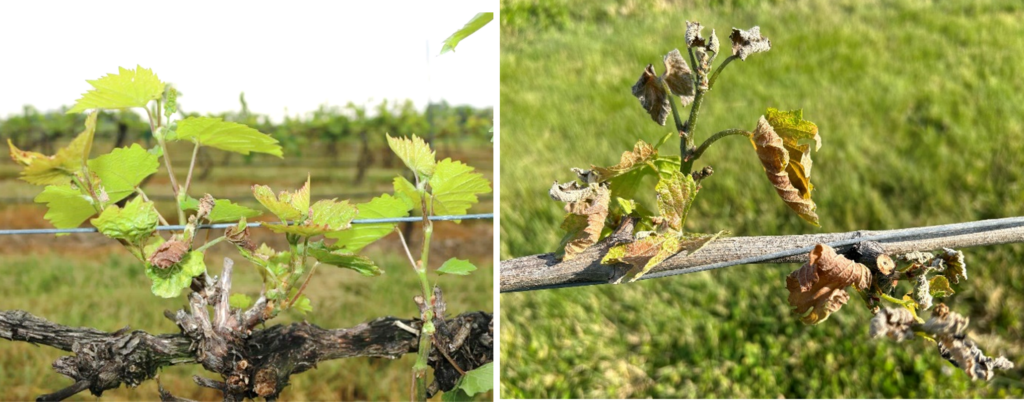
Although immediate concerns following freeze events often focus on crop loss, freeze injury can substantially alter disease risk throughout the growing season. Even when crop potential is limited, disease management remains important.
Phomopsis Cane and Leaf Spot
Phomopsis infections are favored by cool, wet conditions early in the growing season and can become established on shoots, rachises, and leaves shortly after budbreak. The disease becomes particularly important once flower clusters become visible, and grapevine tissues remain susceptible through berry set. In New Jersey vineyards, it is important to maintain fungicide protection during these periods. Maintaining good canopy airflow can also help reduce prolonged leaf wetness and disease development. Mancozeb products can be used during the early season, provided the 66-day pre-harvest interval (PHI) is observed. After bloom, growers can transition to Ziram products with a 21-day PHI. Captan products may also serve as an alternative option for disease management.
Black Rot
Black rot management remains important with the remaining crop potential. Despite the freeze, this overwintering inoculum remains active and ready to infect new growth. The most critical control period for black rot is around bloom. This is important because berries naturally become resistant to black rot 4 to 5 weeks after bloom, meaning your spray timing window is narrow and critical. The first and second post-bloom sprays are the most important applications for black rot control. These sprays cannot be skipped if you want to protect any crops. Mancozeb applied before bloom provides good protectant activity. FRAC 3 fungicides, such as Rally and Mettle, combined with Ziram, are effective options for post-bloom black rot control. FRAC 11 fungicides like Abound are also effective but require careful management.
Powdery Mildew
Powdery mildew is the most important fungal disease of grapevines. In freeze-damaged vineyards with reduced crop load, the focus of disease management shifts from fruit protection to maintaining leaf health. Severe defoliation from uncontrolled powdery mildew compromises vine recovery, making disease control important but requiring a different strategy. Rather than intensive fruit protection, growers should focus on reducing infections and limiting the overwintering inoculum for next season. This provides flexibility to reduce the spray program from its usual calendar-based schedule. However, lateral shoots from secondary buds can cause dense growth, creating a perfect microclimate for powdery mildew.
Sulfur is an excellent option for powdery mildew control, providing both preventative and curative activity. FRAC 3 (Demethylation Inhibitors) such as Rally 40WSP, Mettle 125ME, Inspire Super, and Quadris Top can be a good option for application in mid- to late-season to reduce the inoculum for next year. Other fungicides such as FRAC 11 (Quinone outside Inhibitors: Abound, Flint) can also be used. Newer chemistry options such as Quintec (FRAC 13), Torino (FRAC U6), and Gatten (FRAC U13) are also viable alternatives. However, you can stick with affordable options this year to keep costs down. The key is to maintain leaf health throughout the season.
Growers should use caution with sulfur applications during periods of high temperatures or on sulfur-sensitive cultivars.
Downy Mildew
Management of downy mildew in New Jersey vineyards requires regular scouting, especially after rain events and during periods of high humidity. Once the bloom is established, management becomes critical. If lesions appear, applying Captan can eradicate the disease and stop its spread. Scout again after two to three weeks to monitor effectiveness. Improving airflow through shoot thinning and canopy management is equally important, as it directly reduces the humidity that favors downy mildew development. Continue monitoring even in low-crop vineyards to preserve canopy function and vine health.
Multi-site fungicides such as Captan and Ziram are effective in managing this pathogen. Phosphorous acid products offer curative activity for early-stage infections but have limited residual protection. If using Phosphorous acid products, Ziram can be added for longer protection. Copper products are effective where varietal sensitivity allows. For systemic control, Revus and Zampro are available options. Always tank mix or rotate these materials with unrelated fungicide groups to maintain effectiveness.
Botrytis Bunch Rot
Botrytis presents a special challenge in freeze-damaged vineyards. Freeze-damaged tissues may increase susceptibility to infection. The risk increases during wet conditions between bunch closure and harvest. Botrytis primarily affects tight-clustered Vitis vinifera and hybrid cultivars, dense canopies due to lateral shoots, and delayed-ripening fruits on freeze-damaged vines, which can elevate risk. Consider using Botrytis fungicide from FRAC groups (9, 12, and 17) during the bloom period. Importantly, tank mix any Botrytis material with either Captan or fixed copper to maintain resistance management and provide broader disease protection. Veraison, when berries begin to soften and ripen, is critical for timing protection. Some important management considerations include improving airflow and reducing cluster-zone humidity, carefully monitoring late-season weather conditions, and prioritizing protection in tight-clustered vinifera cultivars.
Re-timing Your Spray Schedule
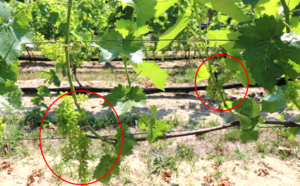
A standard “calendar-based” fungicide program, or a program based on fixed phenological stages, does not work in freeze-damaged vineyards. The reason is simple: uneven vine recovery leads to staggered growth. New growth remains vulnerable longer than expected in traditional vineyards. Not all vines reach the same growth stage at the same time. The standard spray timing developed for uniform vineyards misses the peak-risk periods in freeze-damaged blocks.
The solution is to shift to phenology-based programs. Scout your vineyard regularly, at least weekly, from May to June. Identify where new secondary and tertiary shoots are emerging. Time your fungicide applications are based on the growth stage of most of your new growth, not calendar weeks. This approach ensures you are protecting the most susceptible tissue at the right time.
REMINDERS
| Fungicide | Key Precautions |
| Sulfur | Do not apply during hot weather (>85°F-90°F) due to phytotoxicity risk. Avoid use of sulfur-sensitive cultivars. Do not apply within 14 days of oil sprays—maintain at least a 14-day separation. May cause leaf burn on stressed or freeze-damaged vines. |
| Copper | Can cause phytotoxicity, especially on sensitive cultivars. Increased injury risk under slow drying conditions or with repeated applications. Avoid mixing copper with phosphorous acid products. Excessive copper use may accumulate in soil over time. |
| Mancozeb | Observe seasonal maximum application limits and monitor total lb. a.i./acre/year applied. Restricted by a 66-day PHI if the crop will be harvested. If it is a no-crop season, this restriction does not apply. Primarily a protectant fungicide; good coverage is essential for effectiveness. |
| Captan | Avoid application during very hot weather or in slow-drying conditions. Do not mix with oils or apply near oil sprays. Can cause phytotoxicity on stressed vines, so use extra caution in freeze-damaged vineyards. |
| Phosphorous Acid | Do not tank-mix with copper products due to the risk of phytotoxicity. Limited residual activity; may require shorter intervals or tank-mixing with protectant fungicides to maintain adequate protection. |
Young Vineyards May Require Additional Attention
Young or recently established vineyards may be particularly vulnerable following freeze injury because they have not yet developed extensive carbohydrate reserves within trunks and cordons. These vines are often located closer to the ground, where temperatures may be colder during frost events and may require additional monitoring throughout the recovery period. Severely injured young vines may recover slowly or, in extreme cases, require replacement.
Weed Management Following Freeze Injury
The goal during a low- or no-crop year is not to maintain a completely weed-free vineyard floor, but to reduce perennial weed populations, prevent annual weed seed production, manage excessive vine vigor, and prepare for the following season.
Low crop years provide a unique opportunity to address persistent weed problems that are often difficult to manage during seasons with normal fruit production. With reduced concerns about immediate crop losses, vineyard managers can shift their focus from protecting current yield to improving long-term vineyard floor management and reducing future weed pressure.
Prioritizing Perennial Weed Management
Perennial weeds should be the primary target during low-production years. Effective suppression of species such as mugwort (Artemisia vulgaris), field bindweed (Convolvulus arvensis), poison ivy (Toxicodendron radicans), multiflora rose (Rosa multiflora), Canada thistle (Cirsium arvense), or goldenrod (Solidago spp.) typically requires a multi-year management approach. A season with little or no crop presents an ideal opportunity to target these species when they are actively growing and most susceptible to control measures. Directed applications of systemic herbicides or repeated mowing may help reduce underground reserves and limit re-establishment in subsequent years.
Rethinking Annual Weed Management
Unlike perennial weeds, annual weeds may not require complete season-long suppression during a low crop year. Moderate levels of annual weed growth within the row can provide some competition for water and nutrients, potentially helping to moderate excessive vine vigor that frequently develops when crop load is substantially reduced or absent. Excessive vegetative growth can increase canopy management requirements, reduce spray penetration, and create favorable conditions for disease development. For this reason, vineyard managers may be able to tolerate greater annual weed presence than would normally be acceptable in a full-crop season, provided weeds are prevented from producing seed. Mowing and mechanical suppression may therefore become more important management tools than repeated postemergence herbicide applications, particularly where annual weed populations are not interfering with vineyard operations.
Preparing for the Following Season
Although some annual weed competition may be acceptable during the growing season, vineyard floors should be as free of weeds as possible by late summer and early fall. Clean vineyard rows improve the effectiveness of fall weed management programs and allow timely application of residual herbicides where appropriate. Reducing existing vegetation before fall applications can improve soil coverage and help establish a cleaner vineyard floor entering the 2027 growing season.
Scouting and Mapping Problem Areas
Low crop years also provide an excellent opportunity to scout vineyards and document the location of troublesome perennial weed infestations. Mapping species composition and problem areas can improve future management decisions, facilitate site-specific applications, and help prioritize areas requiring more intensive intervention in subsequent seasons. Investments made in weed management during a low-production year can provide benefits that extend well beyond a single season.
Insect Management Considerations Following Freeze Injury
Insect management decisions should be based on remaining crop potential, vineyard history, and scouting observations.
Where harvestable fruit remains, cluster-feeding pests such as grape berry moth should still be prioritized to preserve fruit quality and reduce population buildup for future seasons. Grape berry moth remains one of the most important cluster-feeding pests in New Jersey vineyards and may become concentrated on fewer remaining clusters in reduced-crop situations.
Growers should continue monitoring for:
- Grape berry moth
- Japanese beetle
- Spotted lanternfly
- Mites
- Grape root borer where historically problematic
- Leafhoppers, mealybugs, and scale insects where historically problematic
Regular scouting remains critical for identifying developing pest populations and determining whether treatment thresholds are exceeded. Recommendations emphasize the importance of local scouting information when making insecticide and fungicide decisions.
Grape Berry Moth
Grape berry moth (GBM) pressure may vary considerably across New Jersey vineyards depending on surrounding wooded habitat, vineyard history, cultivar susceptibility, and remaining crop levels following freeze injury. Vineyards bordering wooded areas often experience greater pressure, particularly where wild grape hosts are present. In vineyards with reduced crop loads following freeze injury, clusters that remain may warrant protection to preserve fruit quality.
Management considerations for New Jersey vineyards:
- Continue scouting vineyards and using pheromone traps to determine relative pest pressure and adult flight timings. Vineyards adjacent to wooded habitats are often at greater risk.
- Monitor clusters for webbing, frass, and larval feeding injury, particularly after peak moth flight periods.
- Time insecticide applications around egg hatch and early larval activity using regional degree-day models, scouting observations, and vineyard history.
- Using January 1 as a biofix, target the second generation at 1200–1400 degree days and third generation at 2100–2300 degree days (base temperature 47°F) when larval activity in bunches exceeds thresholds.
- Insecticides labeled in New Jersey grapes include products containing chlorantraniliprole (Altacor and generics), methoxyfenozide (Intrepid), indoxacarb (Avaunt), spinetoram/spinosad (Delegate, Entrust), Bacillus thuringiensis products, and pyrethroids such as bifenthrin and zeta-cypermethrin. Rotate modes of action to reduce resistance risk and always consult product labels for rates, timing, PHIs, and restrictions.
Japanese Beetle
Japanese beetles can skeletonize grape leaves and may be especially problematic in young, newly planted, or freeze-stressed New Jersey vineyards during mid- to late summer. While established vines can tolerate some feeding, excessive defoliation may reduce vine vigor and limit canopy development needed for vine recovery and carbohydrate storage.
Management considerations:
- Monitor vineyards from June through late summer, particularly along vineyard edges and in historically infested areas.
- Focus protection efforts on young vineyards, replants, and highly stressed vines, which are more vulnerable to excessive defoliation.
- Preserve canopy leaf area needed for vine recovery, particularly in vineyards affected by winter injury or freeze stress.
- Avoid placing Japanese beetle traps near vineyards, as traps may attract additional beetles and increase localized feeding pressure.
- Insecticide applications may be warranted when populations are high and defoliation threatens vine health. Products labeled in New Jersey grapes include materials containing acetamiprid (Assail), bifenthrin, zeta-cypermethrin (Mustang Maxx), carbaryl (Sevin), chlorantraniliprole (Altacor and generics), and imidacloprid. Always consult the product label for rates, timing, PHIs, and restrictions.
Spotted Lanternfly
Spotted lanternfly (SLF) continues to be an important concern in many New Jersey vineyards. Heavy feeding by SLF can stress vines, reduce winter hardiness, and contribute to reduced vine vigor. Following the 2025–2026 freeze events, vines experiencing crop loss or environmental stress may be more vulnerable to additional injury from high SLF populations. While SLF can be found throughout vineyards, populations often begin along vineyard borders adjacent to wooded edges or preferred host plants.
Management considerations for New Jersey vineyards:
- Continue monitoring vineyard borders and interior rows throughout the growing season, particularly near wooded edges and areas with known infestations.
- Scout regularly for nymphs and adults on trunks, cordons, and shoots, as well as honeydew accumulation and sooty mold.
- Remove or manage nearby tree-of-heaven (Ailanthus altissima) where practical, as it is a preferred host that can support local populations.
- Well-timed insecticide applications targeting other vineyard pests may also help suppress SLF populations. Products labeled in New Jersey grapes include materials containing bifenthrin, dinotefuran (Venom), thiamethoxam (Actara), carbaryl (Sevin XLR Plus), zeta-cypermethrin (Mustang Maxx), and phosmet (Imidan). Always consult the product label for rates, timing, PHIs, and restrictions.
- In vineyards with a history of high pressure, prioritize management when large numbers of SLF are present on vines to reduce additional vine stress.
Spider Mites
Mite outbreaks are often associated with hot, dry conditions and may worsen in stressed New Jersey vineyards later in the season.
Management considerations for New Jersey vineyards:
- Monitor leaves for bronzing and stippling
- Preserve predatory mites whenever possible and limit use of pyrethroids
- Avoid unnecessary insecticide applications that disrupt biological control
- Pay particular attention during hot, dry periods later in the season
Regular scouting and preservation of beneficial arthropods remain key components of mite management in New Jersey vineyards.
Grape Root Borer
Grape root borer is a variable pest across New Jersey vineyards, with some vineyards requiring yearly management while others experience little pressure. Vineyards with a history of grape root borer infestations may be at greater risk for winter injury and vine decline, as larval feeding on roots weakens vines and can increase susceptibility to environmental stress, including freeze damage. Larvae feed on grapevine roots, reducing vine vigor and, in severe infestations, may contribute to vine decline or death.
Management considerations:
- Monitor vines for symptoms including reduced vigor, shortened shoot growth, small leaves, yellowing or wilting foliage, and reduced fruit production.
- Scout for empty pupal cases protruding from the soil around the base of vines from July through September, which indicate adult emergence.
- Eliminate weeds and excessive vegetation around the vine base to reduce favorable egg-laying sites and improve monitoring.
- Use mating disruption in vineyards with a history of infestations. Isomate GRB can help disrupt adult mating and reduce populations.
- In vineyards under chronic pressure, insecticides used on New Jersey grapes include products containing bifenthrin and chlorpyrifos. Applications should be timed to target adults and newly hatched larvae according to label directions and local emergence timing. Always consult the product label for rates, timing, PHIs, and restrictions.
Mealybugs
Three mealybug species may be found in New Jersey vineyards: grape mealybug (Pseudococcus maritimus), obscure mealybug (Pseudococcus viburni), and Gill’s mealybug (Ferrisia gilli). Mealybugs feed on grapevines and excrete honeydew, which can lead to the development of sooty mold on leaves and clusters. More importantly, mealybugs are an important vector of Grapevine Leafroll–Associated Viruses (GLRaVs), which can reduce vine vigor, delay fruit ripening, and decrease fruit quality and yield.
Management considerations for New Jersey vineyards:
- Monitor vines for white cottony masses under bark, at nodes, and around clusters, as well as honeydew and associated sooty mold.
- Scout for crawler activity, as crawlers are the most susceptible life stage for management.
- Remove and destroy heavily infested vines when practical to reduce virus spread.
- Manage ants when present, as they protect mealybugs from natural enemies.
- Avoid unnecessary broad-spectrum insecticide applications that disrupt biological control by predators and parasitoids.
- Preserve natural enemies, including lady beetles, lacewings, and parasitoid wasps, which can help suppress populations.
- When treatment is warranted, target the crawler stage for best efficacy. Products labeled for mealybug management in New Jersey include Movento, Applaud (buprofezin), Assail and generics (acetamiprid), Scorpion/Certador (dinotefuran), and azadirachtin products. Always consult the product label for rates, timing, PHIs, and restrictions.
Continue Scouting and Targeting Inputs Carefully
Regular scouting remains especially important this season, as pest pressure and vine recovery may vary significantly between vineyards and even between blocks within the same operation.
Careful monitoring can help growers:
- Identify developing disease outbreaks early
- Determine whether insect populations exceed treatment thresholds
- Prioritize sprays where crop remains
- Reduce unnecessary pesticide applications
- Improve timing and efficacy of needed treatments
When sprays are necessary, maximizing coverage and application timing will be especially important to ensure each input provides the greatest benefit possible.