Search Results for: corn borer

Field crop progress mid-July, Salem County

Crop fields continue to be a smorgesborg for insect and insect vectored pathogens. With four different planting groups of soybean and three of corn, foliar and silk clipping pests are making their presence known in soybeans and corn.

Corn: Japanese beetle feeding continues to expand across soybean fields. The abundance of healthy stands and silk emergence in early planted corn will shift these leaf feeders over to corn silks. This planting group is overall in excellent condition and most fields have obtained maxiumum height and nitrogen utilization. These fields have very high stand populations and leaf development. Hopefully this will help mitigate the edge feeding losses from Japanese beetles and another silk clipper, stinkbugs. In the coming weeks after pollination, good air flow and lower humidity through grain fill is needed to limit mycotoxin development.

Late May and June planted corn up to three feet in height oversaturated just prior to planting continues to show signs of moisture stress, and soil compaction issues. These fields are in the rapid stem elongation phase and were leaf curling this week in the high heat. Several fields are symptomatic for nitrogen deficiency as a result of those earlier ponding events. Soils are sunbaked on the surface and fields with higher clay content are root zone compacted. These are the fields to monitor for economic damage from silk clipping if the crop continues to be under heat stress. To limit further yield losses, these acres are more likely to benefit from insecticide treatments during silking still a few weeks away. Stink bugs in V1 to V6 plantings are most likely to be of economic concern and treatable in this corn group when 1 out of ten plants have bugs; decreasing to 1 out of every four at reproductive stage.

July planted corn is less effected by moisture and heat stress. The root systems of these v1 to v5 plantings have found adequate surface soil moisture from last week’s rains and are loving this heat and humidity. This crop group is highly variable for soil compaction depending on the quality of the soil and the path of heavy rainfall just prior to planting.

Soybeans: Overwintering pests of concern vectoring diseases to soybeans have emerged in abudance from vegetation in field edges, old meadows, and grass hay fields. The acreage and variability in cover crop plantings and cash grain crop plantings last fall was ideal for insect populations and residue infected bacterial innoculums to increase.

Along the south-west side of the county, in uncanopied vegetative beans on sandy soils, wind-rain-sand deposition of soil onto leaves occurred in recent storms and disease progression is evident on stems and leaves. Field comparisions here observed tillage at planting reduced movement of bacterial innoculum onto stems and leaves in canopied stands in contrast to adjacent no-tilled early vegetative stands. On the opposite corner of the county, oversaturated, low-lying loamy fields recently fitted for planting are showing expected variablity in stand establishment.

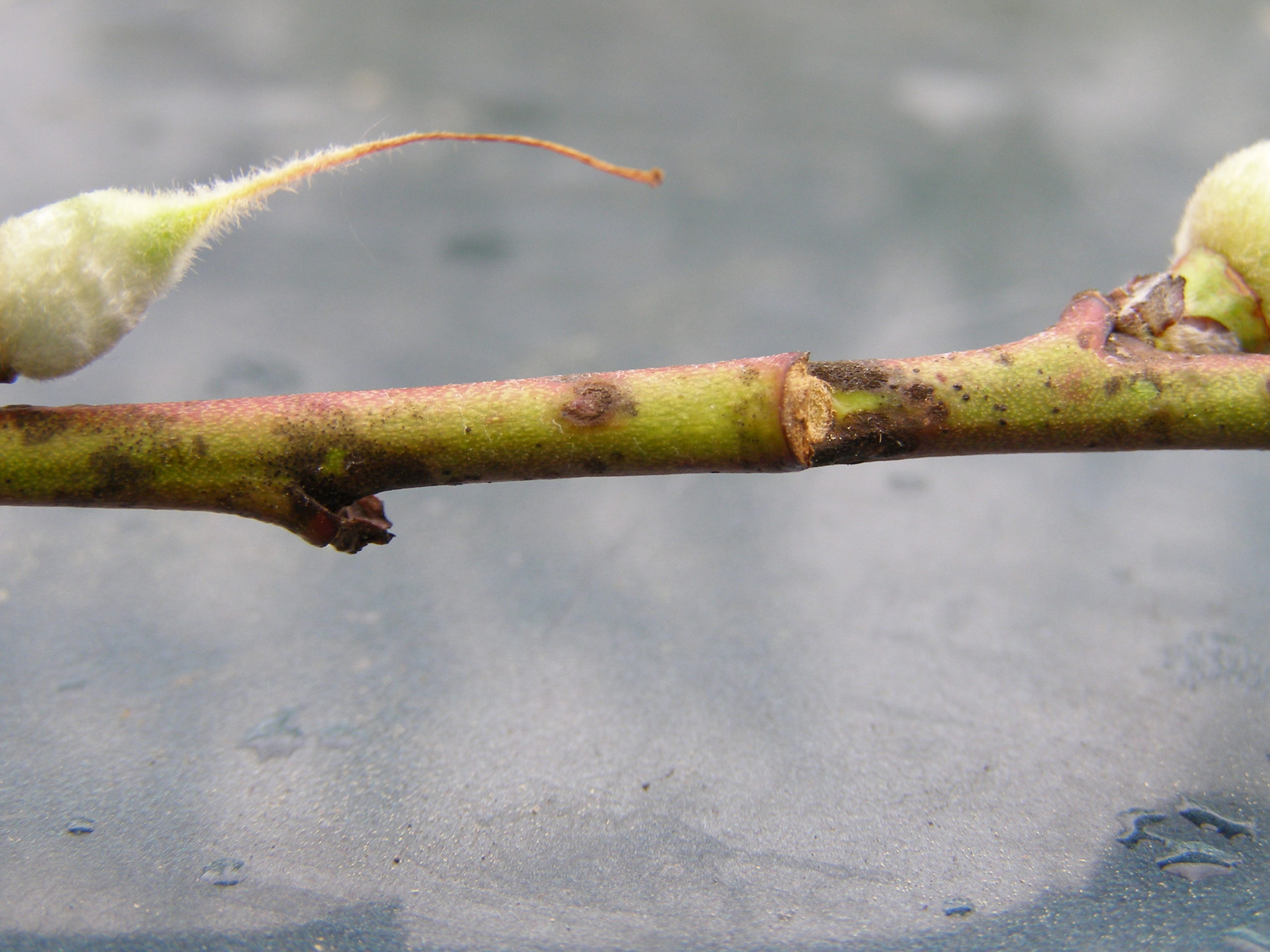
Adult soybean stem borer

Soybean stem borer adults are present in bean after bean fields

On better ground without compaction issues, most early planted fields are in good foliage condition.  Early R stage beans that were under heat and moisture stress last week show signs of self-abortion of lower stem flowers. Management of insect feeding and variatal resistance response in these fields is optimum. Crop rotation matched to soil type and timing of inputs stands out as the key niche for uniform early planted stand evaluations. In these ideal stands, evaluate what combination of variety, tillage, prior crop rotation, planting date, and timing of inputs and preciptation thwarted insect vectored diseases.

Observations on later planted beans are quite variable regardless of when inputs were applied. Grasshoppers, japanese beetles, spider mites and thrips have already vectored leaf diseases in this group. Soybean stem borer adults and larva were observed in v4 to v5 fields.

Knowing the weather was just not ideal for this planting group, document signs and progression of insect vectored diseases in the foliage, exterior of stems, interior of stems, cross section of roots, feeder root presence and presence of healthy nitrogen fixing bacteria by variety.

Healthy stems and roots in the vegetative stage are a good sign plants will respond to foliar feeds if needed. Expect insect pressure to continue to build. Soybean diseases overlap as do insect stages and feeding pressure. While one pathogen may be of minimal concern in early planted beans, another may take over second plantings and dominate later plantings as season progresses.

Nursery – Pest Scouting Guide for July – BWB and RHFB Reminders

NURSERY PEST SCOUTING GUIDE – JULY (1300-2200 GDD50)

Please download and print the pest scouting guide resources (printable version of the information below for your desk or truck) –(click on the link and then print)

To determine your local growing degree-days, please review this postObtaining your local growing degree-day information”

Projected GDD50 accumulation as of 7/1/2021
Region Location 1-Jul 1-Aug 1-Sep 1-Oct 1-Nov
Southern Upper Deerfield (NJ50) 1303 2145 2931 3477 3682
Central Howell / Freehold (NJ10) 1102 1896 2630 3109 3249
Northern High Point (NJ59) 884 1490 2045 2352 2384
Forecast: NOAA NCEP Coupled Forecast System model version 2 (CFSv2) forecast system (3.5 months) (USPEST.ORG)


(Same material as downloads)

Nursery Pest Scouting – Growing Degree-day Ranges  (1300-2200 GDD50) 
CROP TYPE Common Name Scientific Name GDD Min (50F) GDD Max (95F) Reference Developmental / Target Stage
Many Japanese beetle  Popillia japonica 950 2150 5 Adults emerge and feed
Turf Bluegrass billbug Sphenophorus parvulus 1094 1217 RU Larvae (40%)
Many Indian wax scale Ceroplastes ceriferus 1145 6 Crawlers (1st generation)
Many Oriental Beetle Anomala orientalis 1147 6 Adult emergence
Euonymus Euonymus Scale Unaspis euonymil 1150 1388 5 2nd generation targeted treatments
Dogwood Dogwood sawfly Macremphytus tarsatus 1151 1500 RU Larvae Treatment
Tulip Tuliptree aphid Illinoia liriodendri 1151 1514 RU Nymphs / adults
Boxwood Boxwood leafminer  Monoarthropalpus flavus 1200 1400 5 Larvae Treatment
Conifer Northern pine weevil Pissodes nemorensis 1200 1400 4 2nd generation adults active
Conifer Pales weevil Hylobius pales 1200 1400 4 Adults 2nd generation
Conifer Pine root collar weevil  Hylobius radicis 1200 1400 4 2nd generation adults active
Conifer White pine weevil Pissodes strobi 1200 1400 4 2nd generation adults active
Rhododendron Azalea whitefly Pealius azaleae 1250 1500 5 Adults/nymphs (2nd generation)
Turf Bluegrass sod webworm Parapediasia teterrella 1250 1920 RU Larvae
Birch Birch Skeletonizer Bucculatrix canadensisella 1266 1580 5 Typical treatment window
Shade trees European fruit lecanium Parthenolecanium corni 1266 1645 5 Crawlers
Many Fall webworm Hyphantria cunea 1266 1795 2 Caterpillars present – larvae treatment
Many Lacebugs ( on hawthorn) Corythucha cydoniae 1266 1544 RU Nymphs / adults
Many Leafhoppers Species within Cicadellidae  1266 1544 RU Nymphs / adults
Privet Privet rust mite Aculus ligustri 1266 1515 5 Second typical treatment window
Conifer Pine Needle Scale Chionaspis pinifoliae 1290 1917 3 Crawlers emerge (2nd generation)
Many Two spotted spider mite  Tetranychus urticae 1300 2000 RU Nymphs / adults
Turf N. Masked chafer Cyclocephala borealis 1377 1579 RU Adults (90%)
Conifer Hemlock scale Abgrallaspis ithacae 1388 2154 5 Typical treatment window
Lilac Lilac leafminer  Caloptilia syringella 1388 1644 5 Typical treatment window
Conifer Cooley spruce gall adelgid Adelges cooleyi 1500 1775 RU Adults/nymphs (Douglas Fir)
Malus, Prunus, many Peachtree borer Synanthedon sp. 1500 1800 RU Larvae Treatment
Conifer Pine Needle Scale Chionaspis pinifoliae 1500 4 Hyaline crawlers = treatment timing
Conifer Nantucket tip moth Rhyacionia frustrana 1514 1917 RU Adults 2nd generation
Many Roundheaded apple tree borer Saperda candida 1514 1798 5 Typical treatment window
Many Redheaded flea beetle Systena frontalis 1570 1860 Udel. 2nd generation egg hatch
Many Japanese beetle  Popillia japonica 1590 1925 RU Adults (90%)
Many White prunicola scale Pseudaulacaspis prunicola 1637 6 Egg hatch / crawler (2nd generation)
Conifer Rust-mites  Nalepella and Setoptus spp. 1644 2030 RU Nymphs / adults
Many Two-banded Japanese weevil Pseudocneorhinus bifasciatus 1644 2271 RU Adults
Willow Willow twig aphids Lachnus spp. 1644 2271 5 Typical treatment window
Conifer Juniper webworm Dichomeris marginella 1645 1917 RU Larvae Treatment
Euonymus Euonymus Scale Unaspis euonymil 1700 RU Continued 2nd generation treatments
Conifer Cryptomeria scale Aspidiotus cryptomeriae 1750 2130 RU, 4 Crawlers emerge (2nd generation)
Many Obscure scale Melanaspis obscura 1774 6 Egg hatch / crawler
Oaks Oak skeletonizer Bucculatrix ainsliella 1798 2155 RU Larvae
Conifer Arborvitae leafminer Argyresthia thuiella 1800 2200 RU Larvae Treatment (3rd generation)
Mimosa, Honeylocust Mimosa webworm Homadaula anisocentra  1800 2100 RU Larvae (2nd generation)
Conifer Cooley spruce gall adelgid Adelges cooleyi 1850 1950 RU Galls open (Spruce)
Turf Hairy chinch bug  Blissus leucopterus 1903 2160 RU Second generation- 50%- 2nd instars
Tulip Tuliptree aphid Illinoia liriodendri 1917 2033 RU Nymphs
Conifer Zimmerman pine moth Dioryctria zimmermani 1917 2154 5 Treatment window (adult flight-1700 GDD)
Mainly Oaks Orangestriped oakworm Anisota senatoria 1917 6 Egg hatch – early instars
Conifer White pine aphid Cinara strobi 1991 2271 RU Adults
Rhododendron Azalea whitefly Pealius azaleae 2032 2150 5 Adults/nymphs (3rd generation)
Maple Sugar maple borer Glycobius speciosus 2032 2375 5 Typical treatment window
Conifer Maskell scale lepidosaphes pallia 2035 6 Egg hatch / crawler (2nd generation)
Mainly Tulip Tulip tree scale Toumeyella liriodendri  2037 2629 RU Crawlers (1st generation)
Mainly Magnolia Magnolia scale Neolecanium cornuparvum 2155 2800 RU Crawlers (1st generation)
Locust Locust borer Magacyllene robiniae 2271 2805 5 Typical treatment window
Poplar and Willow Poplar and willow borer  Crytorhynchus lapathi 2271 2806 5 Typical treatment window
Conifer Spruce spider mite  Oligonychus ununguis 2375 2806 5 Typical treatment window
Note: Growing degree-day values utilize daily average air temperatures with a minimum temperature threshold (a.k.a. ‘base’) of 50F = GDD50 (max. temp. threshold set at 95F). These values are accumulated from a biofix date, such as January or March 1st in the NE USA. Provided GDD50 are scouting ranges and should be truthed. References RU Rutgers Cooperative Extension – Landscape IPM Notes
2 http://ccetompkins.org/resources/using-growing-degree-days-for-insect-management
3 https://extension.psu.edu/ipm-basics-for-christmas-trees#section-2
4 https://www.canr.msu.edu/ipm/agriculture/christmas_trees/gdd_of_conifer_insects
5 https://www.agriculture.nh.gov/publications-forms/documents/landscape-pests.pdf
Daily GDD50 =                                                                                                  (Max + Min temp.) / 2 – 50 (min temp. threshold) 6 https://extension.umd.edu/ipm/pest-predictive-calendar-landscapenursery
7 https://www.canr.msu.edu/ipm/agriculture/christmas_trees/gdd_of_landscape_insects
Unv. Del. Coorespondance with Dr. Kunkel (University of Delaware)-evolving GDD ranges
Compiled 7-6-2021 – Timothy J. Waller, Ph.D. – Rutgers Cooperative Extension, Cumberland County Nursery Crops – twaller@njaes.rutgers.edu  

Redheaded flea beetle considerations:

Adults are mating and laying eggs in southern NJ. Contact material applications are still viable to target adults now (if found scouting) but will also be useful when treating larvae prior to emergence from the soil/growing media in a few weeks time. The use of systemics should also be considered to protect foliage from the next generations adults and again late season to guard from first generation adults in the 2022 spring season.

NOTE: The majority of RHFB I have personally observed have been seen later in the evening, especially if the foliage is wet. I have also isolated an anthracnose pathogen (Colletotrichum sp.) from what appeared to be damaged leaves. Thus a complete fungicide – insecticide program needs to be in place if this is a high value crop for your business.


Boxwood blight considerations: 

Preventative applications should continue in high value plantings. As with the vast majority of foliar diseases, overhead irrigation plays a major role in reducing the staying power and efficacy of fungicides. Overhead irrigation or rain events also play a critical role in pathogen dispersal and ease of entry by these pathogens into plant tissues. Anything you can do to reduce/limit overhead irrigation in virtually all crops will aid in reducing the overall disease pressure that your plants experience.

Boxwood Blight Risk Model (CLICK HERE) – In 30 seconds you can have a better idea of boxwood blight (and other pathogen) activity in your immediate area!

    • (click on the link – input area code – select closest weather station – check 7-14 prediction – click on graph / table) 

Great new resources by Steve Rettke

Mimosa Webworm Activity Begins

Some Key Soft Scale Pests in the Landscape


SURVEY REQUESTS

Please answer a few questions if you would like to be included in a statewide Phytophthora in Conifer Nurseries sampling project 

Please fill out this brief survey if you are experiencing damages due to Redheaded flea beetle (RHFB)

Contact – Timothy J. Waller – twaller@njaes.rutgers.edu for more information

Nursery – Pest Scouting Guide for June, Boxwood blight advisory, survey requests

BOXWOOD BLIGHT

There is an immediate potential for boxwood blight June 4/5th throughout NJ.

Preventative / protective fungicide applications should be initiated and continued in high value crops

Boxwood Blight risk-model information, considerations, and links:

Boxwood Blight Risk Assessment as of 6/1/2021
Region Location CODE 1-Jun 2-Jun 3-Jun 4-Jun 5-Jun 6-Jun
Southern Upper Deerfield NJ50 Very Low  Very Low  Low  Infection Risk Infection Risk Low 
Central Howell / Freehold NJ10 Low  Very Low  Low  Infection Risk Infection Risk Low 
Northern High Point NJ59 Very Low  Very Low  Low  Infection Risk High Risk Low 
Please check your local boxwood blight risk here (click here and type in your area code – select closest station)


Wednesday 5/4/21 -PPA Post regarding boxwood blight activity (click here)

  • These advisories are general in nature and change rapidly so someone from your business should be using this risk model (CLICK HERE) daily if boxwood is important to your financial stability – In 30 seconds you can have a better idea of boxwood blight (and other pathogen) activity in your immediate area!
    • (click on the link – input area code – select closest weather station – check 7-14 prediction – click on graph / table) 


NURSERY PEST SCOUTING GUIDE – JUNE

To determine your local growing degree-days, please review this postObtaining your local growing degree-day information”

Projected GDD50 accumulation as of 6/1/2021
Region Location 1-Jun 1-Jul 1-Aug 1-Sep 1-Oct
Southern Upper Deerfield (NJ50) 590 1283 2125 2910 3456
Central Howell / Freehold (NJ10) 438 1078 1873 2607 3085
Northern High Point (NJ59) 353 837 1444 1999 2305
Forecast: NOAA NCEP Coupled Forecast System model version 2 (CFSv2) forecast system (3.5 months) (USPEST.ORG)


Nursery Pest Scouting – Growing Degree-day Ranges (500-1300 GDD50)
CROP TYPE Common Name Scientific Name GDD Min (50F) GDD Max (95F) Reference Developmental / Target Stage
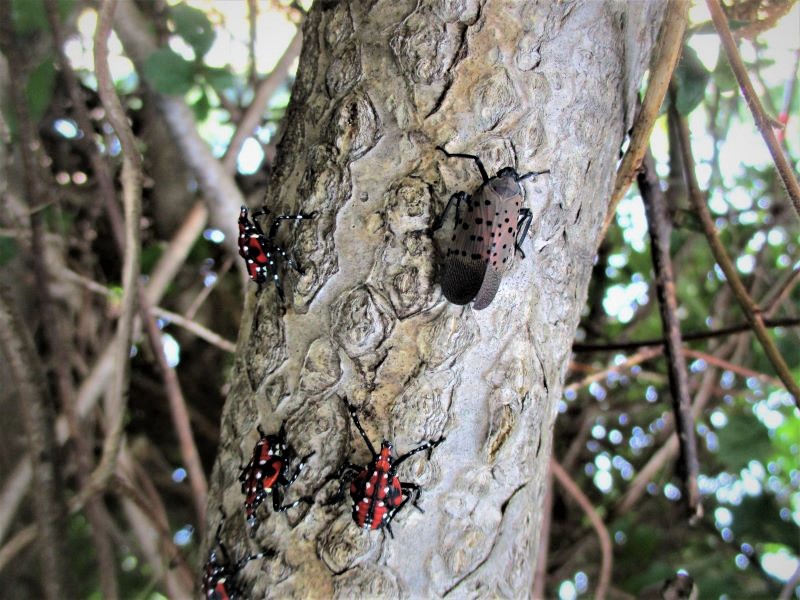
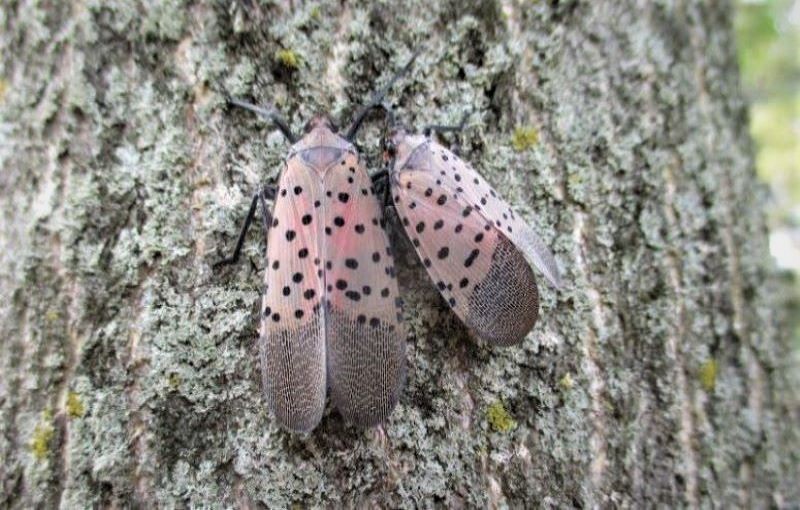
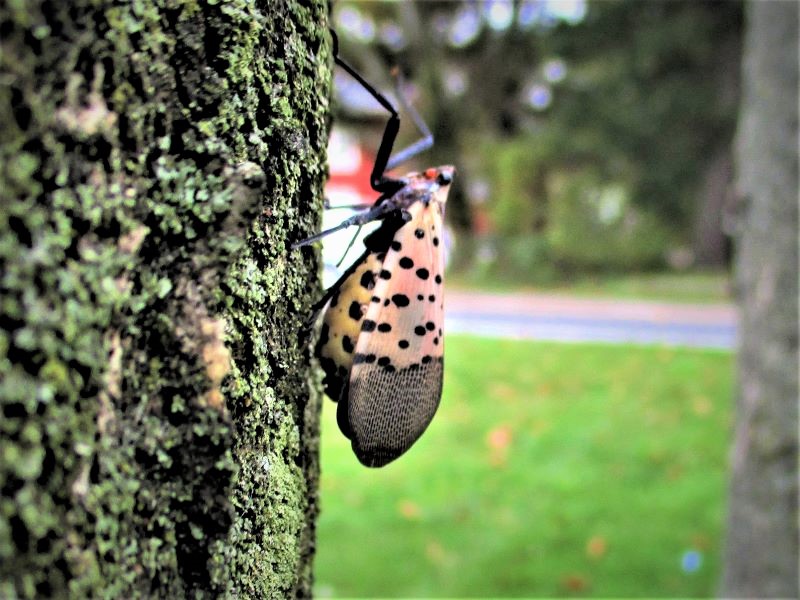
Many Spotted Lantern Fly Lycorma delicatula 250 1000 PA Dept. Ag 1st-4th Instar (nymphs) – control target
Conifer European pine shoot moth Rhyacionia buoliana 480 710 5 Larvae Treatment
Malus, Prunus, many Peach Tree Borer Synanthedon sp. 500 600 RU Adults – emerge (1st treatment both types)
Rhododendron Rhododendron Borer Synanthedon rhododendri 509 696 RU Adults emerge
Many Redheaded flea beetle Systena frontalis 517 1028 Unv. Del Adults – feeding / laying eggs
Many Cottony camellia / taxus scale Pulvinaria floccifera 520 6 Crawlers (1st generation)
Birch Birch Leafminer Fenusa pusilla 530 700 RU Larvae (2nd generation)
Oak Oak blotch leafminers Cameraria spp. ; Tisheria spp. 533 912 5 Typical treatment window
Maple Greenstriped mapleworm Dryocampa rubicunda 533 1645 5 Control target
Conifer Arborvitae Leafminer Argyresthia thuiella 533 700 RU Adults (egg laying) – larvae treatments
Euonymus Euonymus Scale Unaspis euonymil 533 820 RU Crawlers (1st generation)
Conifer Balsam gall midge Paradiplosis tumifex 550 700 4 Galls apparent
Conifer Juniper scale Carulaspis juniperi 550 700 7 Egg hatch
Malus, Prunus, many Greater peach tree borer Synanthedon exitiosa 575 710 4 Adult emergence
Conifer Cryptomeria scale Aspidiotus cryptomeriae 600 800 3 First crawler emergence
Conifer Cooley spruce gall adelgid Adelges cooleyi 600 1000 7 Nymphs active – Douglas fir (control target)
Conifer Bagworm Thyridopteryx ephemeraeformis 600 900 RU Larvae (early instars) – ONLY CONTROL WINDOW
Conifer Cryptomeria scale Aspidiotus cryptomeriae 600 800 RU Crawlers (1st generation)
Elm Elm leaf beetle Xanthogaleruca luteola 600 1300 7 Larvae (2nd generation)
Conifer Spruce budscale Physokermes hemicryphus 700 1150 4 Crawlers (1st generation)
Many White prunicola scale Psedaulacaspis prunicola 707 1151 RU Crawlers (1st generation)
Conifer Juniper scale Carulaspis juniperi 707 1260 RU Crawlers (1st generation)
Many Calico scale Eulecanium cerasorum 714 6 Crawlers (1st generation)
Conifer Striped pine scale Toumeyella pini 750 800 4 Egg hatch
Turf Hairy cinch bug Blissus leucopterus 765 870 RU 1st generation (50% – 2nd instar)
Oak, hickory, birch, many Oak leacanium scale Parthenolecanium quercifex 789 6 Crawlers (1st generation)
Rhododendron Azalea Lacebug Stephanitis pyrioides 802 1029 RU Eggs / Nymphs 3rd Generation
Many, shadetrees Cottony maple scale Pulvinaria innumerabilis 802 1265 RU Crawlers (1st generation) – control target
Oaks Oak spider mites Oligonychus bicolor 802 1265 RU All Stages
Many Roundheaded appletree borer Saperda candida 802 1129 RU Adults
Oaks Golden oak scale Asterolecanium variolosum 802 1266 5 Egg hatch
Acer Cottony maple leaf scale Pulvinaria acericola 802 1265 5 Crawlers (1st generation)
Maples Japanese maple scale Lopholeucaspis japonica 829 6 Crawlers (1st generation)
Elm European elm scale Gossyparia spuria 831 1388 6,2 Crawlers (1st generation)
Mimosa, Honeylocust Mimosa webworm Homadaula anisocentra 880 RU Larvae (1st generation)
Turf Bluegrass billbug Sphenophorus parvulus 884 1003 RU Larvae 20%
Turf N. Masked chafer Cyclocephala borealis 898 905 RU 1st adults
Honeylocust Honeylocust mite Eotetranychus multidigituli 912 1514 2 All Stages
Honeylocust Honeylocust spider mite Platytetranychus multidigituli 912 1514 5 Typical treatment window
Shade trees European fruit lecanium Parthenolecanium corni 932 1645 6,RU Crawlers  – control target
Many Japanese beetle Popillia japonica 950 2150 7 Adult emergence and feeding
Conifer Pine tortoise scale Toumeyella parvicornis 1000 1200 4 Egg hatch ends, last of crawlers
Ash Emerald ash borer Agrilus planipennis 1000 1200 4 Peak adult activity
Many Redheaded flea beetle Systena frontalis 1028 1570 Unv. Del 2nd generation of un-hatched eggs
Yew, many conifers Fletcher Scale (Yew) Parthenolecanium fletcheri 1029 1388 RU Crawlers (1st generation) – control target
Locust Locust leafminer Odontota dorsalis 1029 1388 RU Adults
Juglandaceae Walnut Caterpillar Datana integerrima 1029 1514 2 Larvae Treatment
Many Indian wax scale Ceroplastes ceriferus 1145 6 Crawlers (1st generation)
Many Oriental Beetle Anomala orientalis 1147 6 Adult emergence
Euonymus Euonymus Scale Unaspis euonymil 1150 1388 5 2nd generation targeted treatments
Dogwood Dogwood sawfly Macremphytus tarsatus 1151 1500 RU Larvae Treatment
Tulip Tuliptree aphid Illinoia liriodendri 1151 1514 RU Nymphs / adults
Conifer Northern pine weevil Pissodes nemorensis 1200 1400 4 2nd generation adults active
Conifer Pine root collar weevil Hylobius radicis 1200 1400 4 2nd generation adults active
Conifer White pine weevil Pissodes strobi 1200 1400 4 2nd generation adults active
Boxwood Boxwood leafminer Monoarthropalpus flavus 1200 1400 5 Larvae Treatment
Conifer Pine Needle Scale Chionaspis pinifoliae 1250 1350 7 Crawlers (2nd generation)
Rhododendron Azalea whitefly Pealius azaleae 1250 1500 5 Adults/nymphs
Many Lacebugs ( on hawthorn) Corythucha cydoniae 1266 1544 RU Nymphs / adults
Many Leafhoppers Species within Cicadellidae 1266 1544 RU Nymphs / adults
Many Fall webworm Hyphantria cunea 1266 1795 2 Caterpillars present – larvae treatment
Privet Privet rust mite Aculus ligustri 1266 1515 5 Second typical treatment window
Many Two spotted spider mite Tetranychus urticae 1300 2000 RU Nymphs / adults
Conifer Cooley spruce gall adelgid Adelges cooleyi 600 1000 7 Nymphs active – Douglas fir (control target)
RU Rutgers Cooperative Extension – Landscape IPM Notes
2 http://ccetompkins.org/resources/using-growing-degree-days-for-insect-management
3 https://extension.psu.edu/ipm-basics-for-christmas-trees#section-2
4 https://www.canr.msu.edu/ipm/agriculture/christmas_trees/gdd_of_conifer_insects
5 https://www.agriculture.nh.gov/publications-forms/documents/landscape-pests.pdf
6 https://extension.umd.edu/ipm/pest-predictive-calendar-landscapenursery
7 https://www.canr.msu.edu/ipm/agriculture/christmas_trees/gdd_of_landscape_insects
Unv. Del. Coorespondance with Dr. Kunkel (University of Delaware)
Compiled 6-1-2021 – Timothy J. Waller, Ph.D. – Rutgers Cooperative Extension, Cumberland County Nursery Crops – twaller@njaes.rutgers.edu


SURVEY REQUESTS

Phytophthora sampling project – grower collaborators wanted 

Please answer a few questions if you would like to be included in a statewide Phytophthora in Conifer Nurseries sampling project 

Redheaded Flea beetle NJ specific survey: 

Please fill out this brief survey if you are experiencing damages due to Redheaded flea beetle (RHFB)

Contact – Timothy J. Waller – twaller@njaes.rutgers.edu for more information

Cicadas Are Here and Fruit IPM for 5/26/21

Cicadas are Here, There and Everywhere (Depending where you are): 17 year cicadas began emergence last week. These insects while a marvel in the insect world, are also capable of doing considerable damage to young fruit trees, grape vines, and blueberry bushes. After mating they begin to deposit their eggs in slits along small diameter branches. Thin branches which are loaded with fruit weight and damaged by egg laying can break. Some growers have asked about damage and what they can do to prevent it. Most egg laying is starting this week.

[Read more…]

Fruit IPM for 5/18/21

Peach:

Oriental Fruit Moth: First generation timings are updated below. Growers that have utilized mating disruption for OFM can focus on PC; GPA; and catfacing insect pests as described below.

[Read more…]

Tree Fruit IPM Report for 5/11/21

Peach:

Oriental Fruit Moth: First generation timings are updated below: Growers that have utilized mating disruption for OFM can focus on PC; GPA; and catfacing insect pests as described below. If you have not placed mating disruption dispensers yet they can still be deployed for later generations, but this generation must be treated with insecticides at the first generation timings.


OFM 1st Generation Timing
Insecticide Type
County/Region Degree Days by  5/10 base 45 Conventional

170-200, 350-375

Diamide

100-150, 300-350

Gloucester – Southern 384 1st – past

2nd – past

1st – past

2nd – past

Hunterdon – Northern 307 1st – past

2nd – May 14-15

1st – past

2nd – May 9-12


Plum Curculio (PC): PC activity usually peaks about mid-May and may linger into early June. Preferred materials that offer PC control now are Avaunt, and Imidan. If using high rates of a neonicotinoid (i.e. Actara, Belay, Assail), be aware that there is a synergistic effect when used in tank mixes with DMI materials (i.e. Rally) with regard to bee toxicity. Neonicotinoids should not be used if there are any flowering weeds in your orchard. Those flowering weeds will attract bees, which will be killed by the insecticide. The use of most of these products when bees are present is off label and therefore not legal. If pyrethroids are being used, then high rates are advisable, since low rates often do not control PC, especially in hot weather. Where PC is a problem, growers should rotate away from pyrethroid insecticides if possible. Actara and Belay will also control PC (and GPA), but not OFM.

Green Peach Aphids (GPA): Green Peach Aphid: GPA colonies remain at very low levels in southern counties, and are well below treatment thresholds. If aphids are at treatment level, you have and your ground cover is clean of blooming weeds, a good choice that will cover catfacing insects, aphids, and plum curculio is Thiamethoxam (Actara and in VoliamFlexi). Actara will not control OFM. Examine trees for the presence of colonies by standing back and looking at the entire tree. Clusters of curled leaves will define a single colony. Count the number of colonies on ten trees and use a treatment threshold of 2 colonies/tree at petal fall to shuck split for peach, and 1 colony/tree for nectarine. If treating aphids alone then Movento @ 6 oz/A is a good non-neonicotinoid choice. Movento must be combined with a spreader/penetrant spray adjuvant. Used later during late May to early June this will also control scale. Movento will not control PC or catfacing insects. Lannate can also be used, but is not quite as effective and is a weak PC material. To date no aphids have been observed in southern county orchards.

Tarnished Plant Bugs and Other Catfacing Insects:  This is the other key insect complex at this time of year. Stink bugs have been found at low levels in beating tray samples. Tarnished plant bugs will become more of an issue as temperatures warm and mowing and other ground cover activities become more common. General spray timing at this time of year should still be targeted for Oriental Fruit Moth and/or Plum Curculio (PC). Most materials, except the diamides (Altacor, Belt, Tourismo) used for these pests will have some efficacy for plant bugs.

Lesser Peach Tree Borer and Peach Tree Borer: Growers that wish to use mating disruption for borer control should place them in the orchard before the lesser borer flight begins, which should be sometime very soon. 

Bacterial Spot: Maintain tight covers with antibiotics until pit hardening. Typical antibiotics used include various copper and oxytetracyclene formulations. Full covers with at least 100 gpa are recommended around wetting periods or severe weather. No bacterial spot cankers or leaf symptoms have been observed in southern county orchards as of yet.

Peach Scab: In addition to Rusty Spot and Bacterial Spot, peach scab requires protective applications starting at petal fall. Peach scab cankers begin to expand at bloom and by shuck split begin to shed spores during wetting periods. Topsin, Topsin/Captan combinations, Flint Extra, Inspire Super, and especially Quadris Top applied at petal fall are the best materials for blocks that had scab last year. Quadris Top, Flint Extra and Topsin should be used at the high rate to suppress overwintering lesions on the wood. Quadris Top contains azoxystrobin which is phytotoxic to many apple varieties. Phytotoxic residues can remain in the tank for long periods after an application is made, even if a tank cleaner is used. Do not use Quadris Top or Abound in the same sprayer used for apples. Bravo (chlorothalonil) is also a good protectant that may be applied no later than shuck split. Captan is also helpful in cover sprays after shuck split where scab was troublesome last year.

Rusty Spot: Rusty spot infections are ongoing until pit hardening. If you are using Flint Extra, Inspire Super, or Quadris Top for scab, these materials will also control rusty spot. After petal fall, maintain coverage with effective materials such as Rally, Rhyme, or potassium bicarbonate products.

Apple:

Codling Moth (CM): Biofixes for Codling moth have been set. See the chart below. Timings for codling moth treatments by chemistry are listed below.


Codling Moth Degree Day Timing
Application and Insecticide Type
County Area Biofix Rimon:

75-100DD + 14-17 days later


Intrepid

150 + 450 DD

Diamides – Altacor, Voliam mixes: (150-200 DD) + 14-21 days later

Cyd-X, Carpovirusine

250 DD + every 7-9 days during brood hatch (later if first spray is an IGR)

Standard Insecticides –  Delegate, Avaunt, OP’s, carbamates, pyrethroids

250 DD + 550 DD


DD 75 100 150 450 250 250 550
Southern May 2 May 6 May 13 May 16 Too far off Too far off Too far off Too far off
Northern April 28 May 4 May 8 May 17 Too far off Too far off Too far off Too far off

European Apple Sawfly (EAS): This insect is active through bloom and into petal fall and first cover. Adult females lay eggs just under the skin of freshly set fruit, and the young larvae mine just under the skin. Where this insect is active, it is a primary target at petal fall. In orchards of mixed variety plantings, the petal fall spray for the entire planting is prolonged. This enables EAS to start damaging the first varieties where petals fell earlier before a petal fall spray could be applied to the entire block.

Tufted Apple Budmoth (TABM): A biofix was set statewide on May 3. Predictions for insecticides timings are too far out at this time. More on this in later reports.

Diseases: Apple Scab, Powdery Mildew, Cedar Apple Rust, are diseases of concern at this time. The NEWA scab models are predicting about 100% ascospore maturity during this period in southern NJ. Primary apple scab spores are released during any substantial wetting and infection period, and since all ascospores are predicted to be mature primary scab season is nearing the end in southern counties. Growers should continue to manage for primary scab through May since microclimates may affect spore maturity and because it has been dry the next significant wetting may still result in a primary scab infection. Ascopore maturity will be slightly less in northern counties. Cedar apple rust infections can occur anytime between pink and 3rd cover.

Fire Blight: Continue rotations of Streptomycin, Mycoshield or Firewall through 1st cover for shoot blight. If using apogee or Kudos for shoot blight suppression follow label instructions.

Grapes:

Diseases: Grape diseases active at this growth stage are phomopsis, powdery mildew and black rot. Disease infection periods can be monitored using the NEWA models. Choose the weather station closest to your vineyard.

Insects: At this growth stage monitor for climbing cutworms and grape flea beetle. Both of these are considered minor pests. Leafhoppers have been seen in a few spots. This complex is generally not of concern. Potato leafhoppers, which arrive sometime in June, can cause some minor damage.

Scouting Calendar Tree Fruit Southern Counties

The following table is intended as an aid for orchard scouting. I t should not be used to time pesticide applications. Median dates for pest events and crop phenology are displayed. These dates are compiled from observations made since 1995 in Gloucester County. Events in northern New Jersey should occur 7-10 days later.


Pest Event or Growth Stage

Approximate Date 2019 Observed Date
Bud Swell (Redhaven) March 23 +/- 15 Days March 29

1/4″ Green Tip Red Delicious

March 31 +/- 13 Days March 27

Pink Peach (Redhaven)

April 4 +/- 15 Days April 4

Tight Cluster Red Delicious

April 9 +/- 13 Days April 6

Oriental Fruit Moth Biofix

April 9 +/- 13 Days April 8

Full Bloom Peach (Redhaven)

April 9 +/- 14 Days April 10

Pink Apple (Red Delicious)

April 14 +/- 12 Days April 11

Codling Moth Biofix

April 27 +/- 13 Days May 2

Green Peach Aphid Observed

April 16 +/- 16 Days April 26

Full Bloom Apple (Red Delicious)

April 22 +/- 11 Days April 20

Petal Fall (Redhaven)

April 22 +/- 10 Days April 24

Petal Fall (Red Delicious)

April 27 +/- 14 Days May 7

Shuck Split (Redhaven)

April 30+/- 11 Days April 29

First PC Oviposition Scars Observed

May 3 +/- 18 Days April 29

Tufted Apple Bud Moth Biofix

May 4 +/- 10 Days May 3

San Jose Scale Crawlers

June 2 +/- 8 Days Not yet observed

White Peach Scale Crawlers

May 26 +/- 11 days Not yet observed

Pit Hardening Peach

June 16 +/- 8 Days Not yet observed


Tree  Fruit Trap Counts – Southern Counties


Weekending STLM TABM-A CM AM OFM-A DWB OFM-P TABM-P LPTB PTB
4/17/21 7 0 8 1
4/24/21 12 0 34 2
5/1/21 7 0 11 1 0 0