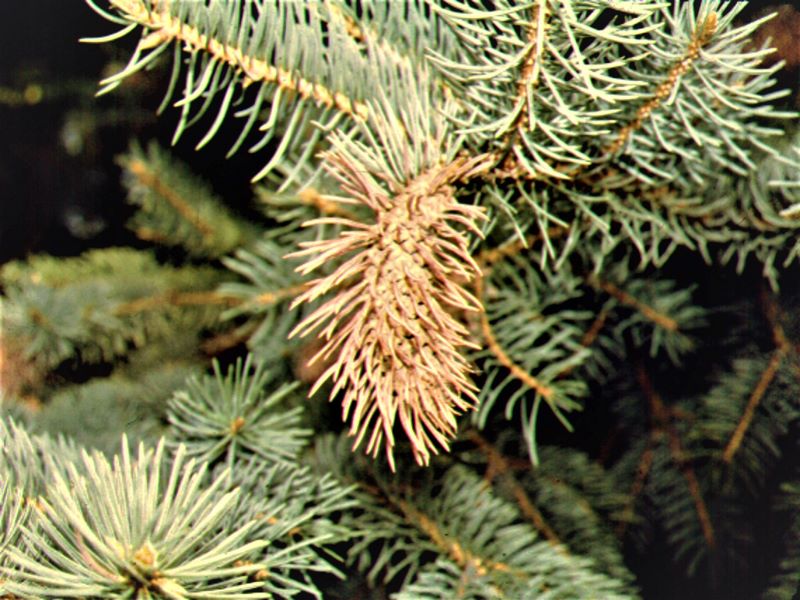
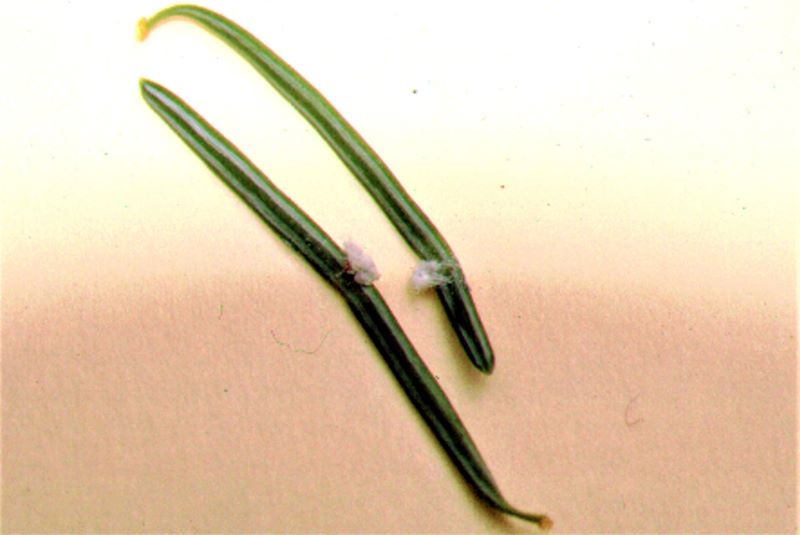
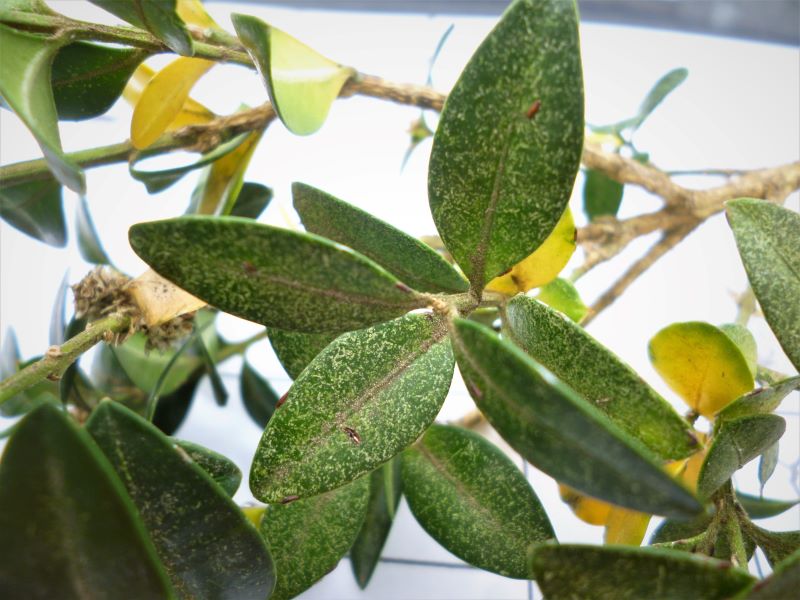
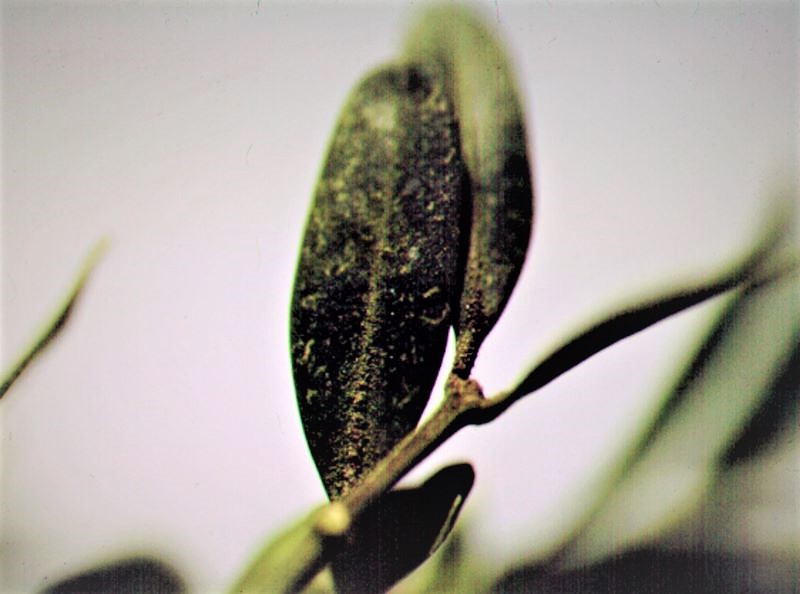
As we enter the last week of April, many of our mid-spring landscape insect/mite pests continue to awaken & cause feeding symptoms on our ornamentals. This blog only talks over some of the typical mid-spring pests that plague our landscapes. Those discussed within include: Southern Red Spider Mites; Gypsy Moths; Evergreen Lace Bugs (e.g., rhododendron, azalea, & andromeda lace bugs); Nantucket Pine Tip Moth; Birch Leaf Miner; Hemlock Woolly Adelgid; Plant Leaf Galls (eriophyid mites).
Search Results for: corn borer
Tree Fruit IPM Report for 4/27/21
Peach:
Oriental Fruit Moth: First generation timings are updated below: Growers that have utilized mating disruption for OFM can focus on PC; GPA; and catfacing insect pests as described below. If you have not placed mating disruption dispensers yet they can still be deployed for later generations, but this generation must be treated with insecticides at the first generation timings. [Read more…]
Nursery Pest Scouting Guide: 25-60 Growing Degree-days (Southern NJ will hit approx. 45 GDD by Friday)
Please print or download the two resources of this post (click on them):
- Printable Pest Scouting Guide 25-60 GDD
- Expanded Pest Scouting Guide 25-60 GDD with CLICKABLE links
- (Zoom in and click directly on the links within this document)
The information provided in the downloads gives early season scouting ranges (in growing degree days, base 50F) for specific insect pests harming nursery crop production and maintenance. Additionally, forecasting predictions (GDD50 accumulation) for calendar dates of multiple regions of New Jersey (S,N,C) are provided.
To determine your local growing degree-days, please review this post “Obtaining your local growing degree-day information”
Scouting Ranges:
- This document supports scouting, it does not replace it. Keeping good notes on pest development will help dial in scouting and treatment efforts at your local level.
- It is important to note that these GDD50 are not exact, rather provide a range of GDD and subsequent calendar dates that can be used to scout for, and treat for, insect pests.
- The pests listed here will be listed again in future scouting range announcements as they undergo further developmental life stages or are vulnerable to management options.
- If you need more information, OR you are regularly seeing specific pest development stages at growing degree-days different than those listed here, please contact Tim Waller at twaller@njaes.rutgers.edu
| Projected GDD50 accumulation as of | ||||||
| NJ – Region | Location | March 1st | April 1st | May 1st | June 1st | July 1st |
| Southern | Upper Deerfield (NJ50) | 0 | 48 | 157 | 564 | 1241 |
| Central | Howell / Freehold (NJ10) | 0 | 26 | 107 | 455 | 1076 |
| Northern | High Point (NJ59) | 0 | 5 | 11 | 224 | 676 |
| Forecast: NOAA NCEP Coupled Forecast System model version 2 (CFSv2) forecast system (3.5 months) (USPEST.ORG) | ||||||
| Pest Scouting – Growing Degree-day Ranges | (25-60 GDD50) | |||||
| CROP TYPE | Common Name | Scientific Name | GDD Min (50F) | GDD Max (95F) | Reference | Developmental / Target Stage |
| Conifer | Eastern spruce gall adelgid | Adelges abietis | 25 | 100 | 3 | Spring control of overwintering stage |
| Conifer | Northern pine weevil | Pissodes approximatus | 25 | 100 | 4 | 1st adults active |
| Conifer | Zimmerman pine moth | Dioryctria zimmermani | 25 | 100 | 3 | 1st larvae active |
| Conifer | Cooley spruce gall adelgid | Adelges cooleyi | 25 | 120 | 3 | Spring control of overwintering stage |
| Conifer | White pine weevil | Pissodes strobi | 25 | 220 | 4 | 1st adults active |
| Shade trees | European fruit lecanium | Parthenolecanium corni | 35 | 145 | 2 | Spring control of overwintering stage |
| Many, evergreen | Euonymus scale | Unaspis euonymi | 35 | 120 | 2 | Spring control of overwintering stage |
| Conifer | European pine sawfly | Neodiprion sertifer | 35 | 145 | 1 | Hatched larvae |
| Conifer | Fletcher scale | Parthenolecanium fletcheri | 35 | 148 | 2 | Spring control of overwintering stage |
| Conifer | European pine shoot moth / borer | Rhyacionia buoiana | 50 | 220 | 4 | 1st larvae active |
| Maples | Maple bladdergall mite | Vasates quadripedes | 58 | 148 | 2 | Spring control of overwintering stage |
| Honeylocust | Honeylocust plant bug | Diaphnocoris chlorionis | 58 | 246 | 2 | Nympths / adults active |
| Conifer | Pine tortoise scale | Toumeyela parvicornis | 58 | 148 | 2 | Cralwer activity |
| Conifer | Pine bark adelgid | Pineus strobi | 58 | 618 | 2 | Spring control of overwintering stage |
| Conifer | Balsam twig aphid | Mindarus abietinus | 60 | 100 | 4 | Egg hatch |
| References | RU | Rutgers Cooperative Extension – IPM Notes | ||||
| 2 | http://ccetompkins.org/resources/using-growing-degree-days-for-insect-management | |||||
| 3 | https://extension.psu.edu/ipm-basics-for-christmas-trees#section-2 | |||||
| 4 | https://www.canr.msu.edu/ipm/agriculture/christmas_trees/gdd_of_conifer_insects | |||||
| 5 | https://www.agriculture.nh.gov/publications-forms/documents/landscape-pests.pdf | |||||
| 6 | https://extension.umd.edu/ipm/pest-predictive-calendar-landscapenursery | |||||
(Please note: we will be providing pest GDD ranges regularly throughout the season for our green industries)
Important notes about growing degree-day models:
- These models do not replace scouting. They should guide scouting efforts and pest management programs, once the vulnerable life stage or economic threshold of a pest is recorded. Observations at a local level for specific pests is critical to IPM efforts and further refinement of degree-day-based predictions.
- GDD50 values for pest development are not exact, rather they should be viewed as a range.
- The growing degree-day model (GDD50) is general by design. Some insect pests have specific formulas for their growth and development (some examples here). However, the GDD50 model is useful for many pests and plant species.
- Many GDD50 target values were developed in other parts of the country and should be ‘ground truthed’ at a local level. Blind applications of pesticides, without truthing pest development, may not deliver desired outcomes.
Early Season Conifer and Christmas Tree Pest Scouting List Using Growing Degree-days (base 50F)
Please print or download the two resources of this post (click on them):
- Expanded Early Season Conifer Pest Scouting Guide (0-300 GDD) with clickable links pertaining to pest’s biology, control considerations, and ID
- (Zoom in and click directly on the links within this document)
The information provided in the downloads gives early season scouting ranges (in growing degree days, base 50F) for specific insect pests harming conifer and Christmas tree production and maintenance. Additionally, forecasting predictions (GDD50 accumulation) for calendar dates of multiple regions of New Jersey (S,N,C) are provided.
To determine your local growing degree-days, please review this post “Obtaining your local growing degree-day information”
Scouting Ranges:
- This document supports scouting, it does not replace it. Keeping good notes on pest development will help dial in scouting and treatment efforts at your local level.
- It is important to note that these GDD50 are not exact, rather provide a range of GDD and subsequent calendar dates that can be used to scout for, and treat for, insect pests.
- The pests listed here will be listed again in future scouting range announcements as they undergo further developmental life stages or are vulnerable to management options.
- If you need more information, OR you are regularly seeing specific pest development stages at growing degree-days different than those listed here, please contact Tim Waller at twaller@njaes.rutgers.edu
| Projected GDD50 accumulation as of | ||||||
| NJ Region | Location | March 1st | April 1st | May 1st | June 1st | July 1st |
| Southern | Upper Deerfield (NJ50) | 0 | 24 | 133 | 540 | 1217 |
| Central | Howell / Freehold (NJ10) | 0 | 14 | 95 | 443 | 1064 |
| Northern | High Point (NJ59) | 0 | 1 | 7 | 220 | 672 |
| Forecast: NOAA NCEP Coupled Forecast System model version 2 (CFSv2) forecast system (3.5 months) (USPEST.ORG) | ||||||
| Early Season Conifer Pest Scouting – Growing Degree-day Ranges | Starting (0-300 GDD50) | ||||
| Common Name | Scientific Name | GDD Min (50F) | GDD Max (95F) | Reference | Developmental / Target Stage |
| Conifer rust mites | Eriophyidae | 7 | 22 | 4 | Overwintering eggs hatch |
| Eastern pine weevil | Pissodes nemorensis | 7 | 58 | RU | Overwintering adults become active / prevent egg laying |
| Taxus mealybug | Dysmicoccus wistariae | 7 | 91 | 2 | Spring control of overwintering stage |
| Cottony taxus scale | Pulvinaria floccifera | 7 | 91 | 6 | Spring control of overwintering stage |
| Elongate hemlock scale | Fiorinia externa | 7 | 120 | 2 | Spring control of overwintering stage |
| Spruce spider mite | Oligonychus ununguis | 7 | 121 | RU | Overwintering eggs hatch |
| Pales weevil | Hylobius pales | 7 | 121 | RU | Overwintering adults become active / prevent egg laying |
| White pine aphid | Cinara strobi | 22 | 91 | RU | Spring control of overwintering stage |
| Pine bark adelgid | Pineus strobi | 22 | 58 | 2 | Spring control of overwintering stage |
| Spruce bud scale | Physokermes piceae | 22 | 120 | 2 | Spring control of overwintering stage |
| Juniper scale | Carulaspis juniperi | 22 | 148 | 2 | Spring control of overwintering stage |
| Eastern spruce gall adelgid | Adelges abietis | 25 | 100 | 3 | spring control of overwintering stage |
| Northern pine weevil | Pissodes approximatus | 25 | 100 | 4 | 1st adults active |
| Zimmerman pine moth | Dioryctria zimmermani | 25 | 100 | 3 | 1st larvae active |
| Cooley spruce gall adelgid | Adelges cooleyi | 25 | 120 | 3 | Spring control of overwintering stage |
| White pine weevil | Pissodes strobi | 25 | 220 | 4 | 1st adults active |
| European pine sawfly | Neodiprion sertifer | 35 | 145 | 1 | Spring control of overwintering stage |
| Fletcher scale | Parthenolecanium fletcheri | 35 | 148 | 2 | Spring control of overwintering stage |
| European pine shoot moth / borer | Rhyacionia buoiana | 50 | 220 | 4 | 1st larvae active |
| Pine tortoise scale | Toumeyela parvicornis | 58 | 148 | 2 | Cralwer activity |
| Pine bark adelgid | Pineus strobi | 58 | 618 | 2 | Spring control of overwintering stage |
| Balsam twig aphid | Mindarus abietinus | 60 | 100 | 4 | Egg hatch |
| Eastern pine shoot borer | Eucosma gloriola | 75 | 200 | 4 | 1st adults active |
| Cooley spruce gall adelgid | Adelges cooleyi | 90 | 180 | 4 | 1st adults active – Douglas fir |
| Balsam twig aphid | Mindarus abietinus | 100 | 150 | 4 | Stem mothers present (control target) |
| Pine engraver (Ips bark beetle) | Ips spp. | 100 | 150 | 4 | 1st adults active |
| European pine sawfly | Neodiprion sertifer | 100 | 195 | 4 | 1st larvae active |
| Larch casebearer | Coleophora laricella | 120 | 150 | 4 | Egg hatch |
| Nantucket pine tip moth | Rhyacionia frustrana | 121 | 448 | RU | 1st generation egg hatch |
| Gypsy moth | Lymantria dispar | 145 | 200 | 4 | Egg hatch, 1st larvae |
| Spruce spider mite | Oligonychus ununguis | 150 | 175 | 4 | 1st egg hatch |
| Spruce needleminer | Endothenia albolineana | 150 | 200 | 4 | 1st larvae active |
| Balsam gall midge | Paradiplosis tumifex | 150 | 300 | 4 | Adults laying eggs |
| Spruce budworm | Choristoneura fumiferana | 200 | 300 | 4 | 1st larvae active |
| Cooley spruce gall adelgid | Adelges cooleyi | 200 | 310 | 4 | 1st galls visible – Spruce |
| Arborvitae leafminer | Argyresthia thuiella | 245 | 360 | 4 | Larvae in mines; 1st generation |
| Eastern spruce gall adelgid | Adelges abietis | 250 | 310 | 4 | Egg hatch, galls begin forming |
| Pine needle scale | Chionaspis pinifoliae | 298 | 448 | 4 | 1st generation egg hatch |
| Pine root collar weevil | Hylobius radicis | 300 | 350 | 4 | 1st adults active |
| Turpentine beetle | Dendroctonus terebrans | 300 | 350 | 4 | Parent beetles colonizing brood material |
| References | RU | Rutgers Cooperative Extension – IPM Notes | |||
| 2 | http://ccetompkins.org/resources/using-growing-degree-days-for-insect-management | ||||
| 3 | https://www.canr.msu.edu/ipm/agriculture/christmas_trees/gdd_of_conifer_insects | ||||
| 4 | https://extension.psu.edu/ipm-basics-for-christmas-trees#section-2 | ||||
| 5 | https://www.agriculture.nh.gov/publications-forms/documents/landscape-pests.pdf | ||||
| 6 | https://extension.umd.edu/ipm/pest-predictive-calendar-landscapenursery | ||||
(Please note: we will be providing pest GDD ranges regularly throughout the season for our green industries)
Important notes about growing degree-day models:
- These models do not replace scouting. They should guide scouting efforts and pest management programs, once the vulnerable life stage or economic threshold of a pest is recorded. Observations at a local level for specific pests is critical to IPM efforts and further refinement of degree-day-based predictions.
- GDD50 values for pest development are not exact, rather they should be viewed as a range.
- The growing degree-day model (GDD50) is general by design. Some insect pests have specific formulas for their growth and development (some examples here). However, the GDD50 model is useful for many pests and plant species.
- Many GDD50 target values were developed in other parts of the country and should be ‘ground truthed’ at a local level. Blind applications of pesticides, without truthing pest development, may not deliver desired outcomes.
Accurately Timing Scouting by Using Plant Phenological Indicators
Challenges of Pest Controls
Accurately timing a control tactic against the most vulnerable stage of an insect’s development allows for the use of biorational pesticides as well as less use of traditional pesticides. Unfortunately, accurately timing controls is difficult because of the complex array of landscape plants and pests that can be present on any one site. IPM methods require knowledge of the pest’s life cycle stages and when the vulnerable stage occurs for each pest. It requires knowledge of what pesticides will suppress the pest as well as their relative toxicities. This extensive amount of information can become overwhelming, especially to the less experienced landscaper or arborist.
Some landscape managers often resign to the easy, yet environmentally unsound practice of using four or more preventative cover sprays of pesticides each year. Studies have shown that typically only 2% of a blanket spray actually hits a targeted pest, with the remaining 98% contaminating the surrounding environment. Is there another way that pesticides can be applied more intelligently?

Farmers know that when White Oak leaves are the size of a squirrel’s ear, THEN…. (Photo Credit: Steven K. Rettke, Rutgers Coop. Ext.)

….THEN, =It is time to Sow Corn into the planting fields. (Photo Credit: Steven K. Rettke, Rutgers Coop. Ext.)
Fruit IPM for September 2, 2020
Peach:
Peachtree Borers: The peachtree borer flight has peaked and most of the eggs have been laid and larvae emerged. [Read more…]