Fruit Crops Edition - Cranberry Section

Seasonal updates on diseases, insects, weeds impacting small fruit (blueberry, cranberry, and wine grape). Fruit Pest Alerts are also available via this category feed.
 
Subscription is through the general Fruit feed available via EMAIL and RSS.

Voles Damage in Orchards: Identification and Control Measures

There have been growing concerns about vole damage in apple and peach orchards in southern New Jersey. Vole populations are often cyclic and can reach high populations every 2-4 years. This, combined with poor weed control in orchards, can lead to disastrous effects on trees. Past winter saw many days of snowpack, which is beneficial for voles in many ways. It provides a safe, insulated space for nesting and easy access to the base of fruit trees, without being preyed upon and causing substantial damage to large acres in a short time.

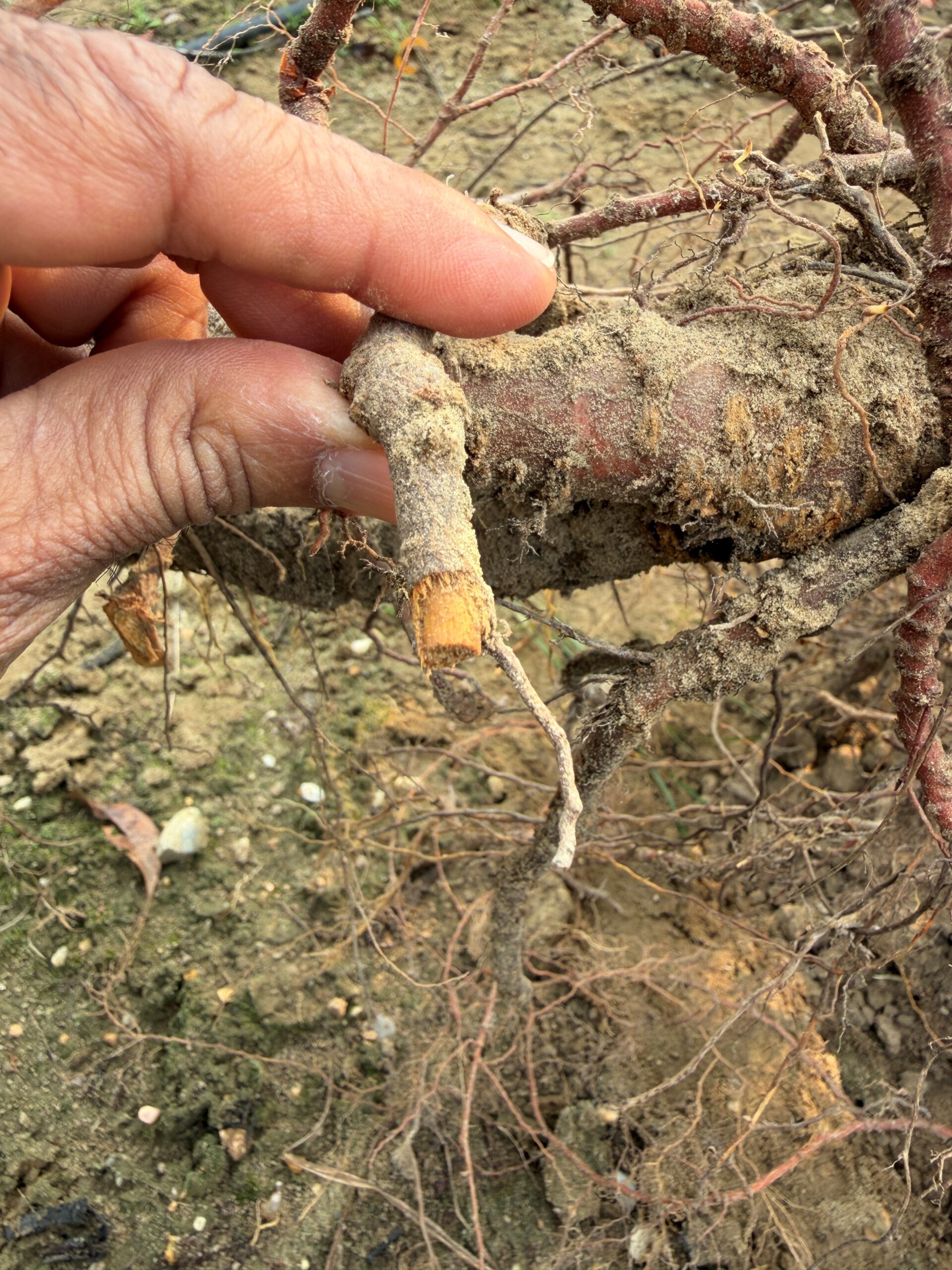
Figure 2. Peach tree root feeding is likely by the pine voles (Photo; H. Gohil).

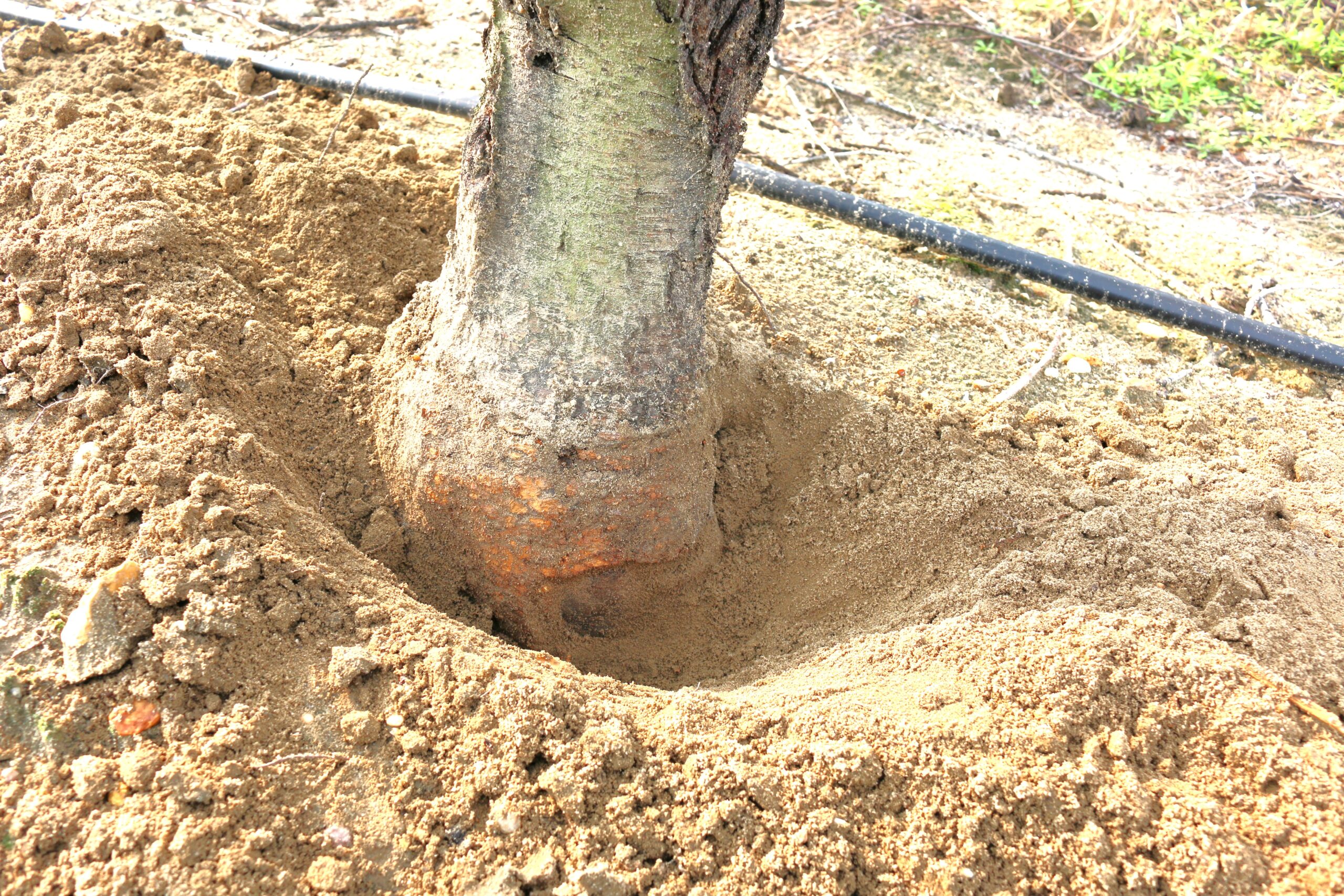
Figure. 1. Vole damage is seen as gnaw marks and girdling at the base of peach tree (Photo; H. Gohil).

Identification and Habitat: Meadow voles and pine voles are two common vole species.  Pine voles have small eyes and small, almost inconspicuous ears, while meadow voles have larger eyes and ears. Meadow voles primarily feed in open vegetation, while pine voles prefer underground burrow systems just below the ground surface. Vole diets include many primary food sources in addition to tree bark. However, they can attack fruit trees during the fall and winter months when other food sources are scarce.

Damage: Direct visible signs of Meadow vole damage are often clearly visible at the ground surface in the form of girdling and or gnawing (Figure 1) at the base of the trunk. Pine vole girdles large roots and eats small roots (Figure 2). Pine vole damage is difficult to notice until the tree growth begins to decline, by which time it is difficult to save the tree. Most pine vole damage will appear as root damage and crown girdling just below

the ground surface. However, when feeding occurs under a deep snow cover, damage can appear at the ground surface.

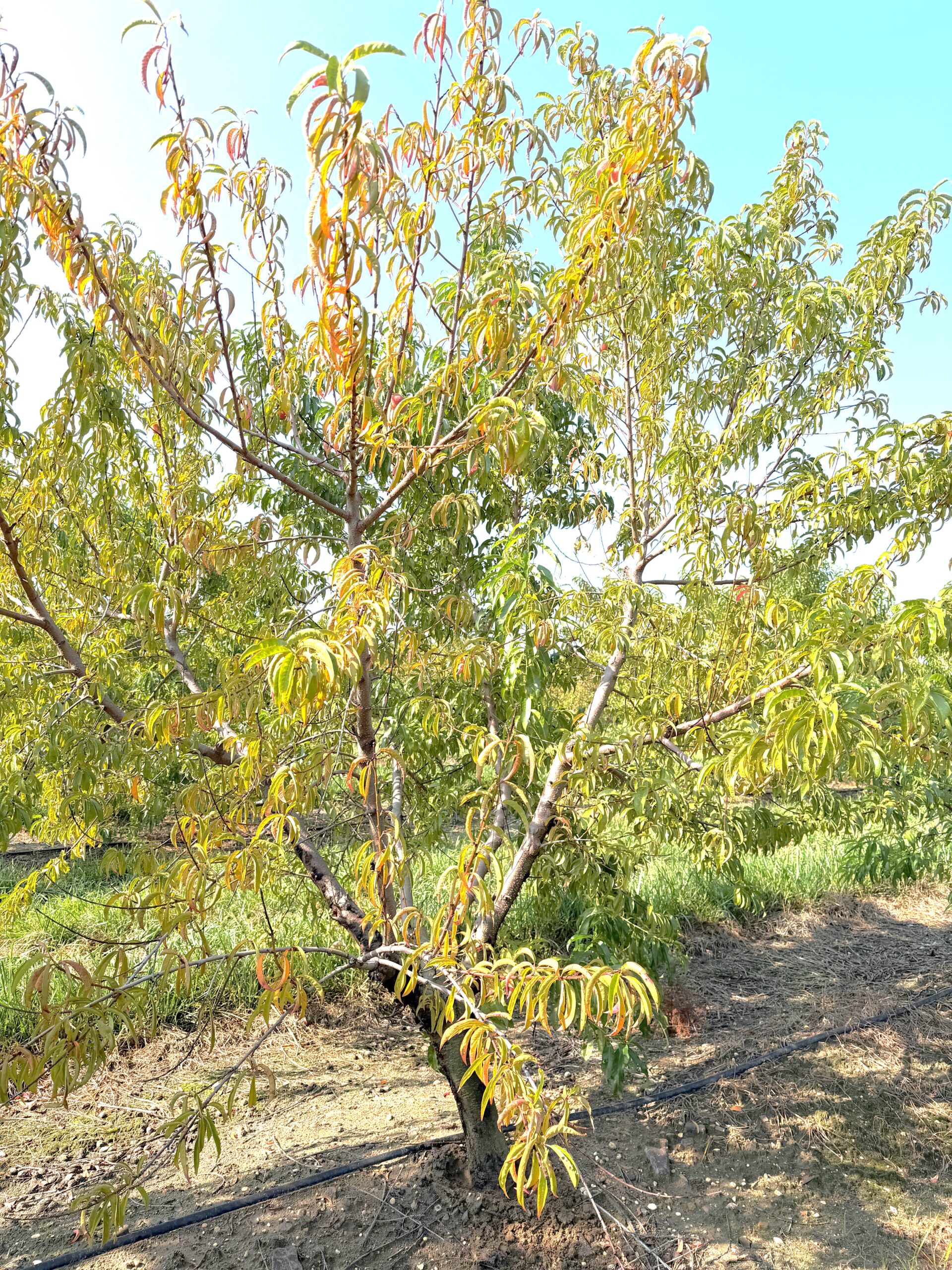
Secondary symptoms: Vole damage may already be extensive by the time unhealthy, declining trees are observed. Above-ground signs resemble those of water and nutrient stress, including yellowish leaves, premature leaf drop, and branch dieback (Figure 3). Observations of extensive gummosis and tunneling by insect borers in the tree trunk or branches indicate weakened trees that may have sustained vole damage. Secondary infections from Phytophthora and Cytospora canker are more likely to occur in damaged or wounded areas (Figure 4). Drought, winter injury, and extreme fluctuations in early-spring temperatures are compounding factors contributing to tree decline in the orchard.

Fig. 4 Gummosis from the trunk indicative of potential secondary infection and environmental stress (Photo; H. Gohil).

Figure 3. Above- ground symptoms of vole damage. (Photo; H. Gohil)


Figure 5. Presence of holes near the tree indicates vole tunnels and vole damage at the base of the tree (Photo; H. Gohil).

Vole Monitoring: If you notice holes, dime-sized or larger, under the tree, they could be signs of a vole tunnel and likely vole damage (Figure 5). Dig the soil around the trunk and look for gnaw marks or girdling. Meadow voles create an extensive network of surface runways in the grass, about 1.5 inches wide, often visible after close mowing. Bits of leaves and vole droppings in pathways are the surest signs of meadow vole presence. Runways are often spread out through the cover crop in orchard aisles and, under poor weed control, cross back and forth to the tree row. Since pine vole burrows and runways are just underground, there is a “soft” feel of the soil underfoot, which is one indication of pine vole presence. A simple monitoring method is a two-step process. First, place a grid of ‘shelters’ in the orchard. These can be pieces of roofing shingles, heavy tar paper or roof matting, or scraps of wood. After leaving them for 3-5 days so the voles can find them, place apple chunks or slices beneath each shelter. Return in 24 hours and assess which pieces have been chewed. This will give you a rough idea of where controls need to be focused.

Vole Management: 

Non-Toxicant: Regularly mowing ground cover to 3 to 5 inches is a recommended practice for an integrated vole damage management program. It not only limits the availability of food for voles’ survival but also exposes them to predators. Maintaining a vegetation-free zone below the trees discourages voles from living near the trunk, where they can cause significant damage. This is the MOST IMPORTANT aspect of routine vole prevention. Sanitizing the orchard floor by removing leaves and pruned twigs, which attract the voles, is also helpful.

The addition of a 12-inch-diameter, 3-4-inch-deep gravel layer around the trunk will also help. Gravel collapses in on a vole runway, helping prevent voles from accessing the trunk and crown of the tree.

Fig. 6. Bait Station for voles in the orchard

Cylinder-shaped wire guards made from 1/4-inch hardware cloth mesh placed around the tree trunks can protect young trees. However, make sure to bury the hardware cloth at least 6 inches below the surface to control both meadow and pine voles. This exclusion method may not be very practical or cost-effective in large orchards.

Toxicants: Sometimes, to control large-scale vole populations, chemical methods are the only practical option available. When vole populations get too high, toxicants within and near the herbicide strip in the tree rows are the most effective means of controlling them. There are 2 types of toxicants available: 1) zinc phosphide, which is a fast-acting stomach poison, and 2) chlorophacinone and diphacinone, which are slow-acting anticoagulants. Zinc phosphide is extremely toxic. These materials are sold under a number of brand names including for Zinc Phosphide: Prozap Zinc Phosphide Pellets, Prozap Zinc Phosphide Oat Bait, Bonide Orchard Mouse Bait, and Zinc Phosphide Rodent Bait AG. Anticoagulants include Ramik Oats, Ramik Brown, and Rozol Vole Bait. Make sure you have the necessary pesticide applicator license to handle these chemicals.

The reliance on one product over another is discouraged, since voles will get accustomed to grain baits with anticoagulants or become bait-shy of anticoagulants in general. Bait is most effective when placed in simple bait stations, such as under roofing shingles, boards, or scrap plate steel, or in PVC pipe bait stations (Fig. 6). Hand placement in areas of high vole activity, or depositing bait with a trail maker, is also effective. Broadcast placement of toxicants is discouraged, since it is inefficient and can put wildlife at risk. Bait stations can reduce the chances of bait getting into contact with unintended animals or humans. Bait stations are easy to make using 2- to 3-inch PVC pipes in an ‘L’ or ‘T’ shape, with the horizontal pipe providing an opening for voles to enter and the vertical pipe containing the toxicant. Fumigants are usually not effective because shallow depth of vole burrow systems allow fumigants to escape.

Sources:

https://web.extension.illinois.edu/wildlife/files/vole_control_in_apple_orchards.pdf.

http://extension.psu.edu/plants/tree-fruit/commercial-tree-fruit-production/wildlife-damage-control/voles.

https://www.aphis.usda.gov/wildlife_damage/nwrc/publications/93pubs/93-42.pdf.

http://extension.missouri.edu/p/G9445

Farmer Health and Wellness Services Available for Burlington, Camden, Gloucester, and Atlantic Counties

Could your farm or a local agricultural event benefit from free health and wellness services? The Pinelands Alliance, in partnership with NOFA-NJ and Virtua Health, was awarded a SARE grant entitled “Mobilizing for Farmer Wellness” which aims to bring health screenings and education to farmers and farmworkers in Burlington, Camden, Gloucester, and Atlantic Counties.

The following health and wellness services could be provided at individual farms or at community events. If you are interested or would like to learn more, please contact Annie Preston from the Pinelands Alliance at annie@pinelandsalliance.org or 301-675-0729.

Virtua Health Services (need 30 to 60 days advance notice)

  • Eat Well Mobile Grocery Store and Mobile Farmers Market – accepts SNAP, sometimes can be a free produce giveaway
  • Mobile Pediatric Screening Units: Screenings for children 6 and under: vision, hearing, dental, developmental; School and sports physicals for birth -12th grade; Flu vaccinations for all ages, including adults; Blood lead level screening for children under 6 and pregnant or lactating people
  • Women’s Cancer Screening for insured and uninsured patients – need a minimum of 15 people to pre-register
  • Cancer education
  • Stop the Bleed First Aid and Tourniquet Trainings (class for up to 24 people at a time)
  • Dietitians and nutrition educators
  • Blood pressure, cholesterol, and A1c screenings (A1c needs temperature-controlled environment).
  • Health Education and Stress First Aid
  • Speakers representing a variety of medical specialties (subject to availability)

 Cherry Hill Free Clinic (need 2 weeks advance notice)

  • Men’s Cancer Screenings
  • Hepatology
  • Diabetes care
  • Vaccines (Gardasil, pneumovax, Shingrix).
  • 20 medical specialties (subject to availability)
  • Patients can use their Uber business account to book rides to the clinic, lab, and imaging appointments
  • Remote patient monitoring including at-home glucometer kits, BP cuffs, and blood glucose implants. Good for up to 2 weeks before changed out.
  • Vaccines (Gardasil, pneumovax, Shingrix).
  • They can bring a Doctor/nurse practitioner who can write a prescription for meds on site.

Post-Pollination Cranberry Insect Pest Control: July 2026 Update

Dr. Cesar Rodriguez-Saona, Extension Specialist in Blueberry Entomology, Rutgers University

Dr. Yahel Ben-Zvi, Post-doctoral Researcher, Rutgers University

If needed, post-pollination sprays—particularly for Sparganothis fruitworm (Picture 1) and spotted fireworm (Picture 2)—should be applied as soon as bees are removed. Sparganothis fruitworm is monitored using pheromone traps to assess adult flight activity and abundance. If trap counts are high and no insecticide has yet been applied, treatment should be considered promptly to prevent berry damage.

Sparganothis fruitworm

Picture 1. Adult Sparganothis fruitworm

Where pheromone trap catches are high, management should begin soon after bee removal. The optimal timing for the first post-pollination spray is approximately two weeks after peak moth catch, which typically coincides with the 1st-2nd week in July.

Spotted fireworm

Spotted fireworm is one of the most important pests in New Jersey cranberry production. Male moth catches typically peak during the second to third week of June. While trap catches provide an indication of population levels, they do not always correlate well with egg mass abundance. This pest is particularly problematic in weedy beds, where females preferentially lay eggs on weeds, such as brier, red maple, redroot, and leatherleaf. For this reason, monitoring for egg masses on weeds is essential. Maintaining clean, weed-free beds is an important component of management. Egg masses are typically hatching at this time of year, and larvae from this generation will feed on both foliage and fruit.

Control options

Picture 2. Adult spotted fireworm


Insect growth regulators (IGRs), such as Intrepid, are effective against Sparganothis fruitworm and spotted fireworm. If IGRs have been used intensively (e.g., in pre-bloom or bloom applications over the past one to two seasons), rotation to alternative chemistries is recommended. Options include Altacor, Delegate, Exirel, or broad-spectrum insecticides such as Diazinon. Broad-spectrum materials may also be preferred where blunt-nosed leafhopper populations are high, since Intrepid, Delegate, and Altacor do not provide control of this pest.

Root-feeding insects and imidacloprid use

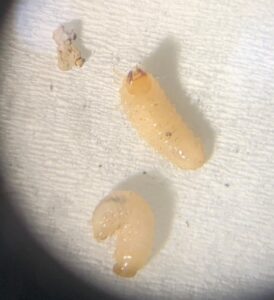
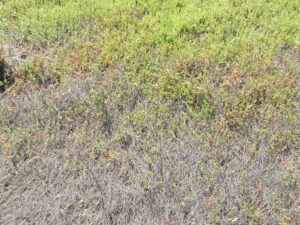
If cranberry beds show signs of damage from root-feeding insects, treatment with imidacloprid (e.g., Admire Pro and generics) should be considered immediately after bee removal (mid-July). Dead patches of vines are often indicative of root-feeding injury (Picture 3). Affected areas should be inspected by pulling dead vines and examining the root zone and surrounding soil for grubs.


Imidacloprid is labeled for control of rootworm (Picture 4), root grubs (Phyllophaga spp.), and other scarab beetles in cranberries. It acts as a contact and stomach poison affecting the insect nervous system and is highly systemic. Because it is highly toxic to honey bees, it must only be used post-pollination.

Picture 4. Larvae of cranberry rootworm

Since most scarab grubs in cranberries have multi-year life cycles, a single application may not fully suppress populations. In many cases, two to three consecutive years

Picture 3. Injury by root-feeding insects

of treatment are required for effective long-term control. Identifying the specific grub species present is therefore important prior to treatment.


Blunt-nosed Leafhopper in Cranberries (22 May 2026)

By: Yahel Ben-Zvi and Cesar Rodriguez-Saona

Rutgers P.E. Marucci Center

New Jersey cranberry growers are increasingly concerned about rising populations of the blunt-nosed leafhopper (BNLH). This increase is likely associated with shifts in pest management strategies, including the adoption of reduced-risk insecticides and decreased use of broad-spectrum products, as well as the expansion of high-yielding cranberry varieties. BNLH is particularly problematic because it transmits a phytoplasma—a type of bacterium that causes false blossom disease (Figure 1). Symptoms of this disease include stunted growth, deformed and sterile flowers that point upward, and a characteristic branching of upright shoots known as witches’ broom.

Figure 1. Cranberry false blossom disease symptoms in mid-May. Note the clustered branching of ‘witches’ broom’, erect and sterile flower buds, and more redness in the leaves. Photo by Yahel Ben-Zvi.

Life Cycle

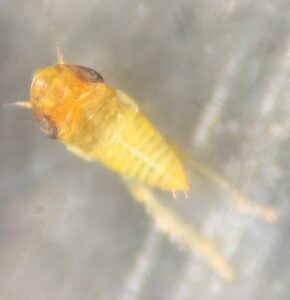
BNLH has one generation per year (Figure 2). Its eggs overwinter embedded in cranberry stems and begin hatching in early May. Nymphs pass through five instars over approximately two months. Adults emerge in early July, peak in mid- to late July, and decline by the first week of August (Figure 3). Adults are characterized by their distinctive blunt heads and vary in color from light yellowish-gray to dark brown. Egg laying occurs between July and August.

Damage

Nymphs and adults feed on cranberry plant sap using their piercing-sucking mouthparts. Although direct feeding causes little visible damage, BNLH is an important pest because it serves as a vector of the phytoplasma that causes false blossom disease.

Management

At this time of year, early-instar nymphs should be active (Figure 2). Here are some guidelines to consider when managing BNLH in cranberries:

  1. Identify Infestation Sites: The key to effective BNLH control is identifying infestation sites. The most reliable method for monitoring this insect is the use of a sweep net. Before bloom, use sweep nets to collect nymphs. Because nymphs are small and difficult to see, bag and freeze the samples to kill them, then count the nymphs using a microscope or magnifying lens.
  2. Sweep Net Monitoring: Perform sweep sets consisting of 25 sweeps each. The recommended number of sweep sets is:
    • 1 per acre

      Figure 2. An early-instar blunt-nosed leafhopper nymph in mid-May. Photo by Yahel Ben-Zvi.

    • At least 10 sweep sets for 10–20 acres
    • 1 sweep set per 2 acres for areas larger than 20 acres
  3. Lack of Economic Thresholds: Establishing an economic threshold for BNLH is difficult because the proportion of phytoplasma-infected individuals within BNLH populations is unknown and may vary by cranberry variety and location. Notably, higher infection rates have been observed in newer varieties, even when BNLH populations are low.
  4. Control Measures: Management decisions should be based on BNLH population trends relative to previous years, the history of insecticide applications, and the cranberry variety grown. If BNLH populations are increasing compared to prior seasons and beds have not been treated for BNLH during the past 2–3 years, treatment should be considered.
  5. Treatment Options: If treatment is necessary, consider the following options for managing BNLH:
    • Timing: The best time for insecticide applications is before bloom to target young nymphs.
    • Insecticide Options:
      • Organophosphates: Diazinon (diazinon), Orthene (acephate)
      • Carbamates: Sevin (carbaryl)
      • Pyrethroids: Fanfare or Brigade (bifenthrin), Danitol (fenpropathrin)

        Figure 3. Life cycle of the blunt-nosed leafhopper. Drawing by Lindsay Lindhult.

      • Neonicotinoids: Assail (acetamiprid), Actara (thiamethoxam)
        Note: Use neonicotinoids with caution before bloom because of their potential negative effects on pollinators. These systemic insecticides can accumulate in pollen and nectar, posing risks to bees.
      • Sulfoximines: Transform (sulfoxaflor). Although effective in small-plot trials at the P.E. Marucci Center, additional data are needed to confirm efficacy at larger commercial scales.
    • Although not scientifically proven, there are claims that Orthene and Sevin may reduce pollinator activity by repelling bees.
    • Rotate insecticides with different modes of action to help prevent the development of resistance in pest populations.

April 2026 Frost Damage in Fruit Crops Survey

We invite you to participate in a brief survey to better understand how April frost events have affected crop production, economic impact, and how growers are managing this risk. The information collected will help us assess the overall severity of the frost and compile broad, aggregated data to effectively communicate its impact to legislative offices and Farm Service Agency, and others.  Your input will help also inform research and Extension programs to support fruit growers in New Jersey better.

Please note that your responses are strictly confidential and will only be reported in aggregate. You should be 18 years or older and involved in fruit production to respond to this survey. Approximate time – 10-12 min.

Ready to start? Please click the link below:

https://rutgers.ca1.qualtrics.com/jfe/form/SV_6zliIMszIABIRjU

If you have any questions or concerns, please contact Seowoo Sophie Lee (seowoo.lee@rutgers.edu) or Hemant Gohil gohil@njaes.rutgers.edu

Thank you for your valuable time.

Sincerely,

This document was approved by the Rutgers University Institutional Review Board for the Protection of Human Subjects on May 13, 2026.

South Jersey Wine Grape Twilight

When:     May 20 (Wed) 5:00 PM
Where:    Saddlehill Winery and Vineyards: 1407 White Horse Rd, Voorhees Township, NJ 08043
Credits:  CORE; PP2; 1A; 10

5:00 pm Welcome and Updates
        Bill Green, Owner, Saddlehill Winery
        Hemant Gohil, Gloucester County Extension Agent, Rutgers NJAES

        Drone in Vineyard Applications – Demonstration
        What Should You Know to Legally Fly Drones in Agricultural Applications?
        Nathan Graham, UAV/Drone Specialist, Hoober Inc., PA.

        Field Observations from the Wine Grape IPM Pilot Program
        Janine Spies, Statewide Fruit IPM Program Leader, Rutgers NJAES.

        Insect Pest Management in the Vineyard
        Anne Nielsen, Extension Specialist in Fruit Entomology, Rutgers NJAES.

        Timing, Chemistry, Coverage: The Formula for Effective Disease Control
        Nancy Sharma, Extension Specialist, Fruit Pathology, Rutgers NJAES.

        Weed Management Updates for Vineyard
        Thierry Besancon, Extension Specialist, Weed Science, Rutgers NJAES.

        Pesticide recertification credits and adjourn.

Light fare will be provided. 
If you plan to attend, please email Joan Medany at jmedany@co.gloucester.nj.us or call 856-224-8030. 
For additional assistance, please contact Hemant Gohil at 856-224-8029 before the meeting.

 [Read more...]