Voles Damage in Orchards: Identification and Control Measures

There have been growing concerns about vole damage in apple and peach orchards in southern New Jersey. Vole populations are often cyclic and can reach high populations every 2-4 years. This, combined with poor weed control in orchards, can lead to disastrous effects on trees. Past winter saw many days of snowpack, which is beneficial for voles in many ways. It provides a safe, insulated space for nesting and easy access to the base of fruit trees, without being preyed upon and causing substantial damage to large acres in a short time.
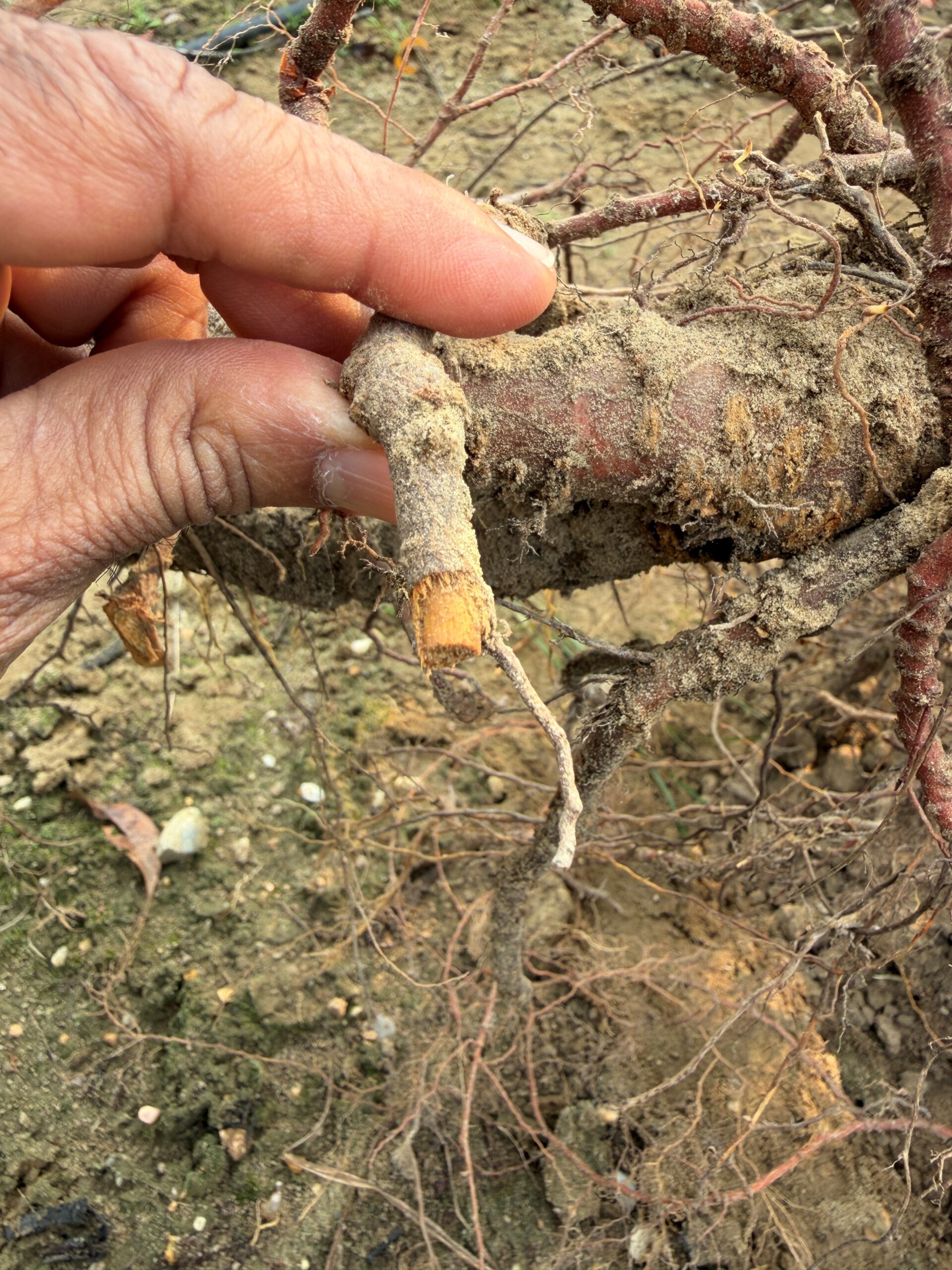
Figure 2. Peach tree root feeding is likely by the pine voles (Photo; H. Gohil).
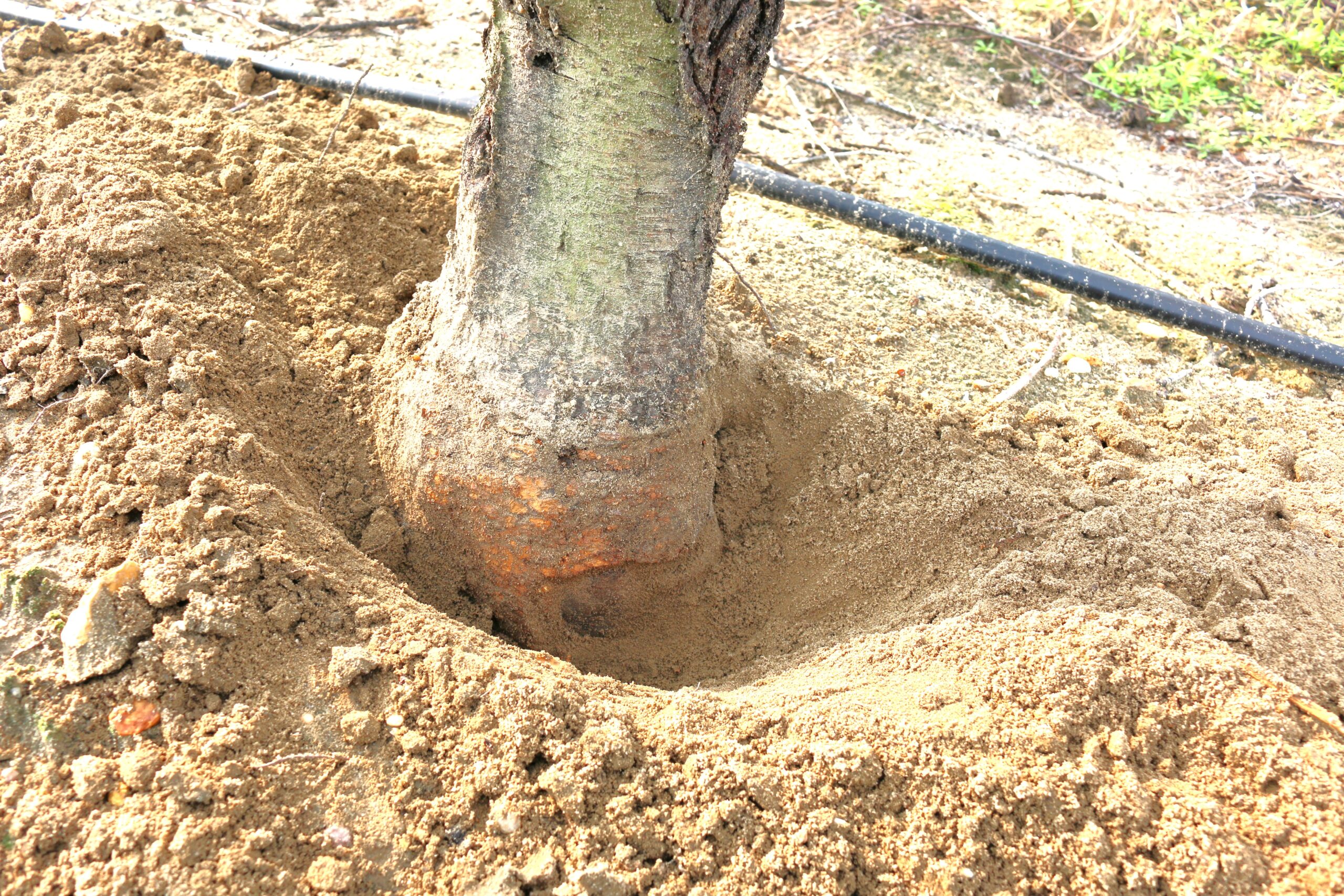
Figure. 1. Vole damage is seen as gnaw marks and girdling at the base of peach tree (Photo; H. Gohil).

Identification and Habitat: Meadow voles and pine voles are two common vole species.  Pine voles have small eyes and small, almost inconspicuous ears, while meadow voles have larger eyes and ears. Meadow voles primarily feed in open vegetation, while pine voles prefer underground burrow systems just below the ground surface. Vole diets include many primary food sources in addition to tree bark. However, they can attack fruit trees during the fall and winter months when other food sources are scarce.

Damage: Direct visible signs of Meadow vole damage are often clearly visible at the ground surface in the form of girdling and or gnawing (Figure 1) at the base of the trunk. Pine vole girdles large roots and eats small roots (Figure 2). Pine vole damage is difficult to notice until the tree growth begins to decline, by which time it is difficult to save the tree. Most pine vole damage will appear as root damage and crown girdling just below

the ground surface. However, when feeding occurs under a deep snow cover, damage can appear at the ground surface.

Secondary symptoms: Vole damage may already be extensive by the time unhealthy, declining trees are observed. Above-ground signs resemble those of water and nutrient stress, including yellowish leaves, premature leaf drop, and branch dieback (Figure 3). Observations of extensive gummosis and tunneling by insect borers in the tree trunk or branches indicate weakened trees that may have sustained vole damage. Secondary infections from Phytophthora and Cytospora canker are more likely to occur in damaged or wounded areas (Figure 4). Drought, winter injury, and extreme fluctuations in early-spring temperatures are compounding factors contributing to tree decline in the orchard.

Fig. 4 Gummosis from the trunk indicative of potential secondary infection and environmental stress (Photo; H. Gohil).
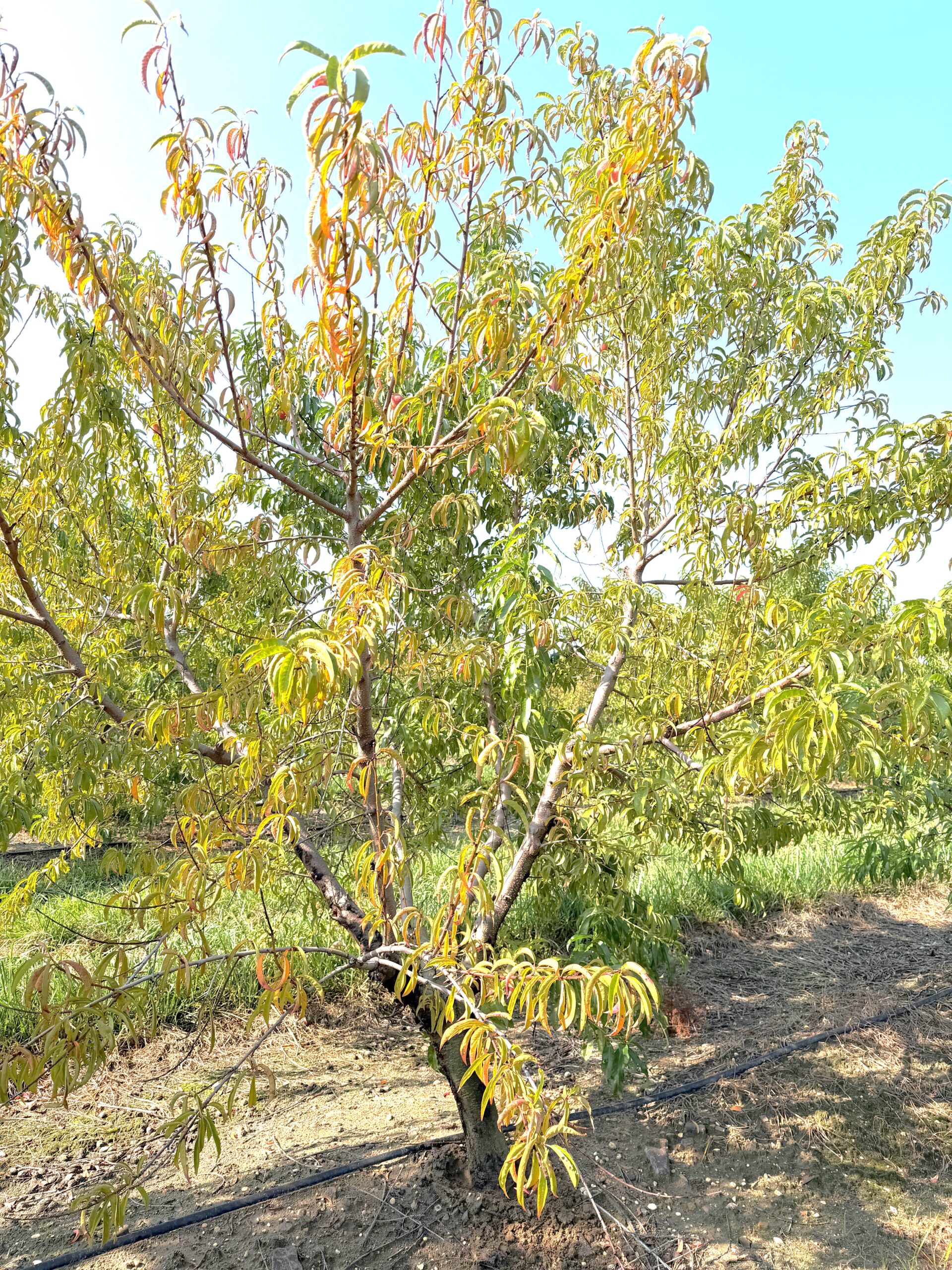
Figure 3. Above- ground symptoms of vole damage. (Photo; H. Gohil)


Figure 5. Presence of holes near the tree indicates vole tunnels and vole damage at the base of the tree (Photo; H. Gohil).

Vole Monitoring: If you notice holes, dime-sized or larger, under the tree, they could be signs of a vole tunnel and likely vole damage (Figure 5). Dig the soil around the trunk and look for gnaw marks or girdling. Meadow voles create an extensive network of surface runways in the grass, about 1.5 inches wide, often visible after close mowing. Bits of leaves and vole droppings in pathways are the surest signs of meadow vole presence. Runways are often spread out through the cover crop in orchard aisles and, under poor weed control, cross back and forth to the tree row. Since pine vole burrows and runways are just underground, there is a “soft” feel of the soil underfoot, which is one indication of pine vole presence. A simple monitoring method is a two-step process. First, place a grid of ‘shelters’ in the orchard. These can be pieces of roofing shingles, heavy tar paper or roof matting, or scraps of wood. After leaving them for 3-5 days so the voles can find them, place apple chunks or slices beneath each shelter. Return in 24 hours and assess which pieces have been chewed. This will give you a rough idea of where controls need to be focused.

Vole Management: 

Non-Toxicant: Regularly mowing ground cover to 3 to 5 inches is a recommended practice for an integrated vole damage management program. It not only limits the availability of food for voles’ survival but also exposes them to predators. Maintaining a vegetation-free zone below the trees discourages voles from living near the trunk, where they can cause significant damage. This is the MOST IMPORTANT aspect of routine vole prevention. Sanitizing the orchard floor by removing leaves and pruned twigs, which attract the voles, is also helpful.

The addition of a 12-inch-diameter, 3-4-inch-deep gravel layer around the trunk will also help. Gravel collapses in on a vole runway, helping prevent voles from accessing the trunk and crown of the tree.

Fig. 6. Bait Station for voles in the orchard

Cylinder-shaped wire guards made from 1/4-inch hardware cloth mesh placed around the tree trunks can protect young trees. However, make sure to bury the hardware cloth at least 6 inches below the surface to control both meadow and pine voles. This exclusion method may not be very practical or cost-effective in large orchards.

Toxicants: Sometimes, to control large-scale vole populations, chemical methods are the only practical option available. When vole populations get too high, toxicants within and near the herbicide strip in the tree rows are the most effective means of controlling them. There are 2 types of toxicants available: 1) zinc phosphide, which is a fast-acting stomach poison, and 2) chlorophacinone and diphacinone, which are slow-acting anticoagulants. Zinc phosphide is extremely toxic. These materials are sold under a number of brand names including for Zinc Phosphide: Prozap Zinc Phosphide Pellets, Prozap Zinc Phosphide Oat Bait, Bonide Orchard Mouse Bait, and Zinc Phosphide Rodent Bait AG. Anticoagulants include Ramik Oats, Ramik Brown, and Rozol Vole Bait. Make sure you have the necessary pesticide applicator license to handle these chemicals.

The reliance on one product over another is discouraged, since voles will get accustomed to grain baits with anticoagulants or become bait-shy of anticoagulants in general. Bait is most effective when placed in simple bait stations, such as under roofing shingles, boards, or scrap plate steel, or in PVC pipe bait stations (Fig. 6). Hand placement in areas of high vole activity, or depositing bait with a trail maker, is also effective. Broadcast placement of toxicants is discouraged, since it is inefficient and can put wildlife at risk. Bait stations can reduce the chances of bait getting into contact with unintended animals or humans. Bait stations are easy to make using 2- to 3-inch PVC pipes in an ‘L’ or ‘T’ shape, with the horizontal pipe providing an opening for voles to enter and the vertical pipe containing the toxicant. Fumigants are usually not effective because shallow depth of vole burrow systems allow fumigants to escape.

Sources:

https://web.extension.illinois.edu/wildlife/files/vole_control_in_apple_orchards.pdf.

http://extension.psu.edu/plants/tree-fruit/commercial-tree-fruit-production/wildlife-damage-control/voles.

https://www.aphis.usda.gov/wildlife_damage/nwrc/publications/93pubs/93-42.pdf.

http://extension.missouri.edu/p/G9445
NJ DEP issues Open Burn Permit from April 6 through April 12, 2025

To Agriculture and Agribusiness Representatives:

The New Jersey Department of Environmental Protection (DEP) is issuing this notice concerning open burning due to colder spring overnight temperatures presently forecasted for areas of New Jersey from April 6 (Sun), through April 12 (Sat), 2025, which could adversely affect fruit, vegetable, and floriculture crops in bloom or near bloom around the state. The DEP intends to exercise its authority and discretion under the Air Pollution Control Code, N.J.A.C. 7:27, et seq., and other applicable authorities to permit the following procedure for open burning or the use of smudge pots to assist farmers in protecting their crops in low temperatures. These cold events could adversely affect some of the fruit, vegetable, and floriculture crops. 

Note: The NJDEP and New Jersey Forest Fire Service caution all farmers and agriculture businesses with respect to the use of open burning in high wind velocity conditions. Please take note that farmers are encouraged to utilize smudge pots is warming as necessary during higher wind conditions. Use of open burning when wind velocity is greater than 5mph is strictly prohibited, may contribute to wildfire risk, and can carry significant penalties.

For the Burn Permit Application form, please see: https://www.state.nj.us/dep/parksandforests/fire/docs/ag-permit.pdf

The DEP intends to exercise its authority and discretion under the Air Pollution Control Code, N.J.A.C. 7:27, et seq., and other applicable authorities to permit the following procedure for open burning or the use of smudge pots to assist farmers in protecting their crops in low temperatures. Procedures for Open Burning and the Use of Smudge Pots Pertaining to New Jersey Fruit, Vegetables, and Floriculture

  • Facilities that believe they will conduct open burning or use smudge pots must provide notice to the DEP 24-hour Communications Center at 1-877- WARN DEP (1-877-927-6337) prior to the use of either technique. • Facilities should notify DEP if they believe they may need to use either technique. • Where DEP cannot be notified in advance, a facility must notify DEP the following morning no later than 9:00 a.m. • The following information must be provided to DEP upon each notification:
  1. Name of the individual deciding to conduct the open burning or use of smudge pots.
  2. Name of the farm or facility
  3. Actual street address of the facility on which either technique will be used.
  4. Contact person and telephone number at the facility.
  5. Predicted temperature (in F) at facility anticipated when the technique will be used.
  6. Predicted wind speed at facility anticipated when the technique will be used.
  7. Predicted hours of open burning or use of smudge pots
  8. Predicted material to be used for open burning or use of smudge pots.
  • Upon completion of the open burning or the use of smudge pots, the facility must provide the following information within 2 business days to the DEP 24-hour Communication Center at 1877-WARN DEP (1-877-927-6337):
  1. The DEP Communications Center incident number
  2. Ambient orchard(s) temperature (in F) at the time the technique was used.
  3. Actual wind speed at the orchard(s) location at the time the technique was used.
  4. A statement that all restrictions in the open burning or use of smudge pots were followed. The restrictions are noted below.

RESTRICTIONS

  • NO OPEN BURNING WILL BE PERMITTED UNLESS: 1. The temperature within the orchard area is at or below the critical temperature for the bud stage. The attached report lists the critical temperatures for New Jersey crops. -AND 2. The wind velocity is less than 5 miles per hour.
  • Authorized open burning material may consist only of either the following materials: clean scrap lumber (untreated), felled trees, prunings, hedgerows or firewood.
  • ABSOLUTELY NO refuse, trade waste, tires, garbage, or other solid waste may be added to the authorized open burning material. Introduction of any unauthorized material into an authorized open burn is a violation of environmental laws and may carry significant penalties.
  • Smudge pots are only permitted when the temperature within the orchard area is at or below the critical temperature for the bud stage (wind velocity restriction does not apply).
  • Smudge pots must be fueled only with either kerosene or No. 2 fuel oil.
  • Failure to abide by these provisions and restrictions may result in enforcement action.


New to Orchards? Homesteading Academy Hosts Educational Tour in June

The Rutgers Homesteading Academy invites you to “Take a Walk with an Expert” at the Rutgers Snyder Research and Extension Farm in Pittstown, NJ (Hunterdon County). Join Dr. Megan Muehlbauer, Hunterdon County Agricultural Agent, for an educational tour of the orchards on Wednesday, June 15, 2022 from 5:30 to 7:30 p.m. [Read more…]

Frost Protection in Orchards – What Should You Monitor?

By Hemant Gohil and Megan Muehlbauer

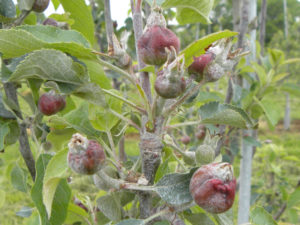
The weather forecast for the next few days indicate subfreezing temperature in several parts of New Jersey. In fruit crops, such events during the flower bud development, can cause crop loss which could vary from minor loss of quality and quantity to a total crop loss. Recently, frost events seem to be occurring more frequently. These events have been driven by warmer spring temperatures pushing bud growth earlier, making blossoms more vulnerable to frost damage.

What to monitor before active frost protection?

Frost damage occurs when plant tissues are exposed to subfreezing temperatures (Figure 1). However, it is the co-occurrence of other factors that determines the extent of the damage. All these factors should be monitored, and will assist in determining which frost protection method to employ and its duration.

Frost damage in apple

Figure 1. Frost damage in apple following the freeze event in 2010 in Pennsylvania (Photo by R. Crassweller).

Bud Stage: Regular monitoring of the bud development stage beginning at bud swell will help in determining the actual threat of frost damage. Critical temperatures have been researched and calculated for each bud development stage. For example, in an apple orchard, at 24°F, one can expect up to 90% crop loss at ‘first pink’ stage, but only marginal to zero percent loss at green tip stage at the same temperature. An example of the critical temperature for some of the most common pome and stone fruit crops In New Jersey is available at https://www.canr.msu.edu/news/critical_spring_temperatures_for_tree_fruit_bud_stages  Note that the critical temperature for damage at a particular bud stage may vary by 4 or 5⁰F depending on temperatures during the previous few days before the cold event.

Type of frost event: There are two types of frost:  Advective and Radiative frost.  Advective frost occurs when a large mass of cold dry air moves in from another region and replaces warmer air such as during a polar vortex. The rapid movement of air aids this, and there is generally an absence of an inversion layer, creating the potential for a prolonged event. Frost protection will generally be not effective during an advective frost.  Conversely, radiative or radiational frost occurs when there is a rapid loss of heat from the ground, usually with a cloudless open sky, dry air, little wind and the likely formation of an inversion layer. This frost is relatively manageable with frost protection methods.

Inversion Layer: A strong inversion layer can be a source of warmer air, and could have a substantial difference in temperature than that closer to the ground.  For this reason, inversions need to be closely monitored.

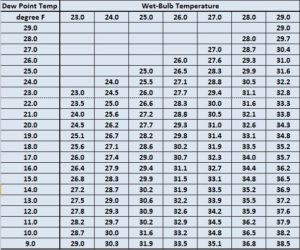
Table of wet bulb temp

Table 1. An example of determining wet bulb temp using ambient temp and dew point. Courtesy, Don Smith, Penn State University

Air Temperature: Frost can occur when the ambient temperature dips below freezing (32°F). The hourly rate of falling temperatures and the lowest forecasted temperature should also be monitored. However, temperature experienced by trees will not necessarily be the same as the reported ambient temperature.  To measure the temperature of the flower buds, farmers must take into account the cooling effect of evaporation of the moisture on the trees which is referred to as the wet-bulb temperature. Generally, the wet bulb temperature will be a few degrees lower than the dry bulb temperature except at the 100% RH. Table 1 provides an example of determining wet bulb temperature using the ambient temperature and the dew point. Hand-held and digital psychrometers can be used in the field to determine the wet bulb temperature.

Recently, Knox et al. (2017) at the University of Georgia showed that wet bulb temperature can be simply derived by ‘subtracting one third the difference between ambient temperature and dew point, from the ambient temperature.’ Modern frost alarms measure wet bulb temperature, which can directly transmit real time data to the user’s mobile phone or computer.

Dew point: Dew point is commonly reported as the atmospheric temperature below which water droplets begin to condense, forming dew. At low temperatures, the moisture in the air transitions from a gas to a liquid, as air temperature reaches the dew point. A higher dew point is associated with relatively slow drops in temperature, and vice versa. A lower dew point also generally means surface moisture will evaporate quicker.

Cloud coverage:  Clear skies normally result in lower low temperatures than when there is cloud cover trapping radiant energy from the ground.

Wind Speed: Wind will determine the rate of loss of thermal energy. Almost all Frost Protection methods will have reduced efficiency at wind speeds above 10 mph, and are therefore not recommended when winds are above 10 mph.

Effective Frost Protection requires weather stations and sensors for each of the fields you are seeking to monitor and protect.  Data from a nearby weather stations may not always be reliable.  On-farm weather stations are the most accurate source of weather data, and should be linked with a frost alarm.

Literature Cited:

Knox JA, Nevius DS, and Knox PN. 2017. Two Simple and Accurate Approximations for Wet-bulb Temperature in Moist Conditions with Forecasting Applications. Bulletin of American Meteorological Society. Sept Issue: 1897-1906. https://journals.ametsoc.org/doi/pdf/10.1175/BAMS-D-16-0246.1

Take home message: 

  • Monitor both your temperature and relative humidity to determine the wet bulb temperature. Remember nighttime temperatures often dip BELOW predicted temperatures, do not GAMBLE.
  • Determine what bud stage your tree fruit are at.
  • If you suspect you are at risk of a nighttime frost event, monitor the weather report for the likelihood of an inversion layer.
  • hink you have a potential for a frost event in your orchard, utilize appropriate frost protection measures.