Search Results for: bagworms

Bagworms + PEST ALERTS (SCALE crawlers) + Ornamental IPM 5/27 Recording Upload

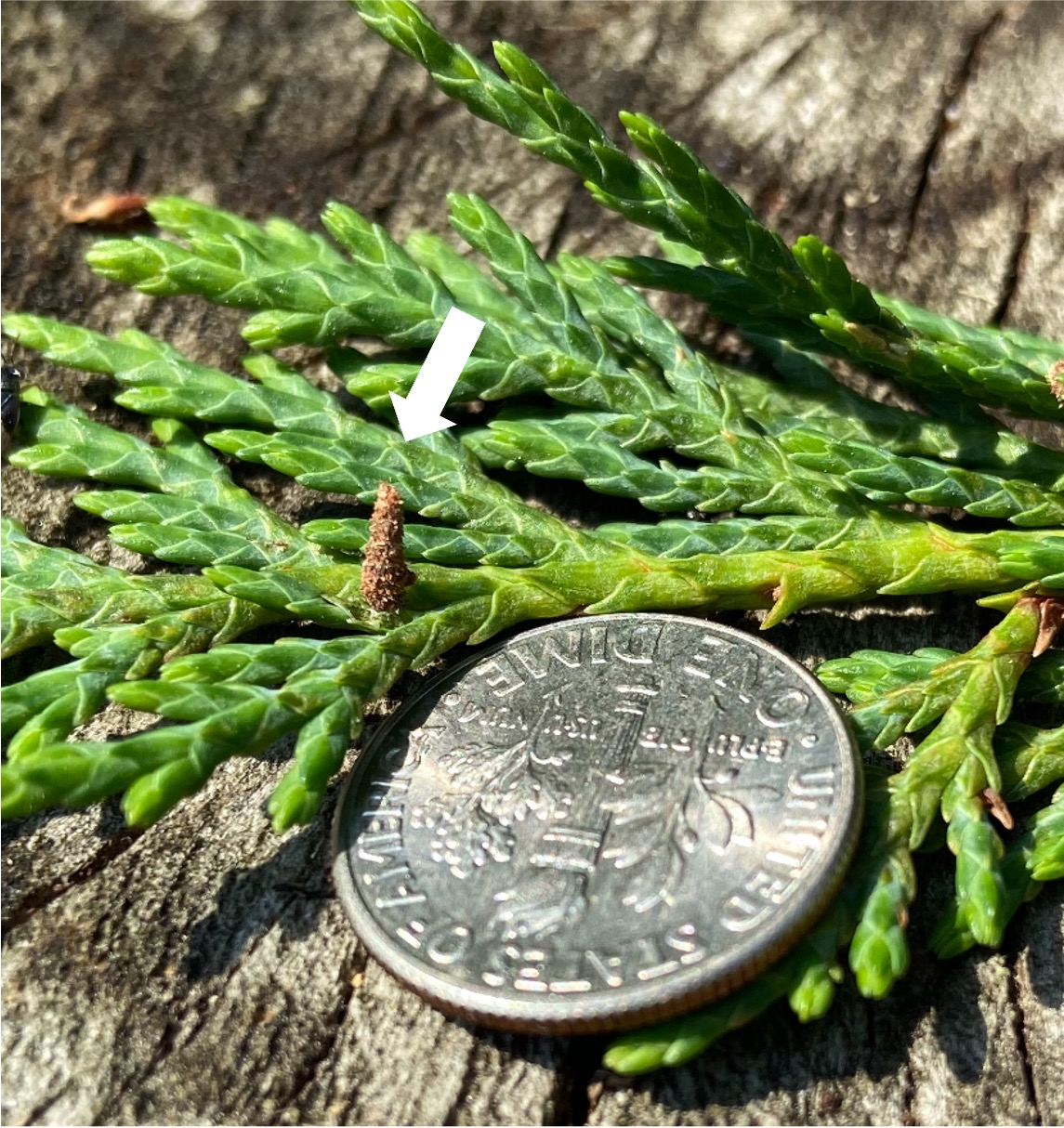
Days old bagworm size

Bagworms should begin hatching NOW through – 4 weeks in NJ, beginning in the southern regions. Now is an optimal time to get this pest on your radar and prepare materials or approaches to attack first/second instar caterpillars. The control window for this pest is typically between 600-900 GDD50  when they begin to hatch and become airborne, i.e. the “ballooning” phase. It is important to check for egg-hatch prior to applications for greatest chemical efficacy, and to continue scouting as they often hatch and develop at asynchronous rates.

It is critical to target these insects EARLY! We need to target when they are as small as shown in the image. 

Bagworm management – mechanical: If eggs have not hatched: hand-remove sacs/bags. Typically female/egg filled sacs are higher in the canopy so keep that in mind while scouting. This removes the problem from the field or landscape.

Treatment options for Lepidoptera (caterpillars) to have at the ready – containing: B.t. (Bacillus thuringiensis), spinosad , bifenthrin ), cyfluthrin, carbaryl, chlorantraniliprole, cyclaniliprole, cyclaniliprole + flonicamid, Lambda-cyhalothrin, cyantraniliprole, Indoxacarb.  NOTE – Lethal pesticide doses are important, as sub-lethal doses can trigger early pupation, making the pest all but invincible to chemical or biological treatments. Follow label exactly.

Still time to Sign up for the 2025 – Rutgers Ornamental IPM Program

(Join us for the next Session Tuesday 6/10/25)

Note we have clearwing borer lures and wing or delta traps, scale crawler tape, and yellow sticky cards available to commercial grower program members at our Cumberland (twaller@njaes.rutgers.edu) and Monmouth (william.errickson@njaes.rutgers.edu) RCE offices.

ALERTS:

  1. Scale crawler emergence throughout the state
  2. Bronze Birch Borer (BBB) and Emerald Ash Borer approaching adult emergence
  3. Clearwing Borer adult flight – still capturing clearwings
  4. Red-headed flea beetle (RHFB) egg hatch – adult emergence
  5. Bagworm reminders – be vigilant

UPLOADS 5/27 SESSION: (contains information on flathead borers (Bronze Birch, Emerald Ash), Armored scales, bagworms, Volutella blight in Boxwoods, Mildews)

  1. Click here for a PDF of May 27, 2025 webinar
  2. Click here for VIDEO of May 27, 2025 webinar

Previous webinars:

(click the ‘Read More’ below for complete dates in S-C-Northern NJ per pest)
 

[Read more…]

Nursery Update 5/20/24 – Red-headed flea beetle and flathead borer ADULT emergence, Boxwood blight, bagworms, more

Please note: The Rutgers Nursery and Green Industry Working Group is working to deliver regular pest and disease updates throughout the season. These will be in addition to important alerts, critical topics, and pesticide credit opportunities. This tool is made for you, the commercial agriculture business, so please let us know if there are particular topics you would like to see included in the regular update.

Email:  twaller@njaes.rutgers.edu Phone: 856-451-2800 Ext. 1.


Projected GDD50 accumulation as of 5/20/2024 (for June – July)
CODE Location 20-May 1-Jun 15-Jun 1-Jul 15-Jul
NJ50 Upper Deerfield (South) 437 658 957 1363 1766
NJ73 Vineland (South) 454 670 961 1360 1755
KMIV Millville Airport (South) 445 655 942 1338 1730
NJ05 Greenwich (South) 453 681 984 1395 1798
NJ10 Howell (Central) 344 545 809 1180 1554
N59 High Point (North) 275 463 683 997 1316
USPEST.ORG – Model: simple average/growing degree-day, Min: 50F – Max: 95F, NMME forecast
Forecast:  7-month NMME based seasonal climate forecast (USPEST.ORG) – Subject to change regularly = Check Often

Please download and print the Rutgers Nursery and Landscape Pest Scouting Guide  or  Conifer and Christmas Tree Pest Scouting Guide and refer to this post “Obtaining your local growing degree-days (GDD)” for additional information.  (See pest scouting guides for complete list of references) 

Please SHARE what you SEE!! If you see a pest, disease, otherwise interesting or troublesome issue please report it to the Working Group by following the QR Code on the front of the Pest Scouting Guides or by filling out this reporting form.

Keep reading for more ALERTS – Red-headed flea beetle and Borer ADULT EMERGENCE, Boxwood Blight, bagworms [Read more…]

Get ready for bagworms…NOW

Days old bagworm size

Days-old bagworm = critical management target – T. Waller – RCE

Bagworms should begin hatching NOW through – 4 weeks in NJ, beginning in the southern regions. Now is an optimal time to get this pest on your radar and prepare materials or approaches to attack first/second instar caterpillars. The control window for this pest is typically between 600-900 GDD50  when they begin to hatch and become airborne, i.e. the “ballooning” phase. It is important to check for egg-hatch prior to applications for greatest chemical efficacy, and to continue scouting as they often hatch and develop at asynchronous rates.

It is critical to target these insects EARLY!

Bagworm management – mechanical: If eggs have not hatched: hand-remove sacs/bags. Typically female/egg filled sacs are higher in the canopy so keep that in mind while scouting. This removes the problem from the field or landscape.

Treatment options for Lepidoptera (caterpillars) to have at the ready – containing: B.t. (Bacillus thuringiensis), spinosad , bifenthrin ), cyfluthrin, carbaryl, chlorantraniliprole, cyclaniliprole, cyclaniliprole + flonicamid, Lambda-cyhalothrin, cyantraniliprole, Indoxacarb.  NOTE – Lethal pesticide doses are important, as sub-lethal doses can trigger early pupation, making the pest all but invincible to chemical or biological treatments. Follow label exactly.

IT IS CRITICAL TO ROTATE MATERIALS (Rotate between IRAC groups) 

DISCLAIMER: The label is the law, always refer to it for allowable host crops, use-restrictions, application rates, reapplication intervals, re-entry intervals (REI), and mix compatibility information. Production and pesticide information on this site are for private/commercial pesticide applicators and landscape professionals only, and are NOT for home gardener use. Provided materials represent examples and do not cover all possible control scenarios. Please contact your local agent or chemical sales representative for more information or to discuss additional pest management options.

BAGWORMS (600-900 GDD) (Bagworm hatch prediction as of 5/24/23)
Crop type Common Name Scientific Name GDD Min (50F) GDD Max (95F) Reference Developmental / Target Stage
Conifer mostly, many minor hosts Bagworm Thyridopteryx ephemeraeformis 600 900 RU Larvae (early instars) – ONLY CONTROL WINDOW
Region Location Station Date (600 GDD) Date (900 GDD) *Treatment window  *Bagworm Hatch – Predictions only, SCOUTING is critical! Treat as soon as larvae detected. 
South Upper Deerfield NJ50 31-May 14-Jun 14 days
Central Howell / Freehold NJ10 9-Jun 23-Jun 14 days
North High Point NJ59 15-Jun 2-July 17 days 

Please download and print the Rutgers Nursery and Landscape Pest Scouting Guide  or  Conifer and Christmas Tree Pest Scouting Guide and refer to this post “Obtaining your local growing degree-days (GDD)” for additional information.  (See pest scouting guides for complete list of references – cited within lists below) 

Please SHARE what you SEE!! If you see a pest, disease, otherwise interesting or troublesome issue please report it to the Working Group by following the QR Code on the front of the Pest Scouting Guides or by filling out this reporting form.

Nursery Pests Scouting June – Bagworms, Scales, Borers, RHFB, BWB


Red-headed flea beetle – Adult emergence beginning any day now

Please refer to this timeline of pest development compiled by Tim Waller in communication with Brain Kunkel (Unv. Del) and Danny Lauderdale (NC State)

  • Contains material selection and timing, along with regime information and considerations

Boxwood Blight Alert – Infection Potential (Saturday) 5/27

Boxwood Blight Risk Assessment as of 5/24/2022
Region Location CODE 24-May 25-May 26-May 27-May 28-May 29-May
Southern Upper Deerfield NJ50 Very Low  Very Low  Low  High Risk Very Low  Very Low 
Central Howell / Freehold NJ10 Very Low  Very Low  Low  Infection Risk Very Low  Very Low 
Northern High Point NJ59 Very Low  Very Low  Very Low  Infection Risk Very Low  Low 
Check local boxwood blight risk here (CLICK HERE – input your area code – select closest weather station – check 7-14 prediction – click on graph / table)


Refer to the most recent Alert for more information – CLICK HERE


Pest Scouting – Please refer to these documents for a full listing of insects pests for your area corresponding to growing degree-days (GDDs). 

Contact if seeing insects at different times: twaller@njaes.rutgers.edu (or call the Cumberland County Extension Office – 856-451-2800)

The following key groups of pests will be active, vulnerable, or otherwise treatable during the next month throughout most of NJ. Here, bagworms, scale insects and borers with key life stage events during the 350-1500 GDD timeframe are discussed. Note there are many other insect pests present this time of year so please view the pest scouting guides above for your particular needs.

Projected GDD50 accumulation as of 5/24/2022 (USPEST) Note: Growing degree-day values utilize daily average air temperatures with a minimum temperature threshold (a.k.a. ‘base’) of 50F = GDD50 (max. temp. threshold set at 95F). These values are accumulated from a biofix date, such as January or March 1st in the NE USA. Provided GDD50 are scouting ranges and should be truthed.
Region Location Station 24-May 1-Jun 1-Jul
South Upper Deerfield NJ50 488 638 1358
Central Howell / Freehold NJ10 426 551 1203
North High Point NJ59 288 387 909
Forecast: NOAA NCEP Coupled Forecast System model version 2 (CFSv2) forecast system (3.5 months) (USPEST.ORG)

Refer to this post “Obtaining your local growing degree-days” for additional information 

BAGWORMS (600-900 GDD) (Bagworm hatch prediction as of 5/24/22 – now until July 14 (Southern NJ (NJ50)))
Crop type Common Name Scientific Name GDD Min (50F) GDD Max (95F) Reference Developmental / Target Stage
Conifer mostly, many minor hosts Bagworm Thyridopteryx ephemeraeformis 600 900 RU Larvae (early instars) –

ONLY CONTROL WINDOW

Refer to this post for additional information on Bagworms

BORER Insect Activity for 350 – 1500 GDD (Now until ~July 1 in Southern NJ (NJ50))
Crop type Common Name Scientific Name GDD Min (50F) GDD Max (95F) Reference Developmental / Target Stage
Malus, Prunus, many Lesser peach tree borer Synanthedon pictipes 350 375 4 Adult flight, egg laying
Dogwood, apple, pecan, elm, hickory, willow Dogwood borer Synanthedon scitula 350 850 4 adults, eggs, caterpillars
Birch Bronze Birch Borer Agrilus anxius 440 880 RU Adults (egg laying)
Malus, Prunus, many Peach Tree Borer Synanthedon sp. 500 600 RU Adults – emerge (1st treatment both types)
Rhododendron Rhododendron borer Synanthedon rhododendri 509 696 RU Adults emerge
Malus, Prunus, many Greater peach tree borer Synanthedon exitiosa 575 710 4 Adult emergence
Many Roundheaded appletree borer Saperda candida 802 1129 RU Adults
Ash Emerald ash borer Agrilus planipennis 1000 1200 4 Peak adult activity
Malus, Prunus, many Peachtree borer Synanthedon sp. 1500 1800 RU Larvae Treatment
Many Roundheaded apple tree borer Saperda candida 1514 1798 5 Typical treatment window
Conifer Nantucket tip moth Rhyacionia frustrana 1514 1917 RU Adults 2nd generation

Click here – “Identifying Clearwing Moth Borers in Pheromone Traps” or “Differentiating the Common Wood Borers of Ash Trees”

[Read more…]

It is time to put Bagworms on your radar in Southern NJ

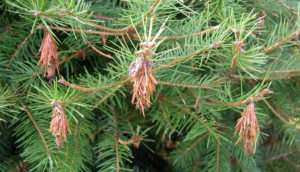
Bagworms

Photo: Rich Buckley

Bagworms should begin hatching in the next 2-6 weeks throughout NJ, starting in the southern regions. Now is an optimal time to get this pest on your radar and prepare materials or approaches to attack first/second instar caterpillars. The control window for this pest is typically between 600-900 GDD50 (growing degree-days) and treatments should be in use prior to their mobile, airborne, “ballooning” phase. Check that the eggs have hatched prior to application of pesticides – as most compounds will not be effective at all if the first instar caterpillars are not present. Lethal pesticide doses are important, as sub-lethal doses can trigger early pupation, making the pest all but invincible to chemical or biological treatments.


Bagworm management – mechanical: If eggs have not hatched: hand-remove sacs/bags. Typically female/egg filled sacs are higher in the canopy so keep that in mind while scouting.

Treatment options for Lepidoptera (caterpillars) to have at the ready – containing: B.t. (Bacillus thuringiensis)(Dipel), spinosad (Entrust SC), bifenthrin (Talstar, UP-Star), cyfluthrin (Decathlon 20WP), carbaryl (Sevin SL), chlorantraniliprole (Acelepryn), cyclaniliprole (Sarisa), cyclaniliprole + flonicamid  (Pradia), Lambda-cyhalothrin (Scimitar GC), cyantraniliprole (Mainspring), Indoxacarb(Provaunt)

IT IS CRITICAL TO ROTATE AS MUCH AS POSSIBLE BETWEEN IRAC GROUPS DUE TO THE NUMBER OF POTENTIAL APPLICATIONS

DISCLAIMER: The label is the law, always refer to it for allowable host crops, use-restrictions, application rates, reapplication intervals, re-entry intervals (REI), and mix compatibility information. Production and pesticide information on this site are for private/commercial pesticide applicators and landscape professionals only, and are NOT for home gardener use. Provided materials represent examples and do not cover all possible control scenarios. Trade-names listed do not imply endorsement and are used as examples only. Please contact your local agent or chemical sales representative for more information or to discuss additional pest management options.

More information on Bagworms:

Steve Rettke’s 2020 PPA Post – Bagworm caterpillars have hatched throughout most of NJ

RU Bagworm FactSheet 

Bagworms on Ornamental Landscape Plants


Photo Credits: Rich Buckley (Plant Diagnostics Laboratory) https://njaes.rutgers.edu/plant-diagnostic-lab/


Bagworms will be hatching very soon and need attention

This advisory has three topics: (1) Bagworm hatch, (2) boxwood blight activity, and (3) NJNLA online pesticide credit course availability.

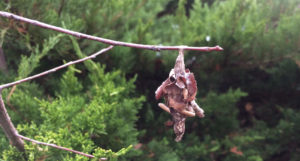
Bagworm hanging from a branch

Photo: Rich Buckley

Bagworms

Photo: Rich Buckley

(1) Bagworms

Bagworms (and many other caterpillars) will be hatching any day now, and should be managed very soon. Bagworms should be targeted during egg hatch through first/second instar caterpillars, typically between 600-900 GDD50 (growing degree-days) prior to their airborne “ballooning” phase. Check that the eggs have hatched prior to application of pesticides as most compounds will not be effective at all if the first instar caterpillars are not present. Lethal pesticide doses are important, as sub-lethal doses can trigger early pupation, making the pest all but invincible.

Growing degree-days as of 6/7 (Using NEWA): (Upper Deerfield: 651 GDD50)(Howell: 502 GDD50)(Pequest: 414.5 GDD50)

Bagworm management: If eggs have not hatched: hand-remove sacs/bags. Typically female/egg filled sacs are higher in the canopy so keep that in mind while scouting.

Bagworm preferred materials: B.t. (Bacillus thuringiensis) and Spinosad containing compounds.

Other bagworm material options: Indoxacarb(Provaunt), chlorantraniliprole (Acelepryne), cyantraniliprole (Ference), growth regulator such as tebufenozide (Mimic), and many other compounds are available. Please contact your extension agent or chemical dealer for more information.

Please read the label. The label will provide use rates, restrictions (phytotoxicity or pollinator concerns), and re-application intervals.

Bagworm links / Shade tree insect recommendations:

https://plant-pest-advisory.rutgers.edu/bagworm-caterpillars-have-hatched-throughout-most-of-nj/#more-5610

https://njaes.rutgers.edu/pubs/publication.php?pid=FS1144

https://njaes.rutgers.edu/pubs/publication.php?pid=E334

Photo Credits: Rich Buckley (Plant Diagnostics Laboratory) https://njaes.rutgers.edu/plant-diagnostic-lab/

(2) Boxwood blight

Please continue or initiate protective/preventative applications this week for Boxwood Blight.

Previous Boxwood PPA 6/4/2020: https://plant-pest-advisory.rutgers.edu/immediate-potential-for-boxwood-blight-activity/

Boxwood blight activity as of today (6/8) for the next week (using a Millville, NJ weather station) 

As of now the predicative model found at (https://uspest.org/risk/boxwood_appindicates that there is a possibility for Boxwood Blight activity Wednesday (10th) and Thursday (11th) of this week. Additionally, I am expecting another round of pathogen activity on Sunday (14th). The tropical storm systems pushing up from the south may bring higher winds and short periods of rain that could easily spread the disease if present. Be mindful of overhead irrigation during this period and only water when leaves will have adequate time to dry.

Please visit and use this webpage for local disease forecasting (select a close-by weather station within the website or application): https://uspest.org/risk/boxwood_app

(3) NJNLA online pesticide credit opportunity

NJNLA pesticide credit webinar/course: Invasive Forest Pests: New Threats and Their Management

Sign-up: https://www.njnla.org/events/EventDetails.aspx?id=1383945

Webinar – June 10th, 2020 – 7:00pm to 8:30pm. Invasive Forest Pests: New Threats and Their Management. You must include your email address when registering. Information to join Webinar will be sent just prior to the start. Cost: $35/Member, $50/Non-Member

NJ Pest Credits: 3A (Ornamentals) – 3, PP2 (Private Applicator Category) – 3, Plus: 2 (Forest) – 3, 8C (Campgrounds) – 3, 9 (Regulatory) – 3,. CNLP: Environment – 1.5, LTE/LTCO: 1 CEU, NJUCF: 1 CEU and ISA is still pending.


Please take the 2020 Nursery Industry Survey: https://forms.gle/dUjLxaiu6qDQYYsRA

Have a plant problem? Contact the Rutgers Plant Diagnostic Laboratory https://njaes.rutgers.edu/plant-diagnostic-lab/


Timothy J. Waller, Ph.D. @ twaller@njaes.rutgers.edu