The Rutgers Farm Health and Safety Working Group is conducting a survey to evaluate the priority needs of New Jersey farmers for training and resource development related to safety and health. As a New Jersey farmer, you are invited to complete this survey by Friday, May 1, 2026. Click here to access the survey and learn more. [Read more…]
Salem County Agronomy Twilight Meeting-1 (May 1, 2026)
SALEM COUNTY AGRONOMY TWILIGHT MEETING-1
Date & Time: May 1, 2026 | 5:00 PM – 7:30 PM
(Program starts at 5:00 PM; please arrive a few minutes early)
Location: Rutgers Cooperative Extension Office, 51 Cheney Rd., Woodstown, NJ 08098
Registration:
Call: 856-769-0090
Email: molly.english@salemcountynj.gov
Credits Applied For:
- CORE: Basic Safety and Handling
- 1A: Agricultural Plant
- 10: Demonstration / Research
- PP2: Private Applicator
- 11: Animal (Livestock) Pest Control
Topics & Speakers:
- The 3R’s of Pesticide Use: Resistance, Rotation, and Regulation
Speaker: Janine Spies, Rutgers Cooperative Extension - The Endangered Species Act Changes to Pesticide Labels
Speaker: William J. Bamka, Rutgers Cooperative Extension - Nitrogen from Air to Soil using Sunlight
Speaker: Joseph R. Heckman, Rutgers University - Agronomist’s Field Guide to Drought Resilience
Speaker: Ramandeep Sharma, Rutgers Cooperative Extension
ALERT: Be prepared to manage White Pine Weevil in conifers early next week
With increasing temperatures, it is plausible that a critical treatment window for controlling White Pine Weevil (WPW) will be present early next week, throughout many areas of NJ. Factors leading to this post include increased air temperatures and climbing growing degree-days (WPW adult movement and egg laying is around 7-58 growing degree-days (GDD50)), and most importantly rising soil temperatures as this pest typically begins movement with soils hovering around 50F. All of these factors lead to the possibility of WPW movement early next week and growers may wish to utilize a preventative, long lasting residual spray (pyrethroids) to target adults before they begin egg laying.
So we have:
- NJ will be within the GDD window for adult movement and approaching egg laying (7-58 GDD50)
- Soil temperatures in some areas may be close to 50F.
- Increased air temperatures and insect mobility
| White Pine Weevil (Pissodes strobi) – potential for emergence as of 3/6/2026 | |||||||||
| Region | Location | CODE | METRIC | FRI | SAT | SUN | MON | TUES | WEDS |
| 6-Mar | 7-Mar | 8-Mar | 9-Mar | 10-Mar | 11-Mar | ||||
| Southern | Upper Deerfield | NJ50 | GDD50 | 0 | 0 | 9 | 13 | 18 | 31 |
| High Temp [ºF] (Average) | 49 (43.5) | 52 (50.5) | 63 (52) | 67 (45) | 71 (62) | 71 (60.5) | |||
| 24hr Average – Soil TEMP [ºF] | 47.1 | <- (This will change over time / no prediction available) | |||||||
| Central | Freehold / Howell | NJ50 | GDD50 | 0 | 0 | 4 | 6 | 9 | 17 |
| High Temp [ºF] (Average) | 42(39) | 49(48) | 62(51.5) | 69(56.5) | 74(63) | 70(59) | |||
| 24hr Average – Soil TEMP [ºF] | 40.7 | <- (This will change over time / no prediction available) | |||||||
| Northern | HACKETTSTOWN | G5633 | GDD50 | 0 | 0 | 3 | 3 | 6 | 17 |
| High Temp [ºF] (Average) | 41(37.5) | 47(45.5) | 61(49.5) | 69(55) | 76(63) | 68(55) | |||
| 24hr Average – Soil TEMP [ºF] | 34.1 | <- (This will change over time / no prediction available) | |||||||
| USPEST.ORG – Model: simple average/growing degree-day, Min: 50F – Max: 95F, NMME forecast | |||||||||
| Forecast: 7-month NMME based seasonal climate forecast (USPEST.ORG) – Subject to change regularly = Check Often | |||||||||
| Air temperatures: Weather Underground (https://www.wunderground.com/) and NEWA: (https://newa.cornell.edu/) | |||||||||
| Soil temperatures (10cm): https://www.greencastonline.com/tools/soil-temperature | |||||||||
| Compiled by Waller. T. 3/6/2026 [twaller@njaes.rutgers.edu] | |||||||||
ALERT – Potential for Ambrosia Beetle flight early next week – if you regularly have issues with this pest – take notice
The last few seasons we have seen an upswing in ambrosia beetle activity in nursery production, principally in field grown nursery stock of thin barked trees (commonly – dogwood, honey locust, magnolia, maple, redbud, zelkova, styrax, Prunus spp.). Based on evidence from multiple lines of trap collection data throughout the United States, adult female flights appear to be correlated to consecutive days (2-3) of 70F temperatures (highs) with daily average air temps around 65F (max+min/2). That is extremely close to what we will have throughout most areas of NJ early next week, based on 10-day weather forecasts. Note: this is historically very early for treatment of this pest and it will get colder the following days, however, we have missed control opportunities over multiple years so take treatment into consideration if you regularly encounter this pest.
Consider using pyrethroids in your production areas next Monday or Tuesday (weather dependent) if this pest has been a regular problem.
Contact insecticides:
- Pyrethroids [3A]: –thrins (bifenthrin, permethrin, etc.) – Pyrethroids longer lasting residual activity is why these materials are so effective against ambrosia beetles.
- Systemic insecticides DO NOT WORK

Stay informed:
- Sign up for the 2026 – Rutgers Ornamental IPM Program – click here to sign up
- First webinar 4/14/26
- Program is free, but registration is required – Registration includes:
- Site visit to your ornamental nursery/farm from Rutgers agents
- Delivered printed IPM resources (Guides, factsheets, bulletins)
- Free pheromone & sticky trap kit + guidance on setup/monitoring (for commercial nursery/greenhouse and Christmas tree farms)
- Access to live bi-weekly webinars (Zoom)
- (First session TUESDAY 4/14 @ 12PM)
- Every Second and Fourth, Tuesday, April through September
Approaching boxwood blight season – 2026 (threat this week in Central and Southern NJ)
March weather is always unpredictable, however, if we have sustained periods of increased temperatures (above 50F) and spring rains, boxwood blight (BWB) can become an issue quickly.
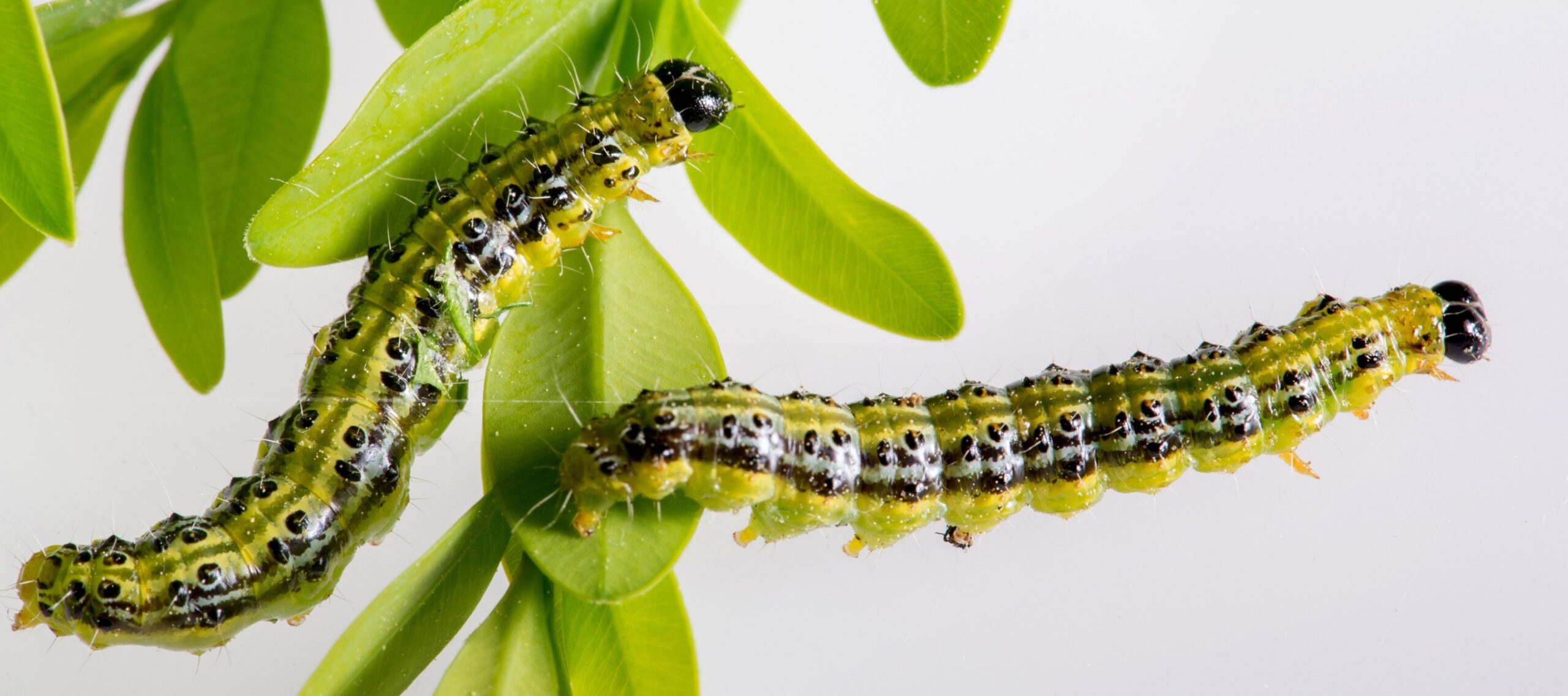
[pictorial tri-fold] Common Boxwood Pests and Diseases (click-here). This includes Box Tree Moth images. Print the PDF out double-sided, then fold.
If you suspect Boxwood Blight and would like to have this verified – please contact the Rutgers Plant Diagnostic Laboratory (click here) for sample submission instructions
| Boxwood Blight Risk Assessment as of 3/2/2026 | ||||||||
| Region | Location | Station
CODE |
MON | TUE | WED | THU | FRI | SAT |
| 2-Mar | 3-Mar | 4-Mar | 5-Mar | 6-Mar | 7-Mar | |||
| Southern | Upper Deerfield | NJ50 | Very Low | Very Low | Very Low | Infection Risk | Low | Low |
| Southern | Vineland | NJ73 | Very Low | Very Low | Low | Infection Risk | Infection Risk | Infection Risk |
| Southern | Millville | KMIV | Very Low | Very Low | Low | Infection Risk | Low | Low |
| Southern | Bridgeton | D4116 | Very Low | Very Low | Very Low | Infection Risk | Low | Low |
| Southern | Mays Landing | G4661 | Very Low | Very Low | Low | Infection Risk | Low | Low |
| Central | Howell / Freehold | NJ10 | Very Low | Very Low | Very Low | Low | Low | Low |
| Central | Princeton | F0303 | Very Low | Very Low | Very Low | Low | Infection Risk | Very Low |
| Central | Somerville | F6261 | Very Low | Very Low | Very Low | Low | Infection Risk | Infection Risk |
| Northern | High Point | NJ59 | Very Low | Very Low | Very Low | Very Low | Low | Low |
| Northern | Randolph | AU137 | Very Low | Very Low | Very Low | Very Low | Low | Low |
| Northern | Belvidere | E7133 | Very Low | Very Low | Very Low | Very Low | Low | Very Low |
| Please check your local boxwood blight risk at (https://uspest.org/risk/boxwood_app) | ||||||||
There is a minor potential for boxwood blight infections this Thursday, Friday, & Saturday throughout Southern and Central NJ. Incoming rains, coupled with warmer temperatures may initiate boxwood blight infections this week. This will likely extend into the following week with anticipated higher temperatures.
-
It is time to begin protective fungicide applications in boxwoods throughout the state if you have not already done so.
- If BWB is important to your business – Use the USPEST – PUSH Alerts – (click here) – to setup weekly email alerts. Create an account, watch the tutorial, and then set up your subscriptions. You select which locations (as many as you like), days you want to receive emails, and what you would like to receive alerts about (BWB and a variety of other pests and diseases). Rutgers is not directly affiliated, however this is an incredible tool.
Farm Safety Needs Assessment
The Rutgers Farm Health and Safety Working Group is conducting a survey to evaluate the priority needs of New Jersey farmers for training and resource development related to safety and health. As a New Jersey farmer, you are invited to complete this survey. Click here to access the survey and learn more. [Read more…]