Approaching boxwood blight season – 2026 (threat this week in Central and Southern NJ)

March weather is always unpredictable, however, if we have sustained periods of increased temperatures (above 50F) and spring rains, boxwood blight (BWB) can become an issue quickly.

[pictorial tri-fold] Common Boxwood Pests and Diseases (click-here). This includes Box Tree Moth images. Print the PDF out double-sided, then fold.

If you suspect Boxwood Blight and would like to have this verified – please contact the Rutgers Plant Diagnostic Laboratory (click here) for sample submission instructions

Boxwood Blight Risk Assessment as of 3/2/2026
Region Location Station

CODE

MON TUE WED THU FRI SAT
2-Mar 3-Mar 4-Mar 5-Mar 6-Mar 7-Mar
Southern Upper Deerfield NJ50 Very Low  Very Low  Very Low  Infection Risk Low Low 
Southern Vineland NJ73 Very Low  Very Low  Low  Infection Risk Infection Risk Infection Risk
Southern Millville KMIV Very Low  Very Low  Low  Infection Risk Low  Low 
Southern Bridgeton D4116 Very Low  Very Low  Very Low  Infection Risk Low  Low 
Southern Mays Landing G4661 Very Low  Very Low  Low  Infection Risk Low  Low 
Central Howell / Freehold NJ10 Very Low  Very Low  Very Low  Low  Low  Low 
Central Princeton F0303 Very Low  Very Low  Very Low  Low  Infection Risk Very Low 
Central Somerville F6261 Very Low  Very Low  Very Low  Low  Infection Risk Infection Risk
Northern High Point NJ59 Very Low  Very Low  Very Low  Very Low  Low  Low 
Northern Randolph AU137 Very Low  Very Low  Very Low  Very Low  Low  Low 
Northern Belvidere E7133 Very Low  Very Low  Very Low  Very Low  Low  Very Low 
Please check your local boxwood blight risk at (https://uspest.org/risk/boxwood_app)  

There is a minor potential for boxwood blight infections this Thursday, Friday, & Saturday throughout Southern and Central NJ. Incoming rains, coupled with warmer temperatures may initiate boxwood blight infections this week. This will likely extend into the following week with anticipated higher temperatures.

  • It is time to begin protective fungicide applications in boxwoods throughout the state if you have not already done so. 

  • If BWB is important to your business – Use the USPEST – PUSH Alerts – (click here) – to setup weekly email alerts. Create an account, watch the tutorial, and then set up your subscriptions. You select which locations (as many as you like), days you want to receive emails, and what you would like to receive alerts about (BWB and a variety of other pests and diseases). Rutgers is not directly affiliated, however this is an incredible tool. 
[Read more…]

Farm Safety Needs Assessment

The Rutgers Farm Health and Safety Working Group is conducting a survey to evaluate the priority needs of New Jersey farmers for training and resource development related to safety and health.  As a New Jersey farmer, you are invited to complete this survey. Click here to access the survey and learn more.  [Read more…]

2026 Central Jersey Turf and Ornamental Institute

Rutgers Cooperative Extension presents

2026 Central Jersey TURF & ORNAMENTAL Institute

Friday, February 27

9:00 am – 3:00 pm

Monmouth County Ag Building

4000 Kozloski Road, Freehold, NJ


Registration: $75 per person (includes Continental Breakfast & Lunch)

Registration Brochure: CJTOI Brochure 2026

 732-431-7260 or email Catherine.VanBenschoten@co.monmouth.nj.us

Registration by cash, check, or purchase order only.


Agenda:

  • CORE Pesticide Safety for Ornamental IPM – Tim Waller, Ph.D.
  • Boxwood BMPs and Alternative Shrubs – Bill Errickson, Ph.D.
  • Managing Scale in the Landscape – Steve Rettke
  • Integrated Pest Management for Invasive Plant Species in Woodlands, Fields, and Parks – R.J.Curcio and Maggie Coakley
  • Mosquito & Tick Management for Green Industry Professionals – Emily Fontaine
  • Things to Consider Before Applying Fungicides to Control Turfgrass Diseases – Ming-Yi Chou, Ph.D.
  • Integrated Weed Management for Turfgrass – Matthew Elmore Ph.D.
  • Turfgrass Fertility Management for Sports Fields and Grounds – Brad Park

Recertification Credits:

  • Core = 2 credits
  • PP2 = 4 credits
  • 1A = 2 credits
  • 2 = 2 credits
  • 3A = 4 credits
  • 3B = 3 credits
  • 6B = 4 credits
  • 8A = 1 credit
  • 8C = 7 credits
  • 9 = 2 credits
  • 10 = 6 credits
  • 13 = 1 credit
  • ProFACT = 1 credit


NEED PESTCIDE RECERTIFICATION CREDITS? REGISTER TODAY

4 CORE Credits – Pesticide Safety Workshop

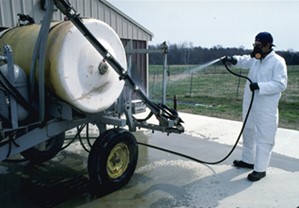
A Tuesday, January 20, 2026 Workshop for Pesticide Applicators to gain CORE Credits towards their license will be held at the NE Agriculture Expo at Harrah’s in Atlantic City to start of this year’s event. This workshop will take place from 10:00AM to 12:00PM. Licensed applicators must accumulate 8 CORE Credits over a 5-year period to maintain their NJDEP Pesticide Applicators License. This workshop will offer 4 CORE Credits. Pre-registration is requested and can be found on the VGANJ website at https://vganj.com“>https://vganj.com. Registration cost is $25 per person and non-refundable. Registration for this workshop is separate from the convention registration and attendees must also register for the expo at https://vganj.com/convention-tickets. The topics include: Pesticide Safety – Personal Protection Equipment for the Pesticide Applicator; Update on US EPA Worker Protection Standards; Storage, Tank Mixing, Tank Cleaning, and Disposal; Pesticide Record Keeping and Notification. For more information contact Bill Bamka (bamka@njaes.rutgers.edu) or Michelle Infante-Casella (minfante@njaes.rutgers.edu).

For the full program (January 20-22nd) of Rutgers Educational Workshops and Sessions that offer more credits and diverse topics, see https://go.rutgers.edu/2026rutgerseduprog

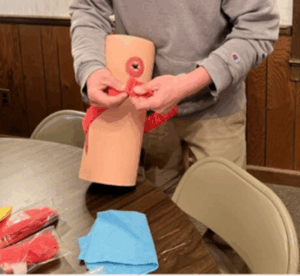
South Jersey Farmers – Stop the Bleed Training – February 2, 2026

STOP THE BLEED TRAINING
FOR FARMERS AND THE AGRICULTURAL COMMUNITY
REGISTRATION REQUIRED – NO COST

REGISTER USING THIS LINK OR QR CODE:
https://go.rutgers.edu/stopthebleed


DATE: MONDAY, FEBRUARY 2, 2026 TIME: 9:00AM
LOCATION: GLOUCESTER COUNTY OFFICE OF GOVERNMENT SERVICES
1200 N. DELSEA DR., CLAYTON, NJ

Rutgers Cooperative Extension’ Farm Health and Safety Team has partnered with the Gloucester County Emergency Services to provide “Stop the Bleed” training for the farming community.

Don’t miss this opportunity to learn the life-saving skills of pressure application, wound packing, and use of tourniquets. The first 25 registrants will also receive a complementary bleeding control kit.

Space is limited, register today.

If you have questions contact Rutgers Cooperative Extension of Gloucester County 856-224-8040 ext. 1 or email minfante@njaes.rutgers.edu

Rutgers Farm Health and Safety Team:
Agricultural Agents: Kate Brown, Michelle Infante-Casella, William Bamka, and Stephen Komar

Northeast Sustainable Agriculture Research and Education – Farmer Grant Applications Available – Due December 9, 2025

The Call for 2026 Northeast SARE Farmer Grant applications is now available. Awards of up to $30,000 are available, depending on the complexity of a project. Proposals are due no later than 5:00 p.m. EST on December 9, 2025. The NJ SARE Coordinator is Stephen Komar, Agricultural Agent in Sussex County and Michelle Infante-Casella is the Assistant Coordinator for SARE in NJ. If you have questions you can send an email to Steve or Michelle, or contact your local county Rutgers Cooperative Extension Agricultural Agents who can assist and also provide technical assistance.


Northeast SARE Farmer Grants provide the resources farmers need to explore new concepts agriculture conducted through experiments, surveys, prototypes, on-farm demonstrations or other research and education techniques. Projects address issues that affect farming with long-term practical impacts in mind.
Farmer Grants are designed to be a strong starting point for farmers interested in pursuing grant funding of projects. Before starting their proposals, potential candidates identify a Technical Advisor who can provide non-farming expertise in areas such as research design, troubleshooting, and promotion. The Technical Advisor acts as a go-to support person throughout the grant project, making it easier on first time grantees and forging new relationships in agricultural communities across the Northeast.


Northeast SARE funds projects in a wide variety of topics, including marketing and business, crop production, raising livestock, aquaculture, hydroponics, silvopasture, and more.


Northeast SARE covers the Northeast and Mid-Atlantic states of Connecticut, Delaware, Maine, Massachusetts, Maryland, New Hampshire, New Jersey, New York, Pennsylvania, Rhode Island, West Virginia, Vermont, and Washington, D.C.


The Farmer Grant program is specifically for farmers. Northeast SARE will be releasing calls for proposals for other grant programs in the coming months.

For applications, tutorials on farmer grants, and other important information about this grant program see the NESARE Farmer Grants Webpage.