Freeze injury on grape flower buds and canes can cause crop loss and increased disease problems, but freeze damage at the graft union can kill the entire vine! The most effective technique for limiting freeze injury to the graft union is hilling up soil around the vines high enough to cover the graft union with 3 to 4 inches of soil. This practice is especially important for vines less than 5 years old. Now, before temperatures drop and the ground freezes is the time to get out there and hill up your vines. Factsheet 1264 https://njaes.rutgers.edu/fs1264/ details the following important aspects of hilling-up to protect the graft union from cold damage.
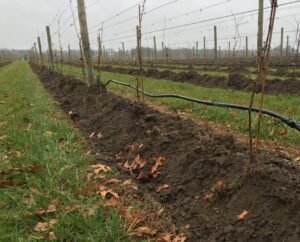 The principle of Hilling-up – How the soil works, both as a thermal mass that holds the heat and an insulator that slows heat loss.
- How to perform effective hilling-up using available and specialized implements.
- Cost benefits of using the implements.
- Challenges such as timing, preventing damage to the drip lines and trunks during hilling-up; and how to address those challenges.
- The process of hilling down in the spring to prevent root formation above the graft union and proper weed management.
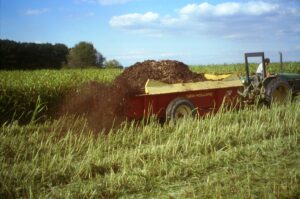 Multiple Northeast SARE (Sustainable Agriculture Research and Education) grant recipient Tommye Lou Rafes, of T.L. Fruits and Vegetables in West Virginia, is sharing her experiences to help other farmers experiment with new ideas through the Farmer Grant program.
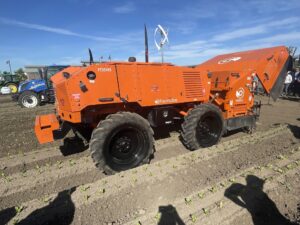
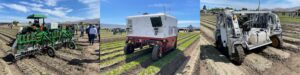
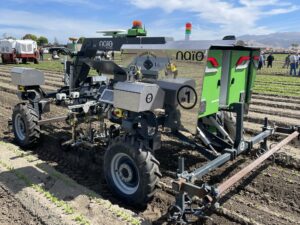 Weed management in vegetables can be difficult due to a shrinking labor pool, which is becoming more costly to source, and a lack of effective herbicides. Research and extension efforts must focus on integrating novel weed technology into current crop production systems. Autonomous and semi-autonomous robotic weed control technology has been implemented by some vegetable growers, mainly in the Western US, but is not universally available to or adapted by many producers. This survey is designed to new tools of interest (e.g. precision sprayers or cultivators, electrical weeders, drones, etc.) for managing weeds in cole crop and leafy green systems as well as the environmental, physical and economic barriers to adoption. The results of this survey will benefit vegetable growers by enabling the research team to develop relevant and realistic research efforts informed by the needs of and constraints faced by our local stakeholders. Specifically, we will use survey data to develop a multi-regional USDA grant proposal to bring grower-specified technology to each our states for evaluation and demonstration under a variety of commercial conditions and provide growers with an economic assessment of their performance relative to current best management practices.