Early Season Tree Fruit Pest Control in 2026

Dormant Oil Sprays: In recent growing seasons, San Jose scale and white peach scale populations have been causing increasing amounts of damage. These pests create a superficial spotted injury caused by crawler stage feeding on the skin of apples and peaches, making the fruit unmarketable. In severe infestations, heavy crawler populations feeding on the sap of tree limbs can cause severe dieback. Scale overwinter on the limbs of trees asimmature crawlers under their protective waxy covering. In the spring when temperatures begin to rise, they respire through this covering. Dormant oil sprays are your first line of defense as they work to coat the protective covering of the scale and prevent respiration. Dr. Anne Nielsen’s lab found that another effective option at the delayed dormant timing is Centaur at 34.5 oz/A.

European red mite is another pest of concern that can be targeted at this stage. These mites feed on the foliage of tree fruit causing a bronzing symptom. Feeding from this pest can reduce fruit quality and tree vigor. European red mites overwinter in orchards as eggs. These eggs begin to hatch just prior to pink through bloom in apples. Dormant oil efficacy improves the closer you are to egg hatch for this pest so an application should be timed for green tip-half inch green in apple.  
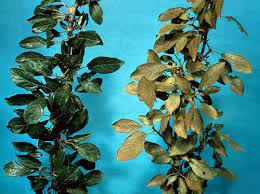
Pear psylla typically become active and begin laying eggs in NJ in mid-late March. Nymph stage pear psylla feed on the sap of pear trees and excrete honeydew which causes black sooty mold on fruit making it unmarketable. This pest also injects a toxin into the leaves as it feeds causing the leaves to blacken and eventually leads to defoliation. Dormant oil works to deter pear psylla from laying eggs and acts as a first line of defense against this pest.  
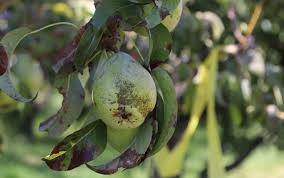
Proper coverage with dormant oil is essential for it to work properly. Due to this, dormant oil should be applied as a full block spray instead of alternate row middle. It is important to ensure your sprayer is properly calibrated and that you are using a sufficient spray volume. Dr. Brett Blaauw from the University of Georgia found that 100 gal/A is a sufficient volume for coverage IF the trees are properly pruned prior to the dormant oil application (see University of Georgia factsheet). It is possible to achieve almost 100% coverage by making multiple dormant oil applications. This strategy is optimal because it also allows you to target both scale and mites at their optimal timings. One application can be made early on when temperatures first begin to rise above 51°F to target scale and a second application can be made between green tip and ½” green to target mites and continue controlling scale. An oil application at ½” green combined with Esteem at 4-5 oz/A will also provide control of aphids including wooly apple aphid. Wooly apple aphid populations have been becoming more prevalent in NJ apple orchards in recent years, likely due to dry end of summer conditions and pyrethroid use flaring populations. The first place this pest will begin to pop up will be pruning cuts so be sure to keep an eye out as the season progresses since early action is critical for effective control.  

Dormant oil application rates depend on the phenological stage and the crop you are spraying. Typically, oil is recommended at a 2% rate or 2 gallons of dormant oil per 100 gallons of spray mix. You can perform concentrated sprays of 6 gallons of dormant oil per 100 gallons of spray mix in pome fruit based on the dilute volume of 300 gallons per acre (amount generally considered to cover a mature semi dwarf apple to the point of drip). In stone fruit, a concentrated spray would include 4 gallons of dormant oil per 100 gallons of spray mix based on the dilute volume of 200 gallons per acre (amount generally considered to cover a mature peach tree to the point of drip). Oil can safely be applied up to the pink stage of tree fruit, but the rate should be dropped the closer you get to this stage. For example, in pome fruit a full rate can be applied up to ½” green, this rate should be halved up to tight cluster and then halved again up to pink.   

When applying dormant oil, it is important that you do not make an application within 2 days of the temperature dropping below 32°F. Another important consideration is that oil should not be applied within 2 weeks of Captan due to phytotoxicity concerns. There are other insecticides that can be mixed with dormant oils to target these pests; however, results are variable on whether the addition of these insecticides improves efficacy over oil alone. 

Dormant Season Copper Sprays: Fire blight can be targeted at the dormant stage using copper as your first line of defense. The copper targets cankers caused by fire blight and reduces the amount of bacterial inoculum present in the field. Early season copper sprays can also be effective against apple scab if some green tissue is present in the bud. Copper should not be applied after ½” green due to concerns with phytotoxicity and fruit russeting. If tank mixing copper with dormant oil, extra precaution should be taken to ensure there is no risk of freezing temperatures since this can exacerbate issues with phytotoxicity and injure the tree.  

The bacteria causing fire blight can only survive inside of living tree tissue. The winter is an optimal time to remove infected branches since the sap is not flowing, this reduces the risk of spreading the inoculum to your next cut. Removing the cankers caused by this disease where most of the bacteria are surviving will reduce your inoculum levels and make this disease easier to manage during the spring. It is a good practice to flag limbs that were infected with fire blight in the previous season to make the cankers easier to find when it comes time to prune. Pruning crews should be trained to look for sunken, dark, cracked areas on the tree bark that may be cankers. A knife can be used to peel away the tree bark to confirm the presence of the canker. If it is in fact a canker, the sapwood will be brown. You can continue peeling the bark away until you find the margin of the canker where the sapwood is still healthy and green. The pruning cut should be made at least 8 inches below the canker to ensure no inoculum is left behind in the tree. All canker prunings should be removed from the orchard since they can still act as a source of inoculum if left behind on the orchard floor.  

If peach leaf curl was not targeted in the late fall at leaf drop, a fungicide application is also effective in the late winter prior to bud swell. Copper, Ziram, and Bravo (Chlorothalonil) are the most effective options at this timing.  

Dormant Season Urea Sprays: Dormant season urea sprays are an extremely effective tool to reduce inoculum in orchards with high apple scab pressure. These sprays help to break down the leaf litter more quickly, which isessential for orchard sanitation and reduction of foliar disease inoculum. Urea applications are most effective if applied after leaf drop in the fall, but if you didn’t have a chance to make the application, it is not too late! Urea can be applied to leaf litter in the late winter or early spring using an airblast sprayer with nozzles pointed towards the ground or a boom sprayer at a rate of 40 lb/A in 100 gallons of water. A flail mower can also be used to chop leaf litter,which allows it to decompose more quickly. By using these methods, you can reduce your apple scab inoculum by 80% or more, which will make management easier and more effective during primary scab infection. 

Reminder – South Jersey Vegetable Integrated Crop Management Twilight Meeting

Tuesday, April 30, 2024
6:00 p.m. – 9:00 p.m.
East Vineland Fire Hall
4931 Landis Ave. across from the Savoy Restaurant
(please park behind the building and enter conference room door in rear)

Pesticide Credits Approved

  • CORE (Basic Safety & Handling)              1
  • PP2 (Private Applicator)                             2
  • 1A (Agriculture Plant)                                 2
  • 10 (Demonstration & Research)                2

USDA’s SARE Program – Resources and Farmer Grants

  • Michelle Infante-Casella, RCE Gloucester

Pesticide Safety and Compliance Tools for Growers and Applicators

  • Pat Hastings, RCE Pesticide Education Program Coordinator

Management Options for Allium Leaf Miner, Diamondback Moth, & Corn Earworm

  • Kris Holmstrom, RCE Vegetable IPM Program Associate

Implications of EPA’s Herbicide Strategic Plan to Comply with the Endangered Species Act &

Weed Management Strategies for Spring and Summer Vegetable Crops

  • Dr. Thierry Besancon, RCE Specialty Crop Weed Specialist

Unlocking the Power of Social Media Marketing Trends

  • Claudia Gil-Arroyo, RCE Cape May

Disease Control Options for Spring Vegetable Crops

  • Dr. Andy Wyenandt, RCE Vegetable Plant Pathologist

Changes to the New FSMA Water Rule Now in Place, and to the Harmonized Audit

  • Dr. Wes Kline, RCE Cumberland

Pesticide Recertification Credits have been requested for this meeting. We hope you’ll be able to join us.

South Jersey Vegetable Integrated Crop Management Twilight Meeting

Tuesday, April 30, 2024

6:00 p.m. – 9:00 p.m.

East Vineland Fire Hall

4931 Landis Ave. across from the Savoy Restaurant

(please park behind the building and enter conference room door in rear)


USDA’s SARE Program – Resources and Farmer Grants

  • Michelle Infante-Casella, RCE Gloucester

Pesticide Safety and Compliance Tools for Growers and Applicators

  • Pat Hastings, RCE Pesticide Education Program Coordinator

Management Options for Allium Leaf Miner, Diamondback Moth, & Corn Earworm

  • Kris Holmstrom, RCE Vegetable IPM Program Associate

Implications of EPA’s Herbicide Strategic Plan to Comply with the Endangered Species Act &

Weed Management Strategies for Spring and Summer Vegetable Crops

  • Dr. Thierry Besancon, RCE Specialty Crop Weed Specialist

Unlocking the Power of Social Media Marketing Trends

  • Claudia Gil-Arroyo, RCE Cape May

Disease Control Options for Spring Vegetable Crops

  • Dr. Andy Wyenandt, RCE Vegetable Plant Pathologist

Changes to the New FSMA Water Rule Now in Place, and to the Harmonized Audit

  • Dr. Wes Kline, RCE Cumberland

Pesticide Recertification Credits have been requested for this meeting. We hope you’ll be able to join us.

Tree Fruit IPM Report for May 25, 2023

Peach:

Bacterial Spot: Generally we recommend starting at 0.5 ozs metallic copper and gradually lowering the rate as the season progresses. The rate applied will depend on the formulation. Dr. Lalancette published a chart listing common copper formulations and rates for peach and nectarine applications. Avoid combining copper with captan especially if it has been overcast for several days. Also avoid acidic spray solutions when applying copper. Dr. Lalancette has published a handy guide for copper applications in early covers. Antibiotics such as Mycoshield or Fireline may also be used and may offer slightly more residual activity during long wetting periods. Bacterial Spot leaf symptoms have began appearing in southern county orchard during the week of 5/8. These infections probably occurred mostly during the heavy rains that occurred on 4/30-5/1. Fruit symptoms from this set of infections have so far not appeared. This week no significant increase in symptoms was noted.

Oriental Fruit Moth: A biofix point for OFM was set on 4/10 in both northern and southern counties.  All timings for first generation OFM have past.

OFM 2nd Generation Timing
Insecticide Type
County/Region Degree Days by  5/24 base 45 Conventional

1450-1500

Diamide

1300-1400

Gloucester – Southern 603 1st –too far off

2nd – too far off

1st –too far off

2nd – too far off

Middlesex – Northern 578 1st –too far off

2nd – too far off

1st –too far off

2nd – too far off

Plum Curculio; Tarnished Plant Bugs; and Other Catfacing Insects: Plum Curculio start to move into orchards at about 88-100 degree days base 50 after January 1. Applications for PC should be initiated once all petals are off, with a second application made with ovicidal materials at 379-402 DD. Additional applications with effective materials may be made between 520 and 730 DD base 50. Currently we have accumulated about 498 DD base 50 in southern counties, and 426 DD base 50 in northern counties. Growers can monitor degree day development at their site by finding the nearest weather station and using the degree day development tool at NEWA. Catfacing insects are active, but will become more of an issue as temperatures warm and mowing and other ground cover activities become more common.

Scale Insects: White peach scale crawlers have begun emergence in southern counties and will continue emergence for the next few weeks. San jose scale crawlers typically begin emergence about late May or Early June and continue emergence for up to 6 weeks. Control options during crawler emergence include Neonicitiniods (suppression only), and the IGR’s Esteem and Centaur. See the NJ Commercial Tree Fruit Production Guide and the product labels for more information.

Apples and Pears:

Diseases: Now that primary scab is nearing the end, or has ended, the focus turns toward summer diseases such as fruit rots (esp. Bitter rot), and sooty blotch and fly speck. Bitter rot control has been difficult at best in recent years even where management programs have been rigorous. Research has suggested Products such as Merivon, Luna Sensation and Inspire Super may be effective, and longtime reliable broad spectrum fungicides such as captan and ziram should provide control. Experience has suggested that the addition of phosphorous acid products such as Prophyt or Rampart to captan sprays may improve control. Observations are that these products improve control of other summer diseases such as sooty blotch and flyspeck, and may help suppress scab infections where present.

Fire Blight: Infections can still occur post bloom so covers with antibiotics when infection events are forecast using the NEWA fire blight model may be beneficial. Remember to rotate streptomycin and oxytetracycline products. Fire Blight symptoms began appearing in southern county apple and pear orchards the week of 5/1. Typically it is recommended to cut out infected limbs however this is a practical decision that must be made. This blog post from Michigan State may be helpful to decide whether it is worth cutting out infected tissue.

Codling Moth (CM): The first codling moth flight has started. A biofix was set for CM on April 17th in both northern and southern counties.

Codling Moth Degree Day Timing
Application and Insecticide Type
County Area Biofix Rimon:

75-100DD + 14-17 days later


Intrepid

150 + 450 DD

Diamides – Altacor, Voliam mixes: (150-200 DD)

Cyd-X, Carpovirusine

250 DD + every 7-9 days during brood hatch (later if first spray is an IGR)

Standard Insecticides –  Delegate, Avaunt, OP’s, carbamates, pyrethroids

250 DD + 550 DD


DD 75 100 150 450 250 250 550
Southern April 17 past past past 6/4 5/21 5/21 6/7
Northern  past  past  past 6/6 5/23 5/23 6/11

Tufted Apple Budmoth (TABM): A biofix for TABM was set in southern county orchards on 5/8. Nothing needs to be done for TABM at this point. The first alternate middle applications for TABM will be on or about 6/3 in southern counties. This has been considered a minor pest in recent years. Many materials used for Codling Moth will also control TABM.

Pear:  Second generation pear psylla began hatching about 5/15. Options for control include spynosyn products such as Delegate and Entrust, and the neocitinoids (IRAC group 4A). The addition of 0.25-1 gal of summer oil may improve control. Other options include Movento, and products containing abamectin. Be sure to read and follow the label instructions regarding the addition of penetrants for these products.

Tree Fruit Trap Captures – Southern Counties

STLM TABM-A CM BMSB OFM-A DWB OFM-P TABM-P LPTB PTB
4/15/2023 433 20 1
4/23/2023 423 1 13 8 4
4/30/2023 417 7 15 4 1 0
5/06/2023 9 2 3 1 0 0
5/13/2023 18 2 7 2 3 0 6 6
5/20/2023 5 18 6 0 51 0 13 67

Tree Fruit Trap Captures – Northern Counties

STLM TABM-A CM BMSB OFM-A DWB OFM-P TABM-P LPTB PTB
4/8/2023 10
4/15/2023 20 3
4/30/2023 28 11 6
5/06/2023 22 2 19 9
5/13/2023 34 1 3 2 5 0
5/20/2023 31 6 7 1 6 0

Phenology Table: Based on annual observations made in Gloucester County.

Pest Event or Growth Stage Approximate Date 2023 Observed Date
 Bud Swell (Redhaven)  March 23 +/- 15 Days March 7
1/4″ Green Tip Red Delicious March 31 +/- 13 Days March 27
Pink Peach (Redhaven) April 4 +/- 15 Days March 24
Tight Cluster Red Delicious April 9 +/- 13 Days April 7
Full Bloom Peach (Redhaven) April 9 +/- 14 Days April 4
Pink Apple (Red Delicious) April 14 +/- 12 Days April 11
Full Bloom Apple (Red Delicious) April 22 +/- 11 Days April 16
Petal Fall (Redhaven) April 22 +/- 10 Days April 15
Petal Fall (Red Delicious) April 27 +/- 13 Days  May 3
Shuck Split (Redhaven) April 30 +/- 11 Days April 21
Pit Hardening June 15 +/- 9 Days


Tree Fruit IPM Report for May 18. 2023

Peach:

Bacterial Spot: Generally we recommend starting at 0.5 ozs metallic copper and gradually lowering the rate as the season progresses. The rate applied will depend on the formulation. Dr. Lalancette published a chart listing common copper formulations and rates for peach and nectarine applications. Avoid combining copper with captan especially if it has been overcast for several days. Also avoid acidic spray solutions when applying copper. Dr. Lalancette has published a handy guide for copper applications in early covers. Antibiotics such as Mycoshield or Fireline may also be used and may offer slightly more residual activity during long wetting periods. Bacterial Spot leaf symptoms have began appearing in southern county orchard during the week of 5/8. These infections probably occurred mostly during the heavy rains that occurred on 4/30-5/1. Fruit symptoms from this set of infections should begin appearing soon. This week no increase in symptoms was noted.

Oriental Fruit Moth: A biofix point for OFM was set on 4/10 in both northern and southern counties.  All timings for first generation OFM have past. Second generation timings are updated below:

OFM 2nd Generation Timing
Insecticide Type
County/Region Degree Days by  5/17 base 45 Conventional

1450-1500

Diamide

1300-1400

Gloucester – Southern 496 1st –too far off

2nd – too far off

1st –too far off

2nd – too far off

Middlesex – Northern 482 1st –too far off

2nd – too far off

1st –too far off

2nd – too far off


Plum Curculio; Tarnished Plant Bugs; and Other Catfacing Insects: Plum Curculio start to move into orchards at about 88-100 degree days base 50 after January 1. Applications for PC should be initiated once all petals are off, with a second application made with ovicidal materials at 379-402 DD. Currently we have accumulated about 425 DD base 50 in southern counties, and 366 DD base 50 in northern counties. Growers can monitor degree day development at their site by finding the nearest weather station and using the degree day development tool at NEWA. Catfacing insects are starting activity, but will become more of an issue as temperatures warm and mowing and other ground cover activities become more common.

Scale Insects: White peach scale crawlers have not yet emerged but usually begin emergence about the third week of May and continue emergence until about the middle of June. San jose scale crawlers typically begin emergence about late May or early June and continue emergence for up to 6 weeks. Control options during crawler emergence include Neonicitiniods (suppression only), and the IGR’s Esteem and Centaur. See the NJ Commercial Tree Fruit Production Guide and the product labels for more information.

Apples and Pears:

Diseases: Now that primary scab is nearing the end, or has ended, the focus turns toward summer diseases such as fruit rots (esp. Bitter rot), and sooty blotch and fly speck. Bitter rot control has been difficult at best in recent years even where management programs have been rigorous. Research has suggested Products such as Merivon, Luna Sensation and Inspire Super may be effective, and longtime reliable broad spectrum fungicides such as captan and ziram should provide control. Experience has suggested that the addition of phosphorous acid products such as Prophyt or Rampart to captan sprays may improve control. Observations are that phosphorous acid products improve control of other summer diseases such as sooty blotch and flyspeck, and may help suppress scab infections where present.

Fire Blight: Infections can still occur post bloom so covers with antibiotics when infection events are forecast using the NEWA fire blight model may be beneficial. Remember to rotate streptomycin and oxytetracycline products. Fire Blight symptoms began appearing in southern county apple and pear orchards the week of 5/1. Typically it is recommended to cut out infected limbs however this is a practical decision that must be made. This blog post from Michigan State may be helpful to decide whether it is worth cutting out infected tissue.

Codling Moth (CM): The first codling moth flight has started. A biofix was set for CM on April 17th in both northern and southern counties. Treatment timings are updated below:

Codling Moth Degree Day Timing
Application and Insecticide Type
County Area Biofix Rimon:

75-100DD + 14-17 days later


Intrepid

150 + 450 DD

Diamides – Altacor, Voliam mixes: (150-200 DD)

Cyd-X, Carpovirusine

250 DD + every 7-9 days during brood hatch (later if first spray is an IGR)

Standard Insecticides –  Delegate, Avaunt, OP’s, carbamates, pyrethroids

250 DD + 550 DD


DD 75 100 150 450 250 250 550
Southern April 17 past past past Too far off 5/20 5/20 Too far off
Northern April 17  past  past  past Too far off 5/22 5/22 Too far off


Pear:  Second generation pear psylla began hatching about 5/15 in southern counties. Options for control include spynosyn products such as Delegate and Entrust, and the neocitinoids (IRAC group 4A). The addition of 0.25-1 gal of summer oil may improve control. Other options include Movento, and products containing abamectin. Be sure to read and follow the label instructions regarding the addition of penetrants for these products.

Tree Fruit Trap Captures – Southern Counties

STLM TABM-A CM BMSB OFM-A DWB OFM-P TABM-P LPTB PTB
4/15/2023 433 20 1
4/23/2023 423 1 13 8 4
4/30/2023 417 7 15 4 1 0
5/06/2023 9 2 3 1 0 0
5/13/2023 18 2 7 2 3 0 6 6

Tree Fruit Trap Captures – Northern Counties

STLM TABM-A CM BMSB OFM-A DWB OFM-P TABM-P LPTB PTB
4/8/2023 10
4/15/2023 20 3
4/30/2023 28 11 6
5/06/2023 22 2 19 9
5/13/2023 34 1 3 2 5 0

Phenology Table: Based on annual observations made in Gloucester County.

Pest Event or Growth Stage Approximate Date 2023 Observed Date
 Bud Swell (Redhaven)  March 23 +/- 15 Days March 7
1/4″ Green Tip Red Delicious March 31 +/- 13 Days March 27
Pink Peach (Redhaven) April 4 +/- 15 Days March 24
Tight Cluster Red Delicious April 9 +/- 13 Days April 7
Full Bloom Peach (Redhaven) April 9 +/- 14 Days April 4
Pink Apple (Red Delicious) April 14 +/- 12 Days April 11
Full Bloom Apple (Red Delicious) April 22 +/- 11 Days April 16
Petal Fall (Redhaven) April 22 +/- 10 Days April 15
Petal Fall (Red Delicious) April 27 +/- 13 Days  May 3
Shuck Split (Redhaven) April 30 +/- 11 Days April 21
Pit Hardening June 15 +/- 9 Days


REMINDER – Vegetable Research Plot Tour at RAREC Tonight

Wednesday, August 24, 2022, 4:30 pm (meet at the shelter near the parking lot)

Rutgers Agricultural Research & Extension Center

121 Northville Rd., Bridgeton, NJ (Upper Deerfield)

PESTICIDE CREDITS approved for this event:  

1A  (AGRICULTURAL PLANT)                     – 07
10  (DEMONSTRATION & RESEARCH)      – 07
PP2  (PRIVATE APPLICATOR CATEGORY)   – 07

4:30 – Welcome and Intros – Rick VanVranken, Atlantic County Agricultural Agent

5:00 –  8:30 pm Tour of research plots and discussions with Rutgers Extension Specialists

Thierry Besancon, PhD, Extension Weed Specialist for Specialty Crops

  • Cover-Crops for Row Middle Weed Management in Plasticulture Tomato.
  • Cover-Crops for Row Middle Weed Management in Plasticulture Cucumber.
  • Crop Safety of Delayed Preemergence Herbicide Application for Cole Crops (Broccoli and Cabbage)

Andy Wyenandt, PhD,  Specialist in Vegetable Pathology

  • Bacterial Leaf Spot Development in Pepper and Tomato in NJ
  • Copper Resistance Development in Bacterial Leaf Spot
  • Basil Downy Mildew Breeding Program Update
  • Bell and Non-bell Phytophthora Tolerance Trials

Joe Ingerson-Mahar, PhD, Vegetable IPM Coordinator

  • Comparing the response of corn earworm to GMO and non-GMO sweet corn varieties and the resistance to BT corn