Landscape, Ornamentals, Nursery, and Turf Edition
Seasonal updates on ornamental, nursery, and turf pests.
Subscriptions are available via EMAIL and RSS.
Companion Website Links:
 Rutgers Turf Blog - Articles on turfgrass diseases and cultural practices for the commercial turfgrass industry. Subscription available via RSS.
Rutgers Weather Forecasting - Meteorological Information important to commercial agriculture.
EPA Announces Update on Atrazine (with editorial note on NJ)
EPA Announces Update on Atrazine (with editorial note on NJDEP 2018 ag use data summary)
IMPORTANT: EPA Issues Final Cancellation Order and Updates to Existing Stocks Provisions for Several Chlorpyrifos Products
EPA Releases Updates on Organophosphate Pesticides Dicrotophos, Dimethoate, and Tetrachlorvinphos
Nursery Twilight – Cumberland Nurseries – THIS Thursday afternoon
Rutgers, in collaboration with Cumberland Nurseries and The New Jersey Nursery and Landscape Association (NJNLA), will be holding the Annual Growers Meeting at Cumberland Nurseries this Thursday afternoon.
When: This Thursday 6/20/2024 (4-8PM)
Where: 1521 Bridgeton-Millville Pike, Millville, NJ 08332
Credits Available:
-
NJ Pesticide Credits: 2x – CORE : 1x- 1A, 3A, 10, PP2
-
LTE/LTCO: 1.5, CNLP: 1.5 Environment
Registration is required: Click here to register and for more information
AGENDA
4:00 – 6:00pm: Networking, meal, sign-in.
6:00 – 7:00pm: CEU Seminar: Tim Waller, Rutgers “Back to Basics – Pesticide Use”.
7:00 – 7:30pm: Questions and Discussion.
7:30 – 8:00pm: Door prizes and networking.
8:00pm: Adjourn.
Tim Waller will be presenting on “Back to Basics – Pesticide Use” which will be split into two sections. Section 1 will principally focus on reminders related to safe handling and application of pesticides. Specific topics will include reminders related to navigating labels, understanding PPE requirements, how REI and PHI can impact day-to-day activities, along with reminders related to handler training and the pesticide certification process will be discussed. We will also look at sprayer calibration and component selection as this can critically impact both the volume of materials used, and the ultimate efficacy of pest management via pesticide applications. Section 2 will focus on the decision-making process when determining where an application will be directed (air blast foliar, drench, pre/post potting granular etc.) and the label language that would allow that, along with specific pest examples to include at least 1 insect pest, 1 foliar disease, and1 root disease. Seminar is geared towards reminding growers of safe and effective use techniques in their operation.
Beat the Heat: Water and Sports Drinks for Hydration
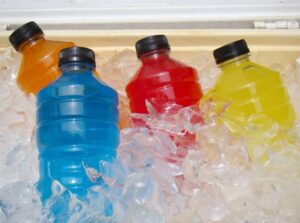 Article By: The Rutgers Farm Health and Safety Working Group: Kate Brown, Michelle Infante-Casella, Stephen Komar and William Bamka
When it comes to hydration, the U.S. National Academies of Sciences, Engineering, and Medicine recommends an adequate daily fluid intake of about 15.5 cups (3.7 liters) of fluids a day for men and about 11.5 cups (2.7 liters) of fluids a day for women. Even with this guidance, the amount varies from person to person. Also, when temperatures are hotter and when workloads increase so should drinking water, to prevent dehydration and to help maintain the proper body temperature especially when sweating.
Regular intake of water throughout the day and during the evening, at recommended amounts may help prevent a person from becoming excessively thirsty and also prevent dehydration. The choice of drinking sports drinks that contain electrolytes may be considered when a person’s activities dramatically increase, when they excessively sweat, if they show signs of dehydration, and/or heat stress.
Most sports drinks are designed to replenish glucose, fluids, and electrolytes (sodium, potassium, magnesium, calcium) lost during strenuous exercise or heavy workloads. Sports drinks may contain carbohydrates in the form of sugar, usually glucose, high-fructose corn syrup, or sucrose. Some contain no sugar and are “sweetened” instead with low-calorie sweeteners. The amounts of sugar and electrolytes in sports drinks are intended to allow for quick hydration and absorption.
It is important to note, persons with diabetes should be mindful of not intaking amounts of sports drinks that are high in sugar that could raise blood sugar to unhealthy levels. Additionally, persons with high blood pressure should be mindful when drinking sports drinks that are high in sodium – most are. Persons who eat a healthy diet should have enough glucose and electrolytes to maintain their health, even during extra activities and with proper water intake. Some studies show drinking too many sports drinks, especially when not performing vigorous exercise, can increase the risk of overweight/obesity and other health issues such as type 2 diabetes, cardiovascular disease, gout and the risk of dental cavities.
Water is the best choice to stay hydrated and it is the responsibility of each individual person to be sure they drink enough water to maintain their proper health.