Protecting your crops from heat stress

Spring in NJ this year has certainly been a whirlwind of conditions. While a few short weeks ago many were battling freezing temperatures, we now face extreme heat. Heat damage typically occurs when temperatures are sustained above 86℉ for long periods. With temperatures in the upper 90s and potentially exceeding 100℉ in some locations this week, you should take extra measures to protect your crops from heat damage. Newly planted transplants and young seedlings with shallow roots are particularly sensitive to extreme heat.

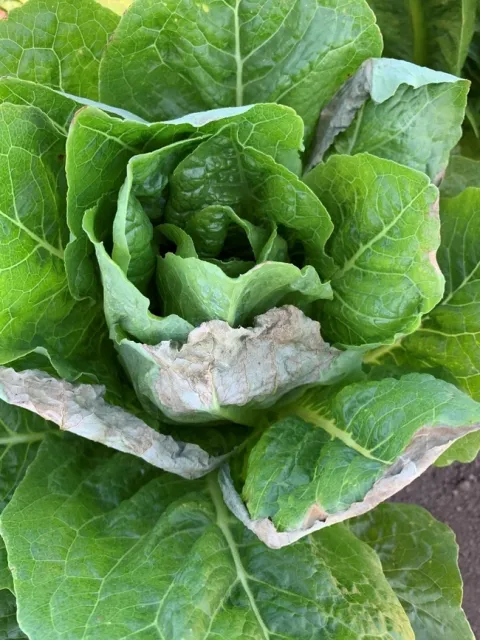
Symptoms of heat stress and heat damage including wilting, cupping of leaves, scorching on leaves and stems, and leaf drop.


Figure 3. Burning along the edges of leaves on romaine

Heat damage on romaine lettuce. Photo: RF Smith and MD Cahn, U of CA

Increasing irrigation is the best mitigation for most systems. Evaporative cooling allows plants to release heat in the form of water vapor through open pores or stomata on their leaves. When plants are low on water, they will close their stomata to retain turgidity, which in turn prevents evaporative cooling. To compensate for this, increase irrigation to prevent desiccation.

Planting on black plastic mulch should be avoided in the summer, as it will cause overheating. White plastic or metalized mulches are effective alternatives to control weeds, increase soil water retention, and reduce soil temperature. If black mulch is used, a foliar application of kaolin clay can be used as a reflective layer. Work conducted by R.J.G. Taveras at Virginia Tech found that applying 20-40 lb/A of Kaolin clay could maintain soil temperatures 10℉ cooler than black plastic alone.

Shade cloth can be placed over stakes or hoops to reduce soil and air temperature. Work by Dr. Emmalea Ernest at the University of DE found 30% shade cloth optimized benefits of cooling without reducing sunlight too drastically for the majority of vegetable crops.

Finally, avoid fertilizing or applying pesticides when temperatures are consistently above 86℉ to prevent burning the crop. Consult the product’s label for more specific guidance.

Contact your County Agent with concerns or questions. Stay cool!

Beat the Heat: Companies for Farmers to Source Heat Stress Prevention Supplies

“Beat the Heat” Plant and Pest Advisory articles are provided by the Agricultural Agents on the Rutgers Farm Health and Safety Team: Kate Brown, Stephen Komar, Michelle Infante-Casella and William Bamka

Protecting yourself and other workers from heat stress may involve purchasing some supplies for your farm operation. Some suggestions for items that may be used to “Beat the Heat” include water coolers, shade structures, fans for air movement in packing facilities, head coverings, sunscreen, and other things to help make a person cooler and more comfortable when working during high temperatures and/or in intense sunlight. Also, some companies listed also offer weather measuring devices to monitor environmental conditions for considering heat stress management decisions.
Below are some companies who offer supplies that may be useful for agricultural operations.  

Grainger https://www.grainger.com/ Active NJ Farm Bureau members receive discounts on most products from Grainger. NJFB members also receive free standard parcel shipping on all standard Grainger products. You can visit any of 12 Grainger stores within NJ, or order online. Grainer offers many safety products for agricultural operations and other industries.

Gempler’s https://gemplers.com/
Gempler’s has an online tab on their website specifically for Heat Relief and Hydration supplies at https://gemplers.com/collections/heat-relief-hydration

Uline https://www.uline.com/
Uline offers personal protective equipment, water coolers, fans and other safety supplies.

Forestry Suppliers https://www.forestry-suppliers.com/
Forestry Suppliers sells personal protective equipment, wet bulb globe temperature meters and other supplies.

Tractor Supply https://www.tractorsupply.com/
Tractor Supply sells water coolers, hats, fans, and other supplies.

Home Depot https://www.homedepot.com/
Home Depot sells a variety of supplies like coolers, fans, and other supplies.

Lowes https://www.lowes.com/
Lowes sells a variety of supplies like coolers, fans, and other supplies.

Businesses listed and products from these companies are not endorsed by Rutgers Cooperative Extension or Rutgers University.

Beat the Heat: NWS Forecast Tools – Expanded

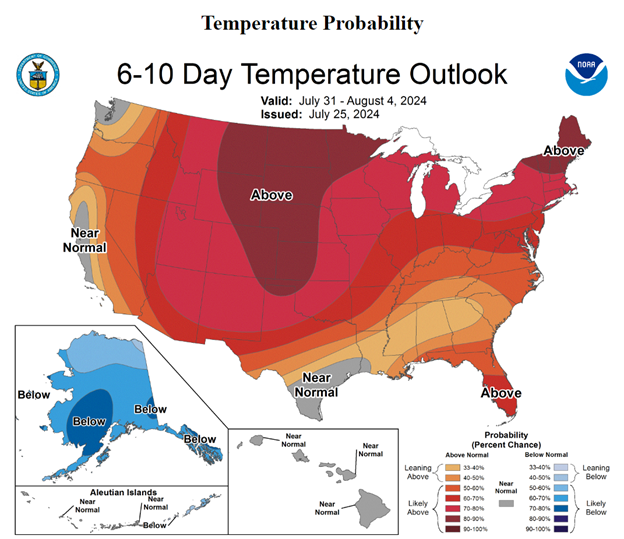
6-10 day temperature outlook from the National Weather ServiceThe National Weather Service compiled a list of resources on “Weather Information for Agriculture”. Direct links to long range outlooks (6-10 day and 8-14 day periods) for temperature are one inclusion which may be relevant for on-farm planning related to heat stress prevention.

Farmers may utilize other tools referenced in this resource to:

  • Evaluate recent precipitation and conduct monthly or seasonal reviews of precipitation
  • Monitor current drought conditions
  • View 1-7 day forecasts for severe weather, excessive rain, air quality, and other weather-related hazards
  • Explore long-range outlooks (up to 3 months out) for temperature, precipitation, and drought

Article By: The Rutgers Farm Health and Safety Working Group: Kate Brown, Michelle Infante-Casella, Stephen Komar and William Bamka

Beat the Heat: Checklist to Identify Heat Hazards

The Occupational Safety and Health Administration (OSHA) has created an Employer Checklist for Outdoor and Indoor Heat-Related Injury and Illness Prevention which may be utilized to identify sources of heat hazards in the workplace and respond effectively. Section 1 of the checklist is designed to help employers recognize job-related heat risks while Section 2 explores preparedness for heat-related injuries and illnesses. Additional OSHA resources on heat-illness prevention are included on the last page of the checklist.

OSHA Safe + Sound Header for Heat Illness Prevention

Beat the Heat: Heat Illness Prevention Plans

Water. Rest. Shade. flyer from OSHAThe University of Houston Clear Lake, using grant funds from the Occupational Safety and Health Administration (OSHA), created a model Heat-Illness Prevention Plan. While heat illness prevention plans are not required for New Jersey employers, review of this model plan may broaden an employer’s knowledge of heat illness prevention strategies. This model plan has five major sections which include employee training, monitoring weather conditions, heat hazard assessment, heat illness prevention strategies, and emergency response. Similar models are available online from states like California and Oregon which have adopted their own heat illness prevention rules.

 

Beat the Heat: Training Resource

Employee training on working in the heat may reduce risk of heat illness by raising awareness of heat safety. OSHA has developed “A Guide for Employers to Carry Out Heat Safety Training for Workers” which provides step-by-step instructions on how to engage employees in participatory heat safety training on three topics: 1) health effects of heat, 2) how to respond to symptoms, and 3) preventing heat illness. The training can be delivered in one, 45-minute session or three, 15-minute sessions.

Front page of OSHA employee training guide on heat illness prevention

Article By: The Rutgers Farm Health and Safety Working Group: Kate Brown, Michelle Infante-Casella, Stephen Komar and William Bamka