Beat the Heat: Tools for Evaluating Heat Risk

Heat index phone application

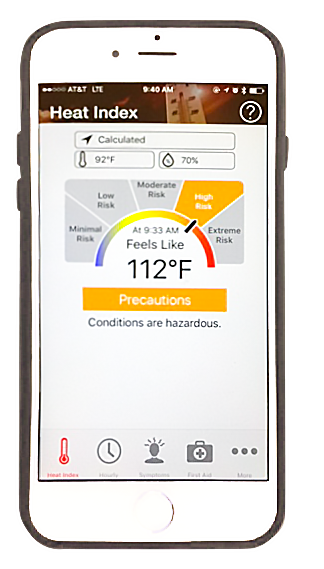
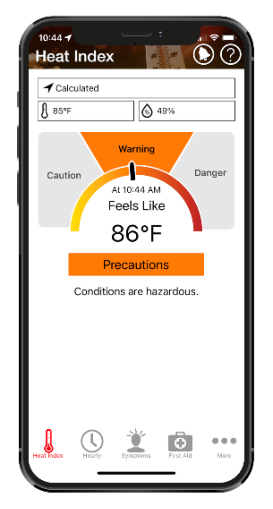
Heat safety tool phone app created by OSHA and NIOSH.

As the weather warms up, prepare yourself to evaluate the heat risk for outdoor tasks. We often use a weather application on our phone to check the daily high and low temperature, but air temperature alone is not sufficient to evaluate heat risk. Heat index is a more appropriate measurement because it combines the effects of air temperature and humidity to indicate the level of discomfort felt by the average person. 

One easy way to check the heat index is the Heat Safety Tool phone app (see photo) developed by the Occupational Safety and Health Administration (OSHA) and the National Institute for Occupational Safety and Health (NIOSH). The app calculates heat index at your specific site and displays the risk level to outdoor workers. It also provides insight into protective measures for the given risk level. This mobile phone app is available for both Android and iPhone

A similar, web-based tool is the HeatRisk website created by the U.S. Centers for Disease Control and Prevention (CDC). The HeatRisk homepage has a color-coded map to indicate today’s heat risk (no risk to extreme risk) for each county in the U.S. You can also enter your zip code to get the daily and 5-day forecasted heat risk for your site plus corresponding actions to reduce heat-related health risks. 

 Stay tuned for weekly posts on how beat the heat this summer!
Quick Tips to Beat the Heat

Daily high temperatures over the next 10 days will soar above 90 degrees each day, with the real feel exceeding 100 degrees at times. It’s important to take precautions to keep you and your workers safe from heat stress and other heat-related illnesses. Check out these 5 quick tips you can implement today to safeguard everyone on your farm during this extreme heat.

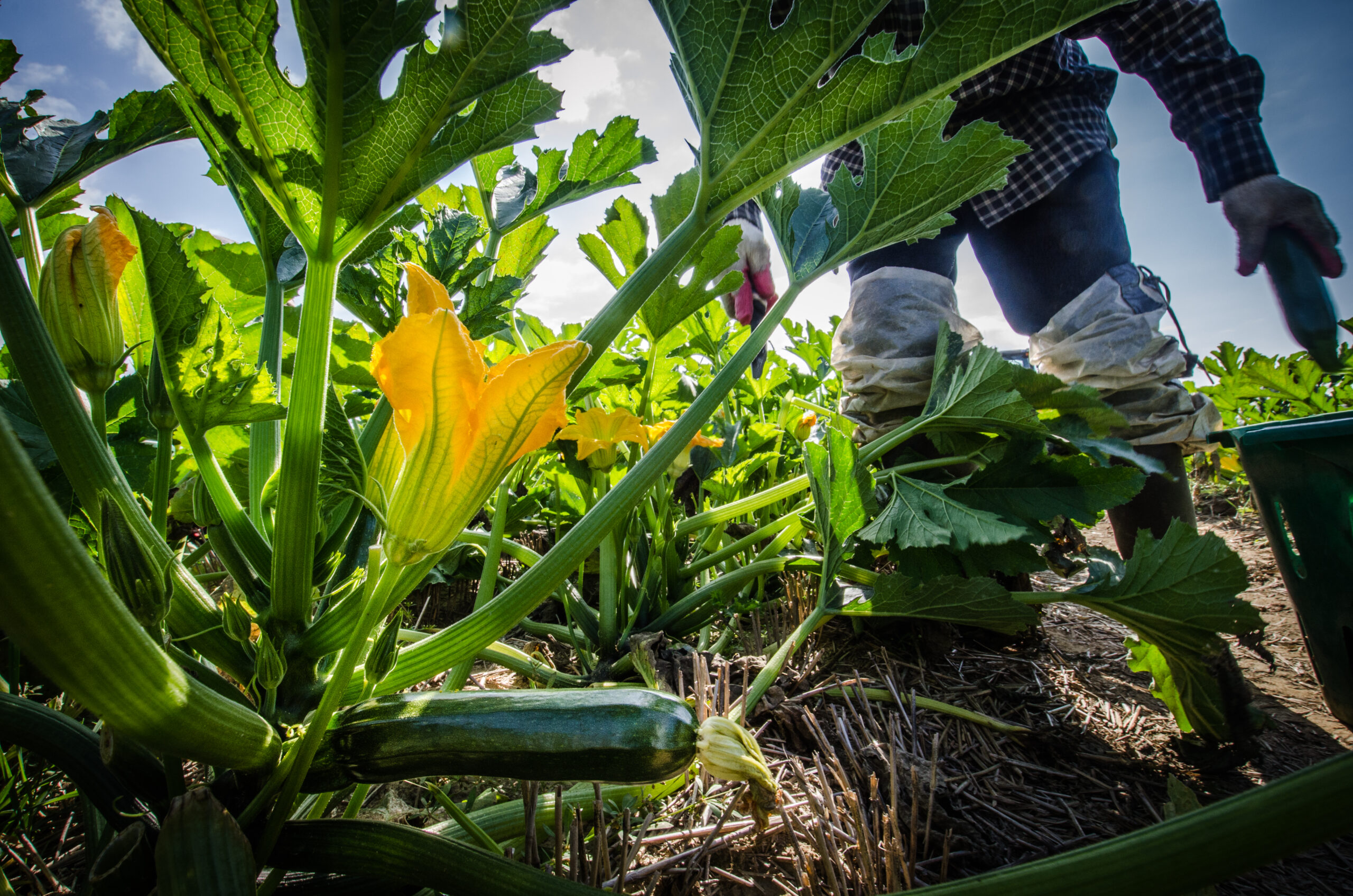
worker harvesting zucchini

USDA photo by Lance Cheung.

  1. Stay hydrated. The CDC recommends drinking at least 1 cup of water every 15-20 minutes during moderate activity. For more on hydration, see this factsheet from NIOSH.
  2. Dress appropriately. Choose light-colored, loose-fitting clothing made of cotton or linen. Protect yourself from the sun with a wide-brimmed hat and sunglasses.
  3. Acclimatize employees to working in the heat. Gradual exposure to work in a hot environment is critical for both new and experienced employees. To learn more about acclimatization, check out this factsheet from NIOSH.
  4. Adjust workload. Plan strenuous tasks for cooler parts of the day, increase the number of workers per task to lighten workload, and shorten work periods to allow for breaks in the shade (at least) hourly. NIOSH offers recommendations for work/rest schedules to decrease risk of heat illness in this factsheet.
  5. Train employees to recognize signs of heat stress. Heat-related illnesses can range from heat rash to heat stroke. Review this NIOSH web page on heat-related illnesses to inform employees about symptoms and first aid response to each illness.

Don’t Let Your Guard Down With Farm Worker Health

The COVID-19 pandemic highlighted the critical and essential role of farm labor in getting food from farm to plate. However, health concerns should not stop with a negative COVID test or vaccine, especially if an employee or family member is exhibiting any of the ‘flu-like’ symptoms that are associated with corona virus.

From the Vermont Law School Center for Agriculture and Food Systems (CAFS) – “The CAFS launched the Food System Worker Law and Policy Project in 2021 with research focused on farmworkers, who—despite forming the backbone of a trillion-dollar industry in the U.S.—face a level of occupational risk unrivaled by most workers. From repeated exposure to pesticides and extreme heat, …. ” Their newly published “report titled “Essentially Unprotected: A Focus on Farmworker Health Laws and Policies Addressing Pesticide Exposure and Heat-Related illness,” … May 2021, provides an overview of the findings as well as policy recommendations that are urgently needed to protect farmworkers.”

Typically not seen until July, we’ve already had 3 heat waves beginning in May that expose workers to a number of potential health risks that may present very similar symptoms and can be equally health, and even life, threatening. Published studies from the Rutgers Institute of Earth, Ocean, and Atmospheric Sciences suggest growing numbers of people worldwide are at risk of heat stress and related complications, including farmers and ag laborers working in high heat and humid conditions. Last year, OSHA-NIOSH released a Heat Index App (in English and Spanish at the Apple App Store or Google Play) featuring:

  • A visual indicator of the current heat index and associated risk levels specific to your current geographical location
  • Precautionary recommendations specific to heat index-associated risk levels
  • An interactive, hourly forecast of heat index values, risk level, and recommendations for planning outdoor work activities in advance
  • Editable location, temperature, and humidity controls for calculation of variable conditions
  • Signs and symptoms and first aid information for heat-related illnesses

For more information about safety while working in the heat, see OSHA’s heat illness webpage, including online guidance about using the heat index to protect workers.

In addition to heat stress, harvesting and other activities along field edges, including going into the woods instead of using a portable bathroom facilities, create a high risk for tick bites which can also carry a number of diseases, many as or more debilitating than Lyme disease. It is critical for your employees’ health and well-being to get proper diagnosis and treatment for all of these ailments. This table illustrates how many tick-born diseases, as well as heat stress, all have potential symptoms very similar to those of COVID-19. Each is linked to additional resources at the CDC. In many cases, it may be the ‘other symptoms’ that may be unique to each disease and assist a medical practitioner with correct identification and lead to better verification with further testing.

   Disease    >

Symptoms  v

COVID-19 Heat Stress Lyme Disease Ehrlichiosis Babe- biosis Powas-san Rocky Mtn Spotted Fever
Vector* Human Black-legged Tick (a.k.a. Deer Tick) (I. scapularis) Lone Star Tick (A. americanum) & Black-legged Black-legged Tick Ground hog(I. cookei), Squirrel (I. marxi) & Black-legged Ticks American Dog Tick (D. variabilis)
Fever or chills X X X X X X X
Cough X X
Shortness of breath/difficulty breathing X
Fatigue X X X X
Muscle/body aches X X X X X X
Headache X X X X X X X
New loss of taste or smell X
Sore throat X
Congestion or runny nose X
Nausea/vomiting X X X X X X X
Diarrhea X X
Rash X X X
Other symptoms X X X X X X
Potentially Deadly/Disabling
X X X X X X X

*NOTE – main vector listed, but many tick born diseases may be vectored by other species of ticks, or different species causing same disease may be carried by different tick species.

OSHA-NIOSH Heat Safety Tool App

Thanks to our Univ of FL colleague Gene McAvoy for sharing news about this new tool. Would have been very valuable during July’s record heat wave, but there will still be hot, humid days ahead when this will help.

OSHA-NIOSH Heat Safety Tool App screenshotWhen you’re working in the heat, safety comes first! With the OSHA-NIOSH Heat Safety Tool, you have vital safety information available whenever and wherever you need it – right on your mobile phone – for planning outdoor work activities based on how hot it feels throughout the day. Featuring real-time heat index and hourly forecasts, specific to your location, as well as occupational safety and health recommendations from OSHA and NIOSH.

The App allows workers and supervisors to calculate the heat index for their worksite, and, based on the heat index, displays a risk level to outdoor workers. Then, with a simple “click,” you can get reminders about the protective measures that should be taken at that risk level to protect workers from heat-related illness-reminders about drinking enough fluids, scheduling rest breaks, planning for and knowing what to do in an emergency, adjusting work operations, gradually building up the workload for new workers, training on heat illness signs and symptoms, and monitoring each other for signs and symptoms of heat-related illness.

Working in full sunlight can increase heat index values by 15 degrees Fahrenheit. Keep this in mind and plan additional precautions for working in these conditions.

The OSHA-NIOSH Heat Safety Tool features:
– A visual indicator of the current heat index and associated risk levels specific to your current geographical location
– Precautionary recommendations specific to heat index-associated risk levels
– An interactive, hourly forecast of heat index values, risk level, and recommendations for planning outdoor work activities in advance
– Editable location, temperature, and humidity controls for calculation of variable conditions
– Signs and symptoms and first aid information for heat-related illnesses

The OSHA NIOSH Heat Index App is available in English and Spanish at the Apple App Store or Google Play. To access the Spanish version, set the phone language to Spanish.

Stay informed and safe in the heat, check your risk level.

For more information about safety while working in the heat, see OSHA’s heat illness webpage, including online guidance about using the heat index to protect workers.

Don’t Let Your Guard Down With Farm Worker Health

The COVID-19 pandemic has highlighted the critical, indeed essential, role of farm labor in getting food from farm to plate. However, health concerns should not stop with a negative COVID test, especially if an employee or family member is exhibiting any of the ‘flu-like’ symptoms that are associated with corona virus.

A recent farm call was a reminder that working outside, especially during this July heat wave, exposes workers to a number of potential health risks that may present very similar symptoms and can be equally health, and even life, threatening. Recently published studies from the Rutgers Institute of Earth, Ocean, and Atmospheric Sciences suggest growing numbers of people worldwide are at risk of heat stress and related complications, including farmers and ag laborers working in high heat and humid conditions.

Harvesting and other activities along field edges, including going into the woods instead of using a portable bathroom facilities, also lead to a high risk of tick bites, which can also carry a number of diseases, many as or more debilitating than Lyme disease that most are now aware of. A recent story at Today.com suggested that the COVID-19 pandemic might lead to more tick-borne disease this year, quoting Rutgers entomologist and assistant professor Alvaro Toledo at the Center for Vector Biology with suggestions how to prevent tick bites.

It is critical for your employees’ health and well-being to get proper diagnosis and treatment for all of these ailments. This table illustrates how many tick-born diseases, as well as heat stress, all have potential symptoms very similar to those of COVID-19. Each is linked to additional resources at the CDC. In many cases, it may be the ‘other symptoms’ that may be unique to each disease and assist a medical practitioner with correct identification and lead to better verification with further testing.

   Disease    >

Symptoms  v

COVID-19 Heat Stress Lyme Disease Ehrlichiosis Babe- biosis Powas-san Rocky Mtn Spotted Fever
Vector* Human Black-legged Tick (a.k.a. Deer Tick) (I. scapularis) Lone Star Tick (A. americanum) & Black-legged Black-legged Tick Ground hog(I. cookei), Squirrel (I. marxi) & Black-legged Ticks American Dog Tick (D. variabilis)
Fever or chills X X X X X X X
Cough X X
Shortness of breath/difficulty breathing X
Fatigue X X X X
Muscle/body aches X X X X X X
Headache X X X X X X X
New loss of taste or smell X
Sore throat X
Congestion or runny nose X
Nausea/vomiting X X X X X X X
Diarrhea X X
Rash X X X
Other symptoms X X X X X X
Potentially Deadly/Disabling
X X X X X X X

*NOTE – main vector listed, but many tick born diseases may be vectored by other species of ticks, or different species causing same disease may be carried by different tick species.

Managing Heat Stress in Nursery and Landscape Plants

With temperatures approaching or exceeding 95oF for many areas of the state, there is potential for heat stress to negatively impact nursery and landscape plants both in the ground and in containers. Most trees and shrubs in our area can begin to experience some degree of heat stress when temperatures exceed 85oF. Several factors can influence the extent of heat stress injury, including the severity and duration of high temperatures, relative humidity, wind, soil moisture status, the age and condition of the plant, and how well the particular species of plant is adapted to dealing with these conditions.

Japanese Maple

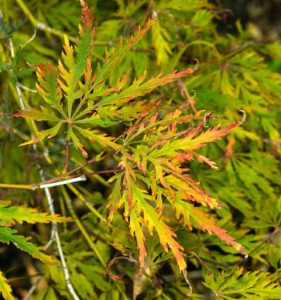
Leaf Scorch on Japanese Maple caused by heat stress. Photo Credit.

Heat stress can cause damage to the leaves, resulting in dried or curled edges, as well as reddish or pale coloration as the green chlorophyll pigment begins to break down. This damage may only be superficial, but in some cases it could cause serious injury and death of the leaf tissue. One factor that greatly affects the severity of tissue damage caused by heat stress is the hydration status of the plant before the onset of extreme temperatures.

Plants will naturally dissipate heat through the process of transpiration, provided there is adequate moisture in the soil to support this function. During periods of extreme temperatures, the roots will struggle to draw enough water from the soil to keep up with the rate of water vapor that is exiting the leaves through transpiration. This leads to symptoms such as leaf scorch, curled leaves, discoloration, defoliation, die-back, and temporary wilting. Because the plant is experiencing stress and a disruption in its normal physiological functions, it becomes more susceptible to insect and disease problems.

There are several preventative measures that can be taken to reduce the impacts of heat stress in nursery and landscape plants.

  1. Thoroughly water plants either in the evening or in the early morning before extreme temperatures occur. Water the plants deeply and use irrigation methods that minimize leaf wetness to reduce the potential for foliar diseases.
  2. Properly mulch plants to conserve water in the soil and help lower soil temperatures. Bark mulch, leaf mulch, straw, and other organic mulches will help to lower the temperature in the root zone, while gravel mulches can actually increase root zone temperatures. Be sure to provide additional water to newly mulched plants to prevent dry mulch from taking moisture away from the roots.
  3. Avoid fertilization during periods of heat stress because this can absorb moisture in the root zone and further contribute to dehydration of the plant.
  4. Avoid applying herbicides that can volatilize in high temperatures and drift, causing damage to non-target species.
  5. Pay special attention to plantings that are located next to driveways, concrete patios, or other structures that can absorb and radiate additional heat to the plants. These areas will likely require additional irrigation.


Additional Resources:

How to Protect Trees and Other Landscape Plants from Heat Stress

Reducing Heat Stress to Container Grown Plants

Natter’s Notes: Heat Stress

Hot Weather Takes a Toll on Georgia Landscapes