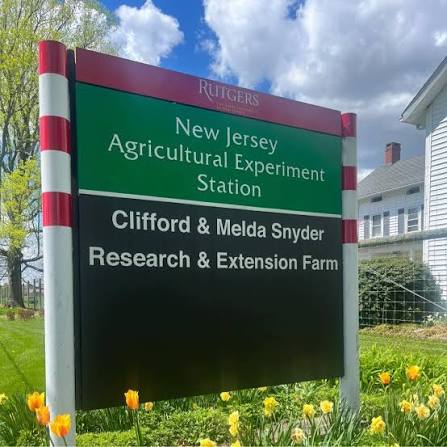
This week we have detected two cases of resistance-breaking tomato spotted wilt virus (RB-TSWV) in South Jersey. Read further for more information.
Vegetable Crops Edition
Seasonal updates and alerts on insects, diseases, and weeds impacting vegetable crops. New Jersey Commercial Vegetable Production Recommendations updates between annual publication issues are included.
Subscriptions are available via EMAIL and RSS.
Quick Links:
NJ Commercial Vegetable Production Recommendations
Rutgers Weather Forecasting - Meteorological Information important to commercial agriculture.
Fertigation: Improving Nitrogen Management In New Jersey Vegetable Crops
Nitrogen is one of the most important nutrients for vegetable production, but it can also be one of the easiest to lose (by leaching), especially on New Jersey’s sandy Coastal Plain soils. Heavy rainfall or excessive irrigation can move nitrogen below the crop root zone before plants have a chance to use it.
One way growers can improve nitrogen-use efficiency is through fertigation. Fertigation is the application of fertilizer through an irrigation system. In many New Jersey vegetable crops, including tomatoes, peppers, cucumbers, pumpkins, watermelons, and sweet corn, drip irrigation systems can be used to deliver small amounts of nitrogen throughout the season rather than applying all of it at planting.
Applying nitrogen in smaller, timely doses helps match crop demand and can reduce the risk of nutrient losses. Fertigation also gives growers more flexibility to adjust nitrogen programs based on crop growth and weather conditions. For example, following periods of heavy rainfall, growers can evaluate fields and make adjustments if additional nitrogen is needed.
Like any management practice, successful fertigation depends on proper irrigation scheduling. Applying too much water can still move nutrients below the root zone. However, when irrigation and fertilizer applications are properly managed, fertigation can be an effective tool to improve nitrogen efficiency, support crop productivity, and reduce nutrient losses.
When does fertigation make sense?
- Fields equipped with drip irrigation systems.
- High-value vegetable crops with season-long nutrient demand.
- Sandy soils with greater leaching potential.
- Situations where growers want flexibility to adjust nitrogen applications during the growing season
Common New Jersey crops where fertigation may be beneficial
Tomato, pepper, cucumber, pumpkin, watermelon, muskmelon, and sweet corn production systems that utilize irrigation.
Some common things to know when fertigating
- Use only fully soluble fertilizers that can move easily through the irrigation system.
- Base fertilizer selections on soil test results. Fields with high phosphorus (P) and potassium (K) levels may only require supplemental nitrogen during the season.
- Common fertigation materials include soluble NPK fertilizers, calcium nitrate, and potassium nitrate.
- Ensure fertilizer injectors are properly calibrated and matched to the flow rate of the irrigation system for uniform nutrient distribution.
- Start irrigation first and allow the system to reach normal operating pressure before injecting fertilizer.
- After fertigating, continue irrigating briefly to flush fertilizer from the drip lines.
- Avoid over-irrigation, as excess water can move nutrients below the root zone and reduce fertilizer-use efficiency.
- Regularly inspect drip lines, filters, and injectors to ensure the system is operating properly.
- Calculate fertigation rates based on the actively cropped area rather than the entire field acreage.
References
- Ernst, T., McWhirt, A., Zimmerman, T., Henderson, E., Duncan, M., and Lay-Walters, A. Basics of Drip Irrigation and Fertigation for Specialty Crops (FSA6160). University of Arkansas Cooperative Extension Service.
- Johnson, G. 2010. Fertigating Drip Irrigated Vegetables. University of Delaware Cooperative Extension, Weekly Crop Update.
- Kelley, L. 2026. Nitrogen Prices Spawn Interest in Fertigation. Michigan State University Extension.
Developing and Improving Your Worker Produce Safety Training for Audits and FSMA
A robust annual worker training is a requirement of both the FSMA Produce Safety Rule and a buyer required third-party audit. Are your produce workers trained? Do you feel good about the training they receive? Develop, review, or improve your produce worker food safety training by using our Developing Your On-Farm Food Safety Worker Training Program decision tool. With this tool you can: consider risks involved with where employees work, the tasks they are conducting, what food safety risks they should know based on these activities, what you are already doing to train these workers, and learn more about additional resources available online that you can share in-person or via text to enhance their understanding of food safety risk reduction. Don’t forget to keep track of who, how, and when they were trained as proof during your inspection or audit. Use our employee training log template digitally or in paper format as part of your food safety recordkeeping.
Vegetable IPM Update 6/12/26
Greetings from the Veg IPM team! Here are this week’s latest pest and disease reports:
Vegetable IPM Update 6/05/26
Greetings from the Veg IPM team! This week we are sharing our first CEW pheromone map of the season, and we have also included some useful information about other early sweet corn pests.
Farm Visitors Are Back: Are you required to let the public bring their animals onto your retail farm?
A spring reminder of what you can and cant do regarding the public wanting to bring animals to your direct market and/or agritourism farm:
An increasing number of customers are bringing animals with them when they visit farm markets, pick your own farms, or agritainment activities. Animals can pose a food safety risk to produce, introduce disease to farm animals, frighten or upset farm animals. Outside animals can also pose a risk to employees and other market customers and farm visitors. Farmers need to consider these occurrences when keeping in compliance with regulations and buyer requirements specific to food safety and biosecurity to protect their farm animals. The Americans with Disabilities Act (ADA) governs what you are legally allowed to do in regards to customers with service animals visiting your market or on your farm. This fact sheet will cover the specifics of the ADA, animals that are not protected by the ADA regulations, and how to reduce potential risk on your farm from outside animals. States often have regulations that go beyond the federal ADA regulation, information represented in this fact sheet is specific to New Jersey. If you farm in another state please consult the state by state guide linked at the end of this article.
What do the ADA regulations cover?
While many types of animals can provide comfort and emotional support to their owners, only service animals are protected by the ADA, specifically Title II and III. The ADA regulations define “service animal” as dogs, and less commonly miniature ponies, that are individually trained to do work or perform tasks for people with disabilities such as guiding a blind person, alerting people who are deaf, assisting a person in a wheelchair, alerting and protecting a person who is having a seizure, reminding a person with mental illness to take prescribed medications, calming a person with PostTraumatic Stress Disorder (PTSD) during an anxiety attack, or other duties. The work or task that a service animal has been trained to perform must be directly related to the persons disability. Some of these disabilities are obvious, others are not.
What questions can you legally ask?
When it is not obvious to you that an animal is a service animal you may ask just two questions to determine if the animal is a service animal.
1) Is the service animal required because of a disability?
2) What work or task has the service animal been trained to perform?
The service animal must have been trained to perform a specific task or work for a person with a disability in order to qualify for protection under the ADA regulations. Note that service animals do not always wear vests or harnesses, and there is no paperwork or ID Card carried by anyone with a service animal.
What questions are you legally prevented from asking?
1) You may not ask about the persons disability.
2) You may not ask for proof of the persons disability. [Read more…]
