Developing and Improving Your Worker Produce Safety Training for Audits and FSMA

A robust annual worker training is a requirement of both the FSMA Produce Safety Rule and a buyer required third-party audit.  Are your produce workers trained? Do you feel good about the training they receive? Develop, review, or improve your produce worker food safety training by using our Developing Your On-Farm Food Safety Worker Training Program decision tool. With this tool you can: consider risks involved with where employees work, the tasks they are conducting, what food safety risks they should know based on these activities, what you are already doing to train these workers, and learn more about additional resources available online that you can share in-person or via text to enhance their understanding of food safety risk reduction. Don’t forget to keep track of who, how, and when they were trained as proof during your inspection or audit.  Use our employee training log template digitally or in paper format as part of your food safety recordkeeping.

Farm Visitors Are Back: Are you required to let the public bring their animals onto your retail farm?

A spring reminder of what you can and cant do regarding the public wanting to bring animals to your direct market and/or agritourism farm:

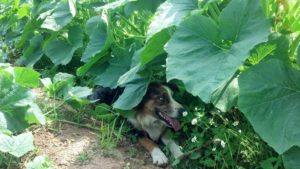
An increasing number of customers are bringing animals with them when they visit farm markets, pick your own farms, or agritainment activities. Animals can pose a food safety risk to produce, introduce disease to farm animals, frighten or upset farm animals. Outside animals can also pose a risk to employees and other market customers and farm visitors. Farmers need to consider these occurrences when keeping in compliance with regulations and buyer requirements specific to food safety and biosecurity to protect their farm animals. The Americans with Disabilities Act (ADA) governs what you are legally allowed to do in regards to customers with service animals visiting your market or on your farm. This fact sheet will cover the specifics of the ADA, animals that are not protected by the ADA regulations, and how to reduce potential risk on your farm from outside animals. States often have regulations that go beyond the federal ADA regulation, information represented in this fact sheet is specific to New Jersey. If you farm in another state please consult the state by state guide linked at the end of this article.Dog resting in the shade

What do the ADA regulations cover?
While many types of animals can provide comfort and emotional support to their owners, only service animals are protected by the ADA, specifically Title II and III. The ADA regulations define “service animal” as dogs, and less commonly miniature ponies, that are individually trained to do work or perform tasks for people with disabilities such as guiding a blind person, alerting people who are deaf, assisting a person in a wheelchair, alerting and protecting a person who is having a seizure, reminding a person with mental illness to take prescribed medications, calming a person with PostTraumatic Stress Disorder (PTSD) during an anxiety attack, or other duties. The work or task that a service animal has been trained to perform must be directly related to the persons disability. Some of these disabilities are obvious, others are not.

What questions can you legally ask?
When it is not obvious to you that an animal is a service animal you may ask just two questions to determine if the animal is a service animal.
1) Is the service animal required because of a disability?
2) What work or task has the service animal been trained to perform?
The service animal must have been trained to perform a specific task or work for a person with a disability in order to qualify for protection under the ADA regulations. Note that service animals do not always wear vests or harnesses, and there is no paperwork or ID Card carried by anyone with a service animal.

What questions are you legally prevented from asking?
1) You may not ask about the persons disability.
2) You may not ask for proof of the persons disability. [Read more…]

Farmer Resource Conference 3/6 at Howell Living History Farm

Mercer County and Rutgers Cooperative Extension are hosting a Farmer Resource Conference on March 6th.

Friday, March 6th 8:30 am to 2:00 pm
Howell Living History Farm
70 Woodens Lane
Free! Lunch provided

Registration deadline extended to March 1, 2026
https://forms.office.com/g/3fE5yqTjVG

1 CORE credit presentation
1 CORE credit for pesticide container recycling

Learn about:
Farm transfer and succession planning
Grant writing tips and grant availability
Farm viability
Marketing your products and connecting with the public

Collaborators:
Mercer County Ag Development Board
Rutgers Cooperative Extension
State Ag Development Committee
NJ Department of Agriculture
NJ Farm Bureau
North Jersey Resource Conservation and Development
NOFA NJ
USDA NRCS

Produce Safety Rule Training Part of the Food Safety Modernization Act (FSMA)

When: Tuesday, March 17, 2026, from 9:30-4:30 PM.

Where: Rutgers Cooperative Extension of Mercer County, 1440 Parkside Ave., Ewing, NJ 08638

Cost:  $100.00 (lunch included) as part of registration process you will ask to pay by card.  Online ticket Sales end on Friday, March 6, 2026. If paying after the deadline or in person payment must be by check made out to Rutgers, the State University of New Jersey

 To sign up and information: https://rutgers.ca1.qualtrics.com/jfe/form/SV_2tP1FhE34sviJv0

Who Should Attend

  • Fruit Growers
  • Vegetable Growers
  • Growers who have farms that fall under the Produce Safety Rule
  • Growers who have farms that do not fall under the rule but will in the future.

 Benefits of Attending the Workshop

Individuals who participate in this course will gain a basic understanding of:

  • Requirements in the FSMA Produce Safety Rule and how to meet them.
  • Fulfills the requirement for at least one supervisor from a farm to complete food safety training at least equivalent to the standardized curriculum recognized by the FDA.
  • Microorganisms relevant to produce safety.
  • Where microorganisms may be found on the farm
  • How to identify microbial risks, practices that reduce risks and how to begin implementing produce safety practices on the farm.
  • Parts of a farm food safety plan and how to begin writing one
  • Cleaning and Sanitizing

Areas Covered Under the Produce Safety Alliance Grower Training:

  • Introduction to Produce Safety
  • Worker Health, Hygiene and Training
  • Soil Amendments
  • Wildlife, Domesticated Animals and Land Use
  • Agricultural Water (Part I: Pre Harvest Water; Part II: Postharvest Water)
  • Postharvest Handling and Sanitation
  • How to Develop a Farm Food Safety Plan

After attending the entire course and submitting the appropriate survey to their trainer at the end of the course, participants will be eligible to receive a certificate from the Association of Food and Drug Officials (AFDO) that verifies they have completed the training course. This course fulfills the FSMA Produce Safety Rule training requirement for at least one supervisor per farm is trained by an FDA-recognized Produce Safety Alliance curriculum.

Does your farm fall under the FSMA PSR? Find out at the link below.
https://rutgers.ca1.qualtrics.com/jfe/form/SV_4IagP1mbPyrp42N

Seed Purchasing and Use Needs Assessment Survey

Cornell University is conducting a needs assessment survey to better understand issues that growers have had with purchased seeds and how these issues are being managed.  Click HERE to access the survey.

Food Safety Modernization Act: Produce Safety Rule Training

When: Tuesday, January 20, 2026, from 10:00-5:00 EST.

Where: Northeast Agricultural Expo (New Jersey Vegetable Growers Convention) at Harrah’s Waterfront, 777 Harrah’s Blvd., Atlantic City, NJ.

To sign up: https://onfarmfoodsafety.rutgers.edu/fsmaac/

Online ticket Sales end on Tuesday, January 13, 2026. Registration after January 13, or in-person registration at the conference, must be paid by check.

Who Should Attend

  • Fruit Growers
  • Vegetable Growers
  • Growers who have farms that fall under the PSR
  • Growers who have farms that don’t fall under the rule but will in the future

 Benefits of Attending the Workshop

Individuals who participate in this course will gain a basic understanding of:

  • Requirements in the FSMA Produce Safety Rule and how to meet them
  • Fulfills the requirement for at least one supervisor from a farm to complete food safety training at least equivalent to the standardized curriculum recognized by the FDA
  • Microorganisms relevant to produce safety
  • Where microorganisms may be found on the farm
  • How to identify microbial risks, practices that reduce risks and how to begin implementing produce safety practices on the farm
  • Parts of a farm food safety plan and how to begin writing one
  • Cleaning and Sanitizing

What to Expect at the Produce Safety Alliance Grower Training:

  • Introduction to Produce Safety
  • Worker Health, Hygiene and Training
  • Soil Amendments
  • Wildlife, Domesticated Animals and Land Use
  • Agricultural Water (Part I: Production Water; Part II: Postharvest Water)
  • Postharvest Handling and Sanitation
  • How to Develop a Farm Food Safety Plan

After attending the entire course, participants will be eligible to receive a certificate from the Association of Food and Drug Officials (AFDO) that verifies they have completed the training course. To receive an AFDO certificate, a participant must be present for the entire training and submit the appropriate survey to their trainer at the end of the course.

Does your farm fall under the FSMA PSR? Find out at the link below.
https://rutgers.ca1.qualtrics.com/jfe/form/SV_4IagP1mbPyrp42N