Commercial Ag Updates + Farm Food Safety

Rutgers Cooperative Extension Ag Agents provide updates on what they see in the field, upcoming events, and other important news that affects your operation, such as developments in on-farm Food Safety. Subscribe if you wish to be notified about workshops, meetings, and upcoming commercial ag events.
 
Subscriptions are available via EMAIL and RSS.

Highly Pathogenic Avian Influenza Detected in NJ

New HPAI case in New Jersey – October 22, 2022.

(TRENTON) – The United States Department of Agriculture’s (USDA) Animal and Plant Health Inspection Service (APHIS) and the New Jersey Department of Agriculture (NJDA) has confirmed a new Highly Pathogenic Avian Influenza (HPAI) case in an Ocean County backyard flock (non-poultry) as classified by the World Organization for Animal Health (WOAH). The disease response is being coordinated between state and federal partners. – Jeff Wolfe, NJ Ag.

For additional information see: https://www.nj.gov/agriculture/news/press/2022/approved/press221022.html

“Second 2022 HPAI case in New Jersey” – Jeff Wolfe

October 14, 2022. (TRENTON) – The United States Department of Agriculture’s (USDA) Animal and Plant Health Inspection Service (APHIS) and the New Jersey Department of Agriculture (NJDA) confirmed the state’s second Highly Pathogenic Avian Influenza (HPAI) case in 2022 in a Warren County non-commercial backyard flock (non-poultry). The disease response is being coordinated between state and federal partners.

The test samples were collected from ducks in Warren County and were tested at the New Jersey Animal Health Diagnostic Laboratory. The duck flock had experienced high mortality, and some displayed neurologic signs before succumbing to the disease. Congruent testing was completed at the National Veterinary Services Laboratory, which confirmed detection of the disease on October 13, 2022. The virus is believed to have spread through wild birds, which were found deceased on the property and tested positive for HPAI.

State and federal personnel are following the appropriate response plan, including implementing site quarantine, proper biosecurity measures, and depopulation of poultry on the premises. Additionally, outreach to poultry owners, live bird markets, and the general public at www.nj.gov/agriculture has been completed to provide recommendations on poultry management and measures to ensure the maintenance of a healthy flock.

HPAI is highly contagious and often fatal in domestic poultry species. According to the U.S. Centers for Disease Control and Prevention, the recent HPAI detections in birds do not present an immediate public health concern. As a reminder, poultry and eggs’ proper handling and cooking to an internal temperature of 165 ˚F kill bacteria and viruses.

Signs of HPAI in poultry can include:

  • Sudden death
  • Decrease in feed or water consumption
  • Respiratory signs such as coughing, sneezing, nasal discharge
  • Swelling around the eyes
  • Open-mouth breathing
  • Darkening of the comb/wattles
  • Reddening of the shanks or feet
  • Decreased egg production
  • Lethargy

HPAI spreads through contact with bodily secretions, including feces, ocular, nasal, or oral secretions from infected birds. The virus can spread on vehicles, equipment, shoes, etc. Practicing good biosecurity can help prevent the spread of HPAI onto a farm.

Those biosecurity practices include:

  • Eliminating exposure of domestic birds to wild birds. Minimizing standing water and extra feed in the environment that might attract wild birds.
  • Avoiding contact with other poultry.
  • Keeping a specific set of shoes and clothing for tending to poultry. Disposable boot covers or a foot bath that is changed regularly are other measures that can be used.
  • Minimizing the number of people who visit the birds.
  • Avoiding sharing equipment with other flocks and using appropriate disinfectants for equipment that must come onto a farm.

HPAI is a reportable disease. Any individual who shall gain knowledge or suspect the existence of the disease shall notify this office without delay. Deceased birds suspected of having Avian Influenza should be double-bagged and stored appropriately for testing. Do not expose dead poultry to the environment, other poultry, or wildlife/wild birds. Wash your hands after handling sick or dead birds.

If you suspect HPAI, please alert the New Jersey Department of Agriculture, Division of Animal Health at 609-671-6400.

For additional information about the disease and outreach materials, go to:

###” – Press release from the NJ Department of Agriculture.
 

NJ BPU Asking for Participation in Broadband Access Study Commission Survey

THE FOLLOWING MESSAGE IS FROM THE NJ DEPT OF AGRICULTURE ON BEHALF OF NJ SECRETARY OF AGRICULTURE DOUGLAS FISHER

The New Jersey Bureau of Public Utilities (BPU), in accordance with the New Jersey Broadband Access Study Commission – established by the state of New Jersey Legislature this past March, has engaged ECC Technologies, Inc., to complete a comprehensive broadband focused project in New Jersey. Among other things, the project addresses broadband infrastructure and service, and includes a survey to identify broadband availability.

We especially encourage state agricultural producers to participate in this project.

Read the full press release at https://bit.ly/3VlwvcU.

Find the survey at www.broadband-nj.com.

Driving into High Path Avian Influenza Quarantine Zones in PA. Know the rules.

September 28, 2022. There has been a significant area placed under quarantine in Lancaster County East Lampeter Township. Read below to refresh on the rules when driving into a HighPath Quarantine Area.

For those traveling to Lancaster County for equipment, supplies and feed, be aware of the 20km zone that includes areas near Ephrata, New Holland, Gap, Quarryville, and Manhiem locations; and the 10km zone that includes Lancaster and Stroudsburg areas; and the epic-center 3km zone. 

Secretary Fisher has sent along the PADLS quarantine map to Ag Agents, you can contact your Ag agent for a copy of the map. The map when it is updated, can also be found at:  https://padeptag.maps.arcgis.com/apps/webappviewer/index.html?id=a9066a3d68a443a08043766cb84bf4ae

“Migration season is underway and the virus is obviously in the environment.  Please ensure all your poultry caretakers are practicing their best biosecurity, especially regarding using clean and dedicated footwear when entering the poultry houses.”- PADLS

Earlier this year….

As of 5/11/2022: The PA Department of Agriculture, via communications from Kevin D. Brightbill, DVM | State Veterinarian | Director is requesting continued compliance of the agriculture industry at large with the General Quarantine Order; Virus Control for Highly Pathogenic Avian Influenza Poultry, Poultry Litter, Conveyances, Feed, Refuse, Containers and Material Standards for the existing control zones established in Lancaster and Berks County.

There is an Interstate (existing or carried on between states) and General Quarantine Order in effect in Pennsylvania; specific to Virus Control for Highly Pathogenic Avian Influenza Vehicle, Container and Material Standards that is critical to abide by to prevent introduction of High Path. The specifics of “following the conditions and requirements of this Interstate and General Quarantine Order Order related to vehicles and products being transported including other domestic animals” can be found in the Pennsylvania Bulletin Volume 52 Issue 18 52 Pa.B. 2597 General Quarantine Order; Virus Control for Highly Pathogenic Avian Influenza Poultry, Poultry Litter, Conveyances, Feed, Refuse, Containers and Material Standards.

https://www.pacodeandbulletin.gov/Display/pabull?file=/secure/pabulletin/data/vol52/52-18/637.html

New Jersey agriculture producers, please be mindful of these efforts as you travel in and out of the location of the current quarantine area (10 kilometer radius) as shown in the PA DEPT AG MAP https://padeptag.maps.arcgis.com/apps/webappviewer/index.html?id=a9066a3d68a443a08043766cb84bf4ae.

Elsewhere in the region, please consider how you can help reduce potential spread as you travel to and from agriculture service centers in the region.

To stay up to date on the quarantine restrictions and recommendations related to disinfecting transportation vehicles and conveyances, please join the weekly Pennsylvania High Path Avian Influenza call by contacting Jennifer Reed – Harry, Penn Ag Industries at Email: jrharry@pennag.com

NJ Poultry Producers. To participate in the next South-Jersey Poultry Association monthly webinar with guest veterinarians from either USDA or state agencies, contact Melissa Bravo at the Salem County Extension Office.


Redroot and Smooth Pigweed: Non-Herbicide Management Options in Specialty Crops

Redroot and smooth pigweeds reproduce in abundance by seed which is easily transported across a farm. Using knowledge about the life cycle of this weed is important when making management decisions that require time and effort throughout a growing season. Learn more about non-herbicide management methods to control smooth and redroot pigweed populations on your farm by using the smooth and redroot pigweed decision tool fact sheet and a companion presentation.  These resources are one of a five-part weed management series created by Extension Specialist Thierry Besancon and County Agricultural Agent Meredith Melendez, funded by USDA Specialty Crop Block Grant AM190100.  You can provide feedback through an online survey about these resources.Redroot plant sprouting

Youth on the Farm: Protect the Future of Agriculture

logo for national farm safety and health week 2022Growing up on a farm has many benefits for children, but farms can also be dangerous. Across the country, over 30 children are seriously injured in agriculture-related incidents every day, and a child is fatally injured on the farm once every three days. Take an active role to keep children safe on the farm by educating them about the risks, thoroughly training them for age-appropriate tasks, providing personal protective equipment, and maintaining adequate supervision. [Read more…]
SARE Farmer Grants for 2023 – Webinar on October 4th

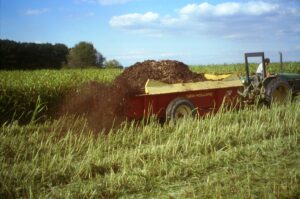
Truck spreading fertilizerMultiple Northeast SARE (Sustainable Agriculture Research and Education) grant recipient Tommye Lou Rafes, of T.L. Fruits and Vegetables in West Virginia, is sharing her experiences to help other farmers experiment with new ideas through the Farmer Grant program.

At noon on October 4th, 2022, Rafes will join Northeast SARE Grant Coordinator Candice Huber for an informational webinar to assist farmers interested in applying for up to $30,000 in funding for projects beginning in March 2023. Registration is required and participants are encouraged to submit questions ahead of the event. The Call for Farmer Grant Proposals is currently available and the online system for submitting applications is opening soon. Applications are due November 15, 2022.

Northeast SARE Farmer Grants are perfect for farmers looking to grow through new practices. Rafes first learned about SARE while attending a Good Agricultural Practices (GAP) training. One of the professors hosting the meeting was a SARE reviewer who invited the attendees to apply for a grant. Rafes knew sustainable practices like using renewable-powered high tunnels to extend growing seasons could be good for business as well as the planet. “Growing in the winter months is a completely different way than you do in the summer months,” she said. “I decided to test varieties that were successful during the winter months as well as growing conditions that could be improved so that people would be more successful.”

Grant Coordinator Candice Huber says Farmer Grants are an opportunity for farmers to try things that could improve their operations. SARE funds can cover the farmer’s time on the project, any farm workers time spent on the project, supplies that are not capital purchase, technical support, soil testing and other budgeted items. Farmer grant projects generally are for one year.

If you have an idea and you need resources to really explore it, a Farmer Grant can connect you with those resources. This webinar will be a good starting point and participants must pre-register. See below.

To sign up for the October 4th webinar at 12:00PM go to https://us02web.zoom.us/webinar/register/6516611235851/WN_RoG_IkMmSDGsduZwmFgKkA

For information about the application for SARE Farmer grants see https://www.sare.org/wp-content/uploads/Northeast-SARE-Farmer-Grant-Call-for-Proposals.pdf

For general information about Northeast SARE go to Northeast SARE Home Page – SARE Northeast