Hairy galinsoga spreads throughout a farm by seeds that germinate quickly once exposed to light, with multiple generations in a growing season. Using knowledge about the life cycle of this weed is important when making management decisions that require time and effort throughout a growing season. Learn more about non-herbicide management methods to control hairy galinsoga populations on your farm by using the hairy galinsoga decision tool fact sheet and a companion presentation. These resources are one of a five-part weed management series created by Extension Specialist Thierry Besancon and County Agricultural Agent Meredith Melendez, funded by USDA Specialty Crop Block Grant AM190100. You can provide feedback through an online survey about these resources.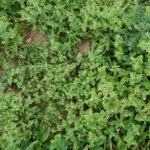
Commercial Ag Updates + Farm Food Safety
Rutgers Cooperative Extension Ag Agents provide updates on what they see in the field, upcoming events, and other important news that affects your operation, such as developments in on-farm Food Safety. Subscribe if you wish to be notified about workshops, meetings, and upcoming commercial ag events.
Subscriptions are available via EMAIL and RSS.
Hairy Galinsoga: Non-Herbicide Management Options in Specialty Crops
USDA Assistance for On-Farm Food Safety Expenses
The United States Department of Agriculture (USDA) has a new program to offset some expenses related to preparing for the food safety requirements. The “Food Safety Certification For Specialty Crops” (FSCSC) will cost share expenses for:
- Developing a food safety plan for first-time food safety certification.
- Maintaining or updating an existing food safety plan.
- Food safety certification.
- Certification upload fees.
- Microbiological testing for products, soil amendments and water.
- Training.
The FSCSC application period for 2022 is June 27, 2022, through January 31, 2023, and the application period for 2023 will be announced at a later date. Farm Service Agency will issue payments at the time of application approval for 2022 and after the application period ends for 2023. If calculated payments exceed the amount of available funding, payments will be prorated.
Interested specialty crop producers can apply by completing the FSA-888, Food Safety Certification for Specialty Crops Program (FSCSC) application. The application, along with other required documents, can be submitted to the FSA office at any USDA Service Center nationwide by mail, fax, hand delivery or via electronic means. Producers can visit farmers.gov/service-locator to find their local FSA office. Specialty crop producers can also call 877-508-8364 to speak directly with a USDA employee ready to assist.
Farm Storage Facility Loans
A second program that has been available for several years is the farm storage loan program. This covers cold storage construction along with equipment in a packing operations such as baggers, brush polishers, bulk bin tippers, cement flooring, circulation fans, dip tanks, conveyors, graders, refrigeration units, sizers, sorting bins and tables, trucks, washers, waxers, etc. A grower may borrow up to $500,000 for up to 12 years. If an operation needs to make major changes in a packinghouse or needs a refrigerated truck this program is worth considering. Contact your local FSA office for details.
RAM-AMS Harmonized GAP Assistance Program
The USDA Risk Management Agency (RMA) and USDA Agricultural Marketing Service (AMS) covers the cost of voluntary USDA Harmonized GAP and Harmonized Plus audits. This is only available for growers, producer cooperatives and food hubs. Once the audit is completed USDA will generate a bill to the auditee which summarizes the cost and then show a credit for the same amount. The funds will cover 100% of the audit fees. These funds are available for 2022 which may be the last year of availability.
Survey of cole crops and leafy green growers – novel weed control technology
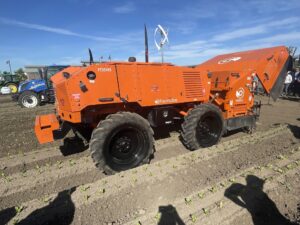
Several university weed scientists from around the U.S. (Clemson, Cornell, UC Davis, Florida, Michigan State, Rutgers, Arkansas) have developed a survey as part of a Specialty Crop Research Initiative (SCRI) planning grant (SC-2021-07806 DEVELOPING A NATIONAL TEAM TO OPTIMIZE NON-HERBICIDE WEED MANAGEMENT TECHNIQUES IN COLE AND LEAFY GREEN CROPS).
We would appreciate if you could share it with your constituents and cooperators (growers, crop consultants, extension personnel, industry partners) via newsletters, email blasts or other outreach efforts.
** WE NEED YOUR INPUT! **
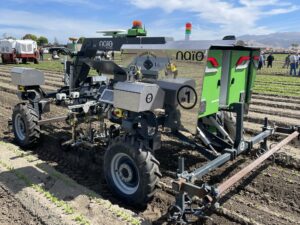 Weed management in vegetables can be difficult due to a shrinking labor pool, which is becoming more costly to source, and a lack of effective herbicides. Research and extension efforts must focus on integrating novel weed technology into current crop production systems. Autonomous and semi-autonomous robotic weed control technology has been implemented by some vegetable growers, mainly in the Western US, but is not universally available to or adapted by many producers. This survey is designed to new tools of interest (e.g. precision sprayers or cultivators, electrical weeders, drones, etc.) for managing weeds in cole crop and leafy green systems as well as the environmental, physical and economic barriers to adoption. The results of this survey will benefit vegetable growers by enabling the research team to develop relevant and realistic research efforts informed by the needs of and constraints faced by our local stakeholders. Specifically, we will use survey data to develop a multi-regional USDA grant proposal to bring grower-specified technology to each our states for evaluation and demonstration under a variety of commercial conditions and provide growers with an economic assessment of their performance relative to current best management practices.
The survey is voluntary and anonymous. All replies will be de-identified. It should take less than 10-15 minutes to complete. The link is below.
https://clemson.ca1.qualtrics.com/jfe/form/SV_1IfwcgkAXC9i6h0
If you have questions, please feel free to contact Thierry Besançon, Associate Professor and Extension Weed Science Specialist for Specialty Crops, New Jersey Agricultural Experiment Station, thierry.besancon@rutgers.edu.
Accelerated Irrigation Funding Now Available for New Jersey Producers
SOMERSET, N.J., Sept. 1, 2022 – The USDA’s Natural Resources Conservation Service (NRCS) in New Jersey is now accepting applications for accelerated Environmental Quality Incentives Program (EQIP) ACT NOW funding for irrigation.
Through this unique opportunity, producers and landowners can convert their existing overhead systems to low flow, high-efficiency systems such as drip or pivot which will efficiently and uniformly apply irrigation water, maintain soil moisture for plant growth, prevent contamination of ground and surface water, and improve poor plant productivity and health. Irrigation may also be combined with soil health practices to improve soil quality.
While NRCS accepts applications year-round, NRCS-NJ has established an evaluation period cut-off date for ACT NOW Irrigation funding of October 1, 2022. Applications submitted prior to the cut-off will be assessed and ranked as soon as the applicant has made treatment decisions through a conservation plan. Land offered for enrollment in EQIP must have been irrigated for at least two out of the last five years to qualify for irrigation-related conservation practices.
Based on fund availability, application assessments with a ranking score of 70 points or greater will be preapproved immediately, allowing the applicant to ACT NOW and achieve contract approval to begin practice installation without being evaluated against other submitted assessments. Application assessment ranking scores less than 70 points will be batched and funded in ranking order as funding allows.
For more details on EQIP, please contract your local USDA Service Center or visit https://www.nj.nrcs.usda.gov
National Farm Safety and Health Week 2022
It’s that time of year again! As we approach fall harvest, one of the busiest and most dangerous seasons of the year for many working in agriculture, we recognize National Farm Safety and Health Week (NFSHW). This year, NFSHW will take place during the week of September 18-24, 2022 with daily topics of interest, listed below. [Read more…]
Non-herbicide Management Options for Large Crabgrass in Specialty Crops
Large crabgrass can form robust root systems thanks to its numerous tillers and capacity to root at stem nodes, allowing it to out-compete crops for moisture and nutrients. Understanding the life cycle and biology of large crabgrass is key to figuring out the best options for its control on your farm. Learn more about non-herbicide life cycle disruptions that can be used in the development of a short and long term management plan through the large crabgrass decision tool fact sheet and an informational video. These resources are one of a five-part weed management series created by Extension Specialist Thierry Besancon and County Agricultural Agent Meredith Melendez, funded by USDA Specialty Crop Block Grant AM190100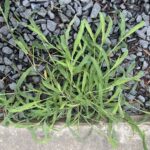 . Provide feedback on these resources through an online survey.

