2025 USDA Sustainable Agriculture Farmer Grant Project Information

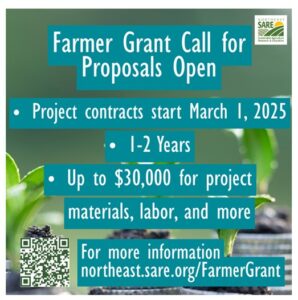
Farmers in the Northeast can apply for up to $30,000 in funding for sustainable agriculture projects starting in 2025. These projects can range from experiments to on-farm events and demonstrations or other educational activities.

The Call for 2025 Northeast Sustainable Agriculture Research and Education (SARE) Farmer Grants is now available. Approximately $850,000 has been allocated to fund projects. Awards of up to $30,000 are available. Proposals are due no later than 5:00 p.m. EST on November 12,2024.

Q&A Sessions are taking place alternating Tuesdays and Wednesdays in October. Register once to attend any of the sessions.
Sessions will take place on: Oct 8, 16, 22, 30. from 12 to 1 EST

To register see https://us02web.zoom.us/meeting/register/tZAlcO-qrjguGtSNrOemAOP7pZWbUCcl5GqN#/registration

To see the call for proposals https://www.sare.org/wp-content/uploads/Northeast-SARE-Farmer-Grant-Call-for-Proposals.pdf

To learn more about the SARE Farmer Grants https://northeast.sare.org/grants/get-a-grant/farmer-grant-program

For More Information contact USDA NESARE or your State Coordinator: Stephen Komar at komar@njaes.rutgers.edu

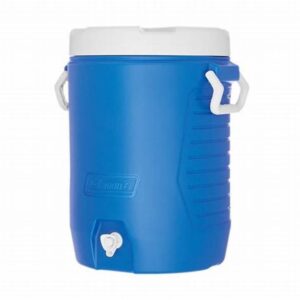
Beat the Heat: Water and Sports Drinks for Hydration

Article By: The Rutgers Farm Health and Safety Working Group: Kate Brown, Michelle Infante-Casella, Stephen Komar and William Bamka

When it comes to hydration, the U.S. National Academies of Sciences, Engineering, and Medicine recommends an adequate daily fluid intake of about 15.5 cups (3.7 liters) of fluids a day for men and about 11.5 cups (2.7 liters) of fluids a day for women. Even with this guidance, the amount varies from person to person. Also, when temperatures are hotter and when workloads increase so should drinking water, to prevent dehydration and to help maintain the proper body temperature especially when sweating.

Regular intake of water throughout the day and during the evening, at recommended amounts may help prevent a person from becoming excessively thirsty and also prevent dehydration. The choice of drinking sports drinks that contain electrolytes may be considered when a person’s activities dramatically increase, when they excessively sweat, if they show signs of dehydration, and/or heat stress.

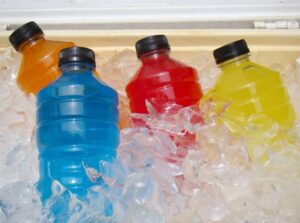
Most sports drinks are designed to replenish glucose, fluids, and electrolytes (sodium, potassium, magnesium, calcium) lost during strenuous exercise or heavy workloads. Sports drinks may contain carbohydrates in the form of sugar, usually glucose, high-fructose corn syrup, or sucrose. Some contain no sugar and are “sweetened” instead with low-calorie sweeteners. The amounts of sugar and electrolytes in sports drinks are intended to allow for quick hydration and absorption.

It is important to note, persons with diabetes should be mindful of not intaking amounts of sports drinks that are high in sugar that could raise blood sugar to unhealthy levels. Additionally, persons with high blood pressure should be mindful when drinking sports drinks that are high in sodium – most are. Persons who eat a healthy diet should have enough glucose and electrolytes to maintain their health, even during extra activities and with proper water intake. Some studies show drinking too many sports drinks, especially when not performing vigorous exercise, can increase the risk of overweight/obesity and other health issues such as type 2 diabetes, cardiovascular disease, gout and the risk of dental cavities.

Water is the best choice to stay hydrated and it is the responsibility of each individual person to be sure they drink enough water to maintain their proper health.

Locations for NJ Pesticide Recycling Containers – 2024

Below are the locations and dates for recycling pesticide containers in New Jersey. Individuals dropping off containers (triple rinsed, holes drilled in bottom of container or slit with a knife & sans paper booklet on container) may do so during business hours and can pick up the form with a stamped self-addressed envelope to mail NJDA to confirm participation. Completed form must be returned to NJDA. Individuals with a valid NJ DEP Pesticide Applicators Licenses will receive 1 CORE point PER CALENDAR YEAR when confirming participation in this program.

More information can be found at www.nj.gov/agriculture/divisions/anr/nrc/processingsteps.html

Salem County
Helena Chemical, 440 N. Main St., Woodstown, NJ
Friday, April 19
Friday, May 17
Friday, June 21
Friday, August 23
Friday, September 20
Friday, October 18

Atlantic County
Helena Chemical, 66 Route 206 (North of the Route 30/206 intersection) Hammonton, NJ
Friday, April 12
Friday, May 10
Friday, June 14
Thursday, July 12
Friday, August 16
Friday, September 13
Friday, October 11

Monmouth County
Rutgers Fruit and Ornamental Research Extension Center
283 Route 539, Cream Ridge, NJ 08514-9634
Friday, April 26
Friday, May 24
Friday, June 28
Friday, July 26
Friday, August 30
Friday, September 27
Friday, October 25

Items that Will Not Be Accepted and Will Be Returned to the Participant:
• Pesticide containers with dried formulation on the container, pour spout or the spout threads
• Pesticide containers with any liquid residue
• Pesticide containers where the insides are caked with dried residue
• Mini-bulk, saddle tanks and nurse tanks, which can be made of fiberglass
• Pesticide containers with lids
• Containers that held any type of petroleum oil product or antifreeze

Non-Waxy Cardboard:
Helena Chemical will also be accepting non-waxy cardboard 1 p.m. to 3 p.m and during the scheduled pesticide container collection times. The clean non-waxy cardboard must be broken down and flattened. Cardboard delivered to the Atlantic County site must be tied.

Clean Non-waxy cardboard will also be accepted year-round at the Cumberland County Solid Waste Complex’s Convenience Center.

More information can be found at: www.nj.gov/agriculture/divisions/anr/nrc/processingsteps.html

Deadline February 29, 2024 NJDA is offering USDA Resilient Food Systems Infrastructure Program Grants

The NJDA is offering USDA Resilient Food Systems Infrastructure Program Grants. The deadline for grant submissions is February 29th. For more information visit the NJDA grant site: Department of Agriculture | Resilient Food Systems Infrastructure Program Grants

Types of projects that could be funded include:
• Expanding processing capacities, including adding product types, increasing production volumes, and supporting new wholesale/retail, product lines;
• Modernizing equipment or facilities through upgrades, repairs, or retooling; (e.g., adapting product lines for institutional procurement or adding parallel processing capacity);
• Purchase and installation of specialized equipment, such as processing components, sorting equipment, packing and labeling equipment, or delivery vehicles;
• Modernizing manufacturing, tracking, storage, and information technology systems;
• Enhancing worker safety through adoption of new technologies or investment in equipment or facility improvements; Construction of a new facility;
• Increasing packaging and labeling capacities that meet compliance requirements under applicable laws (e.g. sealing, bagging, boxing, labeling, conveying, and product moving equipment);
• Increasing storage space, including cold storage;
• Develop, customize, or install climate-smart equipment that reduces greenhouse gas emissions, increases efficiency in water use, improves air and/or water quality, and/or meets one or more of USDA’s climate action goals;
• Modernize equipment or facilities to ensure food safety, including associated Hazard, Analysis, and Critical Control Points (HACCP) consultation, plan development and employee training;
• Training on the use of all equipment purchased under the grant and associated new processes.

Contact at NJDA:

Deelip Mhaske
Grants Administrator
Division of Marketing & Development New
Jersey Department of Agriculture
PO Box 330, Trenton, NJ 08625-0330

Phone: 609-913-6628 Fax: 609-984-2508
E-mail: deelip.mhaske@ag.nj.gov

Register Today for February 6-8, NJ Ag Convention, Educational Events, & Trade Show

SO MANY NEW OFFERINGS AND OPPORTUNITIES FOR 2024:

The 2024 NJ Ag Convention and Trade Show will be held Tuesday to Thursday, February 6-8 at Harrah’s Resort and Waterfront Conference Center 777 Harrah’s Blvd. in Atlantic City, NJ. Registration is required. The 3-day registration and VGANJ membership cost of $150 per farm for 2 persons and $25 for each additional person with your business. There is also a $75 per person daily entry fee option if you are not attending all 3 days and do not wish to be a member. All who register are welcome to attend this diverse and informative annual event. The convention is a cooperative effort with the Vegetable Growers Association of NJ, the NJ Department of Agriculture, and Rutgers Cooperative Extension. Rutgers Cooperative Extension worked with VGANJ and others to bring new educational events, activities, and offerings to the 2024 convention.

Some new and interesting events for 2024 for registered participants:

1. Tuesday mid-day “Lunch and Learn” trade show vendors presentations and free lunch for the first 50 people who sign up and obtain a ticket for this extra event at the registration booth on Tuesday morning. This event is sponsored by the exhibitors. Come see what exhibitors have to offer and find out what is new from industry.

2. Tuesday evening social and happy hour featuring a charity auction benefiting Shriners Hospital for Children with items to bid on from convention sponsors and trades show exhibitors. 

3. Free skin screenings on Wednesday, February 7th from 9AM to 3PM with the Rutgers Cancer Institute of NJ. Space is limited and you must sign up in advance. To sign up see registration form and link: https://screennj.gomohealth.care/patient/enroll/

4. The New Jersey Farm Bureau Womens Leadership Committee is sponsoring a Wednesday afternoon workshop featuring guest speaker, Lorenda Oberman, American Farm Bureau Federation Womens Committee and a panel of NJ Farm Women Leaders.

5. A Thursday, All-Day On-Farm Food Safety Training. The cost is $50/per person, separate from the registration fee to the Convention and Trade Show. For more information, contact Brandi at (856) 451-2800 ext. 1. For online registration and more information see: https://go.rutgers.edu/mhqc3m5u

6. A Thursday, 1/2 day Worker Protections Standards Respiratory Protection Training, Fit Testing and Record Keeping Workshop. Space is limited to 30 participants and is a separate sign up for registered participants to the convention – so sign up soon. For more information and to register see: https://go.rutgers.edu/pesticideworkshop

For more information about the entire convention for registration, hotel, and educational events schedule see https://vganj.com/convention. Discounted room rates through the VGANJ Convention room block are available until January 29, 2024. See the VGANJ website for details. To sign up for tickets to the NJ Agricultural Society Luncheon on Wednesday or to get tickets for the Wednesday night awards banquet see: https://www.nj.gov/agriculture/news/hottopics/approved/topics231208.html

Need Fit Testing for Your Respirator? Workshop on February 8, 2024

WORKSHOP: WPS RESPIRATORY PROTECTOIN TRAINING, FIT TESTING & RECORD KEEPING
Organizer and Host: PATRICIA HASTINGS    Email: hastings@njaes.rutgers.edu
Thursday, February 8, 2024 at 9:00 AM – 1:00 PM (PRE-REGISTRATION REQUIRED-SPACERespirator Mask LIMITED)

As part of the 2024 New Jersey Agricultural Convention and Trade Show, Rutgers Cooperative Extension is hosting educational sessions and workshops on Tuesday, February 6 through Thursday, February 8 at Harrah’s in Atlantic City. On Thursday morning pesticide applicators have a tremendous opportunity to be trained in respirator safety and fit testing. This workshop requires a separate registration (see instructions below to register) along with registration with VGANJ for the convention and trade show (available online or in person at the registration desk in the trade show area). For total list of educational events at the convention click here for Rutgers Educational Sessions. For more information about registering for the convention scroll to the bottom of the page on the Vegetable Growers Association of NJ’s Website.

Workshop Description: Revised WPS requires that agricultural employers provide all handlers (including family members) using a pesticide which requires respiratory protection with:

1) medical evaluation

2) fit testing of all tight-fitting respirators and

3) training per the requirements of 40 CFR 170.507 (b)(10).

This workshop aims to build the capacity of NJ agricultural establishments to protect their pesticide handlers from respiratory hazards. At this workshop, growers/applicators/their employees will receive class instruction and hands-on training in how to correctly select respiratory protection using the pesticide label statements of products used on their farm, train, and fit test others; and document the results to meet the requirements of the Revised WPS in NJ. Participants will be trained in pairs in how to properly conduct a qualitative fit test so that they can perform fit tests on the farm for as many masks and applicators as needed on their own. In rare cases, pesticide labels require respirators that legally require quantitative fit testing. Quantitative fit testing will be performed for those participants that need it. Training in the use of quantitative fit testing will not be provided to participants.

Workshop Pre-Requisites:
• Registration is given priority to growers/applicators/and their employees needing to expand capacity in respirator training, fit testing, and recordkeeping. Limited to the first 30 participants registering.
• Prior to fit testing or using a respirator, OSHA requires that the respirator user be medically evaluated. Each applicant must submit with their registration form a fully completed medical clearance by a physician or other licensed health care provider per OSHA 29 CFR 1910.1910.134(e)(6)9i.
• ALL attendees must pre-register by completing the 4-part registration form (including Part 4). Use the QR Code (right) to register or go to https://go.rutgers.edu/pesticideworkshopQR Code
Part 1: Participant Information
Part 2: List of Pesticides Used Which the Pesticide Label Requires Respiratory Protection
Part 3: Fit Testing Pre-requisites
Part 4: Submitting Your Respirator Workshop Pre-Registration Form

Day of the Workshop:
1) participants must be clean-shaven; use no lotions, aftershave, or makeup; or wear jewelry that interferes with the respirator sealing surface; certain facial hair such as mustaches are acceptable if they do not interfere with the inhalation or exhalation valve function.
2) Must bring respirator(s) they wish to be fit tested with fitted with N, R, or P filters; other makes models, and sizes of respirators will be available if fit cannot be achieved. Ordering information will be provided.
3) Each participant will receive a Workshop Certificate plus a completed “Fit Test Record” and “Respirator Training Record” form and wallet card.

PRESENTERS:
Respiratory Protection for Pesticides, Patricia D. Hastings, Rutgers Pesticide Safety Education Coordinator
Medical Evaluation and Fit Testing, Robin Tutor-Marcom, PhD, Director, NC AgroMedicine Institute

NJDEP PESTICIDE CREDITS FOR ATTENDEES: CORE-8 CREDITS