Free Webinar: Marketing Your Farm – Agritourism

Wednesday, March 29, 12-1pm Eastern Time

Rutgers Cooperative Extension is partnering with other New England states to deliver agritourism education. A free webinar will be held to help farmers learn the three essential components of marketing your farm, with a focus on agritourism. Myrna Greenfield is the “Top Egg” at Good Egg Marketing and the author of Marketing Your Farm: A practical guide to attracting loyal customers and increasing sales. Ellen Parlee is the co-owner of Parlee Farms in Tyngsboro, Massachusetts, which offers pick-your-own fruit and flowers, along with a farmstand, bakery, ice cream stand, animal petting area, and a food trailer for lunch. Ryan Wilson is the co-owner of DeMeritt Hill Farm in Lee, New Hampshire, which offers pick-your-own apples/peaches/blueberries/Xmas trees, hayrides, school tours, special events, Cross Country running, and hiking trails and has a full commercial kitchen. The farm plays host to Torey Roderick Performance Horses and every October, the world-famous Haunted Overload. Lisa Chase from University of Vermont Extension will moderate the session.

To register see: https://uvm-edu.zoom.us/webinar/register/WN_e3WWWaq9SoaQSR8nVkotdQ

This webinar is free, but registration is required.
Webinar: Incorporating Classes into Your Agritourism Business

Thursday March 23, 2023 12-1pm Eastern Time

Rutgers Cooperative Extension is partnering on a regional project with other New England Land Grant Universities to offer webinars related to agritourism in the northeast.

Join our speakers for Incorporating Classes into Your Agritourism Business, where they will share their experiences with offering, hosting, and teaching classes. As farm and food business owners, you are experts in your craft and likely face endless questions from customers and the public. Why not use this as an opportunity to offer classes, enabling your customers or the public to learn from your expertise? Classes can be tailored to a variety of topics and activities.

Susan Rigg is the owner of and cheesemaker at Whey River Creamery. Susan offers both introductory and advanced hands-on cheesemaking classes. Michele Capron is the co-owner of Lavender Essentials of Vermont. She offers numerous classes, including lavender wreath creations, cooking with lavender, native tea blending, herb garden, and make it – take it. Deb Hartshorn owns White Picket Farm LLC, offering a variety of class experiences, including soap making, creating terrariums, succulent bowls, and more!

To register go to: https://extension.psu.edu/incorporating-classes-into-your-agritourism-business

This webinar is free, but registration is required. You will need to create an account with Penn State Extension to register for this webinar.

2023 Pre-Season Farm Labor Meetings to be Held Soon

Sponsored by NJ Farm Bureau and Rutgers NJAES Cooperative Extension, two opportunities for farmers to learn about seasonal updates for farm labor will take place at two different locations. See below:

When: Wednesday, March 22, 7-9pm

Where: Cumberland County Rutgers Cooperative Extension Office, 291 Morton Ave., Millville, NJ


When: Thursday, March 30, 7-9pm

Where: Atlantic County Rutgers Cooperative Extension Office, 6260 Old Harding Highway, Mays Landing, NJ 08360

These meeting will consist of presentations on regulations pertaining to farm labor. The presenters will be from the Department of Labor, NJ DEP Pesticide Control Program, and NJFB. The topics discussed will be as follows. This will be an opportunity to ask any questions you may have going into the growing season.

• Worker Protection Standards Overview of new EPA WPS rules-NJ DEP Bureau of Pesticide Control
• Federal Labor Regulations Update & Overview of MSPA, FLSA and transportation -US Dept. of Labor
• NJ Labor Regulations Update & Overview Wage and Hour and paid sick leave -NJ Dept. of Labor
• Farm Bureau update

NJ DEP Licensed Pesticide Applicators can receive 1 CORE Recertification Credit for attending this event. 

For additional information contact: Ben Casella, New Jersey Farm Bureau, 609-393-7163

NJDEP Bureau of Water Allocation and Well Permitting Workshops Held

The New Jersey Department of Environmental Protection coordinated workshops in the past two weeks to assist farmers with Agricultural Water Certifications/Registrations who needed 5-year renewals. Those farmers with certifications expiring in 2023 were invited by NJDEP to attend the scheduled workshops. NJDEP Staff visited the 4 counties: Gloucester, Salem, Burlington, and Cumberland to complete renewals for 2023. These workshops are an efficient way to make sure forms are accurate, complete, and acceptable to NJDEP – avoiding the need to mail back paperwork to correct any information. If a farmer receives an invitation in the future to attend these NJDEP coordinated workshops, it is really important to attend and update your forms.

If a farmer was unable to attend workshops, or their county did not have a workshop, they must complete the 5-year renewal form mailed by DEP and make an appointment with the County Agricultural Agent in their county to finalize the forms in order to keep their status current. County Agricultural Agents do not have access to obtaining the renewal packets and farmers must bring them completed to the appointment or contact NJDEP for another copy, if they cannot locate their copy.

As per the NJDEP’s instruction, Agricultural Agents are to complete an “agent irrigation calculations sheet” and sign off on the form prior the forms are submitted to DEP. The forms can also be reviewed during an appointment with the Agricultural Agent. All other portions of the form are the responsibility of the farmer to complete. Also, it is important to read all instructions – that includes having a written daily log of the last month water was used in the past year to submit with the 5-year renewal application.

If a farmer does not have an Agricultural Water Use Certification or Registration, they can contact the NJDEP using the information below to obtain the forms.

If a farmer has any questions, NJDEP asks they contact staff at:

NJ Department of Environmental Protection, Division of Water Supply and Geoscience, Bureau of Water Allocation and Well Permitting, Mail Code 401-04Q, P.O. Box 420, Trenton, NJ 08625-0420, 609-984-6831. Also see the website at http://www.nj.gov/dep/watersupply/


SARE Farmer Grants for 2023 – Webinar on October 4th

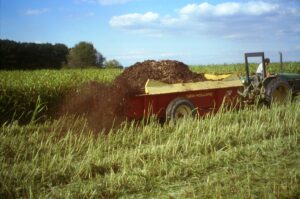
Truck spreading fertilizerMultiple Northeast SARE (Sustainable Agriculture Research and Education) grant recipient Tommye Lou Rafes, of T.L. Fruits and Vegetables in West Virginia, is sharing her experiences to help other farmers experiment with new ideas through the Farmer Grant program.
At noon on October 4th, 2022, Rafes will join Northeast SARE Grant Coordinator Candice Huber for an informational webinar to assist farmers interested in applying for up to $30,000 in funding for projects beginning in March 2023. Registration is required and participants are encouraged to submit questions ahead of the event. The Call for Farmer Grant Proposals is currently available and the online system for submitting applications is opening soon. Applications are due November 15, 2022.

Northeast SARE Farmer Grants are perfect for farmers looking to grow through new practices. Rafes first learned about SARE while attending a Good Agricultural Practices (GAP) training. One of the professors hosting the meeting was a SARE reviewer who invited the attendees to apply for a grant. Rafes knew sustainable practices like using renewable-powered high tunnels to extend growing seasons could be good for business as well as the planet. “Growing in the winter months is a completely different way than you do in the summer months,” she said. “I decided to test varieties that were successful during the winter months as well as growing conditions that could be improved so that people would be more successful.”

Grant Coordinator Candice Huber says Farmer Grants are an opportunity for farmers to try things that could improve their operations. SARE funds can cover the farmer’s time on the project, any farm workers time spent on the project, supplies that are not capital purchase, technical support, soil testing and other budgeted items. Farmer grant projects generally are for one year.

If you have an idea and you need resources to really explore it, a Farmer Grant can connect you with those resources. This webinar will be a good starting point and participants must pre-register. See below.

To sign up for the October 4th webinar at 12:00PM go to https://us02web.zoom.us/webinar/register/6516611235851/WN_RoG_IkMmSDGsduZwmFgKkA

For information about the application for SARE Farmer grants see https://www.sare.org/wp-content/uploads/Northeast-SARE-Farmer-Grant-Call-for-Proposals.pdf

For general information about Northeast SARE go to Northeast SARE Home Page – SARE Northeast

2023 Farmer Grant Proposals from Northeast Sustainable Agriculture Research and Education (SARE)

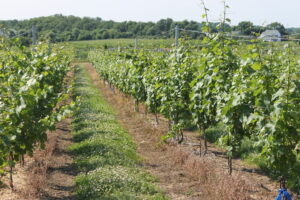
Do you hGrapevinesave an idea you would like to try on your farm that is related to sustainable agriculture? Stephen Komar, Rutgers SARE Coordinator and Sussex County Agricultural Agent, would like to announce that Northeast SARE will open the website for 2023 applications for Farmer Grants on October 1st. Approximately $750,000 has been allocated to fund projects for this grant cycle. Individual awards typically range from $5,000 to $30,000, depending upon a project’s complexity and duration. Projects must be related to sustainable agriculture and results are to be shared through a final report to SARE along with some type of outreach by the farmer as part of the project. 

The online system for submitting proposals will open on Oct 1, 2022. Proposals are due no later than 5:00 p.m. EST on November 15, 2022. Go to Northeast-SARE-Farmer-Grant-Call-for-Proposals.pdf for more information. 

Northeast SARE Farmer Grants provide the resources farmers need to explore new concepts in sustainable agriculture conducted through experiments, surveys, prototypes, on-farm demonstrations or other research and education techniques. Projects address issues that affect farming with long-term sustainability in mind. Northeast SARE funds projects in a wide variety of topics, including marketing and business, crop production, raising livestock, aquaculture, social sustainability, climate-smart agriculture practices, urban and indigenous agriculture and more.

The goals of SARE Farmer Grants are to help farmers try new things that could improve their operations and to share that information with others. There are also some other restrictions for budget items. Funds can be used to conduct the research project including paying farmers for their time, for project-related materials, for project costs like consulting fees or soil tests, and any communications or outreach expenses associated with telling others about project results. This grant program is not meant to help start or expand farm businesses. Farmer Grant funds cannot be used for capital costs associated with building a barn, greenhouse, or other major farm fixture, nor can funds be used to start a farm, purchase durable equipment like tractors or computers, or for any utility, telephone, or other costs that would be there in the absence of the project.

Farmer and employee wages can be included in a Farmer Grant budget for work done specifically on the grant project. Applicants should include a reasonable wage for their work on a grant project. In New Jersey, the current adverse wage rate used for the H2-A farm worker program is currently $15.54 per hour and could help gauge wages for employees time on the project. For farmer/project manager) wages, the rate to use would be higher and could be based on the complexity of the tasks on the project. 

In addition, each project must include a technical advisor to assist with the project. Technical advisors can be anyone who is an agricultural service provider, such as your local cooperative extension agricultural agent, USDA personnel, an agricultural consultant, etc. In New Jersey and other states, SARE Coordinators are not eligible to be technical coordinators due to a conflict of interest of leadership in the program. Therefore, Agricultural Agents, Stephen Komar (Rutgers SARE Coordinator) and Michelle Infante-Casella (Rutgers SARE Assistant Coordinator) are not able to be technical advisors to grants. However, if you have questions about the grant process, they both can help answer questions or point farmers in the right direction to identify technical advisors. 

A SARE Farmer Grant informational webinar featuring Tommye Lou Rafes, who has received multiple SARE Farmer Grants, will take place at 12:00 p.m. on October 4, 2022. This webinar information will help farmers thinking of applying for a SARE grant to learn about the process and types of projects that fit this program. To register for the webinar go to northeast.sare.org/farmergrantwebinar

The Northeast region includes Connecticut, Delaware, Maine, Massachusetts, Maryland, New Hampshire, New Jersey, New York, Pennsylvania, Rhode Island, West Virginia, Vermont, and Washington, D.C. Like other SARE Grants, Farmer Grants are competitive and will be judged against other applicants in the region.

To learn more about SARE project in New Jersey see New Jersey State Fact Sheet (sare.org)