Registration and housing for the 2022 Commodity Classic is now open. America’s largest farmer-led agricultural and educational experience will be held Thursday, March 10 through Saturday, March 12 in New Orleans, LA.
Early discounts on registration end Jan. 21, 2022.
Commodity Classic brings the agriculture industry together again in-person for the annual showcase of ag technology, crop production science, marketing intelligence, and farm innovation.
Commodity Classic features a schedule of over 50 educational sessions, a huge trade show with over 350 exhibitors featuring the latest technology, equipment and innovation, top-notch entertainment, inspiring speakers, unique tours, and the opportunity to network with thousands of farmers from across the nation.
A schedule of events is available at the Commodity Classic webpage.
Established in 1996, Commodity Classic is America’s largest farmer-led, farmer-focused agricultural and educational experience. It is presented annually by the American Soybean Association, National Corn Growers Association, National Association of Wheat Growers, National Sorghum Producers, and the Association of Equipment Manufacturers.
Commodity Classic Conference, March 10-12, 2022 in New Orleans
Sun Exposure and Skin Cancer Precautions in Agriculture
 We all want to be healthy and it is important to take measures to prevent illness and injuries. Everyone, especially farmers need to be cautious about their exposure to the ultraviolet rays (UV) of the sun. Skin cancer is the most common type of cancer in the United States and is related to repeated exposure to the sun which causes damaging changes to a person’s skin. The two types of ultraviolet rays most likely to damage a person’s skin and increase the risk for developing skin cancer are Ultraviolet A (UVA) and Ultraviolet B (UVB).
No one is immune to the sun’s UV rays; however, some skin types are more susceptible than others. People with blonde or red hair, fair skin, or freckles tend to get sunburned more quickly than others and should be even more vigilant about protecting themselves from the sun.
Skin damage builds up over the years, and once the damage has occurred, it cannot be reversed.
Risks of Sun Exposure:
One of the main health concerns of sun exposure is skin cancer. In the United States, one in five people will develop skin cancer. Contact your physician if you notice a difference in your skin or changes in moles regarding asymmetry, border, irregularities, color, or size.
The three main types of skin cancer are basal, squamous, and melanoma. Basal and squamous cancers are typically associated with long-term exposure to the sun but are seldom fatal. Melanoma can be fatal if not diagnosed and treated early and can affect people of all ages. When examining your skin for melanoma, look for changes in the size, shape, and color of existing moles and discolored patches of skin that may start small and grow.
Recommendations:
The following recommendations can reduce an agricultural producer’s risk of sun exposure, skin cancer, and other sun-induced conditions:
Sun Intensity – Exposure to harmful ultraviolet rays is most intense between 10:00 a.m. and 4:00 p.m. When possible, avoid working in direct sunlight during this time. If you must be in the sun during these hours, take shade breaks to reduce exposure, drink plenty of water, and reapply sunscreen at least every two hours.
Sunscreen – Sunscreens have one or more chemicals that absorb or disperse ultraviolet rays. Sun protection factor (SPF) is a numerical rating that indicates a specific amount of protection. You should wear a sunscreen with a minimum SPF of 15, but those with fair skin should use an SPF of 30 or higher. Due to exposure to water, weather, and perspiration, you should reapply sunscreen at least every two hours.
Clothing – Long-sleeved shirts and long pants provide protection from the sun’s rays. Darker clothing with a tight weave provides more protection from the sun than light-colored, loose-fitting clothing. Special SPF or UV-resistant clothing is available to reduce exposing your skin to the UV rays.
Hats – When it comes to sun protection, not all hats are created equal. You should wear a wide-brimmed (minimum of three inches wide) hat with flaps or drapes to provide sun protection for your eyes, ears, and neck.
Information adapted from: Sun exposure and agriculture. (2012) Farm and Ranch eXtension in Safety and Health (FReSH) Community of Practice. Retrieved from http://www.extension.org/pages/63042/sun-exposure-and-agriculture.
3rd Agritourism Webinar: Visitor Incidents and Media Communication
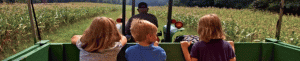 Rutgers Cooperative Extension is working with other extension professionals in the northeastern states to deliver weekly, one-hour webinar programming for agritourism and on-farm direct market operators. The 3rd session will focus on what to do in the event of an confrontation, accident, or injury, and how to communicate with the media in a crisis. Registration is being handled through the University of Vermont. See information below to join the webinars. There are separate registrations for each event.
Session 3: What to Do when Something Goes Wrong, Incident Response and Media Relations, When: May 18, 2021 7:00-8:00 PM Eastern Time. Presenters: Bill Bamka, Stephen Komar, Bill Hlubik, Rutgers Cooperative Extension – Register HERE
Session 4: Liability Insurance, When: May 25, 2021 12:00-1:00 PM Eastern Time. Presenter will be an insurance agent from VT: – Register HERE
Recorded past sessions will be posted to this website if you missed any sessions: https://www.uvm.edu/extension/vtagritourism/safety-and-liability-farms-during-covid-19
To request a disability-related accommodation to participate in this program, please contact Christi Sherlock at 802-476-2003 or Christi.Sherlock@uvm.edu for assistance.
Manage Stress with 10 Self-Care Tips
Mental health is something few people feel comfortable talking about. However, we all know stress can lead to many health issues both mental and physical. Here are a few self-care practices to help eliminate stress and strengthen your mental well-being:
Adopt better sleep habits: Prepare yourself for a restful night’s sleep by securing a comfortable environment. Turn off electronics, lights, and other distractions that may stimulate the brain.
Begin an exercise regimen: Start with small changes by opting to take the stairs, if able, instead of the elevator. Take stretch breaks during the day. Go on a walk or a bike ride.
Find a hobby: Don’t be afraid to try something new or do something you enjoy.
Take a social media break: Put down the tablet, smartphone, step away from the computer for a block of time.
Utilize stress management techniques: Try yoga, meditation, or breathing exercises.
Get organized: Use a planner to set goals for yourself. You will feel a sense of accomplishment crossing things off your list!
Keep a journal: Instead of dwelling over negative thoughts, put them down on paper. Then “close the book on them” and enjoy your day.
Volunteer: It feels good to help a friend or give back to your community, as well as a great way to connect and cultivate relationships.
Strengthen your communication skills: Make connections by reaching out and talking to someone, as well as be a good listener.
Treat yourself, as well as others, with respect: Remember, we are all human, we make mistakes, and we miss goals, but maintaining a positive outlook is key.
Information shared from: Jana L. Davidson, Progressive Agriculture Foundation. More information from the article in the May 5th edition of the Morning Ag Clips.
Agritourism and On-Farm Direct Marketing Webinar Series Begins Tuesday, May 4th
Rutgers Cooperative Extension is working with other extension professionals in the northeastern states to deliver weekly, one-hour webinar programming for agritourism and on-farm direct market operators each Tuesday in May until the first week in June. We are announcing the first session and will post the registration information for more sessions soon. Registration is being handled through the University of Vermont. See information below to join the first webinar.
Session 1: Getting Ready for Pick-Your-Own — Do’s and Don’ts for the Upcoming Season
Tuesday, May 4, 4:00-5:00pm Eastern time
No charge but you must register in advance.
Register for FREE HERE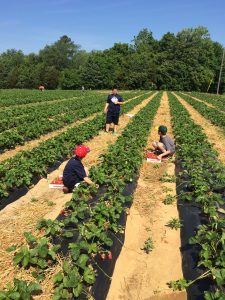
Join growers and ag service providers from the Northeast for an interactive discussion about what is working and what is not as we prepare to open our farms to visitors for the upcoming pick-your-own season. The berries are ripening and the Covid-19 pandemic is evolving – what does that mean for PYO visitor management this season? What did you do last year that you’ll continue and what will be different this season?
Featuring:
-Deb Colitas from Valley Fruits & Veggies in the Lehigh Valley of PA
-Claudia Schmidt from Penn State Extension
-Lisa Chase from University of Vermont Extension
-And YOU! Come ready to share your PYO questions and experiences managing visitors.
This is the first agritourism/on-farm direct marketing zoom session in a series that will cover several topics for farms open to visitors through the evolving COVID-19 pandemic. Other sessions will be held on consecutive Tuesdays on May 11, 18, 25, and June 1. For more programs and information see the Rutgers NJAES Events Calendar.
Session 2: Agritourism Operation Checklists and Self-Assessment During the Pandemic, When: May 11, 2021 7:00-8:00 PM Eastern Time – Register HERE
Session 3: What to Do when Something Goes Wrong, Incident Response and Media Relations, When: May 18, 2021 7:00-8:00 PM Eastern Time – Register HERE
Session 4: Liability Insurance, When: May 25, 2021 12:00-1:00 PM Eastern Time – Register HERE
To request a disability-related accommodation to participate in this program, please contact Christi Sherlock at 802-476-2003 or Christi.Sherlock@uvm.edu for assistance.
USDA National Agricultural Classification Survey – Important to All of Us
Please see the information below. Also, please realize that your information counts. By having the correct information submitted, the USDA is able to properly allocate funds to states for farm assistance programs, agricultural conservation programs, agricultural research and other programs important to our industry. So please don’t discard your survey and please fill it out to the best of your knowledge and return it in the mail.
Below information reprinted from Morning Ag Clips, April 22, 2021
WASHINGTON — The USDA’s National Agricultural Classification Survey (NACS) is arriving in mailboxes around the nation. The survey, one of the most important steps in determining who should receive a 2022 Census of Agriculture questionnaire, asks recipients if they are involved in agricultural activity. The USDA’s National Agricultural Statistics Service (NASS) recently mailed the NACS to 633,000 potential agricultural producers. NASS requests that each person who receives the survey respond by May 3.
“The NACS shows the breadth of American agriculture and helps to ensure we get a complete count of farms and ranches in the upcoming agriculture census,” said NASS Census and Survey Division Director Barbara Rater. “Every response matters. Even if a recipient believes the survey does not apply to them, we ask that they respond online to at least the initial screening questions.”
NASS encourages recipients to respond securely online at www.agcounts.usda.gov, using the 12-digit survey code mailed with the survey. Completed questionnaires may also be mailed back in the prepaid envelope provided.
Referenced by countless national and local decision-makers, researchers, farm organizations, and more, the once-every-five-year Census of Agriculture is the leading source of facts about American agriculture. “The NACS ensures that everyone who produces and sells, or would normally sell, $1000 or more of agricultural product in a calendar year have a voice by being represented in the agriculture census,” said Rater.
If you did not receive the 2017 Census of Agriculture or the NACS and believe you should have, please sign up to be counted at www.agcounts.usda.gov/getcounted. All information reported by individuals will be kept confidential, as required by federal law. For more information about the NACS, visit www.nass.usda.gov/go/nacs. For assistance with the survey, please call 888-424-7828.
