Archives for June 2025

Late June Peach Varieties for New Jersey– New and Standard

The many peach varieties grown in New Jersey were developed in different breeding programs from several peach-growing regions, including the Rutgers Tree Fruit Breeding program. Recent evaluations have examined the known characteristics and challenges growers face in growing these varieties. These are important for making planting, thinning, harvesting, post-harvest handling, and marketing-related decisions. Understanding these differences is important for selecting varieties or replacing existing ones.

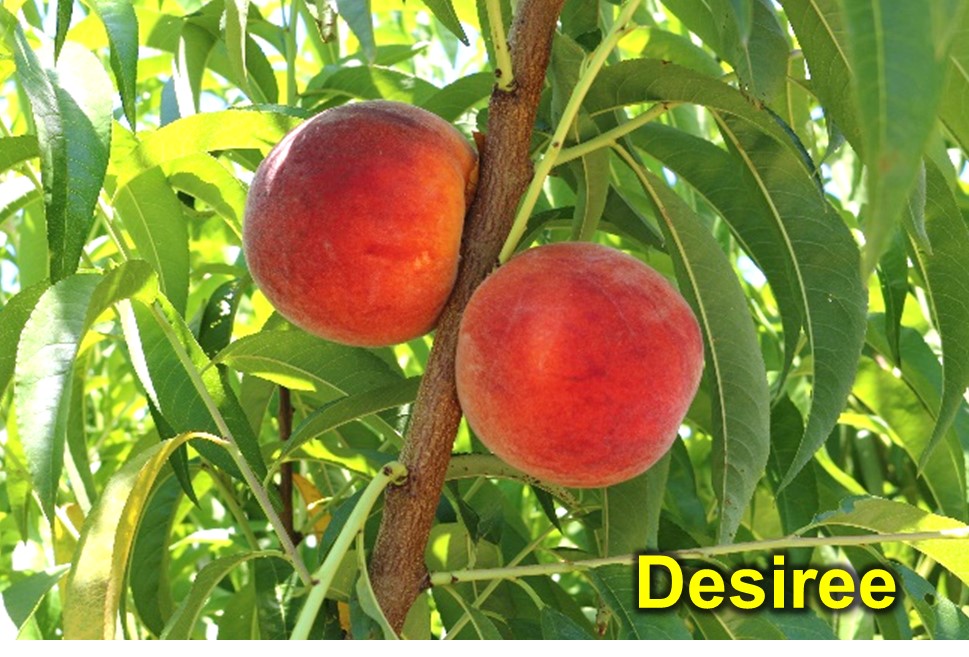
Desiree is a very attractive yellow-fleshed, clingstone peach variety, ripening during the last week of June. The fruit is beautiful and medium to moderately large, which is impressive for the early-season variety. The flesh is firm with a very sweet and tangy flavor. The tree is vigorous, and its leaves have low susceptibility to bacterial spot. The fruit is also having low susceptibility to Bacterial Spot. [Read more…]
Veg IPM update 6/27/25

Greetings from the Veg IPM team! We hope you all stayed cool during the heat wave this past week!

Sweet Corn

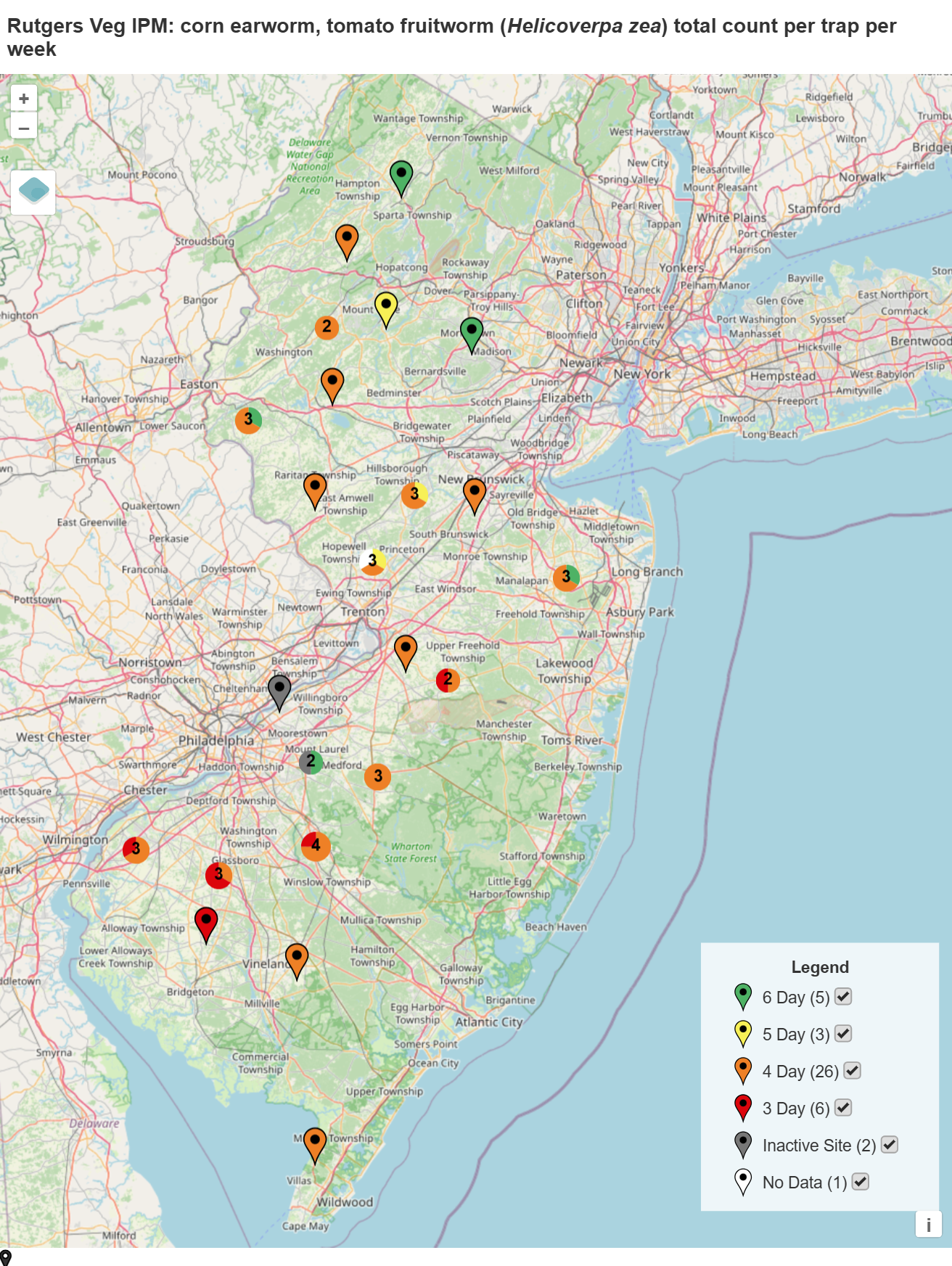
Early plantings of sweet corn are silking throughout New Jersey. Moth captures in much of the state (see map) have generally decreased, but a 4-day spray schedule is still necessary for most growers at this time. When temperatures are high (>85 degrees F), shorten the spray interval by one day. Rotation is important for avoiding resistance, and there are four IRAC groups that are registered in silking sweet corn: 1 (carbamates), 3 (pyrethroids), 5 (spinosyns), and 28 (diamides). Corn earworm is at least partly resistant to several pyrethroids, so a spray program should not rely solely on pyrethroids, although they can be useful in tank-mixes or as pre-mixed products, such as Besiege or Elevest (Group 28 + Group 3). For detailed information about resistance and potential spray programs, the University of Delaware has an excellent resource on corn earworm management. We’ve also seen some instances of European corn borer and corn earworm feeding in tassels of scouted corn, but for the most part, their numbers have not been high enough to warrant control efforts prior to silking.

Spray intervals based on nightly pheromone moth captures for the southern part of New Jersey. Note that not all locations in the IPM program are currently trapping. This map is based on the following thresholds: 0 moths = 6-7 day schedule, 1 moth = 5 day spray schedule, 2-20 moths = 4 day spray schedule, 20+ moths = 3 day spray schedule

Tomatoes

Throughout New Jersey we’re continuing to see high thrips counts both in tunnels and in the field, although numbers have been higher in tunnels. We consider more than 5 thrips on 10 leaves a high count. Other guides suggest 3-5 thrips per flower or the presence of stippling damage on fruit to be a treatment threshold. Thrips management is especially important because of their ability to vector tomato spotted wilt virus (TSWV), a growing concern in New Jersey where we have resistance-breaking strains. TSWV has already been seen on farms this season. Thrips management can be especially challenging in high tunnels due to a lack of products. Minecto Pro (IRAC 28 + 6) and Exirel (IRAC 28) can be used in tunnels, but only suppress thrips populations (this means they reduce numbers, but do not eradicate them). In the field, Entrust/Radiant (IRAC 5) can be used as well as Torac (IRAC 21A) and Harvanta (IRAC 28). We do not recommend pyrethroids or neonicotinoids for thrips due to resistance in different thrips species. Refer to the previous link for a complete list of best management practices for thrips and TSWV.

We’re also seeing limited aphid and spider mite activity. If dealing with primarily aphids, products such as Beleaf (IRAC 29) are recommended, especially if plants have reached the flowering stage. However, natural enemies often control aphids, so if counts are low and natural enemies like lacewings, lady beetles, or parasitoid wasps are present, you may avoid sprays. For spider mites, Nealta (IRAC 25) is an effective material that is more friendly to beneficial insects, but Portal (IRAC 21A) and other materials can be used to manage populations. Colorado potato beetles are especially prevalent in eggplants. Please consult the Mid-Atlantic Commercial Vegetable Production guide for appropriate materials for CPB control.

6 tiny light-colored thrips on a tomato leaf.

Thrips on a tomato leaf. Photo by Maria Cramer.

Cole Crops 

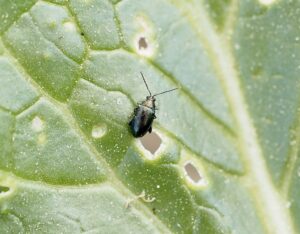
A shiny black beetle with straight antennae stands on a leaf surrounded by circular feeding holes.

Flea beetle surrounded by feeding damage. Picture by Maria Cramer.

Flea beetle activity seems to be slowing down some, but they are still active in some cole crops. This year, they have been especially prevalent in lacinato kale, Napa cabbage and bok choy. Young plants are especially vulnerable to attack from flea beetles. The treatment threshold for flea beetles in heading cole crops is 50% infestation.

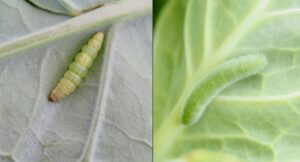
Two caterpillars on brassica leaves. Diamondback moth caterpillar on the left is smooth and tapered at each end. Imported cabbageworm on the right is fuzzy.

Left: Diamondback moth caterpillar, showing characteristic tapering at each end. Right: Imported cabbageworm caterpillar showing characteristic fuzziness. Pictures by Maria Cramer.

We continue to see caterpillar activity in heading cole crops. Treatment thresholds vary between crops and growth stage, but for heading cole crops between early vegetative and cupping, the treatment threshold is 30%. As heads form, the treatment threshold goes down to just 5% infestation. For very small caterpillars, sprayable Bt products (IRAC 11A) such as Dipel, Xentari, or Javelin can be effective on young imported cabbage worm caterpillars. Other materials approved for caterpillar control include Entrust/Radiant (IRAC 5), Proclaim (IRAC 6), Torac (IRAC 21A), and Exirel (IRAC 28). Diamondback moth (the primary caterpillar found in southern NJ) has resistance to many insecticide groups, and pyrethroids (IRAC 3A) are not effective for their management. For Bt products and contact insecticides, coverage on the undersides the leaves is essential.

Diseases

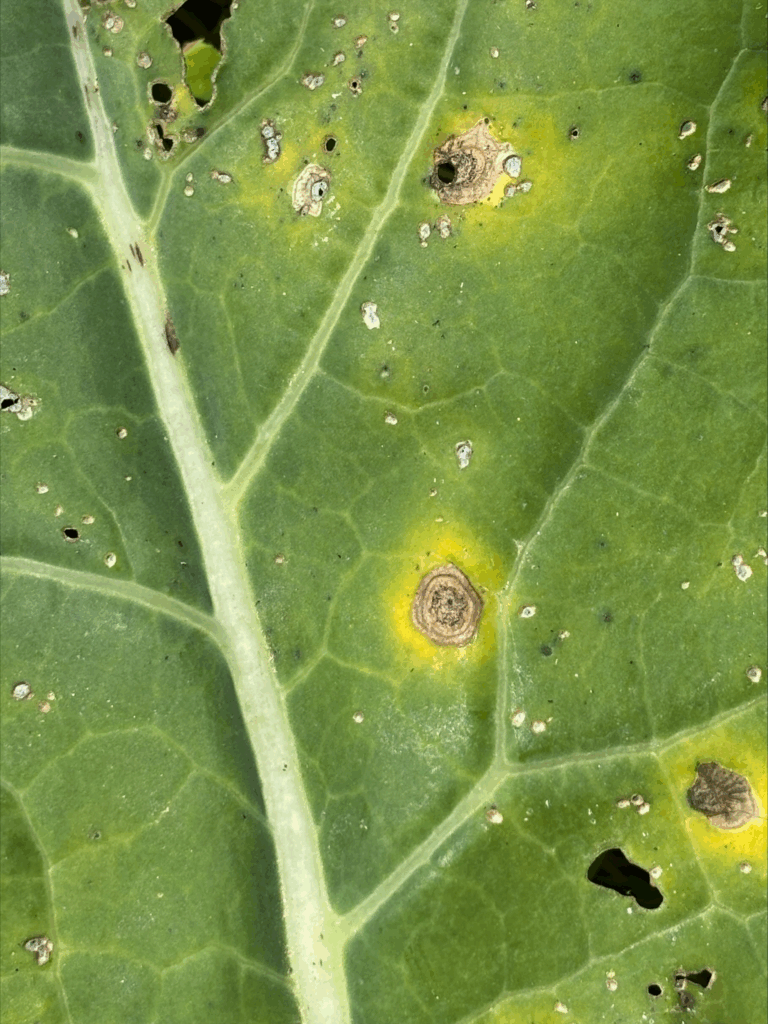
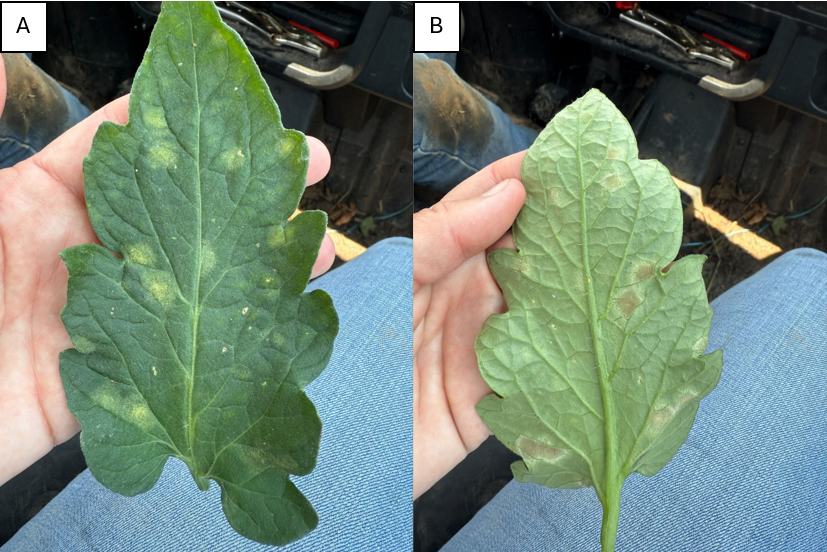
With the heavy rainfall over the last week, conditions have been favorable for diseases to spread. We’re still seeing bacterial and fungal issues in tomatoes, but we have also started to see issues like Alternaria in cole crops. To prevent the spread of disease, avoid working fields when foliage is wet and continue to use resistant varieties when possible. In tunnels, leaf mold is becoming a prevalent problem as well. Be sure to vent the structure regularly to reduce humidity. Mural (FRAC 7 + 11) is labeled for greenhouse use.

Alternaria on broccoli

Alternaria on broccoli. Photo by Amanda Quadrel


Photo showing leaf mold symptoms on the upper (A) and lower (B) surface of the leaves. Photo by Darcy Perehinys


As always, please consult the Mid-Atlantic Commercial Vegetable Production Guide for a more comprehensive list of materials that are labeled for specific crops and pests. As always, be sure to follow label rates and application instructions.

2025 Summer Orchard Tour and Educational Program

2025 Summer Orchard Tour and Educational Program

Sponsored by:

The New Jersey State Horticultural Society
in cooperation with
Rutgers Cooperative Extension of Hunterdon County

Wednesday July 9, 2025 4:00 – 8:00 PM

Hosted by: Kurt Alstede at Alstede Farms
Harvest Hall
100 Route 24
Chester, NJ O7930

Cost: $20.00 includes dinner

Program
4:00 PM: Registration

4:30 PM: Farm Tour /Wagon Ride
                 Win Cowgill, Kurt Alstede, Colin Manning and Rebekah Alstede-Modery 

5:45 PM: Dinner

6:15 PM: Welcome Remarks – Win Cowgill

6:45 PM: Rutgers IPM Mating Disruption Research
                 Janine Spies PhD, State Fruit IPM Program Leader, Rutgers NJAES

7:30 PM: Precision Protection: Harnessing Pheromone Tech in the Battle Against Invasive Orchard Pests
 Haydn Lenz, PNW Technical Field Specialist Suterra

The following NJDEP Pesticide will be awarded.
1 Unit Category 1A      1 Unit PP2
Preregistration required by Monday July 7 at https://njshs.org/event-6223337
Email: njhortsociety@gmail.com


Sparganothis Fruitworm Degree-Day Update: As of June 23, 2025

By: James Shope and Cesar Rodriguez-Saona

As of June 23, Sparganothis fruitworm has accumulated 1,225 degree-days (DD) since the April 15 biofix, based on our degree-day model. This suggests that flight activity has surpassed 90%, with peak flight likely occurring around June 19, 2025. The model reflects average conditions across multiple beds, so some variation may occur depending on the variety. We will continue to provide updates as the season progresses. If needed, an insecticide application is recommended two weeks after peak trap catches—around July 3.

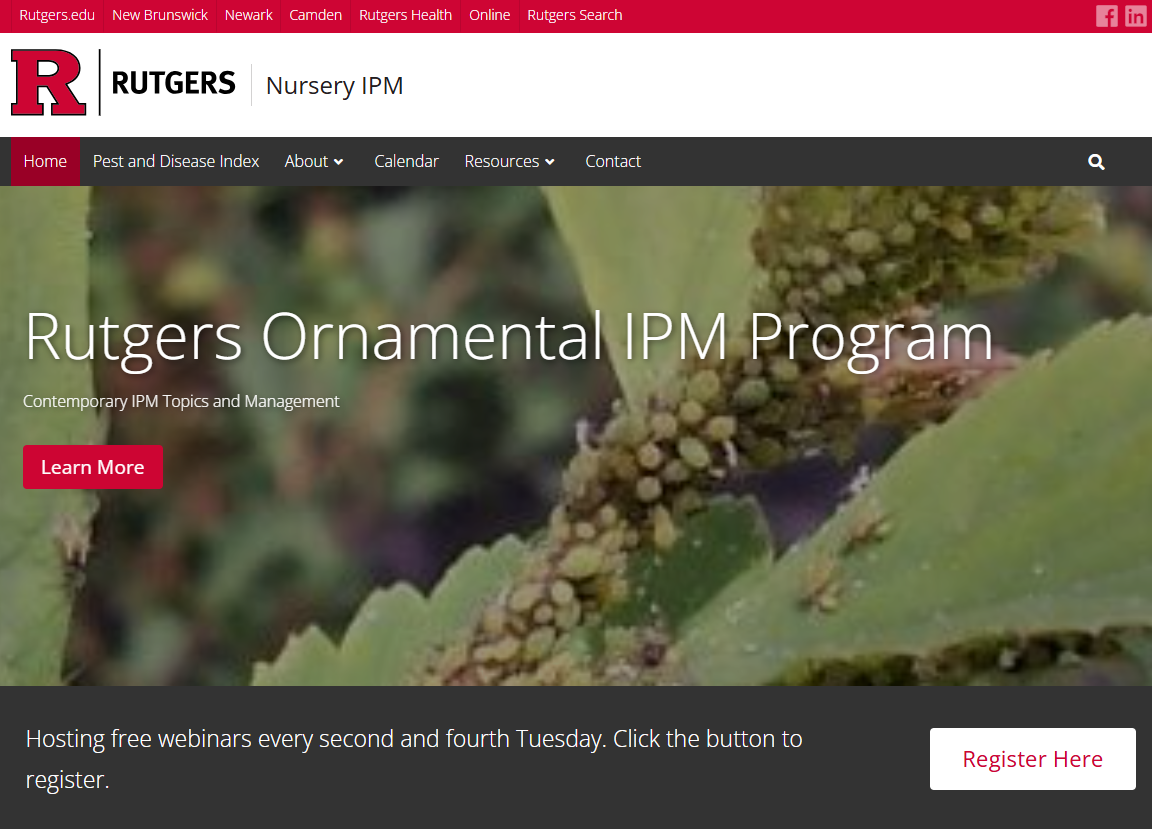
NEW – Ornamental IPM Website & Upload of 6/10 Webinar – Next Session Tuesday 6/24

Still time to Sign up for the 2025 – Rutgers Ornamental IPM Program

(Join us for the next Session Tuesday 6/24/25)

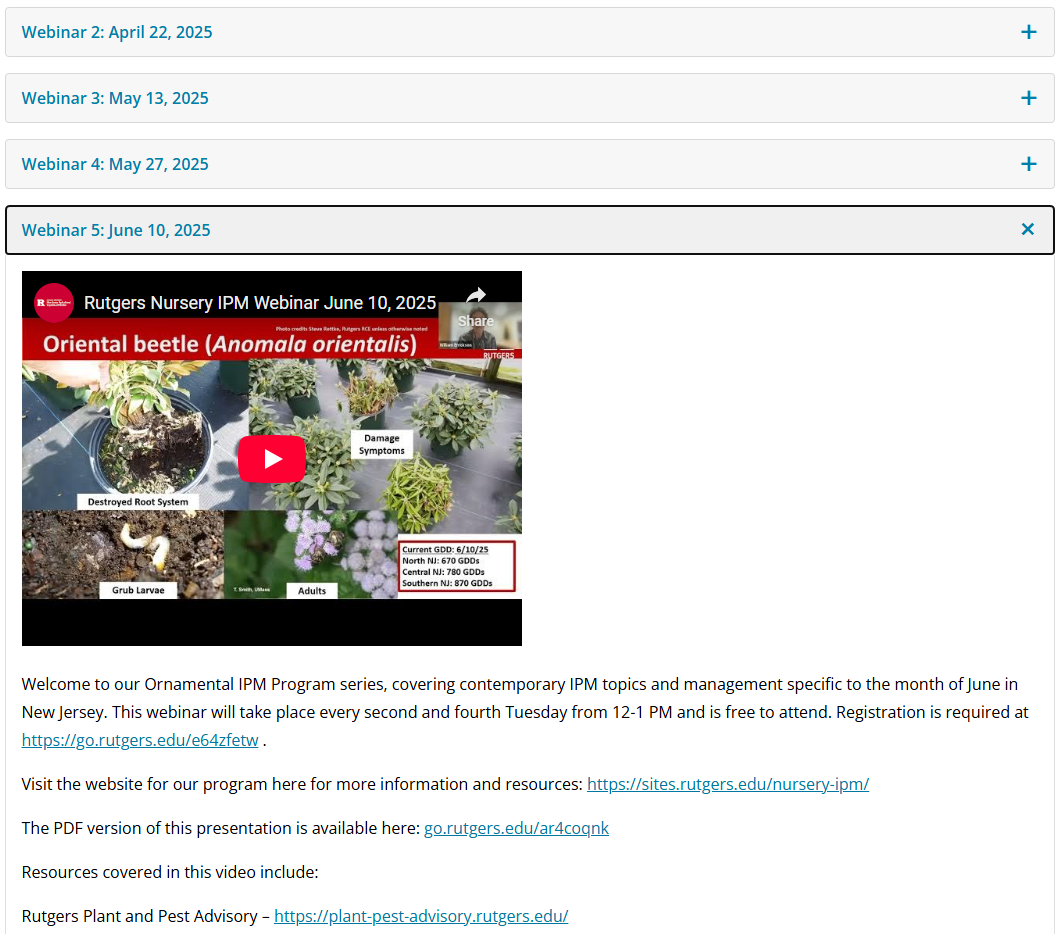
UPLOADS 6/10 SESSION: (contains information on oriental beetle, SLF, Two-spotted spider mites, soft scales, box tree moth, bacterial shothole, virus symptoms)

  1. Click here for a PDF of June 10, 2025 webinar
  2. Click here for VIDEO of June 10, 2025 webina

Previous webinars:

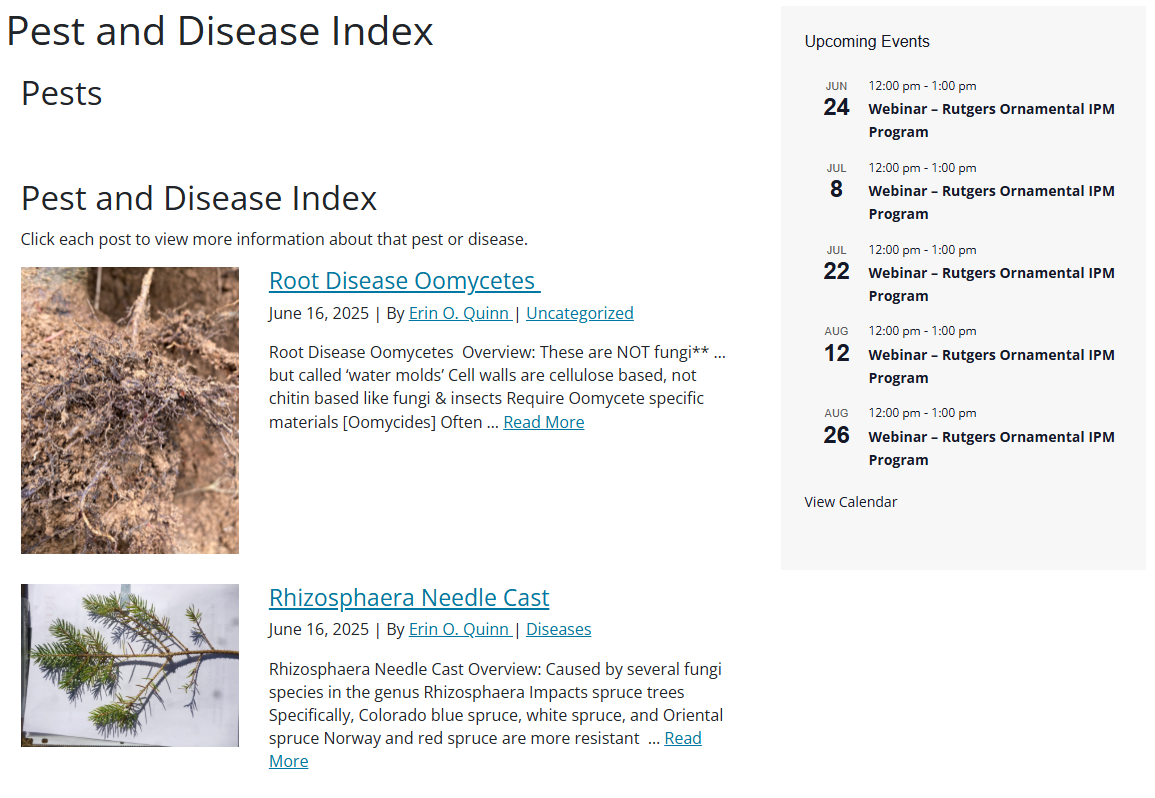
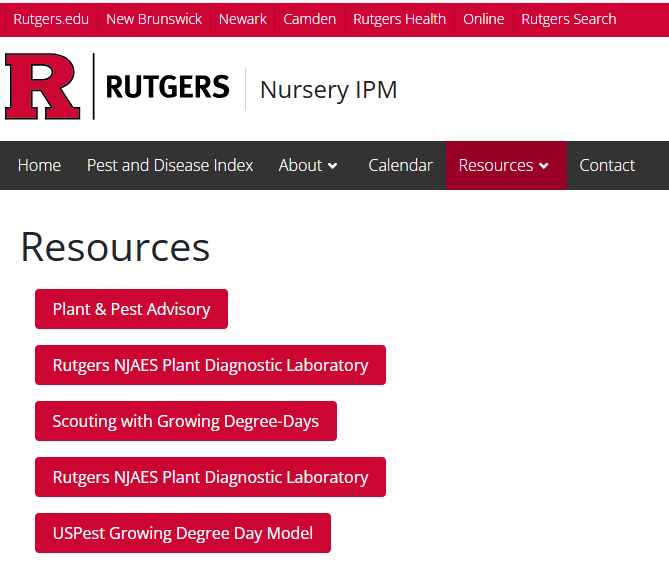
New –Rutgers Ornamental IPM Program Website

With links to all PDFs and recorded Webinars

Pest and Disease specific information 

…and ever expanding Resources  

Click here for the NEW Rutgers Ornamental IPM Program Website

Veg IPM update 6/20/25

Greetings from the Veg IPM team! This week we’re welcoming 3 scouts for southern New Jersey farms: Kris Szymanski, Nick Vergara, and Renee Carter.

Sweet Corn

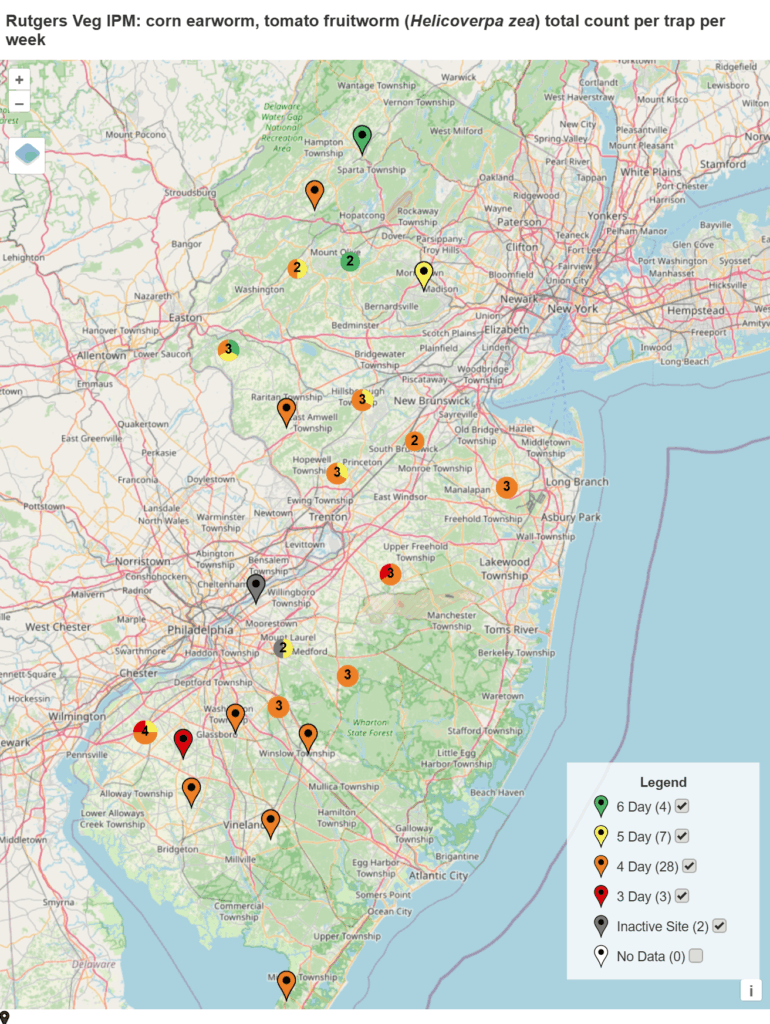
Early plantings of sweet corn are silking throughout New Jersey. Moth captures in much of the state (see map) are indicating that 3 or 4 day spray intervals are necessary. When temperatures are high (>85 degrees F), shorten the spray interval by one day. Rotation is important for avoiding resistance, and there are four IRAC groups that are registered in silking sweet corn: 1 (carbamates), 3 (pyrethroids), 5 (spinosyns), and 28 (diamides). Corn earworm is at least partly resistant to several pyrethroids, so a spray program should not rely solely on pyrethroids, although they can be useful in tank-mixes or as pre-mixed products, such as Besiege or Elevest (Group 28 + Group 3). For detailed information about resistance and potential spray programs, the University of Delaware has an excellent resource on corn earworm management. We’ve also seen some instances of European corn borer and corn earworm feeding in tassels of scouted corn, but for the most part, their numbers have not been high enough to warrant control efforts prior to silking.

Spray intervals based on nightly pheromone moth captures for the southern part of New Jersey. Note that not all locations in the IPM program are currently trapping. This map is based on the following thresholds: 0 moths = 6-7 day schedule, 1 moth = 5 day spray schedule, 2-20 moths = 4 day spray schedule, 20+ moths = 3 day spray schedule.


Tomatoes

In southern New Jersey we’re continuing to see high thrips counts both in tunnels and in the field, although numbers have been higher in tunnels. We consider more than 5 thrips on 10 leaves a high count. Other guides suggest 3-5 thrips per flower or the presence of stippling damage on fruit to be a treatment threshold. Thrips management is especially important because of their ability to vector tomato spotted wilt virus (TSWV), a growing concern in New Jersey where we have resistance-breaking strains. TSWV has already been seen on farms this season. Thrips management can be especially challenging in high tunnels due to a lack of products. Minecto Pro (IRAC 28 + 6) and Exirel (IRAC 28) can be used in tunnels, but only suppress thrips populations (this means they reduce numbers, but do not eradicate them). In the field, Entrust/Radiant (IRAC 5) can be used as well as Torac (IRAC 21A) and Harvanta (IRAC 28). We do not recommend pyrethroids or neonicotinoids for thrips due to resistance in different thrips species. Refer to the previous link for a complete list of best management practices for thrips and TSWV.

We’re also seeing limited aphid and spider mite activity. If dealing with primarily aphids, products such as Beleaf (IRAC 29) are recommended, especially if plants have reached the flowering stage. However, natural enemies often control aphids, so if counts are low and natural enemies like lacewings, lady beetles, or parasitoid wasps are present, you may avoid sprays. For spider mites, Nealta (IRAC 25) is an effective material that is more friendly to beneficial insects, but Portal (IRAC 21A) and other materials can be used to manage populations. Colorado potato beetles are especially prevalent in eggplants. Please consult the Mid-Atlantic Commercial Vegetable Production guide for appropriate materials for CPB control.

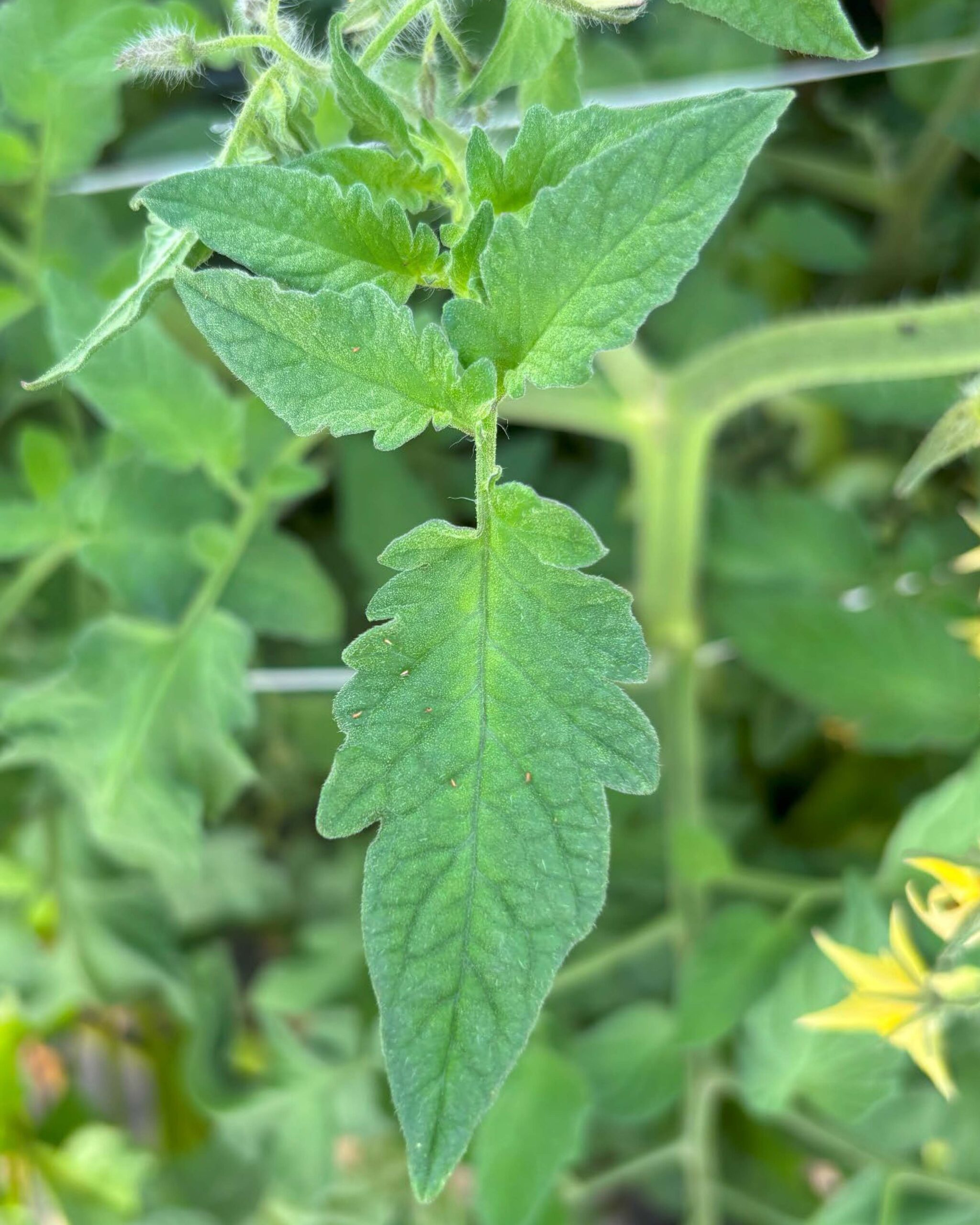
6 tiny light-colored thrips on a tomato leaf.

Thrips on a tomato leaf. Photo by Maria Cramer.

Cole Crops 

A shiny black beetle with straight antennae stands on a leaf surrounded by circular feeding holes.

Flea beetle surrounded by feeding damage. Picture by Maria Cramer.

Flea beetle activity seems to be slowing down some, but they are still active in some cole crops. This year, they have been especially prevalent in lacinato kale, Napa cabbage and bok choy. Young plants are especially vulnerable to attack from flea beetles. The treatment threshold for flea beetles in heading cole crops is 50% infestation.

Two caterpillars on brassica leaves. Diamondback moth caterpillar on the left is smooth and tapered at each end. Imported cabbageworm on the right is fuzzy.

Left: Diamondback moth caterpillar, showing characteristic tapering at each end. Right: Imported cabbageworm caterpillar showing characteristic fuzziness. Pictures by Maria Cramer.

We continue to see caterpillar activity in heading cole crops. Treatment thresholds vary between crops and growth stage, but for heading cole crops between early vegetative and cupping, the treatment threshold is 30%. As heads form, the treatment threshold goes down to just 5% infestation. For very small caterpillars, sprayable Bt products (IRAC 11A) such as Dipel, Xentari, or Javelin can be effective on young imported cabbage worm caterpillars. Other materials approved for caterpillar control include Entrust/Radiant (IRAC 5), Proclaim (IRAC 6), Torac (IRAC 21A), and Exirel (IRAC 28). Diamondback moth (the primary caterpillar found in southern NJ) has resistance to many insecticide groups, and pyrethroids (IRAC 3A) are not effective for their management. For Bt products and contact insecticides, coverage on the undersides the leaves is essential.

Diseases

With the heavy rainfall over the last week, conditions have been favorable for diseases to spread. We’re still seeing bacterial and fungal issues in tomatoes, but we have also started to see issues like Alternaria in cole crops. To prevent the spread of disease, avoid working fields when foliage is wet and continue to use resistant varieties when possible. In tunnels, leaf mold is becoming a prevalent problem as well. Be sure to vent the structure regularly to reduce humidity. Mural (FRAC 7 + 11) is labeled for greenhouse use.

Alternaria on broccoli

Alternaria on broccoli. Photo by Amanda Quadrel


Photo showing leaf mold symptoms on the upper (A) and lower (B) surface of the leaves. Photo by Darcy Perehinys


As always, please consult the Mid-Atlantic Commercial Vegetable Production Guide for a more comprehensive list of materials that are labeled for specific crops and pests. As always, be sure to follow label rates and application instructions.