Fire blight infection predicted week of April 13

NEWA is predicting a high risk for fire blight infection this week as a result of favorable conditions for apple orchards in bloom. Favorable conditions include 1) a certain number of heat units accumulated during bloom for a threshold level of inoculum to be reached; 2) a wetting event to wash the bacteria into infection sites; and 3) the average temperature is above 60°F. If at least two conditions are met during bloom, then the risk for infection is ‘High’ and antibiotics should be applied. A wetting event is not necessary to elevate the risk. Additionally, forecasted wetting events should be carefully considered and a bactericide applied just before or after a rain event.

When using the fire blight model on NEWA, it is important to enter your own “First Blossom Open Date” for your orchard as this can drastically change predictions. You can also enter your orchard’s history with fireblight in the first drop down menu. Lastly, you can enter the date you last applied an antibiotic this season and the model will reset to provide the most accurate predictions. When using the model, it is important to look at the column farthest to the right in the chart titled “Infection Potential EIP Value” since this is the most accurate prediction for our region. Any time the model shows an orange (High) or red (Extreme) output and the value for that date is above 100, an antibiotic application is warranted.

To manage fire blight in both apples and pears, consider using Kasumin at bloom. Kasumin is an antibiotic like Streptomycin and Oxytetratracycline. It contains Kasugamycin which is a different chemistry. Kasumin is only labeled for bloom and petal fall applications while strep and oxytet are labeled for post bloom use (note that Fireline 45 only allows for 1 postbloom application on apple). Using 3 different chemistries in rotation allows for resistance management while extending the protection into the post bloom period when late blossoms typically appear which ever material you use, the addition of Actigard or other plant defense elicitors may improve control. Applications of Apogee or Kudos during bloom can work to prevent shoot blight after petal fall. The use of Actigard and Apogee are especially recommended in new plantings where instances of shoot blight can kill young trees. For further recommendations on these products, Michigan State University published a guide including information on application timing and product rates.

Additionally, for peaches at petal fall, copper formulations should be used to suppress bacterial spot. Generally we recommend starting at 0.5 oz of metallic copper and gradually lowering the rate as the season progresses. The rate applied will depend on the formulation. Dr. Norm Lalancette published a chart listing common copper formulations and rates for peach and nectarine applications. Avoid combining copper with captan especially if it has been overcast for several days. Also avoid acidic spray solutions when applying copper. Dr. Lalancette has published a handy guide for copper applications in early covers. Antibiotics such as Mycoshield or Fireline may also be used and may offer slightly more residual activity during long wetting periods.
South Jersey Commercial Fruit Growers Meeting

Pesticide Credits Approved – #CORE(1); #10(6); #PP2(7); #1A(7)

Date:                    March 4, 2025 (Tuesday)
Location:            Gloucester County Govt. Services Building #A, 1200 N. Delsea Dr., Clayton, NJ 08312
Registration:      $20.00 (Checks only, made out to Rutgers University, can be paid at the door but pre-registration required).  Lunch, Coffee, and Pastries Included. Required by March 3.  Contact: (856) 224 – 8030 or Email: jmedany@co.gloucester.nj.us

PROGRAM

8:30 am           Registration, Coffee and pastries
8:50 am           Welcome and Opening Remarks
Hemant Gohil, County Agent II, RCE of Gloucester County, Rutgers NJAES

9:00 am           Multi Pest Management in the Orchard
Anne Nielsen, Extension Specialist, Fruit Entomology, Rutgers NJAES

9:30 am           Bacterial Spot Management in the Peach Orchard.
Kari Peter, Extension Specialist, Tree Fruit Pathology, Penn State University.

10:00 am         Understanding how irrigation water can be a source for soilborne diseases in the orchard
Kari Peter, Extension Specialist in Tree Fruit Pathology, Penn State University.

10:30 am         Coffee Break
10:45 am         Industry and USDA Updates

11:00 am         An update on the Fruit IPM Program and summary of the 2024 season.
Janine Spies, Statewide Program Leader in Fruit IPM, Rutgers NJAES

11:30 am         What can the Rutgers Plant Diagnostic Lab do for you?
Sabrina Tirpak, Laboratory Researcher, Plant Diagnostic Lab, Rutgers NJAES

Noon             Lunch

1:00 pm           Pesticide Handling and 2025 updates
George Hamilton, Extension Specialist in Pest Management, Rutgers NJAES

1:30 pm           Peach Flower Thinning using ACC (Accede)
Shantanu Krishna Kumar, Assistant Professor of Tree Fruit, Penn State University.

2:00 pm           Plant Nutrition and Causes of Bitter Pit Disease in Apple
Joseph Heckman, Extension Specialist in Soil Fertility, Rutgers NJAES.

2:30 pm           2024 Field Observations – peach varieties, overhead irrigation frost protection, hydro-cooling, post-harvest inking.
Hemant Gohil, County Agent II, RCE of Gloucester County, Rutgers NJAES.
Daniel Ward, Extension Specialist, Pomology, Rutgers NJAES.

3:00 pm           Pesticide recertification credits and Adjourn

For questions, please get in touch with Hemant Gohil at 856-418-6538 or email at gohil@njaes.rutgers.edu
Send Check to Hemant Gohil, Rutgers Coop Extension, 254 County House Rd., Clarksboro, NJ 08020

What to Look for At Bloom: Cankers of Stone fruit.

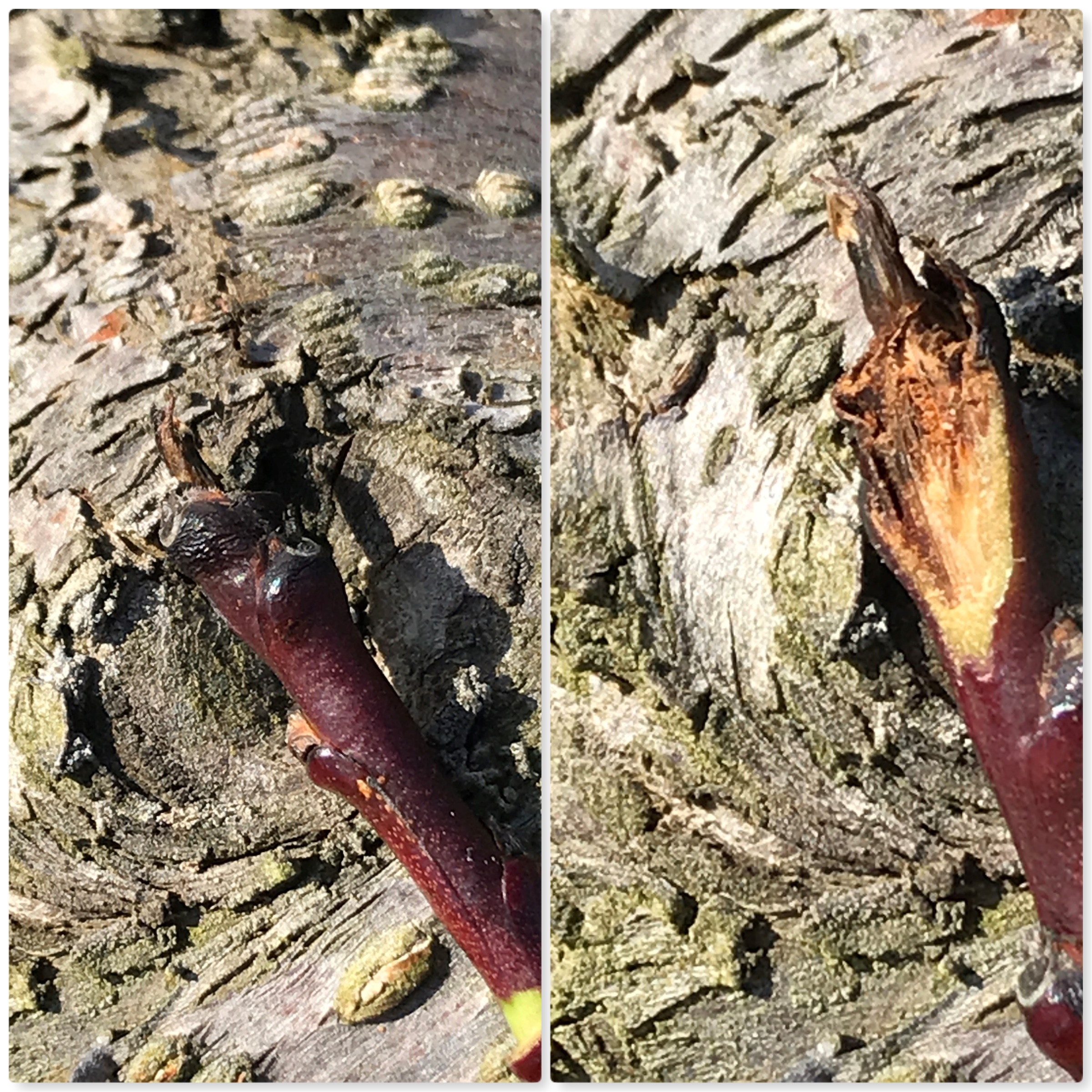
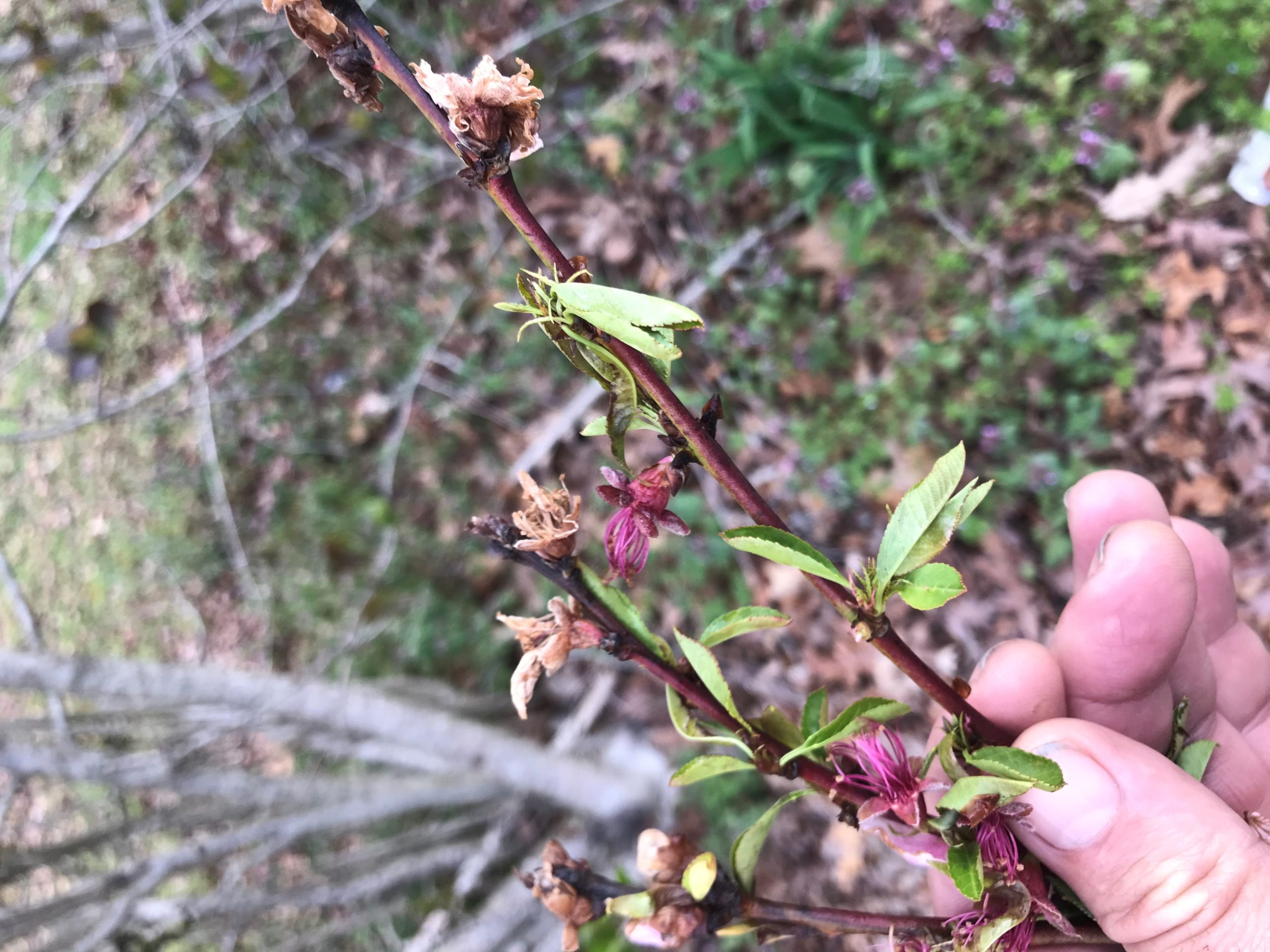
Bacterial Spot is a key pest of Peach, Nectarine and Plum and in some years like 2019 can cause significant losses. It is caused by the bacterium Xanthomonas arbicola pv. pruni. Bacterial spot cankers that cause tip dieback (commonly called Black Tip) are often difficult to distinguish from cankers caused by other peach diseases. Other cankers that may appear during bloom are caused by the blossom blight phase of brown rot, and constriction canker. Black tip usually appears during or just after bloom. Typical symptoms are a gradual blackening of the tip with dead tissue moving down the twig and is often observed on highly susceptible cultivars (Fig. 1). Tip die back may also occur from abiotic factors such as frost. Tip die back from frost is often accompanied by blind wood usually 6-8 inches below the tip where leaves and flowers have fallen off after being killed by a freeze.

Scared onion

Fig. 1 Tip die back likely bacterial spot or spring frost.

In some cases the twig may appear healthy and a shoot begins growing from the tip only to die back after leafing out and flowering. This is often a symptom of late winter/early spring infections of constriction canker. Many times a bud that was infected in the fall and never leafed out may be found just below the new shoot that is dying. This usually a good clue that constriction canker is the cause. These symptoms may be more prevalent in old trees that have a history of the disease (Fig. 2).

Allium Leaf Miner

Fig. 2 Tip die back possibly caused by constriction canker.

Tip cankers such as these may be accompanied by cankers on flower buds lower down the on the twig typically associated with blossom blight or constriction canker, or they may appear alone. Spring cankers from bacterial spot that form around flower buds are less commonly seen in our region. In cases like this it is difficult to diagnose the disease early on, especially where symptoms are randomly found at low levels or are mixed in appearance. The only thing that can be done is to note the trouble blocks and watch to see what develops. Blossom blight and constriction canker will eventually develop unique symptoms. Bacterial spot lesions will eventually show on the leaves. If you see black tip cankers forming during bloom its not a bad idea to assume its bacterial spot and include copper or oxytetracycline with your blossom blight sprays.
