Heat exposure for agricultural laborers should be a consideration when working outside and even in non-airconditioned buildings. When a person’s ability to adapt to heat stress is exceeded, exposure can lead to reduced productivity, mistakes in job performance, increased workplace incidents, and/or heat-related illnesses. Each person’s heat tolerance varies and several factors including type of […]
Continue reading...May 30, 2025 Cesar Rodriguez-Saona
Videos on Blunt-nosed Leafhoppers and False Blossom Disease
In collaboration with Washington State University and the Western IPM Center, we produced three YouTube videos focusing on blunt-nosed leafhoppers and false blossom disease. Ben-Zvi, Y., Rodriguez-Saona, C., Kraft, L., Ben-Zvi, E. Blunt-nosed leafhoppers and cranberry false blossom disease: I. Biology and symptoms. Western IPM, extension video series. https://www.youtube.com/watch?v=nEujE6nNF58 Ben-Zvi, Y., Rodriguez-Saona, C., Kraft, L., […]
Continue reading...May 29, 2025 Maria Cramer
Vegetable IPM Update 5/30/25
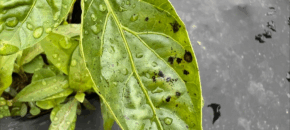
Greetings from the Veg IPM team! The program welcomes Martina Lavender and Coco Lin as the first two scouts of the season, servicing North and Central Jersey respectively. Sweet Corn We’ve put out corn earworm pheromone traps throughout the state. While silking corn is the main target of CEW activity, we set the traps early […]
Continue reading...May 28, 2025 Megan Muehlbauer
North Jersey Wine Grape Twilight Meeting
North Jersey Wine Grape Twilight Meeting June 10, 2025 5:00 PM – 8:00 PM Angelico Winery 20 Hamp Road Lambertville, NJ 08530 5:00 – 5:15 PM Registration 5:15 – 5:45 PM Strategies to Reduce Pesticide Exposure in Applicators Kate […]
Continue reading...May 28, 2025 Andy Wyenandt
Tomato Spotted Wilt Virus present in tomato
Tomato spotted wilt virus (TSWV) has caused significant problems for some fresh-market tomato and pepper growers in New Jersey the past few growing seasons. TSWV has already been detected in tomato this growing season. Although TSWV is not uncommon, economic losses these past few years have been extensive on some farms. TSWV is vectored by […]
Continue reading...May 28, 2025 Janine Spies and Kaitlin Quinn
Fruit IPM Report May 26, 2025

Peach: Bacterial Spot: Copper formulations should be used starting at petal fall to suppress bacterial spot. Generally we recommend starting at 0.5 ozs metallic copper and gradually lowering the rate as the season progresses. The rate applied will depend on the formulation. Dr. Lalancette published a chart listing common copper formulations and rates for peach […]
Continue reading...