Field Trip: Managing Risk on your Agritourism Farm

Managing Risk on your Agritourism Farm A field trip to the Rutgers Snyder Research and Extension Farm

Rutgers Snyder Research and Extension Farm

Tuesday, April 28

10.00am – 1.00pm

Register at: https://go.rutgers.edu/ncudh8xr 


Managing Risk on your Agritourism Farm
A field trip to the Rutgers Snyder Research and Extension Farm


Fruit IPM Updates Week of 4/13/2026

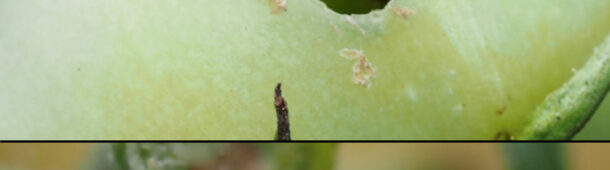
Peach at shuck split in Gloucester County, NJ.

Tree Fruit Phenology Update

Tree fruit development resumed rapidly across New Jersey this past week following earlier frost events, with warm temperatures accelerating phenology. While some frost damage may be present in advanced blocks—particularly in southern counties—overall development is progressing quickly and bloom is widespread. A freeze event is expected overnight Monday 4/20 into Tuesday, and temperatures will gradually moderate through the remainder of the week.

In apples, early varieties such as ‘Pink Lady’ are now at full bloom in southern counties, with most other varieties progressing through pink to early bloom across central and northern regions. Bloom is becoming more widespread statewide.

In pears, most varieties are beginning petal fall in southern counties. Asian pears remain slightly more advanced.

Peach and nectarine varieties are close to 100% petal fall in southern counties, with early varieties beginning shuck split. In northern counties, most varieties are at bloom, with some earlier varieties reaching petal fall.

Apples
Apple Phenology Update

Apple phenology continues to progress across New Jersey, with development advancing rapidly under recent warm temperatures. Observations indicate that most varieties statewide are at pink bud, while early varieties in southern counties, such as Pink Lady, have entered bloom.

This stage marks a critical transition in disease management, particularly for fire blight, apple scab, powdery mildew, and cedar apple rust, while also representing an important period for early-season insect management and monitoring.

Phenology Dates by County (earliest varieties)

County Green Tip Tight Cluster Pink Bud Bloom
Cumberland 3/22 3/28 4/3 4/8
Gloucester 3/22 3/28 4/3 4/8
Burlington 3/22 3/28 4/2 4/13
Mercer 3/22 3/28 4/2 4/13
Middlesex 3/22 4/1 4/4 4/14
Monmouth 3/22 4/1 4/4 4/14
Hunterdon 3/22 4/1 4/10 4/17
Morris 3/26 4/4 4/11 4/17
Warren 3/30 4/4 4/13 4/17
Sussex 3/31 4/10 4/14 TBD
Bergen 3/22 4/1 4/4 4/14

Apple Scab
Models

Apple scab infection risk continues to increase as we move through bloom. Models available through NEWA and RIMpro. indicate that ascospore maturity is progressing rapidly, and we are entering a critical period for primary infection.

While conditions have been relatively dry over the past several days, upcoming weather patterns may result in infection events. Growers should continue to monitor forecasts closely and maintain fungicide coverage, particularly during bloom when susceptibility is high.

Current Update using the Upper Deerfield Station
  • ~58% ascospore maturity as of April 15–17
  • ~28% cumulative ascospore discharge to date
  • Forecasted to reach ~65–75% maturity by April 18–21
  • Cumulative ascospore discharge forecasted to increase to ~57–58% by April 19–20
Management Considerations

Fungicide applications should be maintained through bloom, prior to predicted infection events.

Programs should prioritize control of fire blight, apple scab, powdery mildew, and cedar apple rust, especially in blocks at full bloom or entering petal fall.

Recommended Programs

  • Protectant + single-site tank mix:
    • Mancozeb + single-site fungicide (use reduced rate when tank mixing)
  • FRAC 3 (DMI fungicides):
    • Rally, Indar, Inspire Super, Topguard, Cevya
    • Provide strong activity on scab, powdery mildew, and cedar apple rust
  • FRAC 7 fungicides:
    • Fontelis, Miravis, Sercadis
    • Effective for scab and mildew, but limited rust activity
    • Reserve Aprovia for summer bitter rot programs (max 4 applications)
  • FRAC 9 or FRAC 1 fungicides:
    • Vangard, Scala, Topsin
    • Useful for scab, but do not control cedar apple rust
  • Rotation of Kasugamycin, Streptomycin and Oxytetratracycline for fire blight
    • Kasumin is only labeled for bloom and petal fall applications
    • Streptomycin and oxytetracycline are labeled for post bloom use (note that Fireline 45 only allows for 1 postbloom application on apple).
    • The addition of Actigard, Apogee/Kudos, or other plant defense elicitors may improve control.

Monitor:

  • NEWA models
  • Weather/wetting events
  • Phenology
Insect Update

Early control is critical to avoiding season-long pressure.

Ambrosia Beetle

  • Significant flight activity has been observed across New Jersey, with high trap captures reported in multiple counties.
  • Activity is increasing in all regions.
  • Continue monitoring activity closely, particularly in stressed, declining, or newly planted blocks, which remain most susceptible.
  • Growers should remain alert, as peak flight activity typically coincides with warm temperatures during bloom.

Mating Disruption Timing

  • Codling moth (CM) mating disruption should be deployed by bloom (pink–early bloom timing is ideal).
  • Most counties are now at bloom, and applications should be completed immediately if not already done.
Key Reminders
  • Apply on a 3–7 day interval during bloom, tightening ahead of rain
  • Powdery mildew can develop under dry conditions
  • Do not tank mix Captan with oil due to phytotoxicity risk
  • Rotate FRAC groups and preserve FRAC 11 fungicides for summer use

Pears
Pear Phenology Update

Pear development has progressed rapidly across New Jersey, with warm temperatures accelerating bloom.

Most European pear varieties are now early-petal-fall in southern counties.

Asian pear varieties remain slightly more advanced, with many blocks in southern counties moving through late bloom into early petal fall, and northern plantings at full bloom to late bloom.

Pear Psylla

Pear psylla activity continues to be variable across southern New Jersey, though pressure remains generally low to moderate in most orchards. Earlier oil applications, particularly where combined with materials such as Esteem, have likely helped suppress early populations.

  • Gloucester County: None observed
  • Salem County: Adults observed
  • Burlington County: No activity observed to date
  • Mercer County: No activity observed to date

As orchards move through petal fall, psylla populations are expected to increase with continued warm temperatures.

At Petal Fall:

  • Continue monitoring for adults, eggs, and early nymph hatch
  • Use beating trays to assess adult activity
  • Examine developing shoots and leaf undersides for eggs and emerging nymphs

Management Considerations:

  • Insecticide applications can resume at petal fall, targeting early nymph stages
  • Timing is critical—applications shortly after egg hatch provide the most effective control
  • Prioritize blocks with historically high pressure or current egg presence

Recommended Petal Fall Options:

  • Movento – excellent systemic control of psylla, scale, and aphids (use with a spreading-penetrating adjuvant to improve efficacy)
  • Also effective options at petal fall: Actara, Assail, Belay, Centaur, Sivanto Prime, and Agri-mek

Management should focus on targeting newly hatched nymphs, as this stage is the most susceptible and critical for preventing population buildup.

Pear Diseases
Fire Blight and Early Season Management

As pear orchards move through petal fall, the primary bloom infection period is wrapping up; however, fire blight risk remains elevated under warm conditions. Bacteria can still spread to young tissues, particularly during periods of rain, wind, or rapid growth.

At Petal Fall and Post-Bloom:

  • Continue to monitor forecasts using NEWA for any late infection or trauma blight risk
  • Discontinue streptomycin use after petal fall (not labeled beyond this stage)
  • Kasumin may be used up to petal fall, but should not be applied afterward
  • Focus on protecting actively growing shoots, especially during warm, wet, or stormy conditions

Management Considerations:

  • Watch for trauma events (hail, wind, heavy rain), which can trigger infections
  • Maintain awareness in blocks with a history of fire blight
  • Be prepared to transition to post-bloom management strategies if conditions remain favorable
Pear Scab

RIMpro modeling continues to indicate that ascospore availability remains high, and infection risk persists during wetting events. As trees move beyond bloom, maintaining coverage remains critical to prevent primary infections.

At Petal Fall:

  • Maintain protective fungicide coverage, especially ahead of rainfall
  • Apply prior to wetting events, as infections occur during leaf wetness periods
  • If ≥2 inches of rainfall occurs after an application, consider reapplication to maintain coverage

Recommended Options:

  • Protectants: Mancozeb, Ziram, Ferbam
  • Resistance-risk materials: Procure, Cevya, Flint, Merivon, Luna Sensation, Inspire Super, Vangard (tank mix with protectant)
Summary
  • Most pear varieties across southern New Jersey are now at petal fall, with some blocks moving into early post-bloom stages; northern counties remain at full bloom to late bloom.
  • Asian pear varieties remain slightly more advanced, with many blocks at petal fall.
  • Pear psylla pressure remains low to moderate, likely due in part to prior oil applications, particularly where combined with Esteem.
  • Insecticide applications can resume at petal fall, with a focus on targeting early nymph hatch.
  • Growers should continue scouting for adults, eggs, and newly hatched nymphs to guide post-bloom management decisions.
  • Recent and forecasted wetting events continue to support pear scab infection risk, and fungicide coverage should be maintained.
  • Fire blight risk remains elevated, particularly under warm conditions; monitor for trauma events and late infection risk.
  • Continued scouting and close monitoring of weather conditions and tree growth will be critical over the next 7–10 days as post-bloom disease and insect pressure develop.

Peaches
Peach Phenology
  • Peach at shuck split in Gloucester County, NJ.

    Figure 1. Peach at shuck split in Gloucester County, NJ.

    Peach and nectarine development has progressed rapidly across New Jersey, with warm temperatures accelerating bloom and early fruit set.

  • Most varieties in southern counties are now at petal fall to early shuck split (Figure 1), while northern counties are at full bloom, with some earlier varieties at petal fall.
  • Development is expected to continue advancing quickly under continued warm conditions, with southern blocks moving further into early fruit development stages over the next week.


Brown Rot

Blossom blight risk declines as orchards move through petal fall; however, infections can still occur on remaining blossoms and young fruitlets under favorable conditions.

Infection is favored during wetting periods between 41–86°F, with optimal conditions in the mid-70s, and risk remains elevated during extended wet periods. Fruitlets remain susceptible until shuck split, when natural resistance begins to increase.

Management Considerations

  • Maintain fungicide coverage through petal fall and into early cover, especially ahead of rainfall
  • Focus on protecting young fruitlets, particularly in blocks with a history of brown rot
  • If prolonged wetting occurred during bloom, ensure continued protection post-bloom
  • Rotate fungicide chemistries to reduce resistance risk

Recommended Petal Fall / Early Cover Materials

  • Effective options:
    • Indar, Inspire Super, Luna Sensation, Merivon, Pristine, Cevya, Flint Extra
  • Additional options:
    • Rovral (prior to petal fall timing only)
    • Captan (useful in cover sprays)

Notes:

  • Many of the most effective materials (FRAC 7, 11, 3) also play key roles in pre-harvest brown rot control—plan rotations accordingly
  • Avoid over-reliance on any single FRAC group
  • Abound and Quadris Top are highly effective, but are phytotoxic to apples—do not use if the same sprayer is used across crops

Petal Fall / Early Cover Considerations: 

  • Peach scab:
    • Apply Flint Extra or Abound at petal fall for anti-sporulant activity in high-pressure blocks
  • Bacterial spot:
    • Begin protection at petal fall in susceptible blocks using copper or Mycoshield, especially under warm, wet conditions
  • Rusty spot:
    • Programs should begin at petal fall, with Rally commonly used as the first application
Insect Update

Oriental Fruit Moth (OFM)

OFM traps are active across southern New Jersey, with biofix set for April 7 in South NJ and April 15 for most counties in North NJ.

Degree-day accumulation should be tracked from this date to properly time first-generation management. The first insecticides for first generation Oriental Fruit Moth control should be applied at 170-200 degree days (base 45 deg F) after biofix. This timing generally coincides with petal fall in peaches. Do not apply insecticides until all bloom is off regardless of degree day timing. No Insecticides for OFM should be needed where Mating Disruption is implemented.

As blocks move through petal fall, growers should begin preparing for first cover applications targeting OFM larvae. Timings can be calculated using the degree day calculator at the NEWA website by choosing the weather station nearest your farm, entering the biofix date as the start date, and choosing base 45 in the “degree day type” menu.

Keep in mind that plum curculio is also active at petal fall so an insecticide that targets both pests should be selected.

OFM 1st Generation Timing
  Insecticide Type
County/Region Degree Days

by 4/19 base 45

Conventional

170-200, 350-375

Diamide

100-150, 300-350

Gloucester – Southern 178 1st –4/18-4/23

2nd

1st –past

2nd

Middlesex – Northern 101 1st –4/27-4/29

2nd

 1st – 4/19-4/25

2nd

Scale

  • Delayed dormant oil applications are complete for most orchards.
  • Continue monitoring historically infested blocks and plan for crawler management later in the season if populations persist.

Green Peach Aphid

  • GPA colonies begin forming sometime during bloom. Examine trees for the presence of colonies from pink to shuck split.
  • Continue scouting as terminals expand and colonies begin to establish.
  • Count the number of colonies on ten trees and use a treatment threshold:
    • Nectarines: 1 colony per tree
    • Peaches: 2–3 colonies per tree

Petal Fall Considerations

Insecticide applications can resume at petal fall

  • Target key pests including:
    • OFM (timed by degree-days from biofix)
    • Plum curculio
    • Tarnished plant bug and other catfacing isnects
    • Green peach aphid

Early applications should focus on preventing the establishment of first-generation pests, particularly in blocks with a history of pressure

Recommended Petal Fall Options

  • OFM / Leafrollers:
    • Altacor, Delegate, Besiege, Voliam Flexi
  • Plum Curculio / Catfacing Insects:
    • Imidan, Avaunt, Actara, pyrethroids (e.g., Warrior II, Lambda-Cy)
  • Green Peach Aphid:
    • Assail, Actara, Admire Pro
Summary
  • Most peach and nectarine varieties in southern New Jersey are now at petal fall to early shuck split, while northern counties are at full bloom.
  • Development has progressed rapidly under recent warm temperatures and will continue advancing quickly with favorable weather.
  • Brown rot risk remains present, particularly during wetting events, with young fruitlets susceptible through shuck split.
  • Maintain fungicide coverage through petal fall and into early cover, especially ahead of rainfall.
  • OFM biofix was set for 4/7 for southern counties and 4/15 for northern counties, and growers should continue tracking degree-day accumulation to time first-generation management.
  • Insecticide applications can resume at petal fall, targeting key pests including OFM, plum curculio, and green peach aphid.
  • Delayed dormant oil timing has passed; focus should shift to in-season insect monitoring and management.
  • Continue scouting for green peach aphid, with treatment thresholds of 1 colony/tree in nectarines and 2–3 colonies/tree in peaches.
  • Continued scouting and timely applications will be critical over the next 7–10 days as crop development and pest pressure increase.

SALEM COUNTY AGRONOMY TWILIGHT MEETING-1 (May 1, 2026)

SALEM COUNTY AGRONOMY TWILIGHT MEETING-1 Date & Time: May 1, 2026 | 5:00 PM – 7:30 PM(Program starts at 5:00 PM; please arrive a few minutes early) Location: Rutgers Cooperative Extension Office, 51 Cheney Rd., Woodstown, NJ 08098 Registration:Call: 856-769-0090Email: molly.english@salemcountynj.gov Credits Approved: CORE: Basic Safety and Handling: 02 1A: Agricultural Plant: 02 10: Demonstration […]

Continue reading...

Imbibitional Chilling Injury Risk in Corn

Corn planting is underway across New Jersey (NJ), and early-season weather will strongly influence stand establishment. After a sharp temperature drop from unusually warm conditions earlier in April, the state is now experiencing a highly variable spring pattern with alternating cool and brief warm periods, followed by a gradual shift toward more stable spring conditions […]

Continue reading...

NJ DEP issues Controlled Open Burn Permit from April 18, through Wednesday April 22.

(TRENTON) – With the state expected to experience cooler spring temperatures, the Department of Environmental Protection has agreed with NJDA Secretary Ed Wengryn’s request to allow farmers to do controlled open burning or use specialized torches known as smudge pots to protect flowering crops from damage beginning Saturday, April 18, through Wednesday, April 22. Temperatures […]

Continue reading...

Farm Safety Needs Assessment Closing May 1

Flyer for a farm safety needs assessment.

The Rutgers Farm Health and Safety Working Group is conducting a survey to evaluate the priority needs of New Jersey farmers for training and resource development related to safety and health.  As a New Jersey farmer, you are invited to complete this survey by Friday, May 1, 2026. Click here to access the survey and learn […]

Continue reading...