Hurry – Apply for the Marketing Assistance for Specialty Crops (MASC) Program– Applications Due January 8, 2025 – Contact Your Local FSA Office Now

The MASC program, administered by the Farm Service Agency (FSA) using Commodity Credit Corporation (CCC) funds, provides eligible specialty crop producers with marketing assistance payments to help them engage in activities that aid in expanding domestic specialty crop markets or in developing new markets for their specialty crops in 2025.

SPECIALTY CROPS ELIGIBLE – Fruits (fresh, dried) Nursery crops, Christmas trees, and floriculture, Vegetables (including dry edible beans and peas, mushrooms, and vegetable seed) Culinary and medicinal herbs and spices, Tree nuts, Honey, hops, maple sap, tea, turfgrass, and grass seed. Payments are capped at $125,000 per producer, and if demand exceeds the allocated $2 billion, payments may be prorated. Final payment factors will be determined after the application period closes.

To be eligible for payments, persons or legal entities must:
• Be in the business of producing a specialty crop at the time of application and be entitled to an ownership share and share in the risk of producing a specialty crop that will be sold in calendar year 2025;
• Be a U.S. citizen, resident alien, partnership, corporation, limited liability company, or other organizational structure organized under State law, Indian Tribe or Tribal Organization, or a foreign person or foreign entity who meets certain eligibility requirements;
• Comply with the provisions of the “Highly Erodible Land and Wetland Conservation” regulations, often called the conservation compliance provisions;
• Not have a controlled substance violation;
• Submit a complete MASC application form (FSA-1140) and provide all required documentation as specified in the documents section below.
To be eligible for payments, a person or legal entity must have an average adjusted gross income (AGI) of less than $900,000 for tax years 2021, 2022, and 2023, unless the person or legal entity’s average adjusted gross farm income is at least 75 percent of their average AGI.

Eligible producers can apply by completing the FSA-1140, Marketing Assistance for Specialty Crops (MASC) Application, and submitting it to any FSA county office by January 8, 2025.

FSA-1141, Marketing Assistance For Specialty Crops (MASC) New Producer Expected Sales Worksheet (New producers only)
New producers must complete and sign the new producer expected sales worksheet and provide along with their FSA-1140 to any Farm Service Agency county office nationwide.

See link for more information: https://www.fsa.usda.gov/tools/informational/fact-sheets/marketing-assistance-specialty-crops-program 

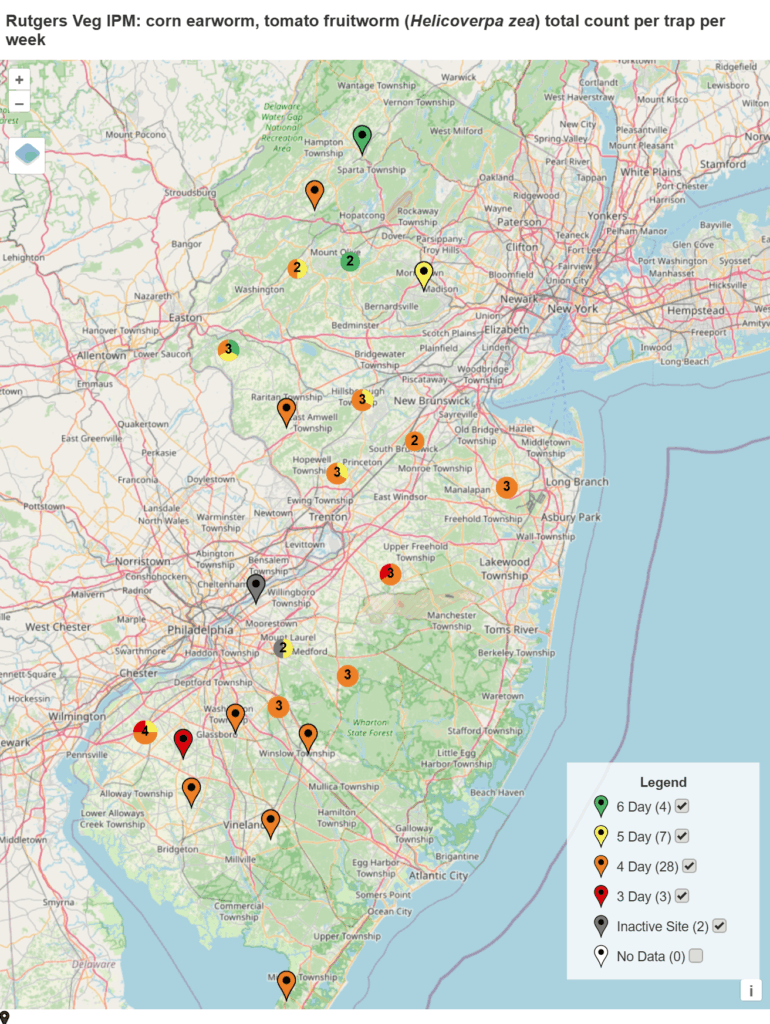
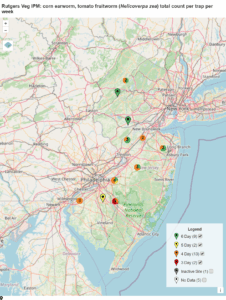
Survey on Corn Earworm Management Practices and Costs in Sweet Corn

If you are a fresh-market grower of sweet corn, the regional Corn Earworm IPM team would like your input! The CEW IPM team includes entomologists and extension specialists across multiple states and institutions, such as the Northeastern and Southeastern IPM Centers and universities in NJ, NY, DE, MD, NC, VA, and GA.

This short survey aims to gather information on your current CEW control practices and their associated costs. This information will be used to evaluate how alternative CEW control practices can affect grower costs, sales, and financial performance. Most importantly, your participation will help us help you; this information will guide future recommendations for more sustainable management practices you can implement on your farms.

Note that this survey is aimed at fresh-market growers; a separate survey will be sent out for those who grow sweet corn for processing.

To take the survey online, please use this link. If you prefer, here is a PDF version of the survey to print and fill out. For more information on the regional CEW team/project, visit CEWIPM.org for the latest updates. Your participation is greatly appreciated!


Webinar: FSMA PSR, Pre-Harvest Water – Wednesday, January 8, 2025, 12 pm – 1 pm

During this one-hour lunchtime webinar, learn the ins and outs of the Food Safety Modernization Act: Produce Safety Rule (FSMA: PSR), Pre-Harvest Water changes. The final rule establishes requirements for systems-based pre-harvest agricultural water inspections and assessments for hazard identification and risk management decision-making on covered farms.

Covered farms – those that are subject to the requirements in the FSMA: PSR – that use pre-harvest agricultural water for covered produce are required to conduct agricultural water inspections and assessments at least once annually, or whenever a significant change occurs that increases the likelihood that a known or reasonably foreseeable hazard will be introduced into or onto produce or food contact surfaces. As part of their pre-harvest agricultural water assessments, farms must evaluate certain factors that could impact produce safety as a result of pre-harvest agricultural water use (e.g., agricultural water use practices, crop characteristics, environmental conditions, etc.).

The deadline to register is Monday, January 6, 2025. To sign up or for more information go to https://onfarmfoodsafety.rutgers.edu/trainings/.


Get Ready for the 2025 NJ Ag Convention – February 3-6

It is that time of year again to sign up for the annual NJ Agricultural Convention, co-sponsored by the Vegetable Growers Association of New Jersey, Rutgers Cooperative Extension, and the New Jersey Department of Agriculture. Visit the VGANJ website at https://vganj.com/convention-tickets to register.

For 2025 there are new and exciting opportunities to learn about all aspects of the agricultural industry at the educational sessions and from vendors at the trade show. If you came last year, you also saw many new improvements to the convention – more vendors, more educational sessions, a complimentary lunch (limited free tickets) on Tuesday highlighting “what’s new from industry”, a complimentary hot buffet at the Tuesday happy hour/charity auction, youth programs for FFA, and co-convention events with the NJ Department of Agriculture. These offerings and more are coming for 2025. New events like Monday afternoon workshops, a livestock session, an agricultural policy session, an environmental session, and others are confirmed for this coming year. Licensed pesticide applicators will see an increase in recertification credits on the program for 2025. 

To check out the educational programming and NJDEP recertification credits for pesticide applicators see https://go.rutgers.edu/ConvProgram2025 – this is a draft program. Also, note that some events need special sign-up so read the program carefully to see what events need pre-registration.

NJ State Board of Agriculture information for the convention is coming soon. Check out their website at Department of Agriculture | Conventions.

If you have any questions about the VGANJ registration, go to https://vganj.com/#contact. If you need more information about the educational programs please contact the Rutgers Co-Chairs for the convention – bamka@njaes.rutgers.edu Bill Bamka, Agricultural Agent in Burlington County, or minfante@njaes.rutgers.edu Michelle Infante-Casella, Agricultural Agent in Gloucester County.

Produce Safety Rule Training

The registration deadline is fast approaching for our December 5 and 6, 2024 Remote Food Safety Modernization Act: Produce Safety Rule Training. This training fulfills the requirements of the Food and Drug Administration that at least one person from each farm that produces fresh fruits and vegetables needs to receive a standardized curriculum recognized by the FDA. This class runs from 9:00-1:00 EST and both days are required to receive the certificate. The deadline to register is Sunday, November 17, 2024, exceptions to this deadline cannot be made due to the nature of the remote program and the need for participants to have a copy of the Growers Training Manual prior to the training.  Without the manual at the time of training participants will not receive a certificate.  Manual will be mailed to all registered participants.  For more information and to sign up for the class go to https://onfarmfoodsafety.rutgers.edu/trainings.

Financial Assistance for Food Safety Certification and Training

This is the chance for eligible fresh fruit and vegetable growers to recover some of their expenses for implementing food safety practices on their farms.

For 2024:

  • Applications are due between July 1, 2024 and January 31, 2025
  • Eligible expenses must be between June 26, 2024 and December 31, 2024

For 2025:

  • Application is due between January 1, 2025 and January 1, 2026
  • Eligible expenses must be between January 1, 2025 and December 31, 2025

Eligible specialty crop operations can apply for Food Safety Certification for Specialty Crops (FSCSC) by working directly with the Farm Service Agency offices at your local FSA office for details. Applications will be accepted via mail, fax, hand delivery, or electronic means.

How the Food Safety Certification for Specialty Crops Program Works

The FSCSC program provides financial assistance for specialty crop operations that incur eligible on-farm food safety program expenses related to obtaining or renewing a food safety certification in years 2024 and 2025. This program helps offset costs to comply with regulatory requirements and market-driven food safety certification requirements.  FSCSC will cover a percentage of the specialty crop operation’s cost of obtaining or renewing their certification, as well as a percentage of their related expenses.

Program Eligibility

Eligibility requirements for FSCSC applicants are outlined below. We recommend you review these requirements before initiating your FSCSC application.

To be eligible for FSCSC, an applicant must:

Have obtained or renewed:

  • 2024 food safety certification issued between June 26, 2024, and December 31, 2024
  • 2025 food safety certification issued during calendar year 2025.
  • Be a specialty crop operation (growing fresh fruits and vegetables); and meet the definition of a small business or medium size business.
  • A small (farm) business means an applicant that had an average annual monetary value of specialty crops the applicant sold during the 3-year period preceding the program year of not more than $500,000.
  • A medium (farm) business means an applicant that had an average annual monetary value of specialty crops the applicant sold during the 3-year period preceding the program year of at least $500,001 but no more than $1,000,000.
Category of Eligible Expenses Payment Amount of Eligible Costs
Developing a Food Safety Plan for First Time Certification ·                     75% (no maximum)
Maintaining or Updating a Food Safety Plan ·                     75% up to $675
Food Safety Certification ·                     75% up to $2,000
Certification Upload Fees ·                     75% up to $375
Microbiological Testing of Produce ·                     75% up to 5 tests
Microbiological Testing of Soil Amendments ·                     75% up to 5 tests
Microbiological Testing of Water ·                     75% up to 5 tests
Training Expenses ·                     100% up to $500

FSCSC payments are calculated separately for each category of eligible costs based on the percentages and maximum payment amounts.  The FSCSC application and associated forms are available online at  farmers.gov/food-safety.

You are encouraged to contact the Farm Service Agency office about FSCSC, program eligibility, or the application process. You may also call 877-508-8364 to speak directly with a USDA employee ready to provide one-on-one assistance.

For our current trainings please go to: Our Trainings – Rutgers On-Farm Food Safety