Upcoming ornamental meetings, webinars, and Boxwood Blight resources

Virtual education opportunities and digital resources update.

Virtual Meetings:

NJLCA – University 2021 (online)

NJNLA – Total Pro (online)

2021 –Rutgers– Central Jersey Turf & Ornamentals Institute (online)

2021 –Rutgers– 30th Anniversary Rutgers Turfgrass Symposium (online)

FREE-Webinars:

HRI tHrive Series (all taught by international experts):

  • Seeing Red? – Problems with and management options for redheaded flea beetles in nurseries
  • International Boxwood Blight Series: Germany – A 15-Year Love-Hate Relationship
  • Plant Benefits or Features – Which Cue is More Effective?

Boxwood Blight Resources

Please contact Timothy J. Waller with any questions: twaller@njaes.rutgers.edu

Energy Efficiency Incentives for Indoor Agriculture – Webinar

New Jersey offers a variety of statewide energy efficiency programs that are designed to offer full project development assistance from information on best practices to rebate payments and financing tools.

“Incentives for Indoor Agriculture” webinar will be presented by New Jersey’s Clean Energy Program on Thursday, March 4, 2021 from 11:00am to 12:00pmEDT. This webinar will discuss how New Jersey’s Clean Energy Program is helping the indoor agriculture industry with state funded incentives and rebates for highly energy efficient technology and money-saving solutions to maximize plant growth potential while reducing utility costs.

Registrations are accepted online by clicking here.

The New Jersey Board of Public Utilities (BPU) provides oversight for the NJ Clean Energy Program.

As stewards of our environment, farmers can reinforce their pledge to sustainable agriculture by using renewable energy and help reduce pollution, global warming, and our dependence on imported fuels. Installation of energy efficient equipment, adoption of energy-saving practices and renewable energy generation is a viable option for New Jersey farmers seeking to reduce their operating costs.

For additional information, please call the NJ Department of Agriculture’s Division of Agricultural and Natural Resources at (609) 292-5532 or visit their website.

Reminder: Register for the VGA-Nursery/Ornamental sessions by this Wednesday (2/17) for pesticide credits!

Reminder: register here by Wednesday Feb. 17th for pesticide credits!

Please join us at the NEW- Nursery and Ornamentals Track at this year’s virtual VGA

Nursery/Ornamental track is on Monday, February 22nd 

  • Session I:  9:15 – 11:45am
  • Session II:  1:15 – 3:45pm (pesticide recertification credits acquired: 3 Cat 1A; 4 Cat 3A; 4 Cat 8C; 4 Cat 10; 4 PP2)

Click here for additional pesticide credit requirements and instructions (mandatory steps for recertification credits at VGA)

Price options:

  1. One day pass – $60.00
  2. Full 1yr VGA Membership (access to all four days of sessions 2/22-2/25)- $120

Rutgers is dedicated to protecting your privacy and keeping your personal information safe. Upon upload, your files will be encrypted and stored to Rutgers Connect. Your information will be kept strictly confidential; used solely to meet NJDEP ID verification protocol for recertification credit; and will not be used for any other purpose. Your files will be deleted within 60 days after the training event.

New Nursery and Ornamental Track at the 2021 VGA

Pest Notes: Witches’ Brooms, Pitch Mass Borers and Ants

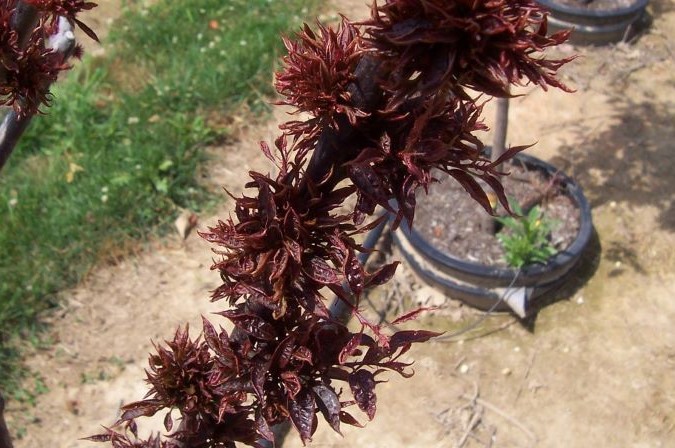
WITCHES’ BROOMS: The development of witches’ brooms on woody plants and the resulting formation of abnormal growth can cause curiosity and concern to your clients. Typically, the new growth is distorted, and a proliferation of leaves or fruit/cones closely clumped together appears when apical dominance is lost. Witches’ Brooms are created on plants when the transfer of growth hormones is disrupted (perhaps caused from the introduction of a foreign substance). Insects (e.g., aphids), fungi, bacteria, viruses, phytoplasmas, and herbicides have all been implicated in causing the formation of witches’ brooms in many plant species.

Witches' Broom

Witches’ Brooms are plants having stunted foliage & short stem internodes. (Photo Credit: Steven K. Rettke, Rutgers Coop. Ext.)

[Read more…]

USDA APHIS Ends Emerald Ash Borer Domestic Quarantine Regulations

Effective January 14, 2021, USDA’s Animal and Plant Health Inspection Service (APHIS) has removed the domestic quarantine regulations for the Emerald Ash Borer (EAB, Agrilus planipennis, Fairmare). According to the Federal Register posting, “this action will discontinue the domestic regulatory component of the emerald ash borer program as a means to more effectively direct available resources toward management and containment of the pest. Funding previously allocated to the implementation and enforcement of these domestic quarantine regulations will instead be directed to nonregulatory options to mitigate and control the pest.”

APHIS’ final rule was posted December 15, 2020, based on the original Federal Register posting from September of 2018, which received over 140 comments. A federal quarantine for EAB has been in place since 2003.

Under this rule, establishments operating under EAB compliance agreements will no longer incur costs of complying with Federal EAB quarantine regulations, although States could still impose restrictions.

EAB has now been found in 35 States and the District of Columbia and it is likely that there are infestations that have not yet been detected. Newly identified infestations are estimated to be 4 to 5 years or more in age. Known infestations cover more than 27 percent of the native ash range within the conterminous United States.

APHIS further summarized, “The domestic quarantine regulations for EAB have not substantially reduced the likelihood of introduction and establishment of the pest in quarantine-adjacent areas. Interstate movement of EAB host articles is unrestricted within areas of contiguous quarantine, and irrespective of human-assisted spread, a mated EAB is capable of flying up to 100 miles in her lifetime, resulting in a high potential for natural spread.”

Public outreach activities outside the EAB regulatory program will continue, and APHIS will continue to work with State counterparts to encourage the public to buy firewood where they burn it and to refrain from moving firewood. The primary national communications tool to warn the public about the plant pest risk associated with the movement of firewood is the Don’t Move Firewood campaign, which is administered by The Nature Conservancy with support from APHIS and other Federal agencies.

EAB and New Jersey

Emerald Ash Borer was discovered in New Jersey in May 2014 in Somerset County. All ash trees in NJ should be considered at high risk for EAB: even if Emerald Ash Borer has not yet been detected, all ash trees are considered to be at high risk of EAB infestation within the next few years.

Through December of 2019, EAB has been found in New Jersey in Bergen, Burlington, Camden, Essex, Gloucester, Hudson, Hunterdon, Mercer, Middlesex, Monmouth, Morris, Passaic, Somerset, Sussex and Warren counties.

The NJ Department of Agriculture hosts an EAB website where industry, communities, woodland owners, and homeowners can access an EAB Action Kit and Management Options Resource Guide.

Landscape IPM Scouting Techniques: Basic Overview

KEY PLANTS vs. KEY PESTS vs. KEY LOCATIONS CONCEPT:

Landscape IPM (Integrated Pest Management) methods require site-specific information. Every landscape typically contains at least several key pests, key plants and key locations that will be unique to each site. These concepts are extremely useful to simplify monitoring procedures at any given landscape. They will enable field technicians to concentrate on plants and locations that are prone to problems as well as those plants and locations that have low aesthetic thresholds. Scouting efficiency should improve and a more productive use of time spent on landscapes is the result. It is important to emphasize that Integrated Pest Management is a philosophy & practitioners will need to develop skills & experience to improve their levels of commitment.

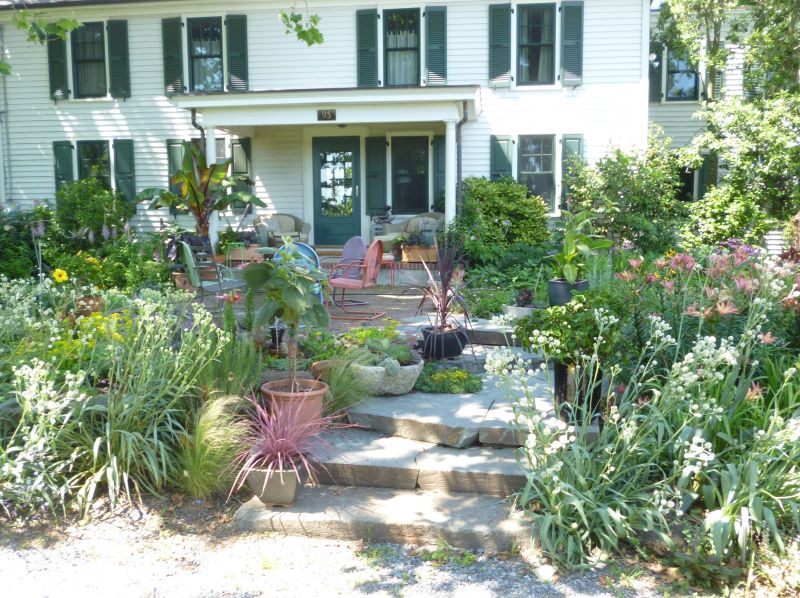
Well-landscaped house

A diverse, well designed landscape that will unlikely develop many pest problems. (Photo Credit: Steven K. Rettke, Rutgers Coop. Ext.)

[Read more…]