Accurately Timing Scouting by Using Plant Phenological Indicators

Challenges of Pest Controls

Accurately timing a control tactic against the most vulnerable stage of an insect’s development allows for the use of biorational pesticides as well as less use of traditional pesticides. Unfortunately, accurately timing controls is difficult because of the complex array of landscape plants and pests that can be present on any one site. IPM methods require knowledge of the pest’s life cycle stages and when the vulnerable stage occurs for each pest. It requires knowledge of what pesticides will suppress the pest as well as their relative toxicities. This extensive amount of information can become overwhelming, especially to the less experienced landscaper or arborist.

Some landscape managers often resign to the easy, yet environmentally unsound practice of using four or more preventative cover sprays of pesticides each year. Studies have shown that typically only 2% of a blanket spray actually hits a targeted pest, with the remaining 98% contaminating the surrounding environment. Is there another way that pesticides can be applied more intelligently?

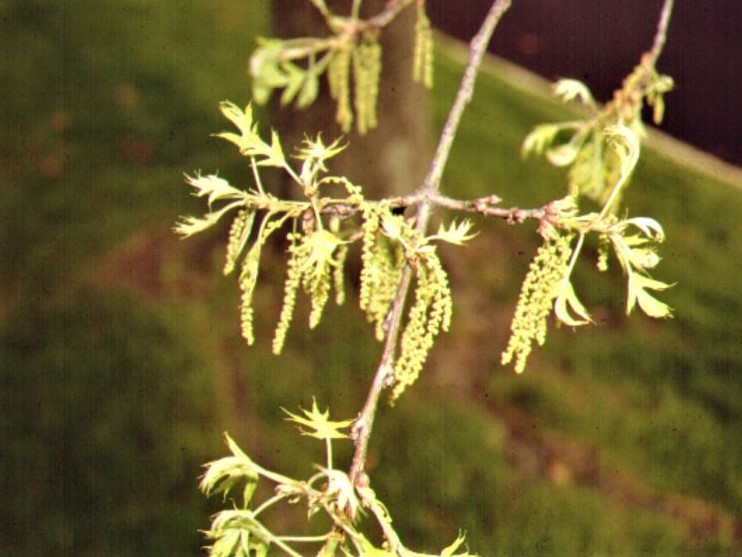
Infected white oak tree

Farmers know that when White Oak leaves are the size of a squirrel’s ear, THEN…. (Photo Credit: Steven K. Rettke, Rutgers Coop. Ext.)

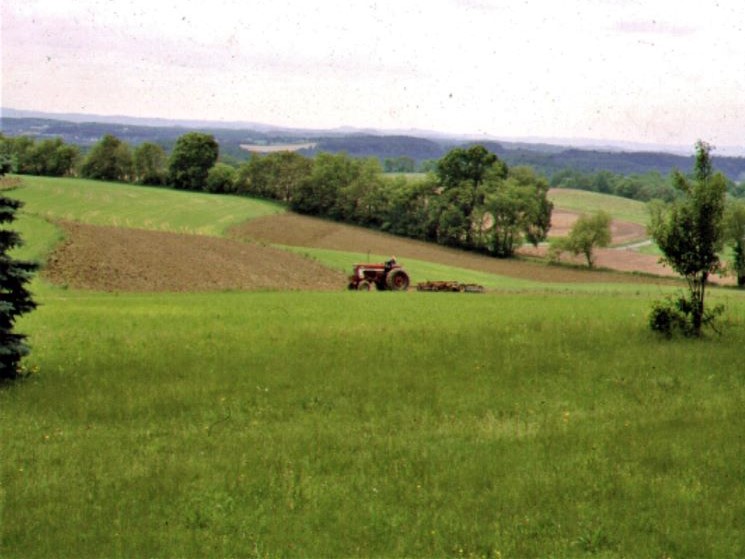
Sowing corn in a field

….THEN, =It is time to Sow Corn into the planting fields. (Photo Credit: Steven K. Rettke, Rutgers Coop. Ext.)


[Read more…]

Early Season Pest Scouting 0-25 Growing Degree-days (Pest GDD list and forecasting)

Please download or print the two resources of this post (click on them)

How to use this pest scouting / growing degree-day (GDD50) information:

The information provided in the downloads give early season scouting ranges (in growing degree days) for specific insect pests. Additionally, forecasting predictions (GDD50 accumulation) per calendar date for multiple regions of New Jersey (S,N,C).

(Please note: we will be providing pest GDD ranges regularly throughout the season for our green industries)

Scouting Ranges (please download / print above resources):

  • It is important to note that these GDD50 are not exact, rather provide a range of GDD and subsequent calendar dates that can be used to scout for, and treat for, insect pests.
  • The pests listed here will be listed again in future scouting range announcements as they undergo further developmental life stages or are vulnerable to management options.
Pest Scouting – Growing Degree-day Ranges Starting (0-25 GDD50)
Crop type Common Name Scientific Name GDD Min (50F) GDD Max (95F) Reference Developmental / Target Stage
Conifer Conifer rust mites Eriophyidae 7 22 4 Overwintering eggs hatch
Pomes, Stone fruit European red mite Panonychus ulmi 7 58 2 1st adults active
Conifer White pine weevil Pissodes strobi 7 58 RU Overwintering adults become active / prevent egg laying
Deciduous Oystershell scale Lepidosaphes ulmi 7 91 2 Spring control of overwintering stage
Deciduous, Yew Cottony camellia / taxus scale Pulvinaria floccifera 7 91 5 Spring control of overwintering stage
Many Southern red mite Oligonychus ilicis 7 91 5 Overwintering eggs hatch
Conifer Taxus mealybug Dysmicoccus wistariae 7 91 2 Spring control of overwintering stage
Oaks Kermes oak scales Kermes spp. 7 91 2 Spring control of overwintering stage
Conifer Elongate hemlock scale Fiorinia externa 7 120 2 Spring control of overwintering stage
Many Aphids Aphidoidea 7 120 2 Spring control of overwintering stage
Conifer Spruce spider mite Oligonychus ununguis 7 121 RU Overwintering eggs hatch
Oaks Golden oak scale Asterolecanium variolosum 7 121 5 Spring control of overwintering stage
Conifer Pales weevil Hylobius pales 7 121 RU Overwintering adults become active / prevent egg laying
Magnoliaceae Tuliptree scale Toumeyella liriodendri 12 121 2 Spring control of overwintering stage
Rhododendron, Azalea Azalea lacebug Stephanitis pyrioides 18 372 RU Spring control of overwintering stage
White and Scotch Pine White pine aphid Cinara strobi 22 91 RU Spring control of overwintering stage
Conifer Pine bark adelgid Pineus strobi 22 58 2 Spring control of overwintering stage
Magnoliaceae Magnolia scale Neolecanium cornuparvum 22 91 2 Spring control of overwintering stage
Conifer Spruce bud scale Physokermes piceae 22 120 2 Spring control of overwintering stage
Conifer Juniper scale Carulaspis juniperi 22 148 2 Spring control of overwintering stage
Conifer Eastern spruce gall adelgid Adelges abietis 25 100 3 spring control of overwintering stage
Conifer Zimmerman pine moth Dioryctria zimmermani 25 100 3 1st larvae
Conifer Cooley spruce gall adelgid Adelges cooleyi 25 120 3 Spring control of overwintering stage
References RU Rutgers Cooperative Extension – IPM Notes
2 http://ccetompkins.org/resources/using-growing-degree-days-for-insect-management
3 https://www.canr.msu.edu/ipm/agriculture/christmas_trees/gdd_of_conifer_insects
4 https://extension.psu.edu/ipm-basics-for-christmas-trees#section-2
5 https://www.agriculture.nh.gov/publications-forms/documents/landscape-pests.pdf


Forecasting (please download / print above resources):

  • The forecasting can help you know what to scout for and when to have materials ready if treatment is required.
  • In the printable resource; look at the date on the bottom of the graph and follow that to the GDD shown to get a better understanding of GDD accumulation at calendar dates. These models change constantly as they are reliant on weather patterns but are still extremely beneficial.
  • Site specific GDD50 models, like those shown in the printable resource can be obtained at USPEST.ORG
  • NEWA-Cornell also have great degree-day models and maps that are useful for regional and specific GDD information
  • Please review Tim Waller’s previous post on utilizing growing degree-day calculators
NJ – Location Station Code GDD-Today GDD-3/19 (next Friday)
Upper Deerfield NJ50 9 19
Howell NJ10 6 16
High Point NJ59 0 4
*predicted

 Contact Tim Waller (twaller@njaes.rutgers.edu) for more information.

IPM vs. PHC: Is There a Difference?

History

During the late 1950’s and early 1960’s, Integrated Pest Management (IPM) was an approach to field crop management that farmers increasingly began to practice in the United States. It took barely a decade for farm agriculture to fully realize the problems associated with the over-reliance on pesticides when controlling pests. The classic example of the overuse of the chlorinated hydrocarbon (DDT) immediately comes to mind. Despite the astonishing success that synthetic pesticides usually have at killing pests, some have failed with disastrous results. This especially has occurred when the same material was used repeatedly over extended periods of time. For this reason, the IPM approach became necessary for US farmers managing extensive row crops. Approximately 20-25 years after farmers began implementing IPM methods, the landscaping or “green industry” started to gradually incorporate IPM methods into their service programs.

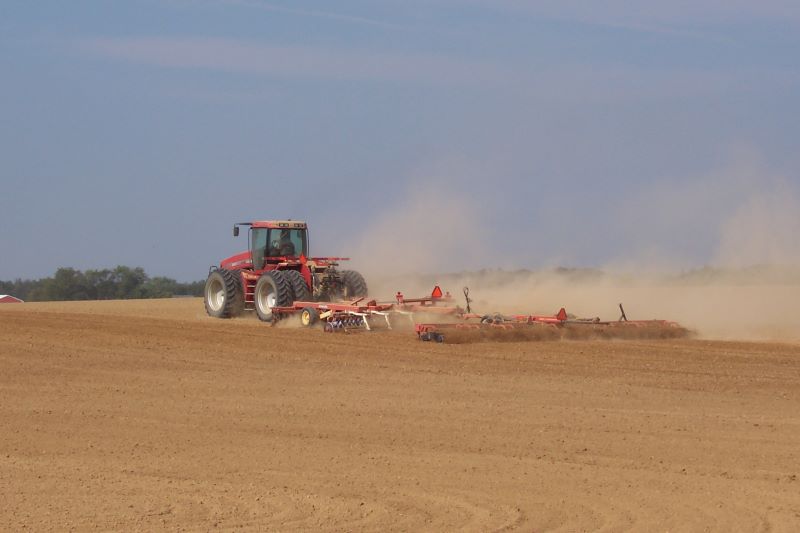
Tractor tilling a field

US Agriculture initially began to practice IPM with extensive row crop farming more than 60 years ago. (Photo Credit: Steven K. Rettke, Rutgers Coop. Ext.)

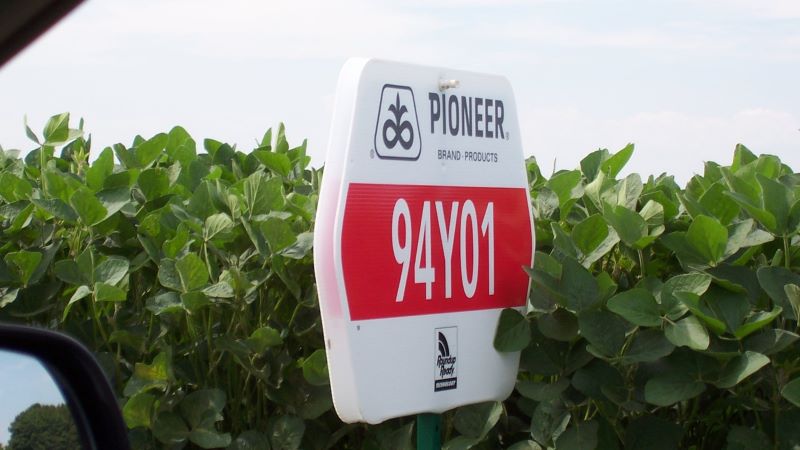
Sign denoting GMOs

The use of GMO’s with crops such as Round-Up Ready soybeans & corn is certainly an IPM tactic, but emerging complications are a concern. (Photo Credit: Steven K. Rettke, Rutgers Coop. Ext.)


[Read more…]

Upcoming ornamental meetings, webinars, and Boxwood Blight resources

Virtual education opportunities and digital resources update.

Virtual Meetings:

NJLCA – University 2021 (online)

NJNLA – Total Pro (online)

2021 –Rutgers– Central Jersey Turf & Ornamentals Institute (online)

2021 –Rutgers– 30th Anniversary Rutgers Turfgrass Symposium (online)

FREE-Webinars:

HRI tHrive Series (all taught by international experts):

  • Seeing Red? – Problems with and management options for redheaded flea beetles in nurseries
  • International Boxwood Blight Series: Germany – A 15-Year Love-Hate Relationship
  • Plant Benefits or Features – Which Cue is More Effective?

Boxwood Blight Resources

Please contact Timothy J. Waller with any questions: twaller@njaes.rutgers.edu

Energy Efficiency Incentives for Indoor Agriculture – Webinar

New Jersey offers a variety of statewide energy efficiency programs that are designed to offer full project development assistance from information on best practices to rebate payments and financing tools.

“Incentives for Indoor Agriculture” webinar will be presented by New Jersey’s Clean Energy Program on Thursday, March 4, 2021 from 11:00am to 12:00pmEDT. This webinar will discuss how New Jersey’s Clean Energy Program is helping the indoor agriculture industry with state funded incentives and rebates for highly energy efficient technology and money-saving solutions to maximize plant growth potential while reducing utility costs.

Registrations are accepted online by clicking here.

The New Jersey Board of Public Utilities (BPU) provides oversight for the NJ Clean Energy Program.

As stewards of our environment, farmers can reinforce their pledge to sustainable agriculture by using renewable energy and help reduce pollution, global warming, and our dependence on imported fuels. Installation of energy efficient equipment, adoption of energy-saving practices and renewable energy generation is a viable option for New Jersey farmers seeking to reduce their operating costs.

For additional information, please call the NJ Department of Agriculture’s Division of Agricultural and Natural Resources at (609) 292-5532 or visit their website.

Reminder: Register for the VGA-Nursery/Ornamental sessions by this Wednesday (2/17) for pesticide credits!

Reminder: register here by Wednesday Feb. 17th for pesticide credits!

Please join us at the NEW- Nursery and Ornamentals Track at this year’s virtual VGA

Nursery/Ornamental track is on Monday, February 22nd 

  • Session I:  9:15 – 11:45am
  • Session II:  1:15 – 3:45pm (pesticide recertification credits acquired: 3 Cat 1A; 4 Cat 3A; 4 Cat 8C; 4 Cat 10; 4 PP2)

Click here for additional pesticide credit requirements and instructions (mandatory steps for recertification credits at VGA)

Price options:

  1. One day pass – $60.00
  2. Full 1yr VGA Membership (access to all four days of sessions 2/22-2/25)- $120

Rutgers is dedicated to protecting your privacy and keeping your personal information safe. Upon upload, your files will be encrypted and stored to Rutgers Connect. Your information will be kept strictly confidential; used solely to meet NJDEP ID verification protocol for recertification credit; and will not be used for any other purpose. Your files will be deleted within 60 days after the training event.

New Nursery and Ornamental Track at the 2021 VGA