Landscape Pest Notes for July 2023

Cooley Spruce Gall Adelgid (1850-1950 GDD = galls open): Colorado spruce (especially green forms), Sitka and Oriental spruce, and Douglas-fir share this pest’s two host life cycles. Mature adult females lay eggs at the tips of branches. These eggs hatch and the immatures move to new growth and start feeding. The combined feeding and salivary secretions induce the development of a bright green, oval “pineapple” gall on the terminals (as opposed to galls at the base of new growth on Norway spruce from the Eastern spruce gall adelgids). By midsummer, the gall will turn brown and crack open, as the adelgids within mature and emerge as adults. These winged adults migrate to Douglas-fir (or another spruce) and spend the remainder of the summer feeding on the needles, covered with cottony wax.
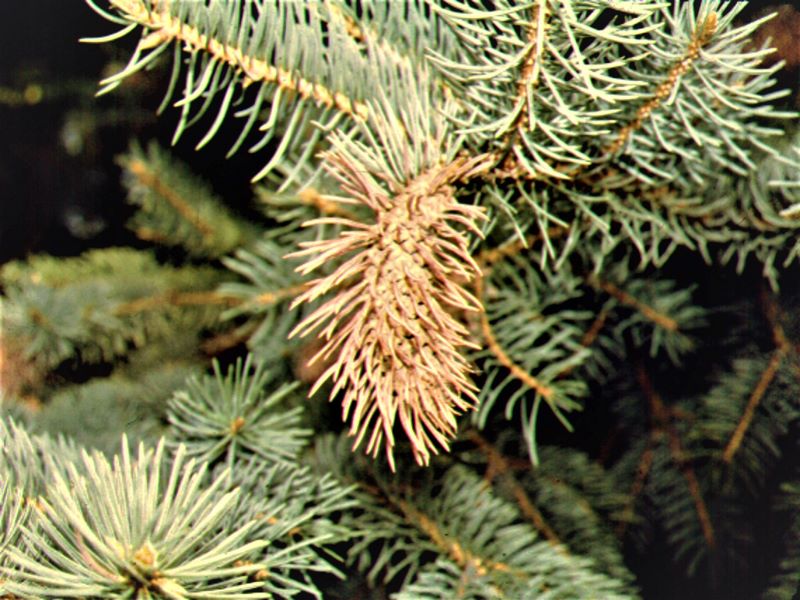
Coolly Spruce Gall Adelgid = dead, open gall

During late July or early August the adult Cooley spruce gall adelgids will emerge from the opened brown pineapple shaped galls. (Photo Credit: Steven K. Rettke, Rutgers Coop. Ext.)

Sometimes Douglas-fir is so heavily attacked that needles are spotted, bent, or distorted. Two or more generations can occur on Douglas-fir through the following season (Christmas tree growers will treat Douglas fir when new growth is 3-4 inches). By next fall another winged generation flies back to spruce and lays eggs for the cycle to repeat itself.
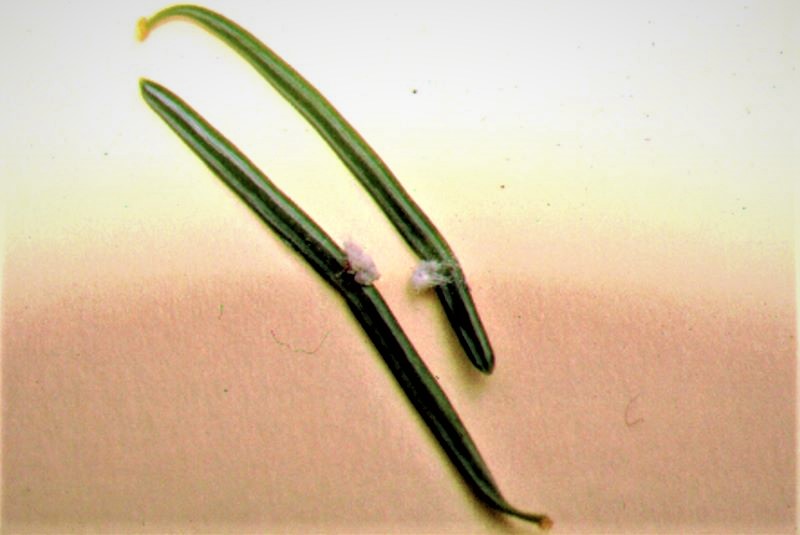
Cooley spruce gall adelgid on Douglas-fi

After the Cooley spruce gall adelgid winged adults emerge from the “pineapple” galls on spruce some will relocate & infest Douglas-fir needles. They will remain on this host for the remainder of the summer. (Photo Credit: Steven K. Rettke, Rutgers Coop. Ext.)

Control by pruning out galls when seen before they open in mid-summer. Place sticky traps out in  summer (Douglas-fir or spruce) (1850-1950 GDD) to determine the timing to spray adults with insecticidal soap (+ sticker). In southern NJ some of the tip “pineapple” galls on spruce will soon open up, and the winged adults will emerged. Except to improve the aesthetic appearance of the trees, there is nothing to be gained by picking off the galls after they have opened. Future control windows will occur during the fall or early spring months, against the overwintering females located at the bases of terminal buds. Some possible treatments include horticultural oil, carbaryl (Sevin), insecticidal soap, or imidacloprid (Merit).

The Landscape Pest Notes for July 2023 contains only insect/mite pests & a couple of predators commonly seen during the month. Contained below are 16 additional pests or predators that appear in the order they are listed as follows: Pine needle scale, Fall webworm, Obscure scale, Pitch mass borer, Two banded Japanese weevil, Aphids, Cicada killer, Juniper webworm, Sapsucker, White pine weevil, Peach tree borer, White waxy lady beetle, Japanese beetle, Oriental beetle, Dogwood sawfly, & Plant leaf galls. [Read more…]
Landscape Pest Notes for Late June 2023

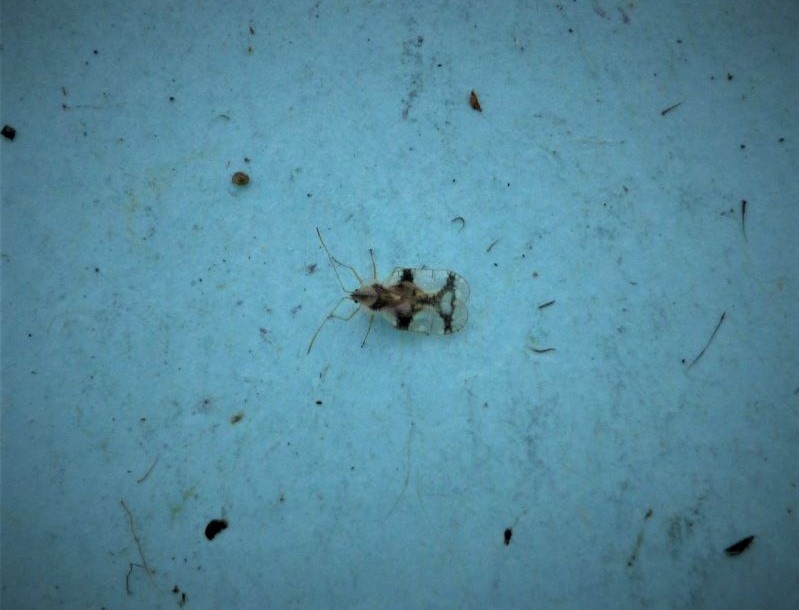
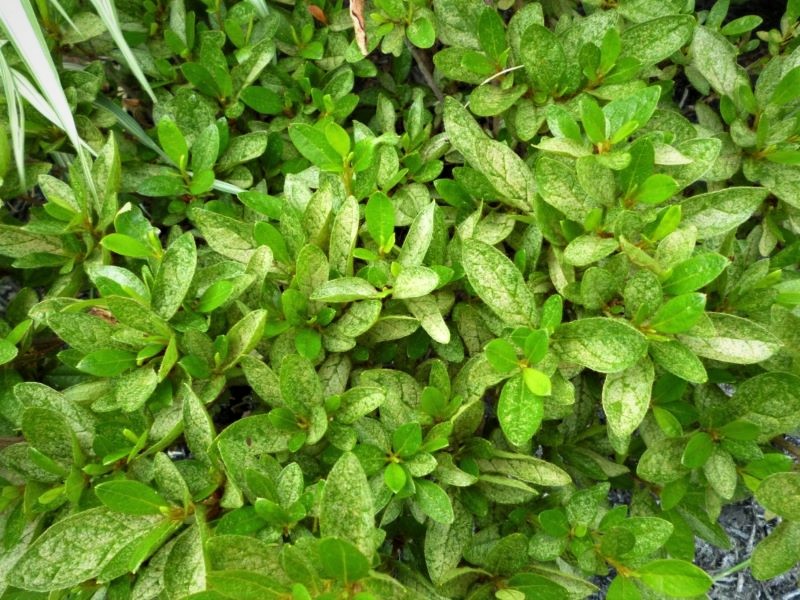
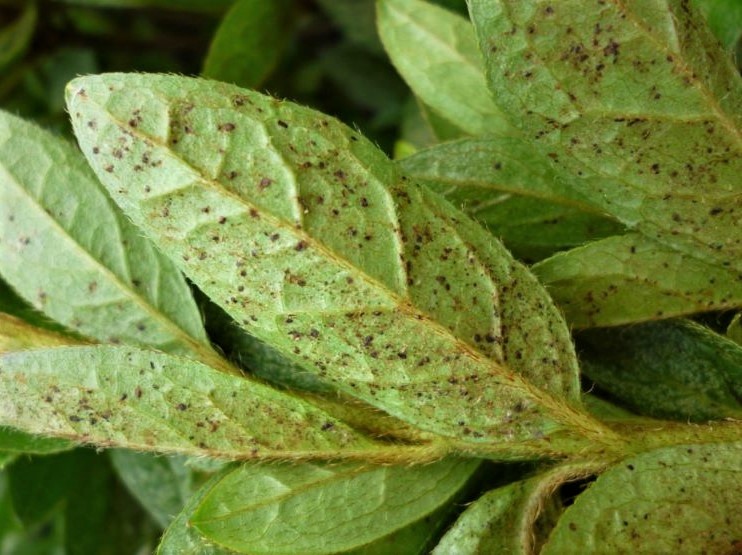
Azalea Lace Bugs (802-1029 GDD = 3rd generation): The third generation of this pest will be in full swing for much of NJ by the end of the month. Look for the presence of nymphs (spiny, black), adults (larger, lacy wings), fecal spots (brown, shiny spots) on the underside of leaves, and stippling (feeding damage from nymphs and adults) on the leaves. Remember that the yellow stippling damage persists on the leaves until they are dropped. Look for the presence of actively feeding lace bug nymphs or adults before treating plants.

Azalea lace bug feeding symptoms.

Azalea lace bug stippling symptoms on Azalea leaves. (Photo Credit: Steven K. Rettke, Rutgers Coop. Ext.)

Azalea lace bug frass spots & egg laying

Azalea leaf undersides with frass spots & egg laying along mid-rib. (Photo Credit: Steven K. Rettke, Rutgers Coop. Ext.)


When found, use horticultural oil (only if a spray can contact the back of the leaves), or acephate (Orthene) if the shrub is too dense to allow effective use of oil. Imidacloprid (Merit) applied to soils now may require 1-2 weeks before they begin to control this second generation or the beginning of the third generation (longer if soils are dry). Chlorantraniliprole is a reduced-risk insecticide that can be effective against lace bugs. Remember that stressed azaleas in full sun are more prone to lace bugs. Also, & more importantly, predators will be fewer in full-sun locations.

Azalea lace bug adult

Azalea lace bug adult with oval shaped wings. Lace bug species having oval shaped wings will only feed on broad-leaf evergreens. (Photo Credit: Steven K. Rettke, Rutgers Coop. Ext.)

The Landscape Pest Notes for Late June 2023 in addition to the azalea lace bugs also includes information & photographs of oak spider mites, two-spotted spider mites, pine spittlebugs, mimosa webworms, various soft scales, white prunicola scales, red-headed flea beetles & tree species prone to mid-season leaf drop.

[Read more…]

Nursery Pest and Disease Update 6/15/2023

In this edition:

  • Insects:
    • MORE Scale crawlers emerging
    • Borers
    • Beetles
  • Diseases:
    • Oomycete root diseases (Phytophthora, Pythium, Phytopythium)
    • Leaf spots / foliage diseases
    • Boxwood Blight – reminder
    • Virus observations
  • Nutrient Management 
    • Managing Soluble Salts by monitoring EC
    • Plant Tissue analysis
  • Plant Spotlight:
    • American Holly (Ilex opaca)
  • Cumberland Nursery / NJNLA – Twilight: tonight (6/15) for NURSERYMEN ONLY (contact twaller@njaes.rutgers.edu or 856-451-2800 Ext. 1. for details)

Please click “read more” below to get updates on pests, diseases, and other important resources for the week of 6/15/2023.

[Read more…]

2023 Spotted Lanternfly Tracking Survey

Rutgers NJAES Wine Grape Extension, in association with Penn State Extension Grape and Wine Team, is calling on those who own, operate, or manage a farm or vineyard in the New Jersey region to participate in a survey that aims to track the spread and severity of nymph and adult spotted lanternfly populations during the 2023 season. The data collected will provide insights into the distribution patterns of both nymph and adult SLF within and outside vineyards, enabling growers and researchers to better understand this invasive pest’s potential impact on agriculture in the Mid-Atlantic region. [Read more…]

Landscape Pest Notes for Early June 2023

Boxwood Spider Mite: (GDD =450-700) (PPI = Kousa Dogwood; Cranberry Bush) This spider mite, which attacks all boxwoods, is neither a true cool nor warm season mite species. It is usually most active with intermediate temperatures during late spring & early summer. The adult is yellow-tan in color with long legs. When the boxwood mites are active, they can be found on both the top & bottom of new growth. Eggs are light yellow & overwinter on leaves & twigs. There are several generations per year.

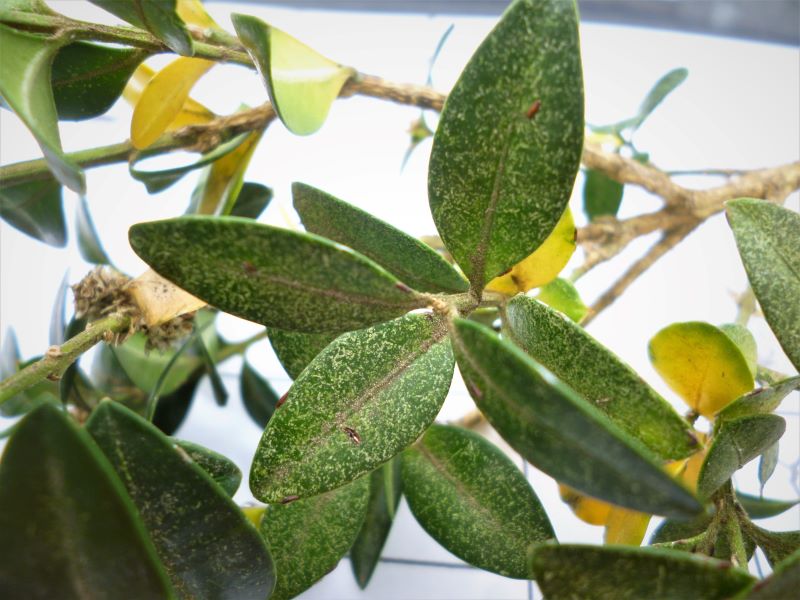
Boxwood spider mite feeding damage results in foliage with yellow to bronze stippling, which may resemble injury caused by thrips. Both of these insects cause distinctive linear stippling streaks. These symptoms can be diagnostic when observed on foliage. With high mite populations, entire leaves may develop yellowish-white streaks; premature defoliation can occur.

Boxwood Spider Mite symptoms

Boxwood spider mite feeding symptoms. This mite species creates linear streaks on leaves. (Photo Credit: Steven K. Rettke, Rutgers Coop. Ext.)

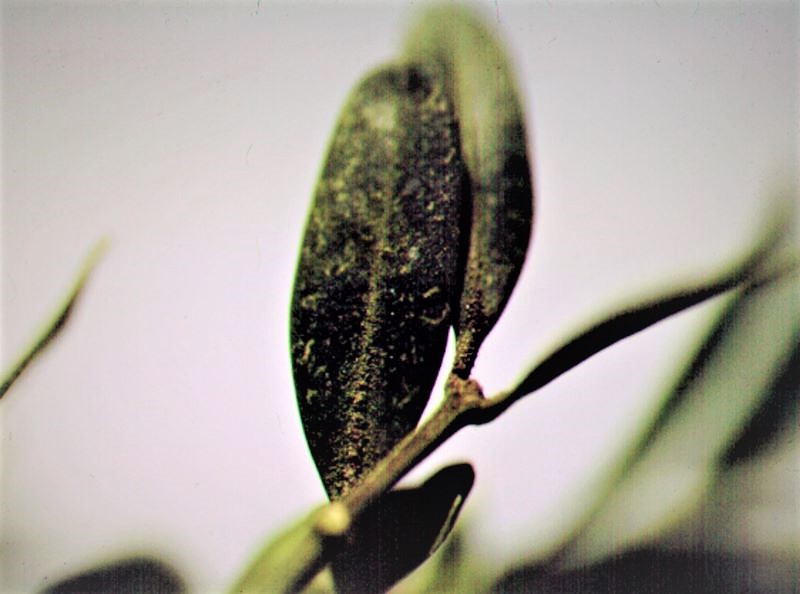
Boxwood Spider Mite symptoms - more mild

Boxwood spider mite symptoms that are more mild. The distinctive linear streaks are more clearly observed. (Photo Credit: Steven K. Rettke, Rutgers Coop. Ext.)


Detected overwintering eggs are treated with dormant oils (2-3%). Although normally unnecessary, summer oils (1-2%) or insecticidal soaps are recommended to control mild mite populations. With high infestations, some reduced-risk materials include spinosad, spiromesifen, acequinocyl, & bifenazate. Examples of other materials include hexythiazoc, abamectin, fluvalinate & acephate. Be aware that fluvalinate is a pyrethroid & can promote spider mite resurgence. Acephate may only provide mite suppression.

The Rutgers Plant & Pest Advisory Blog for Early June 2023 includes some commonly observed insect/mite & disease pests within the landscape during the late weeks of spring & early weeks of summer. In addition to boxwood spider mites, the other insect/mite pests included are juniper scale, bagworm, black vine weevil, bronze birch borer, pear leaf blister mite, & beneficial predacious mite. The disease pathogens included are fire blight, oak leaf blister fungus, black spot of rose, powdery mildew & Verticillium wilt. Some suggested monitoring techniques & variables are listed between the insect/mite & disease pests.     

[Read more…]

Get ready for bagworms…NOW

Days old bagworm size

Days-old bagworm = critical management target – T. Waller – RCE

Bagworms should begin hatching NOW through – 4 weeks in NJ, beginning in the southern regions. Now is an optimal time to get this pest on your radar and prepare materials or approaches to attack first/second instar caterpillars. The control window for this pest is typically between 600-900 GDD50  when they begin to hatch and become airborne, i.e. the “ballooning” phase. It is important to check for egg-hatch prior to applications for greatest chemical efficacy, and to continue scouting as they often hatch and develop at asynchronous rates.

It is critical to target these insects EARLY!

Bagworm management – mechanical: If eggs have not hatched: hand-remove sacs/bags. Typically female/egg filled sacs are higher in the canopy so keep that in mind while scouting. This removes the problem from the field or landscape.

Treatment options for Lepidoptera (caterpillars) to have at the ready – containing: B.t. (Bacillus thuringiensis), spinosad , bifenthrin ), cyfluthrin, carbaryl, chlorantraniliprole, cyclaniliprole, cyclaniliprole + flonicamid, Lambda-cyhalothrin, cyantraniliprole, Indoxacarb.  NOTE – Lethal pesticide doses are important, as sub-lethal doses can trigger early pupation, making the pest all but invincible to chemical or biological treatments. Follow label exactly.

IT IS CRITICAL TO ROTATE MATERIALS (Rotate between IRAC groups) 

DISCLAIMER: The label is the law, always refer to it for allowable host crops, use-restrictions, application rates, reapplication intervals, re-entry intervals (REI), and mix compatibility information. Production and pesticide information on this site are for private/commercial pesticide applicators and landscape professionals only, and are NOT for home gardener use. Provided materials represent examples and do not cover all possible control scenarios. Please contact your local agent or chemical sales representative for more information or to discuss additional pest management options.

BAGWORMS (600-900 GDD) (Bagworm hatch prediction as of 5/24/23)
Crop type Common Name Scientific Name GDD Min (50F) GDD Max (95F) Reference Developmental / Target Stage
Conifer mostly, many minor hosts Bagworm Thyridopteryx ephemeraeformis 600 900 RU Larvae (early instars) – ONLY CONTROL WINDOW
Region Location Station Date (600 GDD) Date (900 GDD) *Treatment window  *Bagworm Hatch – Predictions only, SCOUTING is critical! Treat as soon as larvae detected. 
South Upper Deerfield NJ50 31-May 14-Jun 14 days
Central Howell / Freehold NJ10 9-Jun 23-Jun 14 days
North High Point NJ59 15-Jun 2-July 17 days 

Please download and print the Rutgers Nursery and Landscape Pest Scouting Guide  or  Conifer and Christmas Tree Pest Scouting Guide and refer to this post “Obtaining your local growing degree-days (GDD)” for additional information.  (See pest scouting guides for complete list of references – cited within lists below) 

Please SHARE what you SEE!! If you see a pest, disease, otherwise interesting or troublesome issue please report it to the Working Group by following the QR Code on the front of the Pest Scouting Guides or by filling out this reporting form.