Tree Fruit Edition

Seasonal updates on insects, diseases, weeds, maturity dates and cultural practices impacting only tree fruit.
 
Subscriptions are available via EMAIL and RSS.

What to Look for At Bloom: Cankers of Stone fruit.

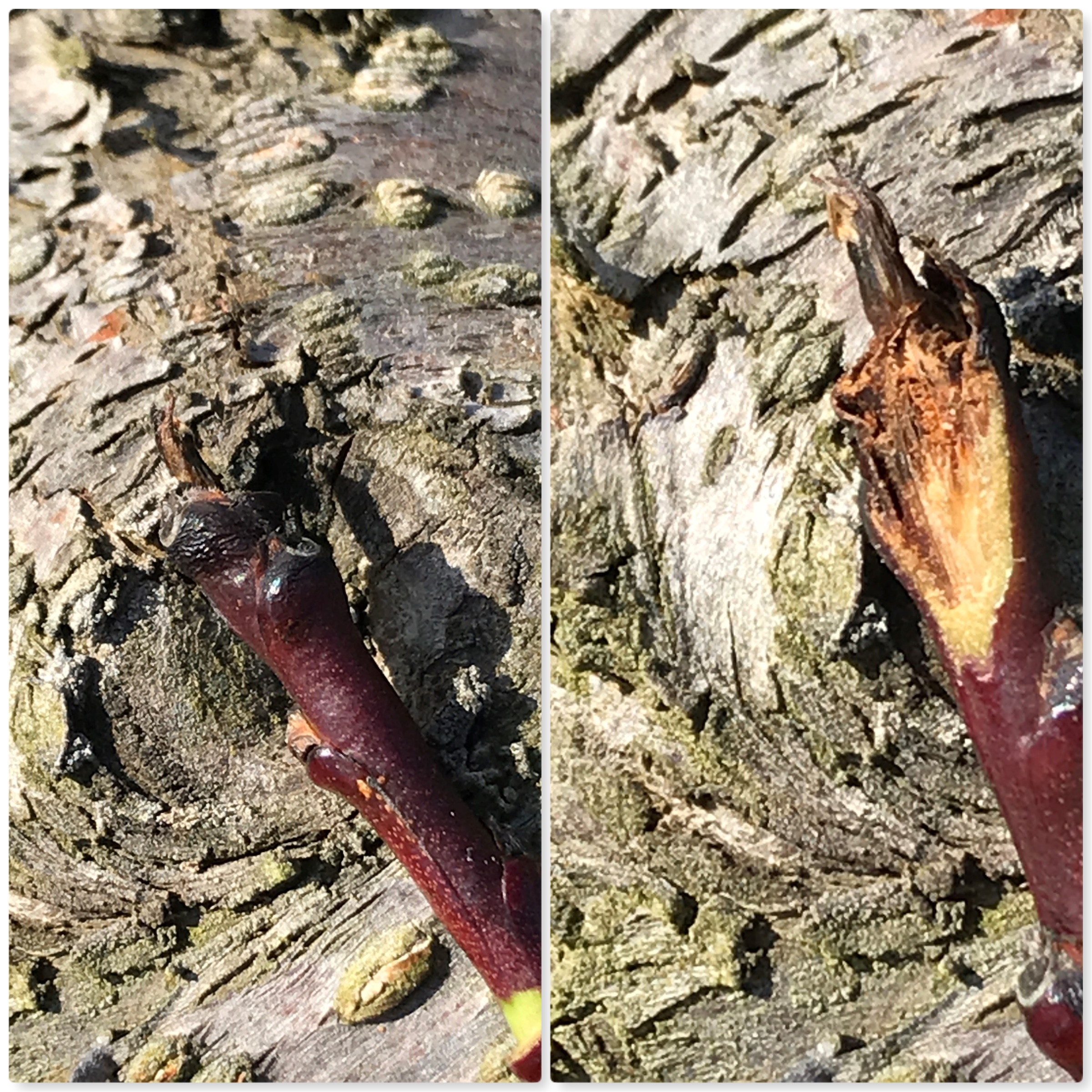
Bacterial Spot is a key pest of Peach, Nectarine and Plum and in some years like 2019 can cause significant losses. It is caused by the bacterium Xanthomonas arbicola pv. pruni. Bacterial spot cankers that cause tip dieback (commonly called Black Tip) are often difficult to distinguish from cankers caused by other peach diseases. Other cankers that may appear during bloom are caused by the blossom blight phase of brown rot, and constriction canker. Black tip usually appears during or just after bloom. Typical symptoms are a gradual blackening of the tip with dead tissue moving down the twig and is often observed on highly susceptible cultivars (Fig. 1). Tip die back may also occur from abiotic factors such as frost. Tip die back from frost is often accompanied by blind wood usually 6-8 inches below the tip where leaves and flowers have fallen off after being killed by a freeze.
Scared onion

Fig. 1 Tip die back likely bacterial spot or spring frost.

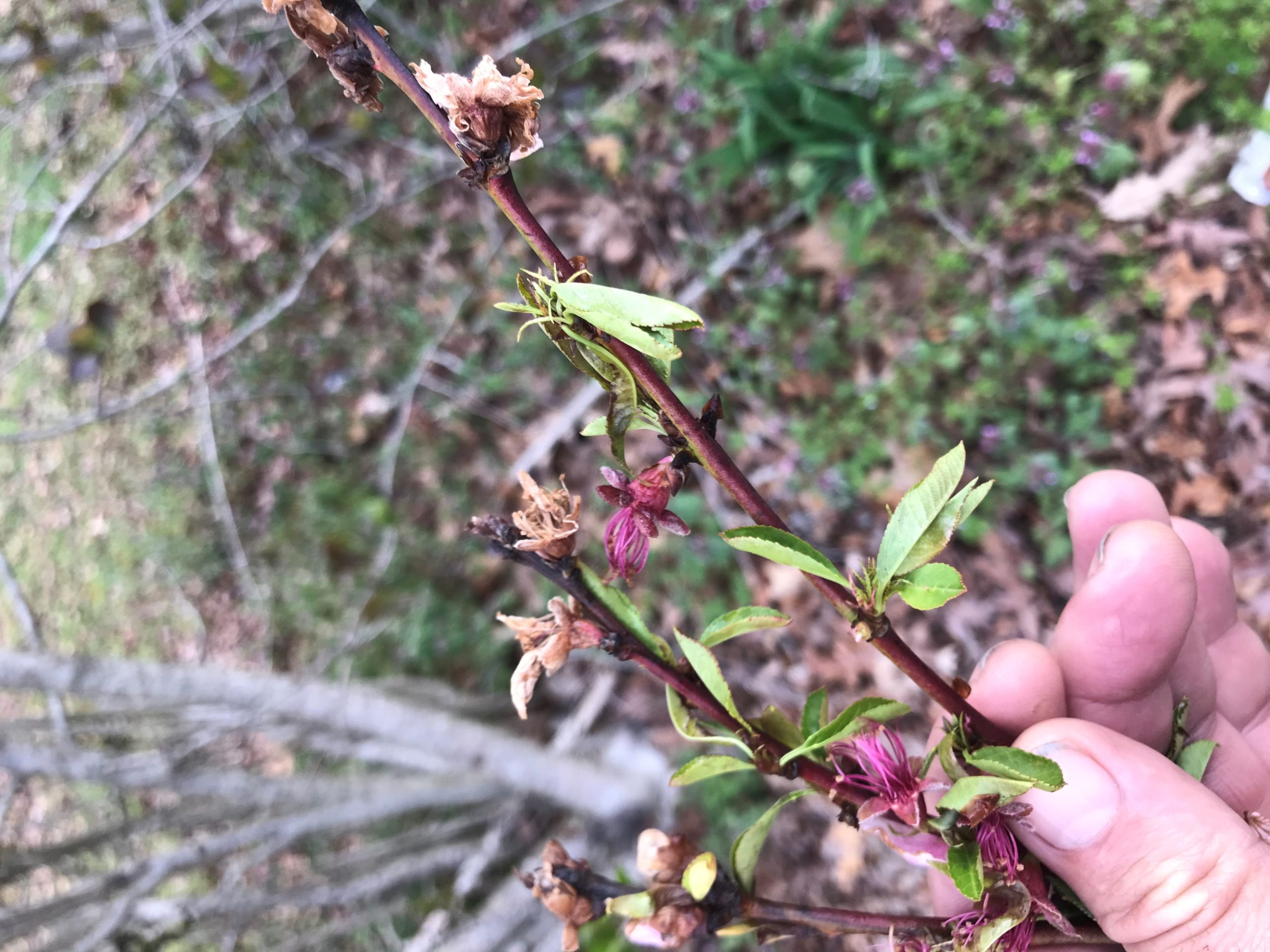
In some cases the twig may appear healthy and a shoot begins growing from the tip only to die back after leafing out and flowering. This is often a symptom of late winter/early spring infections of constriction canker. Many times a bud that was infected in the fall and never leafed out may be found just below the new shoot that is dying. This usually a good clue that constriction canker is the cause. These symptoms may be more prevalent in old trees that have a history of the disease (Fig. 2).
Allium Leaf Miner

Fig. 2 Tip die back possibly caused by constriction canker.

Tip cankers such as these may be accompanied by cankers on flower buds lower down the on the twig typically associated with blossom blight or constriction canker, or they may appear alone. Spring cankers from bacterial spot that form around flower buds are less commonly seen in our region. In cases like this it is difficult to diagnose the disease early on, especially where symptoms are randomly found at low levels or are mixed in appearance. The only thing that can be done is to note the trouble blocks and watch to see what develops. Blossom blight and constriction canker will eventually develop unique symptoms. Bacterial spot lesions will eventually show on the leaves. If you see black tip cankers forming during bloom its not a bad idea to assume its bacterial spot and include copper or oxytetracycline with your blossom blight sprays.

 

Ask the Expert Series Orchard Edition

Ask the Expert Series Orchard Edition

Please Join us for an Interactive Discussion on Tree Fruit Insect Pests

April 21: 9AM-10AM

Zoom Link: https://go.rutgers.edu/eu5ps890

Meeting ID: 970 1440 2692

Password: 989229

Join by Phone: +1 646 558 8656


Expert Panelists
Anne Nielsen Ph.D. Associate Extension Specialist in Entomology,
Rutgers University
and
Arthur Agnello Ph.D. Professor, Cornell University
will be discussing tree fruit pests, and the latest management options


Remember this is intended to be an INTERACTIVE discussion.


Prior to Wednesday April 21, Please E-mail ALL of your Tree Fruit Insect Questions to:
Megan Muehlbauer muehlbauer@njaes.rutgers.eduOr
Hemant Gohil gohil@njaes.rutgers.edu

Prepare to have a lively interactive discussion between the experts and your fellow New Jersey tree fruit growers!

Tree Fruit IPM Report for April 12, 2021

Tree Fruit Phenology:

Tree Fruit Phenology remains about normal. In southern counties all peach orchards are at full bloom to petal fall. Redhaven was at approximately full bloom on 4/12. Plums are at petal fall and pears are at full bloom. Red Delicious is at pink with just a few blossoms beginning to open. Sweet cherries are at early to full bloom and tart cherries are nearing bloom. [Read more…]

Improving Your Early Season Peach Brown Rot Control Program – An Update

Have you ever felt that you did everything right at controlling brown rot during the preharvest period, but still got a significant amount of brown rot at harvest? Your preharvest fungicide applications were at tight intervals during the roughly 21-day fruit ripening period. Rains occurred but you were protected. Even when you looked back at the bloom period you saw no obvious gaps in coverage. Yet, the brown rot appeared at harvest. If this is you, read on. [Read more…]

Preparing Orchards Against the Frost – Low Tech Strategies

Frost is common in the north-eastern US, however, frost events during bloom, specifically in orchard crops can be economically devastating. Often the cause is a few hours of temperatures below the injury threshold temperature for the developing buds as cooler nights result in the rapid loss of thermal energy. Fortunately, there are several passive methods or low-tech strategies, that can help maintain a slightly higher orchard floor temperature, has the potential to prevent substantial crop loss. [Read more…]

Evaluate Your Wine Grape Planting Material Before Planting

Spring is the best time to plant new grapevines in New Jersey.  You may be receiving ordered grapevines in the coming days or weeks. 1You must ensure that your planting material is healthy enough to avoid problems after planting. While it is a good idea to plant grapevines as soon as they arrive, inspecting the physical attributes of your ordered vines before planting may save you some troubles later. Nurseries send planting material on pre-determined dates hence; you should have enough time for a detailed inspection. [Read more…]
