On-Farm Food Safety Section

Keep up with the latest news on this dynamic topic that impacts growers on multiple levels. Developing a farm food safety plan is a good idea for all growers, and may be required as part of food safety audits if you sell to certain buyers.

View NJAES On-Farm Food Safety Essentials

Subscriptions are available via EMAIL and RSS.

Letter from New Jersey Department of Agriculture concerning cyclospora

There have been several reports concerning Cyclospora in the news lately and the NJDA and Rutgers Cooperative Extension wanted to update growers as to the status in New Jersey.  Below is a statement from NJDA.


Dear New Jersey Residents and Consumers,

The New Jersey Department of Agriculture wants to emphasize that no produce coming from New Jersey farms has been linked to the cyclosporiasis outbreak. To date, no New Jersey-grown produce has been identified as a source of cyclosporiasis cases. National and New Jersey health officials and experts are continuing to investigate the outbreak and monitor any cases.

Our Jersey Fresh farmers meet the high-quality standards imposed not only by their own compliance with the Food Safety Modernization Act (FSMA) but also with the quality-grading standards of the Jersey Fresh program.

The New Jersey Department of Agriculture will continue keeping the public informed about any produce categories grown in New Jersey that have been identified by health experts as being a risk.

To help protect against cyclosporiasis and other foodborne illnesses, NJDOH and NJDA recommend:

  • Wash your hands with soap and water before and after preparing fresh fruits and vegetables.
  • Wash all fruits and vegetables thoroughly under running water, even if you plan to peel them.
  • Scrub firm produce, such as melons and cucumbers, with a clean produce brush.
  • Cut away any damaged or bruised areas on fruits and vegetables before preparing or eating.
  • Refrigerate cut, peeled, or cooked fruits and vegetables promptly.


Edward D. Wengryn

New Jersey Secretary of Agriculture


Developing and Improving Your Worker Produce Safety Training for Audits and FSMA

A robust annual worker training is a requirement of both the FSMA Produce Safety Rule and a buyer required third-party audit.  Are your produce workers trained? Do you feel good about the training they receive? Develop, review, or improve your produce worker food safety training by using our Developing Your On-Farm Food Safety Worker Training Program decision tool. With this tool you can: consider risks involved with where employees work, the tasks they are conducting, what food safety risks they should know based on these activities, what you are already doing to train these workers, and learn more about additional resources available online that you can share in-person or via text to enhance their understanding of food safety risk reduction. Don’t forget to keep track of who, how, and when they were trained as proof during your inspection or audit.  Use our employee training log template digitally or in paper format as part of your food safety recordkeeping.

New World Screwworm: Why New Jersey Livestock Producers Should Be Aware

Recent detection (on June 3, 2026) of New World screwworm in Texas (Zavala County) have renewed attention to a livestock pest that was eradicated from the United States more than 50 years ago. While the current detections are far from New Jersey, they serve as a reminder of the importance of animal health surveillance and routine livestock inspections.

  • What is New World Screwworm: New World screwworm (Cochliomyia hominivorax) is a parasitic fly whose larvae (maggots) feed on the living tissue of warm-blooded animals. Unlike common fly maggots that typically feed on dead or decaying tissue, screwworm larvae invade healthy tissue, causing painful and rapidly expanding wounds that can lead to severe animal health problems if left untreated.
  • Why Is It in the News: The pest was eradicated from the United States in the 1960s and 1970s through a successful sterile insect release program. However, outbreaks in Central America and Mexico have moved northward in recent years, resulting in recent detections in Texas. Federal and state animal health officials are actively responding to these detections to prevent establishment and further spread.
  • Should New Jersey Producers Be Concerned: At this time, there is no reason for alarm in New Jersey. However, livestock owners should be aware of the pest and its symptoms because early detection is critical to successful control efforts.
  • Animals at Risk: New World Screwworm can affect cattle, sheep, goats, horses, swine, pets (dogs and cats), and wildlife. Any warm-blooded animal with an open wound can potentially be infested.
  • What to Watch For: Producers should monitor animals for wounds that enlarge rapidly, foul-smelling lesions, bloody or pink-tinged discharge, visible maggots in wounds, excessive irritation or rubbing, reduced feed intake, and lethargy or weakness. Pay particular attention to newborn navels, castration sites, dehorning wounds, ear-tagging sites, branding wounds, cuts and abrasions.
  • Good Management Practices: The best defense remains good animal husbandry. Inspect livestock regularly, treat wounds promptly, maintain fly-control programs, monitor newborn and recently processed animals closely, and consult a veterinarian if unusual wound development is observed.
  • Food Safety: New World screwworm is primarily an animal health concern and does not pose a food safety risk to consumers. Its impact is related to animal welfare, livestock productivity, and economic losses rather than meat safety.
  • Stay Informed: Rutgers Cooperative Extension encourages livestock owners to stay informed through USDA Animal and Plant Health Inspection Service (APHIS), the New Jersey Department of Agriculture, and their local veterinarian. While the current risk to New Jersey remains low, awareness and early recognition are important components of protecting animal health.

References

  • Texas Animal Health Commission. (2026, June 3). New World screwworm confirmed in Zavala County calf: First case of NWS in Texas [News release]. (https://www.tahc.texas.gov/news/2026/2026-06-03_NWS_InitialCase.pdf?utm_source=chatgpt.com)
  • Kaufman, P., Swiger, S. L., & Herring, A. (2026). New World screwworm fact sheet. (https://agrilifeextension.tamu.edu/new-world-screwworm-fact-sheet/)
  • Kansas State University Agricultural Experiment Station and Cooperative Extension Service. (2025, June). New World screwworms: Fact sheet for producers. Kansas State University. (https://entomology.k-state.edu/extension/human-and-animal-health/New%20World%20Screwworms_June2025.pdf)
  • California Department of Food and Agriculture. (2025, June). New World screwworm fact sheet. California Department of Food and Agriculture. (https://www.cdfa.ca.gov/ahfss/animal_health/pdfs/screwworm_fact_sheet.pdf)


Farm Visitors Are Back: Are you required to let the public bring their animals onto your retail farm?

A spring reminder of what you can and cant do regarding the public wanting to bring animals to your direct market and/or agritourism farm:

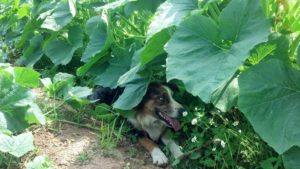
An increasing number of customers are bringing animals with them when they visit farm markets, pick your own farms, or agritainment activities. Animals can pose a food safety risk to produce, introduce disease to farm animals, frighten or upset farm animals. Outside animals can also pose a risk to employees and other market customers and farm visitors. Farmers need to consider these occurrences when keeping in compliance with regulations and buyer requirements specific to food safety and biosecurity to protect their farm animals. The Americans with Disabilities Act (ADA) governs what you are legally allowed to do in regards to customers with service animals visiting your market or on your farm. This fact sheet will cover the specifics of the ADA, animals that are not protected by the ADA regulations, and how to reduce potential risk on your farm from outside animals. States often have regulations that go beyond the federal ADA regulation, information represented in this fact sheet is specific to New Jersey. If you farm in another state please consult the state by state guide linked at the end of this article.Dog resting in the shade

What do the ADA regulations cover?
While many types of animals can provide comfort and emotional support to their owners, only service animals are protected by the ADA, specifically Title II and III. The ADA regulations define “service animal” as dogs, and less commonly miniature ponies, that are individually trained to do work or perform tasks for people with disabilities such as guiding a blind person, alerting people who are deaf, assisting a person in a wheelchair, alerting and protecting a person who is having a seizure, reminding a person with mental illness to take prescribed medications, calming a person with PostTraumatic Stress Disorder (PTSD) during an anxiety attack, or other duties. The work or task that a service animal has been trained to perform must be directly related to the persons disability. Some of these disabilities are obvious, others are not.

What questions can you legally ask?
When it is not obvious to you that an animal is a service animal you may ask just two questions to determine if the animal is a service animal.
1) Is the service animal required because of a disability?
2) What work or task has the service animal been trained to perform?
The service animal must have been trained to perform a specific task or work for a person with a disability in order to qualify for protection under the ADA regulations. Note that service animals do not always wear vests or harnesses, and there is no paperwork or ID Card carried by anyone with a service animal.

What questions are you legally prevented from asking?
1) You may not ask about the persons disability.
2) You may not ask for proof of the persons disability. [Read more…]

Farm Safety Needs Assessment Closing May 1

The Rutgers Farm Health and Safety Working Group is conducting a survey to evaluate the priority needs of New Jersey farmers for training and resource development related to safety and health.  As a New Jersey farmer, you are invited to complete this survey by Friday, May 1, 2026. Click here to access the survey and learn more.  [Read more…]

Visit to Clover Valley Farm – April 11

Field trip to Clover Valley Farm

Saturday, April 11, 10am

Register at: https://go.rutgers.edu/stf3j6x6