Commercial Ag Updates + Farm Food Safety

Rutgers Cooperative Extension Ag Agents provide updates on what they see in the field, upcoming events, and other important news that affects your operation, such as developments in on-farm Food Safety. Subscribe if you wish to be notified about workshops, meetings, and upcoming commercial ag events.
 
Subscriptions are available via EMAIL and RSS.

Beat the Heat: Training Resource

Employee training on working in the heat may reduce risk of heat illness by raising awareness of heat safety. OSHA has developed “A Guide for Employers to Carry Out Heat Safety Training for Workers” which provides step-by-step instructions on how to engage employees in participatory heat safety training on three topics: 1) health effects of heat, 2) how to respond to symptoms, and 3) preventing heat illness. The training can be delivered in one, 45-minute session or three, 15-minute sessions.
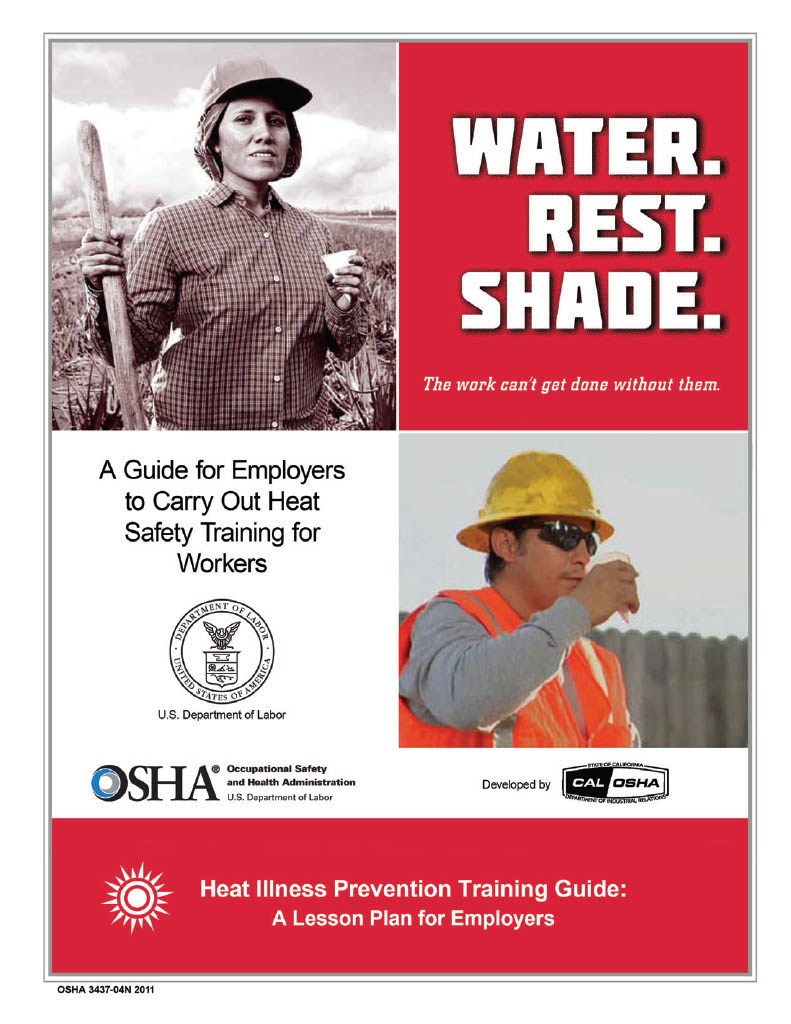
Front page of OSHA employee training guide on heat illness prevention

Article By: The Rutgers Farm Health and Safety Working Group: Kate Brown, Michelle Infante-Casella, Stephen Komar and William Bamka
Food Safety Certification for Specialty Crop (FSCSC) Cost Share Program

This is the chance for eligible fresh fruit and vegetable growers to recover some of their expenses for implementing food safety practices on the farm.

For 2024:

  • Applications are due between July 1, 2024 and January 31, 2025
  • Eligible expenses must be between June 26, 2024 and December 31, 2024

For 2025:

  • Application is due between January 1, 2025 and January 1, 2026
  • Eligible expenses must be between January 1, 2025 and December 31, 2025

Eligible specialty crop operations can apply for FSCSC by working directly with the Farm Service Agency offices at your local FSA office for details. Applications will be accepted via mail, fax, hand delivery, or electronic means.

How the Food Safety Certification for Specialty Crops Program Works

The FSCSC program provides financial assistance for specialty crop operations that incur eligible on-farm food safety program expenses related to obtaining or renewing a food safety certification in years 2024 and 2025. This program helps offset costs to comply with regulatory requirements and market-driven food safety certification requirements.  FSCSC will cover a percentage of the specialty crop operation’s cost of obtaining or renewing their certification, as well as a percentage of their related expenses.

Program Eligibility

Eligibility requirements for FSCSC applicants are outlined below. We recommend you review these requirements before initiating your FSCSC application.

To be eligible for FSCSC, an applicant must:

  • Have obtained or renewed:
  • 2024 food safety certification issued between June 26, 2024, and December 31, 2024
  • 2025 food safety certification issued during calendar year 2025.
  • Be a specialty crop operation (growing fresh fruits and vegetables); and meet the definition of a small business or very small business.
  • A small (farm) business means an applicant that had an average annual monetary value of specialty crops the applicant sold during the 3-year period preceding the program year of more than $250,000 but not more than $500,000.
  • A very small (farm) business means an applicant that had an average annual monetary value of specialty crops the applicant sold during the 3-year period preceding the program year of no more than $250,000.
Category of Eligible Expenses Payment Amount of Eligible Costs
Developing a Food Safety Plan for First Time Certification 75% (no maximum)
Maintaining or Updating a Food Safety Plan 75% up to $675
Food Safety Certification 75% up to $2,000
Certification Upload Fees 75% up to $375
Microbiological Testing of Produce 75% up to 5 tests
Microbiological Testing of Soil Amendments 75% up to 5 tests
Microbiological Testing of Water 75% up to 5 tests
Training Expenses 100% up to $500

FSCSC payments are calculated separately for each category of eligible costs based on the percentages and maximum payment amounts.  The FSCSC application and associated forms are available online at  farmers.gov/food-safety.

You are encouraged to contact the Farm Service Agency office about FSCSC, program eligibility, or the application process. You may also call 877-508-8364 to speak directly with a USDA employee ready to provide one-on-one assistance.

Beat the Heat: Heat Stress Management and OSHA Awareness

A Certified Safety and Health Official (CSHO) from OSHA inspected a farm during the third week of June in Southern NJ for heat related items. With this recent inspection activity and the current legislative landscape pertaining to heat stress, the Rutgers Farm Health and Safety Working Group has increased outreach and education on this topic. Resources on heat stress prevention from Rutgers are available in many formats for farmers.

Please take some time to review the NJAES Heat Stress and Agriculture website which features resources and tools from NJAES, OSHA, and the National Weather Service on heat stress mitigation. The Rutgers Working Group will continue to add new resources as they become available. These tools may aid farmers in their proactive efforts to manage heat stress.

As you review these resources, please realize strengthening your heat stress management practices may also help in preparedness for activities conducted during an OSHA heat-related inspection:

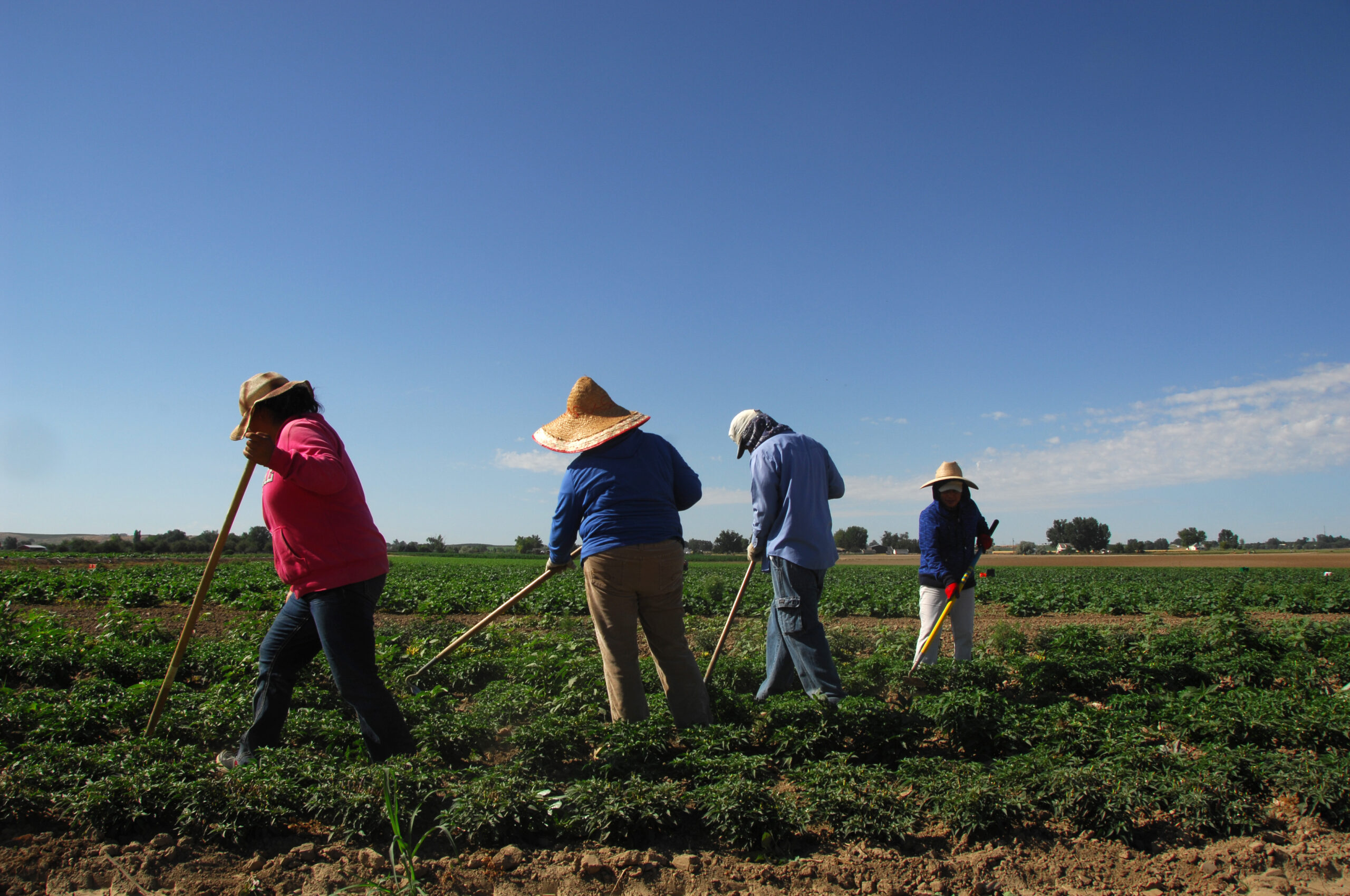
Workers weed a potato field using hand tools.

USDA Photo by Kirsten Strough.

  • Review OSHA 300 Logs for any entries indicating heat-related illness(es),
  • Review injury and illness reports and obtain any records of emergency room visits and/or ambulance transport, even if hospitalizations did not occur,
  • Interview workers for reports of headache, dizziness, fainting, dehydration, or other symptoms that may indicate heat-related illnesses,
  • Review employer’s plan to address heat exposure, including acclimatization procedures (especially for new and returning workers), work-rest schedules, access to shade and water (with electrolytes/sports drinks when needed), and any training records associated with a heat illness prevention program,
  • Document, where possible, the heat index on the OSHA-NIOSH Heat App, using the screen save feature on a mobile phone or tablet, or keep other forms of these records,
  • Identify conditions and activities relevant to heat-related hazards. These can include, but are not limited to:
    • Potential sources of heat-related illnesses (e.g., working in direct sunlight, in a hot vehicle, or areas with hot air, near an engine, furnace, boiler or steam lines),
    • Wet Bulb Globe Temperature (WBGT) calculations and/or other temperature measurements,
    • Heat advisories, warnings or alerts,
    • The use of heavy or bulky clothing or equipment,
    • The types of activities performed by the employees and whether those activities can be categorized as moderate, heavy or very heavy work,
    • The length of time in which a worker is continuously or repeatedly performing moderate to strenuous activities,
    • Heat-related illnesses among new workers,
    • The presence of any recent vacation time or breaks in employment prior to complaints of heat-related symptoms, and
    • The availability of rest breaks, water and shade on site.

Article By: The Rutgers Farm Health and Safety Working Group: Kate Brown, Michelle Infante-Casella, Stephen Komar and William Bamka

Beat the Heat: NWS Forecast Tools

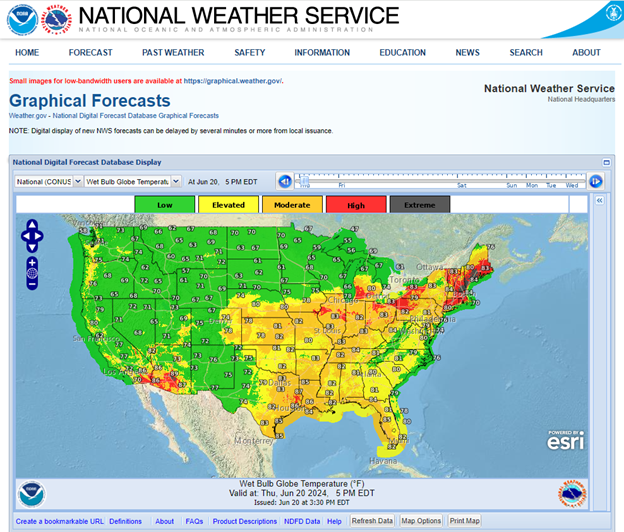
Graphical forecast of wet bulb globe temperature for the lower 48 US states on June 20, 2024.The National Weather Service has graphical forecasts for many weather variables including heat index and wet bulb globe temperature which can be used to evaluate risk of heat stress. These predictive tools may be utilized to evaluate the risk of heat stress up to one week in advance and may aid in planning of field activities.
  • Heat index: describes the apparent temperature based on air temperature and relative humidity in shady locations.
  • Wet bulb globe temperature: incorporates air temperature, relative humidity, solar radiation, and wind speed. May be more representative of field-based working conditions.

To access these graphical forecasts, visit https://digital.weather.gov/ and select either Wet Bulb Globe Temperature or HeatRisk experimental (i.e., heat index) from the drop-down menu. Zoom in to your location by holding your cursor over the area and scrolling with your mouse, or use the provided Zoom and movement tools in the upper left of the graph.

Article By: The Rutgers Farm Health and Safety Working Group: Kate Brown, Michelle Infante-Casella, Stephen Komar and William Bamka

Beat the Heat: Water and Sports Drinks for Hydration

Article By: The Rutgers Farm Health and Safety Working Group: Kate Brown, Michelle Infante-Casella, Stephen Komar and William Bamka

When it comes to hydration, the U.S. National Academies of Sciences, Engineering, and Medicine recommends an adequate daily fluid intake of about 15.5 cups (3.7 liters) of fluids a day for men and about 11.5 cups (2.7 liters) of fluids a day for women. Even with this guidance, the amount varies from person to person. Also, when temperatures are hotter and when workloads increase so should drinking water, to prevent dehydration and to help maintain the proper body temperature especially when sweating.

Regular intake of water throughout the day and during the evening, at recommended amounts may help prevent a person from becoming excessively thirsty and also prevent dehydration. The choice of drinking sports drinks that contain electrolytes may be considered when a person’s activities dramatically increase, when they excessively sweat, if they show signs of dehydration, and/or heat stress.

Most sports drinks are designed to replenish glucose, fluids, and electrolytes (sodium, potassium, magnesium, calcium) lost during strenuous exercise or heavy workloads. Sports drinks may contain carbohydrates in the form of sugar, usually glucose, high-fructose corn syrup, or sucrose. Some contain no sugar and are “sweetened” instead with low-calorie sweeteners. The amounts of sugar and electrolytes in sports drinks are intended to allow for quick hydration and absorption.

It is important to note, persons with diabetes should be mindful of not intaking amounts of sports drinks that are high in sugar that could raise blood sugar to unhealthy levels. Additionally, persons with high blood pressure should be mindful when drinking sports drinks that are high in sodium – most are. Persons who eat a healthy diet should have enough glucose and electrolytes to maintain their health, even during extra activities and with proper water intake. Some studies show drinking too many sports drinks, especially when not performing vigorous exercise, can increase the risk of overweight/obesity and other health issues such as type 2 diabetes, cardiovascular disease, gout and the risk of dental cavities.

Water is the best choice to stay hydrated and it is the responsibility of each individual person to be sure they drink enough water to maintain their proper health.

Additional Information for New Jersey Farm Owners on H5N1 Bird Flu

The New Jersey Departments of Health (NJDOH) and Agriculture (NJDA) are closely monitoring the emerging situation with H5N1 bird flu and would like to provide important information to New Jersey farm owners. Please refer to the memo from NJDOH and NJDA: Information for Farm Owners and Farm Workers (highlights provided below). The public health risk of H5N1 bird flu is low, but people can sometimes get bird flu, usually after close, unprotected contact with infected animals. Poultry and livestock farmers and workers, veterinarians and veterinary staff, and slaughterhouse workers performing certain tasks on lactating dairy cattle are at increased risk of exposure to animals infected with bird flu viruses. Farms containing multiple species, particularly cattle, and/or poultry, should uphold biosecurity practices that reduce the risk of disease spreading between animals. Farm staff and visitors should adhere to recommended precautions regarding contact with other animals and follow personal protective equipment (PPE) protocols.

Rutgers Cooperative Extension is collaborating with NJDOH, following guidance from the CDC, to assist farm owners with preparedness by providing initial PPE supplies by request at county extension offices. To request PPE supplies and/or receive additional information, please contact your respective county extension office (https://njaes.rutgers.edu/county/). You will be asked to specify the quantity and type of PPE needed for your operation.

Refer to the Centers for Disease Control and Prevention’s flyer “Protect Yourself from H5N1 When Working With Farm Animals,” for more guidance on the application, removal, and disposal (or possible re-use) of each personal protective equipment item.

PPE from NJDOH includes the following as supply remains available:

  • Bouffant caps
  • Coveralls
  • Face shields and refills
  • Goggles
  • Gloves
  • N95 respirators
  • Gowns
  • Shoe covers