Wednesday Luncheon at the NE Ag Expo 1/21/26 – Sign Up Today

All are welcome to the 2026 Celebration of the International Year of the Female Farmer on Wednesday, January 21st at the Northeast Ag Expo at Harrah’s in Atlantic City. Your $25 ticket includes access to the luncheon and keynote speakers – Carrie Edsall from New York and NJ Dairy Princess – Dakota Meys. Lunch is a full hot food buffet and dessert. This event will be inspirational and is also a very affordable way to have lunch while at the expo. Spend this time to network with fellow farmers and support women in agriculture. To register for the Expo and the Wednesday Luncheon go to https://vganj.com/convention-tickets

South Jersey Farmers – Stop the Bleed Training – February 2, 2026

STOP THE BLEED TRAINING
FOR FARMERS AND THE AGRICULTURAL COMMUNITY
REGISTRATION REQUIRED – NO COST

REGISTER USING THIS LINK OR QR CODE:
https://go.rutgers.edu/stopthebleed


DATE: MONDAY, FEBRUARY 2, 2026 TIME: 9:00AM
LOCATION: GLOUCESTER COUNTY OFFICE OF GOVERNMENT SERVICES
1200 N. DELSEA DR., CLAYTON, NJ

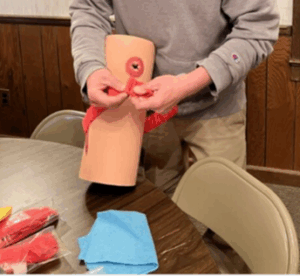
Rutgers Cooperative Extension’ Farm Health and Safety Team has partnered with the Gloucester County Emergency Services to provide “Stop the Bleed” training for the farming community.

Don’t miss this opportunity to learn the life-saving skills of pressure application, wound packing, and use of tourniquets. The first 25 registrants will also receive a complementary bleeding control kit.

Space is limited, register today.

If you have questions contact Rutgers Cooperative Extension of Gloucester County 856-224-8040 ext. 1 or email minfante@njaes.rutgers.edu

Rutgers Farm Health and Safety Team:
Agricultural Agents: Kate Brown, Michelle Infante-Casella, William Bamka, and Stephen Komar

Northeast Sustainable Agriculture Research and Education – Farmer Grant Applications Available – Due December 9, 2025

The Call for 2026 Northeast SARE Farmer Grant applications is now available. Awards of up to $30,000 are available, depending on the complexity of a project. Proposals are due no later than 5:00 p.m. EST on December 9, 2025. The NJ SARE Coordinator is Stephen Komar, Agricultural Agent in Sussex County and Michelle Infante-Casella is the Assistant Coordinator for SARE in NJ. If you have questions you can send an email to Steve or Michelle, or contact your local county Rutgers Cooperative Extension Agricultural Agents who can assist and also provide technical assistance.


Northeast SARE Farmer Grants provide the resources farmers need to explore new concepts agriculture conducted through experiments, surveys, prototypes, on-farm demonstrations or other research and education techniques. Projects address issues that affect farming with long-term practical impacts in mind.
Farmer Grants are designed to be a strong starting point for farmers interested in pursuing grant funding of projects. Before starting their proposals, potential candidates identify a Technical Advisor who can provide non-farming expertise in areas such as research design, troubleshooting, and promotion. The Technical Advisor acts as a go-to support person throughout the grant project, making it easier on first time grantees and forging new relationships in agricultural communities across the Northeast.


Northeast SARE funds projects in a wide variety of topics, including marketing and business, crop production, raising livestock, aquaculture, hydroponics, silvopasture, and more.


Northeast SARE covers the Northeast and Mid-Atlantic states of Connecticut, Delaware, Maine, Massachusetts, Maryland, New Hampshire, New Jersey, New York, Pennsylvania, Rhode Island, West Virginia, Vermont, and Washington, D.C.


The Farmer Grant program is specifically for farmers. Northeast SARE will be releasing calls for proposals for other grant programs in the coming months.

For applications, tutorials on farmer grants, and other important information about this grant program see the NESARE Farmer Grants Webpage.

Webinar on Monday 9/22/26 from 12-1PM: Farm Equipment Hits the Highway: Growing Risks and Smarter Solutions

According to US Bureau of Labor Statistics, agriculture is one of the most dangerous occupations. This is due to the varied number of agricultural risks encountered by farmers and farm workers. Recent events in New Jersey have brought up concerns about farm equipment on public roads.

On Monday, September 22nd from 12:00PM-1:00PM EST, there will be a webinar on
“Farm Equipment Hits the Highway: Growing Risks and Smarter Solutions”

Summary: Tractors and other large ag machines are spending more time on public roads than ever before. As farms expand and equipment grows in size, the risks on rural roadways continue to rise, not just for farmers but for the entire motoring public. This session will explore how design solutions, especially those connected to lighting and marking design standards, reduce collision risk. We’ll unpack crash data, examine discrepancies between federal and state requirements, and highlight recent NHTSA regulations that focus national attention on these issues. We’ll also explore new risks associated with trailering, longer transport routes, and the safety implications of the accelerating shift toward autonomous and robotic machinery.

Objectives: At the end of this webinar, participants will be able to:
Describe how changes in farm size, equipment design, and changes in rural communities contribute to increased roadway travel and higher collision risk.

*Explain the purpose and impact of consensus design standards and how alignment (or misalignment) with state regulations can influence roadway safety outcomes.

*Identify new roadway safety concerns tied to equipment trailering, larger machines, and longer travel distances across spread-out farm operations.

*Assess how automation and robotics in agriculture will introduce both new risks and promising safety solutions—and how policy, like California’s current occupational safety tractor rules, will shape their future use.

Intended audience: Farmers, policymakers, extension educators, engineers from equipment companies, law enforcement, clinicians, health professionals, agricultural association leaders, agribusiness professionals, insurance loss control/underwriters, vo-ag instructors, machinery dealers

Meet the Presenter: Dr. John Shutske, Agricultural Safety & Health Specialist and Professor, University of Wisconsin-Madison

Register by first creating a free account on https://learning.agrisafe.org/register
And then using this link to register for the free webinar: https://learning.agrisafe.org/products/farm-equipment-hits-the-highway-growing-risks-and-smarter-solutions

Rutgers to Host Afternoon Cover Crops Field Day – August 5

Rutgers Cover Crops Field Day
*The program may be rescheduled in the event of inclement weather*
Date: August 5, 2025
Time: 3:00PM to 6:00 PM
Where: Snyder Research Farm, 140 Locust Grove Rd, Pittstown, NJ 08867

REGISTRATION REQUIRED:

Please register by calling RCE of Sussex County: 973-948-3040
*First 20 registrants will receive a FREE copy of the USDA SARE book: “Managing Cover Crops Profitably”

This event will highlight several cover crop research projects and foster discussion and networking on drone use in agriculture and cover crop management.
Please join us for this summer event. 

We will also discuss an upcoming drone pilot certification training we will be hosting this winter.

3:00 PM Registration and Welcome – Stephen Komar, ANR Agent /Rutgers SARE Coordinator
3:15 PM Go to the Field – Calibrating a Drone for Agricultural Applications – Adam Kyle, Warren Co. Com. College, Teaching Administrator, Precision Agriculture, Stephen Komar
4:00 PM Summer Cover Crop Planting Comparison: Drone vs. Drill – Bill Bamka, ANR Agent
4:30 PM Row Middle Cover Crops vs Herbicides for Weed Management in Vegetable Culture – Kate Brown, ANR Agent
RC&D Cover Crop Programs- Laura Tessieri, Executive Director, North Jersey RC&D
Drone Seeding Cover Crops into Pumpkins – Peter Nitzsche, ANR Agent
5:30 PM Update on Worker Protection Standards and Pesticide Recordkeeping – Michelle Infante-Casella, ANR Agent
6:00 PM Pesticide Credits and Adjourn

This event is sponsored by a grant awarded to Stephen Komar (Principal Investigator), Michelle Infante-Casella, and William Bamka Agricultural Agents/Professors, Rutgers Cooperative Extension, by the USDA, Sustainable Agriculture Research and Education, Professional Development Program.

Thrips Active in Vegetable Crops

With higher temperatures increasing hatch times and spring grains like wheat and rye have drying down, thrips may be more prevalent in vegetable crops, especially when small grains are adjacent to vegetable fields. Thrips are very small and often missed if casually looking at a plant since they hide in blossoms, under sepals, on under sides of leaves and other protected areas on the stems, leaves and flowers. To scout for thrips, look at plant parts mentioned above. It is also important to dissect a flower, pulling back petals and sepals to find hiding thrips. It is difficult to see thrips with the naked eye. Therefore, the use of a hand lens will help.

Most adult thrips are elongate, slender, very small (less than 1/20 inch long), and have long fringes on the margins of both pairs of their long, narrow wings. Immature thrips (called larvae or nymphs) are oblong or slender and elongate and lack wings. Most thrips range in color from translucent white or yellowish to dark brown or black.

Females of most plant-feeding species lay their elongate, cylindrical to kidney-shaped eggs on or into leaves, buds, or other locations where larvae feed. Thrips have several generations (up to about eight) a year. When the weather is warm, the life cycle from egg to adult may be completed in as short a time as 2 weeks.

Thrips will feed on most all vegetable crops – solanaceous crops like eggplant, tomatoes, peppers, white potatoes, cucurbit crops like cucumber, squash and melons, bean crops, allium crops like onions, garlic and leeks and others. This is a photo I took last week of Thrips damage and slender yellow thrips on leaves in a tomato field in Gloucester County.

Thrips feeding on plants can damage fruit, leaves, and shoots and very noticeably affect plants’ appearance. Leaves may be speckled on the top surface from feeding on under sides of leaves by the insect’s sucking mouthparts. High populations often cause significant damage to leaves that may at first glance mimic a foliar disease, but upon closer examination is thrips damage. Damage to fruit, like tomatoes may not appear until fruit ripen and can be seen as gold flecks on red tomato fruit. For many thrips species, by the time their damage is seen, such as after flowers open or fruit forms, the thrips may no longer be present.

Once thrips are identified, control can be difficult when they are found in high numbers. Preventative measures like the use of row covers and reflective mulch have some success. Both conventional and organic insecticides labeled for thrips control can be found in the Rutgers Commercial Vegetable Production Recommendations guide under the sections for individual vegetable crops. Always read the pesticide label for instructions, safety precautions, application rates and restrictions. Since thrips hide in tight areas of plant parts it is important to have good coverage and penetration when applying insecticides to reduce the population of this hard to control pest.

For more detailed information about thrips see the Rutgers Fact Sheet https://njaes.rutgers.edu/pubs/publication.php?pid=FS291