Virtual Pesticide Recertification Credit Series – Horticulture 3x Sessions

Sessions hosted by Tim Waller and Bill Errickson – through RCE of Cumberland County

Individual Sessions – October 13th (Th), 20th (Th), 26th (W) 6-7:00pm (Login @ 5:30pm)

Please join us as we discuss topics applicable to all horticulture applicators – the classes of chemistries we use, which to use under various circumstances, and safe handling thereof. These sessions are valuable to our general understanding of IPM tactics via a deeper understanding of the tools available to us.

NOTE: These free virtual sessions (on Zoom) will count as “in-person”, meaning all attendees will receive offered CEUs if they: have a live video feed (and are visible) and upload a government issued photo ID + NJ Pesticide license prior via a secure Rutgers Connect folder (follow directions below, only the agents will have access to information for verification). This approach avoids the 25% online credit restrictions previously in place for those with licenses NOT expiring 10/31/2022.

Government issued photo ID and NJ Pesticide License upload:

  • Click here to upload BOTH your government issued Photo ID and Pesticide License prior to the meeting
  • Upload directions: If you click on the photo ID upload link using a smart phone/tablet you will have the option of simply taking a photo of your ID and uploading it directly into the system. Otherwise, you can scan a copy of your photo ID into a computer and follow the directions at the upload link. If you are unable to upload documentation prior to the meeting, please contact Tim Waller for assistance (twaller@njaes.rutgers.edu).
  • Please upload files of your photo ID and applicator license to the link above as; “Last name_ First_ Photo ID” AND “Last name_ First_ Pesticide License”

Sessions: (You must register for each session individually, but only need to upload ID material one time)

Date:   10/13/2022 (Thursday)

  • Click here to register for 10/13 (TH)
  • How Chemicals Work and Which to Use (Tim Waller, Ph.D. RCE – Cumberland Co.)
  • Tim Waller will be discussing the various types of chemistries and classes thereof that are available for use in comestible agriculture to horticulture to right-of-way to green industries when treating some form of pest (diseases, insects, weeds, etc.). He will explain how these materials behave in or on plants, their effects on pests, when to use which materials, proper handling and safety considerations, and concepts of pesticide resistance that will ultimately lead to better chemical stewardship.
  • CEUs: CORE-2, 1A-2, 3A-2, 3B-2, 6B-2, 8C-2, 10-2, PP2-2

Date:   10/20/2022 (Thursday)

  • Click here to register for 10/20 (TH)
  • Science and Application of Horticultural Sanitation Techniques (Bill Errickson / Tim Waller – RCE – Monmouth / Cumberland Co.)
  • Bill Errickson and Tim Waller will be discussing sanitation techniques that are broadly applicable to horticulture. Sanitation basics, chemical types, and locations where to best utilize sanitation approaches, will be covered. Sanitizing chemistries and pesticides will be highlighted throughout this presentation and will focus on proper handling and safety as many of these compounds are potentially dangerous. Throughout the presentation pest or plant life cycles will be discussed to demonstrate implementation of sanitation techniques.
  • CEUs: CORE-2, 3A-2, 10-2, PP2-2

Date:   10/26/2022 (Wednesday)

  • Click here to register for 10/26 (W)
  • Horticulture Pesticide Safety and Regulation Updates (George Hamilton, Ph.D. – Rutgers Extension Specialist – Pest Management; NJ Pesticide Safety)
  • Dr. George Hamilton will be discussing the reasons for wearing protective equipment (PPE) and the proper types of equipment to use. He will also cover regulations related to recording keeping and application exclusions as well as other pesticide safety related topics.
  • CEUs: CORE-2

Contact RCE of Cumberland County – 856-451-2800 ext.1 with any questions.

ALSO – Rutgers Cooperative Extension of Gloucester County (254 County House Rd, Clarksboro, NJ 08020) is holding an in-person, half-day event, on Tuesday, October 18th from 9:00AM to 12:00PM at their office. Please click here for additional information. CEUs offered at that meeting: CORE-3, 1A-3, 3A-3, 3B-3, PP2-3 


Instructions for Virtual Sessions:

  • Register for each session individually at the above links
  • Include your pesticide license number and date of birth if you would like recertification credits
  • After registration you will receive a confirmation email with a link to the actual twilight meeting.
  • Upload a copy of your government issued photo ID and pesticide license at the link above
  • Day-of – 5:30pm: follow confirmation email link to the session (you may need to copy-paste it)
  • Day-of: Have your video on if you wish to obtain credits

Required to be eligible to receive pesticide applicator recertification credits for these virtual programs:

1.   Attend the entire meeting with live VIDEO feed on, seated in the center of the frameThose without a webcam or  phone attendees without a live video feed are not eligible to receive credits. Call-ins (audio only) are not eligible for pesticide recertification credits as of now; you need a computer/phone/tablet with *live* video capability. If you choose to access via your smartphone, it is recommended that it is fully charged or plugged in; and that any background applications are not running.

2.   Attendees must participate throughout the entire session, staying to the end. Individuals are not eligible for credits if they arrive after the start of the first training topic or leave before the end of the last topic. Polls will be randomly scheduled, and attendance will be visually monitored to verify attendance.


Rutgers is dedicated to protecting your privacy and keeping your personal information safe.  Upon upload, your files will be encrypted and stored to Rutgers Connect. Your information will be kept strictly confidential; used solely to meet NJDEP ID verification protocol for recertification credit; and will not be used for any other purpose. Your files will be deleted within 60 days after the training event.
 

SARE Farmer Grants for 2023 – Webinar on October 4th

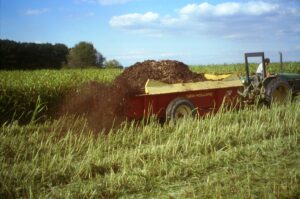
Truck spreading fertilizerMultiple Northeast SARE (Sustainable Agriculture Research and Education) grant recipient Tommye Lou Rafes, of T.L. Fruits and Vegetables in West Virginia, is sharing her experiences to help other farmers experiment with new ideas through the Farmer Grant program.

At noon on October 4th, 2022, Rafes will join Northeast SARE Grant Coordinator Candice Huber for an informational webinar to assist farmers interested in applying for up to $30,000 in funding for projects beginning in March 2023. Registration is required and participants are encouraged to submit questions ahead of the event. The Call for Farmer Grant Proposals is currently available and the online system for submitting applications is opening soon. Applications are due November 15, 2022.

Northeast SARE Farmer Grants are perfect for farmers looking to grow through new practices. Rafes first learned about SARE while attending a Good Agricultural Practices (GAP) training. One of the professors hosting the meeting was a SARE reviewer who invited the attendees to apply for a grant. Rafes knew sustainable practices like using renewable-powered high tunnels to extend growing seasons could be good for business as well as the planet. “Growing in the winter months is a completely different way than you do in the summer months,” she said. “I decided to test varieties that were successful during the winter months as well as growing conditions that could be improved so that people would be more successful.”

Grant Coordinator Candice Huber says Farmer Grants are an opportunity for farmers to try things that could improve their operations. SARE funds can cover the farmer’s time on the project, any farm workers time spent on the project, supplies that are not capital purchase, technical support, soil testing and other budgeted items. Farmer grant projects generally are for one year.

If you have an idea and you need resources to really explore it, a Farmer Grant can connect you with those resources. This webinar will be a good starting point and participants must pre-register. See below.

To sign up for the October 4th webinar at 12:00PM go to https://us02web.zoom.us/webinar/register/6516611235851/WN_RoG_IkMmSDGsduZwmFgKkA

For information about the application for SARE Farmer grants see https://www.sare.org/wp-content/uploads/Northeast-SARE-Farmer-Grant-Call-for-Proposals.pdf

For general information about Northeast SARE go to Northeast SARE Home Page – SARE Northeast

2023 Farmer Grant Proposals from Northeast Sustainable Agriculture Research and Education (SARE)

Do you hGrapevinesave an idea you would like to try on your farm that is related to sustainable agriculture? Stephen Komar, Rutgers SARE Coordinator and Sussex County Agricultural Agent, would like to announce that Northeast SARE will open the website for 2023 applications for Farmer Grants on October 1st. Approximately $750,000 has been allocated to fund projects for this grant cycle. Individual awards typically range from $5,000 to $30,000, depending upon a project’s complexity and duration. Projects must be related to sustainable agriculture and results are to be shared through a final report to SARE along with some type of outreach by the farmer as part of the project. 
The online system for submitting proposals will open on Oct 1, 2022. Proposals are due no later than 5:00 p.m. EST on November 15, 2022. Go to Northeast-SARE-Farmer-Grant-Call-for-Proposals.pdf for more information. 

Northeast SARE Farmer Grants provide the resources farmers need to explore new concepts in sustainable agriculture conducted through experiments, surveys, prototypes, on-farm demonstrations or other research and education techniques. Projects address issues that affect farming with long-term sustainability in mind. Northeast SARE funds projects in a wide variety of topics, including marketing and business, crop production, raising livestock, aquaculture, social sustainability, climate-smart agriculture practices, urban and indigenous agriculture and more.

The goals of SARE Farmer Grants are to help farmers try new things that could improve their operations and to share that information with others. There are also some other restrictions for budget items. Funds can be used to conduct the research project including paying farmers for their time, for project-related materials, for project costs like consulting fees or soil tests, and any communications or outreach expenses associated with telling others about project results. This grant program is not meant to help start or expand farm businesses. Farmer Grant funds cannot be used for capital costs associated with building a barn, greenhouse, or other major farm fixture, nor can funds be used to start a farm, purchase durable equipment like tractors or computers, or for any utility, telephone, or other costs that would be there in the absence of the project.

Farmer and employee wages can be included in a Farmer Grant budget for work done specifically on the grant project. Applicants should include a reasonable wage for their work on a grant project. In New Jersey, the current adverse wage rate used for the H2-A farm worker program is currently $15.54 per hour and could help gauge wages for employees time on the project. For farmer/project manager) wages, the rate to use would be higher and could be based on the complexity of the tasks on the project. 

In addition, each project must include a technical advisor to assist with the project. Technical advisors can be anyone who is an agricultural service provider, such as your local cooperative extension agricultural agent, USDA personnel, an agricultural consultant, etc. In New Jersey and other states, SARE Coordinators are not eligible to be technical coordinators due to a conflict of interest of leadership in the program. Therefore, Agricultural Agents, Stephen Komar (Rutgers SARE Coordinator) and Michelle Infante-Casella (Rutgers SARE Assistant Coordinator) are not able to be technical advisors to grants. However, if you have questions about the grant process, they both can help answer questions or point farmers in the right direction to identify technical advisors. 

A SARE Farmer Grant informational webinar featuring Tommye Lou Rafes, who has received multiple SARE Farmer Grants, will take place at 12:00 p.m. on October 4, 2022. This webinar information will help farmers thinking of applying for a SARE grant to learn about the process and types of projects that fit this program. To register for the webinar go to northeast.sare.org/farmergrantwebinar

The Northeast region includes Connecticut, Delaware, Maine, Massachusetts, Maryland, New Hampshire, New Jersey, New York, Pennsylvania, Rhode Island, West Virginia, Vermont, and Washington, D.C. Like other SARE Grants, Farmer Grants are competitive and will be judged against other applicants in the region.

To learn more about SARE project in New Jersey see New Jersey State Fact Sheet (sare.org) 

July Pest Scouting Nursery, Landscape, and Christmas Trees – Key borer and scale insect control timings

Pest Scouting – Please refer to these documents for a full listing of insects pests for your area corresponding to growing degree-days (GDDs). 

Quick look guides for July (Borers and Scales) and (All other) 

Contact if seeing insects at different times: twaller@njaes.rutgers.edu (or call the Cumberland County Extension Office – 856-451-2800)

The following key groups of pests will be active, vulnerable, or otherwise treatable during the next month throughout most of NJ. Here, scale insects and borers with key life stage events during the 1000-2500 GDD timeframe are discussed. Note there are many other insect pests present this time of year so please view the pest scouting guides above for your particular needs.

Projected GDD50 Accumulation as of July 13 2022 Note: Growing degree-day values utilize daily average air temperatures with a minimum temperature threshold (a.k.a. ‘base’) of 50F = GDD50 (max. temp. threshold set at 95F). These values are accumulated from a biofix date, such as January or March 1st in the NE USA. Provided GDD50 are scouting ranges and should be truthed.
Region Location Station 13-Jul 1-Aug 1-Sep
South Upper Deerfield NJ50 1598 2115 2905
Central Howell / Freehold NJ10 1383 1871 2594
North High Point NJ59 1132 1541 2138
Forecast: NOAA NCEP Coupled Forecast System model version 2 (CFSv2) forecast system (3.5 months) (USPEST.ORG)

Refer to this post “Obtaining your local growing degree-days” for additional information 

BORER Insect Activity for 1000-2500 GDD (~ July)
Crop type Common Name Scientific Name GDD Min (50F) GDD Max (95F) Reference Developmental / Target Stage
Many Roundheaded appletree borer Saperda candida 802 1129 RU Adults
Ash Emerald ash borer Agrilus planipennis 1000 1200 4 Peak adult activity
Many Roundheaded apple tree borer Saperda candida 1514 1798 5 Typical treatment window
Conifer Nantucket tip moth Rhyacionia frustrana 1514 1917 RU Adults 2nd generation
Maple Sugar maple borer Glycobius speciosus 2032 2375 5 Typical treatment window
Locust Locust borer Magacyllene robiniae 2271 2805 5 Typical treatment window
Poplar and Willow Poplar and willow borer Crytorhynchus lapathi 2271 2806 5 Typical treatment window

Click here – “Identifying Clearwing Moth Borers in Pheromone Traps” or “Differentiating the Common Wood Borers of Ash Trees”

SCALE Insect Activity for 1000 – 2500 GDD (~ July)
Crop type Common Name Scientific Name GDD Min (50F) GDD Max (95F) Reference Developmental / Target Stage
Conifer Cryptomeria scale Aspidiotus cryptomeriae 600 800 3 First crawler emergence
Many White prunicola scale Psedaulacaspis prunicola 707 1151 RU Crawlers (1st generation)
Conifer Juniper scale Carulaspis juniperi 707 1260 RU Crawlers (1st generation)
Many Calico scale Eulecanium cerasorum 714 6 Crawlers (1st generation)
Conifer Striped pine scale Toumeyella pini 750 800 4 Egg hatch
Oak, hickory, birch, many Oak leacanium scale Parthenolecanium quercifex 789 6 Crawlers (1st generation)
Acer Cottony maple leaf scale Pulvinaria acericola 802 1265 5 Crawlers (1st generation)
Many, shadetrees Cottony maple scale Pulvinaria innumerabilis 802 1265 RU Crawlers (1st generation) – control target
Oaks Golden oak scale Asterolecanium variolosum 802 1266 5 Egg hatch
Maples Japanese maple scale Lopholeucaspis japonica 829 6 Crawlers (1st generation)
Elm European elm scale Gossyparia spuria 831 1388 6,2 Crawlers (1st generation)
Shade trees European fruit lecanium scale Parthenolecanium corni 932 1645 6,RU Crawlers  – control target
Conifer Pine tortoise scale Toumeyella parvicornis 1000 1200 4 Egg hatch ends, last of crawlers
Yew, many conifers Fletcher Scale (Yew) Parthenolecanium fletcheri 1029 1388 RU Crawlers (1st generation) – control target
Many Indian wax scale Ceroplastes ceriferus 1145 6 Crawlers (1st generation)
Euonymus Euonymus Scale Unaspis euonymil 1150 1388 5 2nd generation targeted treatments
Shade trees European fruit lecanium scale Parthenolecanium corni 1266 1645 5 Crawlers
Conifer Pine Needle Scale Chionaspis pinifoliae 1290 1917 3 Crawlers emerge (2nd generation) – control target
Conifer Hemlock scale Abgrallaspis ithacae 1388 2154 5 Typical treatment window
Malus, Prunus, many Peachtree borer Synanthedon sp. 1500 1800 RU Larvae Treatment
Many White prunicola scale Pseudaulacaspis prunicola 1637 6 Egg hatch / crawler (2nd generation)
Euonymus Euonymus Scale Unaspis euonymil 1700 RU Continued 2nd generation treatments
Conifer Cryptomeria scale Aspidiotus cryptomeriae 1750 2130 RU, 4 Crawlers emerge (2nd generation)
Many Obscure scale Melanaspis obscura 1774 6 Egg hatch / crawler
Conifer Maskell scale lepidosaphes pallia 2035 6 Egg hatch / crawler (2nd generation)
Mainly Tulip Tulip tree scale Toumeyella liriodendri 2037 2629 RU Crawlers (1st generation)
Mainly Magnolia Magnolia scale Neolecanium cornuparvum 2155 2800 RU Crawlers (1st generation)
Maple Japanese maple scale Lopholeucaspis japonica 2508 6 Egg hatch / crawler (2nd generation)
Conifer Elongate hemlock scale Fiorinia externa 2515 2625 RU Typical treatment window – fall activity
Yew, many conifers Fletcher Scale (Yew) Parthenolecanium fletcheri 2515 2800 RU Fall control of overwintering stage

[Read more…]

Bagworm hatch & Boxwood Blight potential now through Friday

Boxwood Blight (BWB) Alert – Infection Potential (Now – FRIDAY) 

There is a potential for new boxwood blight infections throughout much of NJ. The end of week rains coupled with more mild temperatures, cloud cover, and prolonged periods of leaf wetness will contribute to the spread or worsening of boxwood blight infections.

Boxwood Blight Risk Assessment as of 5/24/2022
Region Location CODE 1-June 2-June 3-June 4-June 5-June 6-June
Southern Upper Deerfield NJ50 Very Low  Infection Risk Infection Risk Very Low Very Low  Very Low 
Central Howell / Freehold NJ10 Infection Risk Infection Risk Infection Risk Very Low  Very Low  Very Low 
Northern High Point NJ59 Infection Risk Infection Risk Infection Risk Very Low  Very Low  Very Low 
Check local boxwood blight risk here (CLICK HERE – input your area code – select closest weather station – check 7-14 prediction – click on graph / table)


ALSO: Volutella Blight is extremely common and readily mis-diagnosed as boxwood blight or vise-versa.

  • There is a free / open to the public seminar June 23, 2022 about this important disease. Boxwood International Seminar on Biology and Management of Boxwood Volutella Blight by Prof. Tom Hsiang, University of Guelph, Guelph, Ontario, Canada. Registration Link: Click here to register

Pest Scouting – Please refer to these documents for a full listing of insects pests for your area corresponding to growing degree-days (GDDs). 

Bagworm hatch is upon us in Southern NJ and will soon be /already the case throughout NJ. Please be ready to control these insects during the VERY SHORT treatment window.

Days old bagworm sizeBagworm female case with developing juveniles

BAGWORMS (600-900 GDD) (Bagworm hatch prediction as of 6/1/22)
Crop type Common Name Scientific Name GDD Min (50F) GDD Max (95F) Reference Developmental / Target Stage
Conifer mostly, many minor hosts Bagworm Thyridopteryx ephemeraeformis 600 900 RU Larvae (early instars) – ONLY CONTROL WINDOW
Region Location Station Date (600 GDD) Date (900 GDD) Treatment window  Bagworm Hatch – Predictions only, SCOUTING is critical! Treat as soon as larvae detected. 
South Upper Deerfield NJ50 30-May 12-Jun 13 days
Central Howell / Freehold NJ10 3-Jun 18-Jun 15 days
North High Point NJ59 14-Jun 30-Jun 16 days 


Nursery Pests Scouting June – Bagworms, Scales, Borers, RHFB, BWB


Red-headed flea beetle – Adult emergence beginning any day now

Please refer to this timeline of pest development compiled by Tim Waller in communication with Brain Kunkel (Unv. Del) and Danny Lauderdale (NC State)

  • Contains material selection and timing, along with regime information and considerations

Boxwood Blight Alert – Infection Potential (Saturday) 5/27

Boxwood Blight Risk Assessment as of 5/24/2022
Region Location CODE 24-May 25-May 26-May 27-May 28-May 29-May
Southern Upper Deerfield NJ50 Very Low  Very Low  Low  High Risk Very Low  Very Low 
Central Howell / Freehold NJ10 Very Low  Very Low  Low  Infection Risk Very Low  Very Low 
Northern High Point NJ59 Very Low  Very Low  Very Low  Infection Risk Very Low  Low 
Check local boxwood blight risk here (CLICK HERE – input your area code – select closest weather station – check 7-14 prediction – click on graph / table)


Refer to the most recent Alert for more information – CLICK HERE


Pest Scouting – Please refer to these documents for a full listing of insects pests for your area corresponding to growing degree-days (GDDs). 

Contact if seeing insects at different times: twaller@njaes.rutgers.edu (or call the Cumberland County Extension Office – 856-451-2800)

The following key groups of pests will be active, vulnerable, or otherwise treatable during the next month throughout most of NJ. Here, bagworms, scale insects and borers with key life stage events during the 350-1500 GDD timeframe are discussed. Note there are many other insect pests present this time of year so please view the pest scouting guides above for your particular needs.

Projected GDD50 accumulation as of 5/24/2022 (USPEST) Note: Growing degree-day values utilize daily average air temperatures with a minimum temperature threshold (a.k.a. ‘base’) of 50F = GDD50 (max. temp. threshold set at 95F). These values are accumulated from a biofix date, such as January or March 1st in the NE USA. Provided GDD50 are scouting ranges and should be truthed.
Region Location Station 24-May 1-Jun 1-Jul
South Upper Deerfield NJ50 488 638 1358
Central Howell / Freehold NJ10 426 551 1203
North High Point NJ59 288 387 909
Forecast: NOAA NCEP Coupled Forecast System model version 2 (CFSv2) forecast system (3.5 months) (USPEST.ORG)

Refer to this post “Obtaining your local growing degree-days” for additional information 

BAGWORMS (600-900 GDD) (Bagworm hatch prediction as of 5/24/22 – now until July 14 (Southern NJ (NJ50)))
Crop type Common Name Scientific Name GDD Min (50F) GDD Max (95F) Reference Developmental / Target Stage
Conifer mostly, many minor hosts Bagworm Thyridopteryx ephemeraeformis 600 900 RU Larvae (early instars) –

ONLY CONTROL WINDOW

Refer to this post for additional information on Bagworms

BORER Insect Activity for 350 – 1500 GDD (Now until ~July 1 in Southern NJ (NJ50))
Crop type Common Name Scientific Name GDD Min (50F) GDD Max (95F) Reference Developmental / Target Stage
Malus, Prunus, many Lesser peach tree borer Synanthedon pictipes 350 375 4 Adult flight, egg laying
Dogwood, apple, pecan, elm, hickory, willow Dogwood borer Synanthedon scitula 350 850 4 adults, eggs, caterpillars
Birch Bronze Birch Borer Agrilus anxius 440 880 RU Adults (egg laying)
Malus, Prunus, many Peach Tree Borer Synanthedon sp. 500 600 RU Adults – emerge (1st treatment both types)
Rhododendron Rhododendron borer Synanthedon rhododendri 509 696 RU Adults emerge
Malus, Prunus, many Greater peach tree borer Synanthedon exitiosa 575 710 4 Adult emergence
Many Roundheaded appletree borer Saperda candida 802 1129 RU Adults
Ash Emerald ash borer Agrilus planipennis 1000 1200 4 Peak adult activity
Malus, Prunus, many Peachtree borer Synanthedon sp. 1500 1800 RU Larvae Treatment
Many Roundheaded apple tree borer Saperda candida 1514 1798 5 Typical treatment window
Conifer Nantucket tip moth Rhyacionia frustrana 1514 1917 RU Adults 2nd generation

Click here – “Identifying Clearwing Moth Borers in Pheromone Traps” or “Differentiating the Common Wood Borers of Ash Trees”

[Read more…]