Fruit Crops Edition

Seasonal updates on diseases, insects, weeds impacting tree fruit and small fruit (blueberry, cranberry, and wine grape). Fruit Pest Alerts are also available via this category feed.
 
Subscriptions are available via EMAIL and RSS.

Fruit IPM Report: Week Ending 8/31/13

Fruit IPM Report 8-31-13 – Click to View | Download | Print

In this report:

  • Peach
  • Apple
  • Pear
  • Grape
  • Scouting Calendar
  • Blueberry
  • Trap Counts

Grape Injury
from Captan Mixed with Oil-containing Products

Fig 1 Captan induced Leaf Necrosis in Grape

Fig 1 Captan mixed with oil-containing product
induced leaf necrosis in grape

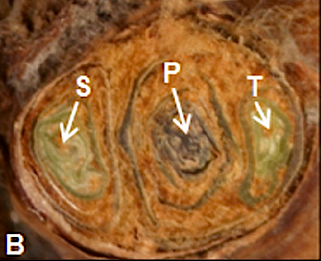
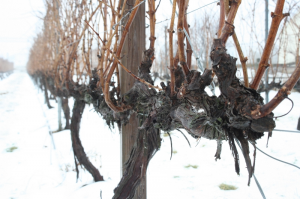
When used properly Captan is a safe and effective fungicide that plays an important role in grape disease control and fungicide resistance management, but it is crucially important to never apply Captan mixed with oil or close in time to the application of any oils. The active ingredient in Captan cannot easily penetrate into the plant, but when it does it can be very toxic, especially to grapes. Injury from this type of spray combination has been reported in blueberries and there are many anecdotal reports of less severe phytotoxicity in other fruit crops. By comparison, the damage to grapes can be very severe and the symptoms include leaf necrosis, longitudinal stem splitting and vine death (Fig. 1, 2, 3). Sadly, experience has shown that under the appropriate conditions a single spray of Captan with an emulsifiable concentrate insecticide can kill an entire vineyard. [Read more…]

Fruit IPM Report: Week Ending 8/24/13

Fruit IPM Report 8-24-13 – Click to View | Download | Print

In this report:

  • BMSB
  • Peach
  • Apple
  • Grape
  • Scouting Calendar
  • Blueberry
  • Trap Counts

Blueberry Pest in Detail: Putnam Scale – 2nd Generation

Crawler counts have increased again since last week. Growers who had infested berries during the first generation should treat this generation as soon as possible. Esteem and Diazinon are the suggested products.

Life History

Scales feed on plant sap, decreasing plant vigor and fruit yield. Adult scales are protected from insecticide sprays by a waxy covering. These insects are common in older canes when not removed, and located mostly under loose bark. In New Jersey, the Putnam scale has two generations a year. It overwinters as second-instar nymphs under loose bark. Spring activity begins in early February. Eggs from the first generation are laid in late April, and immature “crawlers” begin to appear in mid-May. Peak crawler emergences occur in late May and early June. Peak crawler emergences for the second generation occur in early to mid-August (this time of the year).

Monitoring and Management

Growers that have a scale problem need to treat post harvest for the 2nd generation of crawlers (use Diazinon or Esteem). Crawlers can be monitored by wrapping black electricians’ tape covered by double-sided sticky tape around canes. Use a hand lens to see crawlers on the sticky tape. Sprays should coincide with crawler emergence.

Fruit IPM Report: Week Ending 8/17/13

Fruit IPM Report 8-17-13 – Click to View | Download | Print

In this report:

Scorpion- Pome and Stone Fruits

Section 18 Emergency Exemption
for use and distribution only within the state of New Jersey
for control of BMSB in pome and stone fruit
CLICK TO VIEW LABEL

  • BMSB
  • Peach
  • Apple
  • Grape
  • Scouting Calendar
  • Blueberry
  • Trap Counts

Fruit IPM Report: Week Ending 8/3/13

Fruit IPM Report 8-3-13 – Click to View | Download | Print

In this report:

  • Brown Marmorated Stink Bug
  • Peach
  • Apple
  • Grape
  • Scouting Calendar
  • Blueberry
  • Trap Counts