Looking back on last fall’s planting conditions and comparing to current conditions is a useful tool in evaluating how weather patterns influenced the 2021 winter small grain quality and yields.
Statewide: Last fall was a wet September with 4.41 inches of rain on average statewide according to the monthly total precipitation charts compiled by http://climate.rutgers.edu/stateclim_v1/nclimdiv/. At the beginning of September, 93,000 acres of soybean ground was already harvested and ready for a winter cover crop planting but only 25,000 acres went into wheat production (September 2021 Grain Crop Report). This is partly due to the above average (30 year normal) precipitation that continued into the October (5.02 inches) and November (4.09 inches) planting window for winter cover crops. Fields were wet when harvested, wet when fitted, wet when planted, and hardly had time to dry out in January before an excessive amount of rainfall fell in February (4.81 inches). Fall applied fertilizer measures were likely depleted by this pattern.
Then what happened? Temperatures below and above 41 degrees Fahrenheit (F) inducing and breaking dormancy in winter wheat did not occur until the end of December (arrested growth) and beginning of March (active growth) but was sufficient (>45 days) to allow for good tillering and to vernalize crops to flower. The below average precipitation in March (3.84 inches) most likely had little impact on wheat as soil moisture capacity was adequate, but April’s (2.35 inches) dry spell coincided with first applications of winter-spring annual weed control and nitrogen applications. If moisture is not present, herbicide uptake is limited and nitrogen applications can volitilize.
May (3.84 inches) precipitation was on par with the 30-year normal but dipped into a pattern of significant drought stress in several areas of the state through June (3.37 inches). June was also the ninth warmest on record (85.8 max). Temperature stretches above 82 degrees F are not conducive to increasing wheat yields and the average temperature in July was 85.6 F with a high of 90 and a low of 80. However, grain fill recovers quickly after short durations of high heat and drought stress. The critical factor is stage of kernel development. November planted wheat most likely saw more yield loss in the milk stage at this time than September planted which was well into dough stage.
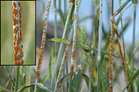
The cumulative effect of the drought and high heat in April and June-July may have produced white blanched seed heads. On the flip side, the weather conditions from flag leaf to grain fill limited significant problems with foliar and head diseases. In fields where problems were noted, be mindful residues of the prior crop contribute to the buildup of sporulating pathogens that are rain and wind splattered onto actively growing leaves during spring green-up.
Yield fertility check: Producers were able to take advantage of a break in August to harvest wheat at 15.5% moisture and bin dry which reduced any further yield loss.
How did local weather conditions and progression of your wheat crop compare to the state average of 67 bu/acre? Were your local conditions more in line with Delaware (70 bu/acre), Pennsylvania (77 bu/acre), or Maryland (79 bu/acre). Did soil PH, potassium, copper, manganese, and zinc levels change? The excessive rainfall pattern of the 2020 crop season may have leached away the calcium, magnesium, potassium, and sodium that influences soil acidity and essential micronutrients necessary for reproductive fitness in small grains. Migratory bird grazing denuded many fields in February and March and yield differences between over grazed and un-grazed areas should be recorded and factored into how varieties performed. Particularly take note of the stage of wheat development when bird damage occurred.
The 2021 fall planting season (6.20 inches September) has started out in a similar pattern as the 2020 cover crop planting start and continues this week with a late October Nor’easter. A 1987 publication ‘The effects of of grazing by Canada geese on winter wheat yield’ gives some insight into how snow geese grazing may or may not decrease yield and could actually increase yield. When they return, a simple and cost-effective way to evaluate the impact of snow geese on small grain yields is to install several meter square exclusion cages prior to their arrival that exclude beaks, remove them after they leave, mark the area with painted stones and a boom flexible taller than the wheat flag and collect yield data ahead of the combine.