Commercial Ag Updates + Farm Food Safety

Rutgers Cooperative Extension Ag Agents provide updates on what they see in the field, upcoming events, and other important news that affects your operation, such as developments in on-farm Food Safety. Subscribe if you wish to be notified about workshops, meetings, and upcoming commercial ag events.
 
Subscriptions are available via EMAIL and RSS.

Quick Tips to Beat the Heat

Daily high temperatures over the next 10 days will soar above 90 degrees each day, with the real feel exceeding 100 degrees at times. It’s important to take precautions to keep you and your workers safe from heat stress and other heat-related illnesses. Check out these 5 quick tips you can implement today to safeguard everyone on your farm during this extreme heat.
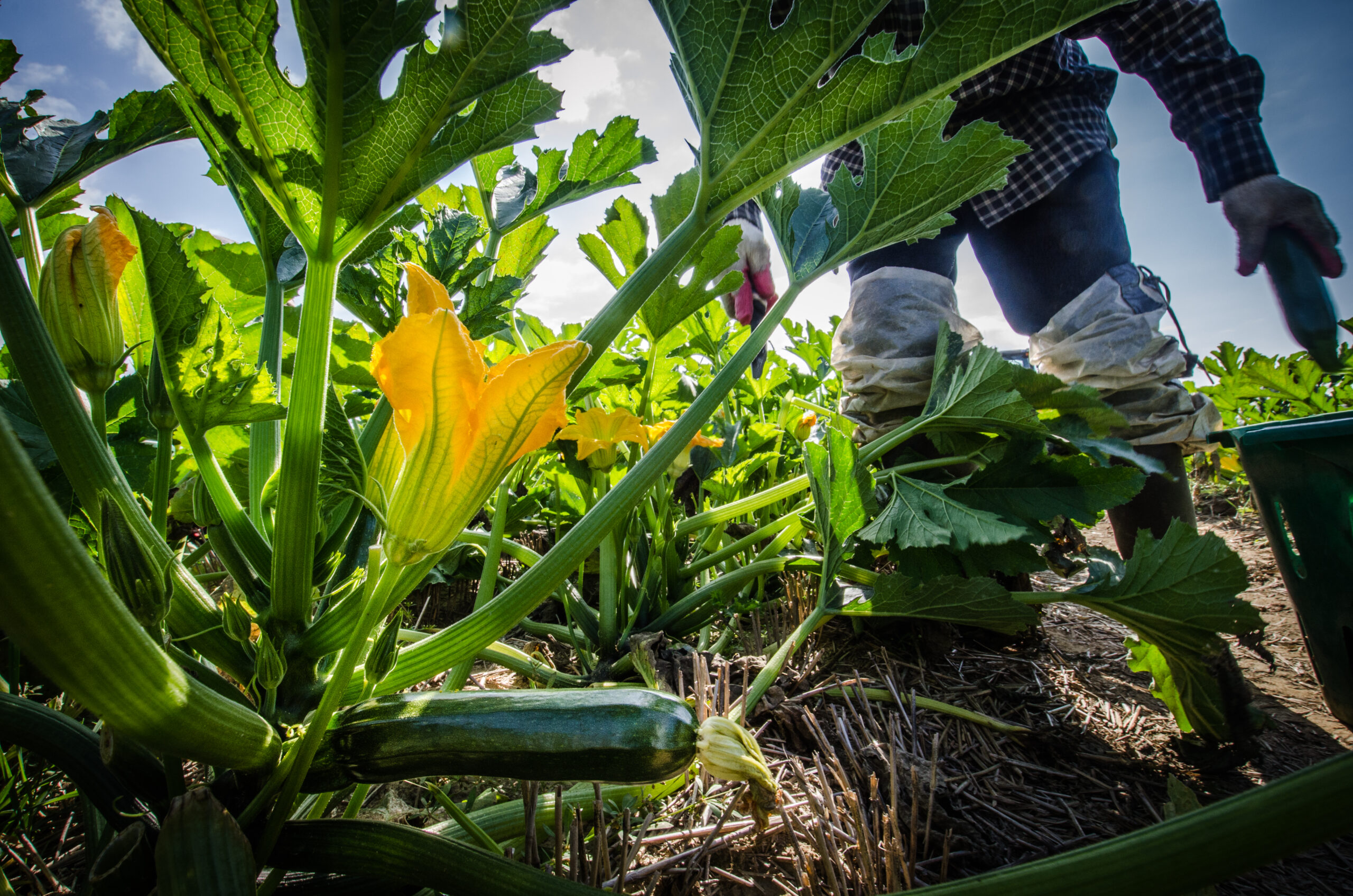
worker harvesting zucchini

USDA photo by Lance Cheung.

  1. Stay hydrated. The CDC recommends drinking at least 1 cup of water every 15-20 minutes during moderate activity. For more on hydration, see this factsheet from NIOSH.
  2. Dress appropriately. Choose light-colored, loose-fitting clothing made of cotton or linen. Protect yourself from the sun with a wide-brimmed hat and sunglasses.
  3. Acclimatize employees to working in the heat. Gradual exposure to work in a hot environment is critical for both new and experienced employees. To learn more about acclimatization, check out this factsheet from NIOSH.
  4. Adjust workload. Plan strenuous tasks for cooler parts of the day, increase the number of workers per task to lighten workload, and shorten work periods to allow for breaks in the shade (at least) hourly. NIOSH offers recommendations for work/rest schedules to decrease risk of heat illness in this factsheet.
  5. Train employees to recognize signs of heat stress. Heat-related illnesses can range from heat rash to heat stroke. Review this NIOSH web page on heat-related illnesses to inform employees about symptoms and first aid response to each illness.

FDA Proposes Compliance Date Extension for Pre-Harvest Agricultural Water Requirements

On July 18, 2022 the U.S. Food and Drug Administration (FDA) issued a supplemental notice of proposed rulemaking to extend the compliance dates for the pre-harvest agricultural water provisions as outlined in the recent 2021 agricultural water proposed rule.

The 2021 agricultural water proposed rule, if finalized, will require farms to conduct annual systems-based agricultural water assessments to determine and guide appropriate measures to minimize potential risks associated with pre-harvest agricultural water. The FDA is now proposing extended compliance dates for those proposed pre-harvest requirements and is also providing clarifying information about the enforcement discretion policy for the harvest and post-harvest agricultural water requirements.

The supplemental rulemaking proposes to establish the following compliance dates for the pre-harvest agricultural water requirements for covered produce other than sprouts:

  • 2 years and 9 months after the effective date of a final rule for very small businesses;
  • 1 year and 9 months after the effective date of a final rule for small businesses; and
  • 9 months after the effective date of a final rule for all other businesses.

Note:  These compliance dates only go into effect when the rule is finalized which we have no information when that will occur!

Compliance Dates for Harvest and Post-Harvest Agricultural Water Requirements

The 2021 pre-harvest agricultural water proposed rule did not propose substantive changes to the harvest and post-harvest agricultural water requirements in the Produce Safety Rule; however, the FDA recognizes that prior to the proposal, stakeholders did not have clarity on whether FDA might propose to change the harvest and post-harvest agricultural water requirements. In addition, the FDA recognizes that adequate training and technical assistance are needed to fully recognize the benefits of the harvest and post-harvest requirements. Therefore, we intend to continue enforcement discretion for the harvest and post-harvest agricultural water requirements of the Produce Safety regulation until the following dates:

  • January 26, 2025, for very small businesses;
  • January 26, 2024, for small businesses; and
  • January 26, 2023, for all other businesses.

We are reopening the comment period only with respect to the proposed compliance dates for the pre-harvest agricultural water provisions until September 19, 2022. Comments should be submitted to docket FDA-2021-N-0471 on Regulations.gov.

As has been done with other FSMA rules, the FDA plans to take an “educate before and while we regulate” posture as we begin implementing the harvest and post-harvest requirements. For the first year of compliance, the FDA intends to work closely with state, other regulatory, and industry partners to advance training, technical assistance, educational visits and on-farm readiness reviews to prepare both growers and state regulators for implementing these provisions prior to initiating routine inspections verifying compliance. The FDA will provide further communications as additional resources become available.

Additional Information


Herbicide Plant-Back Restrictions Explained: Purpose and Application

Are you crystal clear on the purpose of plant-back restrictions and on the length of time required between a herbicide application and the planting of your next crop or cover crop? If not, the guidance below should help. It was developed based on a poster presentation made during the 2022 annual meeting of the Weed Science Society of America (WSSA). For further information regarding the plant-back restrictions for vegetable crops, please refer to Pest Management section (p. 110-118) of the 2022/2023 Commercial Vegetable Production Recommendations.

  • What is a plant-back interval?
    A plant-back interval is the minimum period of time between a pesticide treatment and the planting of your next crop. The EPA establishes plant-back intervals as label requirements for herbicides, insecticides, fungicides, plant growth regulators and other types of pesticides.
  • What’s the purpose of a plant-back interval?
    EPA’s primary focus in setting plant-back intervals is to protect human health by preventing over exposure to pesticide residues in crops – including fruits and vegetables. Regulatory experts include all residue sources when assessing human dietary exposure.
  • Do plant-back intervals also address crop phytotoxicity concerns?
    While pesticide registrants may choose to add label instructions to address potential crop injury or phytotoxicity concerns, these instructions are independent of EPA-mandated plant-back restrictions that focus on limiting human exposure to pesticide residues. If your crop is intended to be harvested for human or animal consumption, you must still comply with the minimum residue-based plant-back intervals, regardless of whether phytotoxicity guidance is given.
  • How are plant-back intervals established?
    EPA requires that pesticide registrants submit residue studies to document pesticide levels and related metabolites. Study data is then used to develop appropriate plant-back interval guidance based on allowed tolerance levels in the plant-back crop. All residue sources from pesticides applied within the current and previous growing seasons are included when assessing human dietary exposure. It is important to note that the plant-back intervals specified by EPA are crop specific. The interval specified for tomato, for example, might vary from that established for cole crops.
  • What should I do if I’m planting a crop that isn’t specified on the label?
    Crops that are not specifically addressed on the label fall into the “other crops” category and require the maximum plant-back interval indicated on the label.
  • Do plant-back intervals apply to both my rotational crop and my cover crop?
    If the crop is harvested for human consumption or is grazed by or fed to livestock that will be consumed by humans, the crop is considered a “rotational crop” and requires an appropriate plant-back interval to protect human health.
    Seasonal plantings that will not be consumed directly by humans or by livestock that will then be consumed by humans are considered “cover crops.” Cover crops such as ryegrass or hairy vetch are grown to improve soil quality, reduce erosion or manage weeds. Since there is no risk of dietary exposure, plant-back restrictions do not apply when planting cover crops.
  • How do I calculate the plant-back interval?
    To comply with the mandated plant-back interval, use the date of the last pesticide application as a starting point. If, for example, the crop selected has a 365-day plant-back interval, the 365-day window begins on the day after the last pesticide application to the previous crop. You can plant that next crop 365 days later.

REMINDER: In-Person CORE Meetings in Burlington County

The second ‘CORE Extravaganza’ meeting hosted by Rutgers Cooperative Extension of Burlington County will be held Thursday, July 14, 2022. This is an in-person opportunity for licensed pesticide applicators to earn CORE  and recertification credits. The July meeting also offers one (1) category credit for 1A, 10, and PP2. See details below. [Read more…]

USDA Announces Assistance for On-Farm Food Safety Expenses for Specialty Crop Growers

Program Details

The Food Safety Certification for Specialty Crops Program (FSCSC) will assist specialty crop operations that incurred eligible on-farm food safety certification and related expenses related to obtaining or renewing a food safety certification in calendar years 2022 and 2023. For each year, FSCSC covers a percentage of the specialty crop operation’s cost of obtaining or renewing their certification, as well as a portion of their related expenses.

To be eligible for FSCSC, the applicant must be a specialty crop operation; meet the definition of a small business or very small business; and have paid eligible expenses related to the 2022 (issued on or after June 21, 2022) or 2023 certification.

Specialty crop operations may receive assistance for the following costs:

  • Developing a food safety plan for first-time food safety certification.
  • Maintaining or updating an existing food safety plan.
  • Food safety certification.
  • Certification upload fees.
  • Microbiological testing for products, soil amendments and water.
  • Training

FSCSC payments are calculated separately for each category of eligible costs. A higher payment rate has been set for socially disadvantaged, limited resource, beginning and veteran farmers and ranchers. Details about the payment rates and limitations can be found at farmers.gov/food-safety.

Very small ($250,000) and small farms (less than 500,000) average monetary value of specialty crops sold during the 3-year period preceding the program are eligible.

Payment Amount of Eligible Costs
Category of Eligible Expenses Historically Underserved Farmer or Rancher All Other Applicants
Development of a food safety plan for first-time certification 75 percent (no maximum)


50 percent (no maximum)


Maintaining or updating a food safety plan


75 percent, up to a maximum of $375


50 percent, up to a maximum of $250


Food safety certification


75 percent, up to a maximum of $2,000


50 percent, up to a maximum of $2,000


Certification upload fees


75 percent, up to a maximum of $375


50 percent, up to a maximum of $250


Microbiological testing – products


75 percent, up to 5 tests


50 percent, up to 5 tests


Microbiological testing – soil amendments


75 percent, up to 5 tests


50 percent, up to 5 tests


Microbiological testing – water


75 percent, up to 5 tests


50 percent, up to 5 tests


Training


100 percent, up to a maximum of $300


100 percent, up to a maximum of $200


Applying for Assistance

The FSCSC application period for 2022 is June 27, 2022, through January 31, 2023, and the application period for 2023 will be announced at a later date. FSA will issue payments at the time of application approval for 2022 and after the application period ends for 2023. If calculated payments exceed the amount of available funding, payments will be prorated.

Interested specialty crop producers can apply by completing the FSA-888, Food Safety Certification for Specialty Crops Program (FSCSC) application. The application, along with other required documents, can be submitted to the FSA office at any USDA Service Center nationwide by mail, fax, hand delivery or via electronic means. Producers can visit farmers.gov/service-locator to find their local FSA office. Specialty crop producers can also call 877-508-8364 to speak directly with a USDA employee ready to assist.

Producers can visit farmers.gov/food-safety for additional program details, eligibility information and forms needed to apply.

Sign Up By June 30 to Receive the 2022 Census of Agriculture

Sign up to be counted, agcensus counts

Agricultural producers who did not receive the 2017 Census of Agriculture and do not receive other USDA surveys or censuses have until June 30 to sign up to receive the 2022 Census of Agriculture. USDA’s National Agricultural Statistics Service (NASS) will mail ag census survey codes for responding securely online to every known U.S. producer this November. Hard copy questionnaires will follow in December.

The ag census, conducted for over 180 years, remains the only source of comprehensive and impartial agricultural data for every state and county in the nation. It includes every operation – large or small, urban or rural – from which $1,000 or more of agricultural products are produced and sold, or would normally be produced and sold, in the ag census year.

“The Census of Agriculture is a complete count of U.S. farms and ranches and the people who operate them,” said Bruce Eklund, state statistician of the USDA’s National Agricultural Statistics Service (NASS), New Jersey Field Office. “Every response is important. The Census of Agriculture is only taken once every five years and documents the value of America’s rural and urban farmers and ranchers. When it comes to Agriculture, people seek information about the local level. Help us document the importance of agriculture in your area.”

On the NASS webpage, producers can also access frequently asked questions, explore past and current ag census data, access tools to help spread the word about the upcoming ag census, learn about ag census special studies, and more.

NASS builds its distribution list for every Census of Agriculture between and during ag census through the official sign-up webpage and multiple National Agricultural Classification Surveys. To learn more about the 2022 Census of Agriculture, visit their website or call the NASS New Jersey Field Office at 503-308-0404.

###

NASS is the federal statistical agency responsible for producing official data about U.S. agriculture and is committed to providing timely, accurate and useful statistics in service to U.S. agriculture. USDA is an equal opportunity provider, employer and lender.
