Commercial Ag Updates + Farm Food Safety

Rutgers Cooperative Extension Ag Agents provide updates on what they see in the field, upcoming events, and other important news that affects your operation, such as developments in on-farm Food Safety. Subscribe if you wish to be notified about workshops, meetings, and upcoming commercial ag events.
 
Subscriptions are available via EMAIL and RSS.

Are Your Produce Buyers Talking about Third-Party Audits?

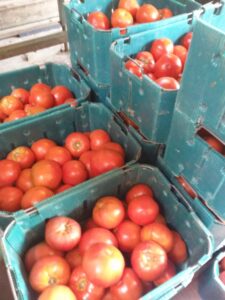
An increasing number of farms are being asked by their wholesale produce customers to comply with a third-party audit.  What do you need to know if a buyer asks you to have a third-Baskets of tomatoesparty audit?

Who would ask for a third-party audit? Current buyers of your product may notify you that you need a third-party audit in order for them to continue to purchase your product. Or a prospective buyer may tell you that in order to start purchasing your product you will need to pass a third-party audit.

What is a third-party audit? A third-party audit is an assessment of your production practices in compliance with a set of produce safety standards.  Requirements include educational training in produce safety, a written food safety plan (including written policies, standard operating procedures, documentation of activities, and records) specific to your operation that meet the standards of the audit your buyer requires. A third-party audit is conducted by an audit firm or outside agency.  The audit can take from several hours to several days based on your operation. The farm pays the audit fees and receives a certificate of compliance, the audit is required annually. Farms may have multiple buyers who require different audits, resulting in multiple audits annually.

Who conducts third-party audits? Auditing firms that buyers may rely on: USDA GAP, USDA Harmonized, Primus, Global GAP, BRC, SQF, etc. In New Jersey USDA audits are conducted by the New Jersey Department of Agriculture Division of Marketing and Development.

What questions should you ask of the buyer?
– What audit firm are they requiring you to use?
– What commodities do they require the audit to cover?
– When do they require you to have the audit completed?
– What type of training is required of the farm and how often is required?

Third-party audits should not be confused with the Food Safety Modernization Act Produce Safety Rule, a federal regulation that most growers of produce that is typically consumed raw must comply with.


Permitting Procedure for Importation of Poultry, Hatching Eggs, or Poultry Waste from Highly Pathogenic Avian Influenza (HPAI) States

Producers, please be aware of the following permit requirements. The updated list of states with detections can be accessed at

https://www.aphis.usda.gov/aphis/ourfocus/animalhealth/animal-disease-information/avian/avian-influenza/2022-hpai

The following information is from the NJ Dept. of Agriculture

https://www.nj.gov/agriculture/divisions/ah/diseases/avian_influenza.html

  • Only poultry or hatching eggs moving into New Jersey live bird markets, from HPAI states, require a permit and 72 hour test.
  • The collection date, collection time, laboratory result, laboratory accession number and laboratory name must be recorded on the CVI
    accompanying the shipment.
  • A copy of the laboratory report must also accompany the shipment.
  • No poultry waste shall be imported from HPAI states, without prior approval and permit issued by the State Veterinarian.
  • For information about testing please refer to the N.J.A.C. 2:3-7.4 (b) at the link below:
    http://www.nj.gov/agriculture/divisions/ah/pdf/NJACChapter3.pdf

STEP ONE:

  • Print and complete the form below and send to the Division of Animal Health by email or fax.
    Email –state.veterinarian@ag.nj.gov
    Fax – 609-671-6413
  • This form is to be used to facilitate the receipt of information. Submission of this form is not a permit for movement.

STEP TWO:

  • Call the Division of Animal Health at 609-671-6400, Monday through Friday, with the exception of holidays, from 8:45 AM to 4:45
    PM (EST), to confirm the Division’s receipt of the information.

STEP THREE:

  • If the application is complete, a permit number will be issued and a copy of the completed form with permit number will be
    emailed or faxed back to the requester.

“Folks who plan to import poultry product into NJ are recommended to call the Division of Animal Health (609-671-6400) to inquire if their intended purchase requires a permit. If yes, we can walk them through the process. The need for a permit might depend on the product, the location of the origin site, testing, etc…” – NJ Animal Health communication

Grower Alert: Don’t Let Spotted Lanternfly Impact Spring Shipping

The following is an alert and reminder from NJDA and NJNLA

The spring shipping season is upon us, and Spotted Lanternfly (SLF) should be one of your top concerns. You are probably well aware of the shipping disruptions that could occur if any life stage of Spotted Lanternfly is found on outbound deliveries from NJ growers.

No doubt many of you heeded the NJ Dept. of Agriculture’s recommendations last fall and implemented control measures to prevent the spread of neighboring infestations into your nursery or greenhouse facility. To the extent that those efforts might have come up short, you would be well advised to begin scouting and removing any egg masses (and adult carcasses) from your crops – especially as items are being loaded for shipment. Otherwise, you run the risk of contaminated shipments being fully rejected by the vigorous inspections that are planned at out-of-state retail and landscape destinations this season.

Even though you may disagree with these measures, be advised that it remains within the discretion of any state to impose crippling load-by-load phytosanitary requirements on future deliveries.

Load-rejections that occurred last fall underscore the seriousness of the Spotted Lanternfly situation and the far-reaching impact it might have on your business and the NJ industry at large.

Additionally, Spotted Lanternfly training permits are required for each company driver who delivers your plants out-of-state. This training is relatively simple and available online by clicking HERE.

Should you have any questions, please feel free to reach out to NJNLA (609-291-7070) or the NJ Department of Agriculture Plant Diagnostic Lab (609-406-6939).

Joseph Zoltowski, NJDA; Ed Overdevest and Lori Jenssen, NJNLA

RCE Seeks Input Regarding COVID-19 Resources For 2022 Season

Rutgers Cooperative Extension’s EXCITE team is requesting NJ farmers input via a short five-minute survey about COVID-19-related resources for the upcoming growing season.  

Please click here to go to the survey: https:/go.rutgers.edu/mcgr9pzt 

This survey is totally anonymous, you do not have to answer any questions you do not want to, and you can stop at any time.  

After taking the survey, please take a minute to forward this post to other NJ farmers who may not see this message. You can copy the link or just forward this message.  

Thank you. 

SARE Partnership Grant Applications Announced

The Northeast Sustainable Agriculture Research and Education Program (SARE) has released its 2022 call for Partnership Grant program proposals.
Applicants are invited to request up to $30,000 in funding to address a topic related to sustainable agriculture. Proposed projects should seek innovative solutions to challenges or explore new opportunities that affect agricultural production, marketing and/or household and community well-being in Northeast farming and food systems. They must be conducted in one of the New England states, Delaware, Maryland, New Jersey, New York, Pennsylvania, Washington, D.C. or West Virginia and strengthen working partnerships with farmers to advance sustainable agriculture.
Proposals are due online by 5 p.m. ET on April 12
for more information, please visit

New USDA Grant Opportunity Value Added Producer Grants

The Value Added Producer Grant is administered by USDA, questions regarding the grant should be directed toward USDA State Director Ms. Jane Asselta, 521 Fellowship Road, Suite 130 Mt. Laurel, NJ 08054, Voice: (856) 787-7700 Fax: (855) 305-7343.

What does this program do?
The Value-Added Producer Grant (VAPG) program helps agricultural producers enter into value-added activities related to the processing and marketing of new products. The goals of this program are to generate new products, create and expand marketing opportunities and increase producer income.

You may receive priority if you are a beginning farmer or rancher, a socially-disadvantaged farmer or rancher, a small or medium-sized farm or ranch structured as a family farm, a farmer or rancher cooperative or are proposing a mid-tier value chain.
Grants are awarded through a national competition. Each fiscal year, applications are requested through a notice published in the Federal Register and through an announcement posted on Grants.gov.

Program Funding: $19.75 million in total available funding. Of this amount, the COVID–19 relief funds constitute $2.75 million rolled over from the FY 2021 appropriations and the other $17 million comes from the FY 2022 appropriations.
Maximum Grant Amount: Planning Grants $75,000; Working Capital Grants: $250,000.

Matching Funds Requirements: The $2.75 million in COVID–19 relief funds may include a reduced cost share match requirement of 10 percent of the grant amount. The other available funds have a statutory cost share match requirement of 100 percent of the grant amount.
Who may apply for this program?

Independent producers, agricultural producer groups, farmer- or rancher-cooperatives, and majority-controlled producer-based business ventures, as defined in the program regulation, are eligible to apply for this program.

How may funds be used?
Grant and matching funds can be used for planning activities or for working capital expenses related to producing and marketing a value-added agricultural product. Examples of planning activities include conducting feasibility studies and developing business plans for processing and marketing the proposed value-added product. Examples of working capital expenses include:
• Processing costs.
• Marketing and advertising expenses.
• Some inventory and salary expenses.

How do I get started?

    Before you apply:

• Register your organization with the System for Award Management (SAM) if you aren’t already registered. The registration is free, but you need to complete several steps. It’s a good idea to start the registration process at least a month before any application deadline. Before you start the registration process, we suggest reading through the HELP materials available on the SAM website. Then, you will need to create an account. After you create your account by setting up a user ID and password, you can register your organization. Please make a note of your CAGE (Commercial and Government Entity) code and expiration date as well as your Unique Entity Identifier (UEI) number because you will need those for your application.

    Additional requirements:

Please read the Federal Register notice for the details on how to apply. Applicants should put together the required information at least a month before the application deadline. The extra time allows collection of other required materials such letters of commitment or support from other organizations, a work plan and budget, and other information. Copies of required forms are available from your nearest Rural Development Office. See the Forms & Resources tab for optional forms that may assist you in developing your application.

Will I need to send any reports if I receive a grant?
Yes, if you receive a grant, you will need to send regular financial and performance reports. Your grant agreement will tell you how often you need to send the reports, what forms you need to use and what information you need to put in the reports.
Where can I get more information?