- With the on and off again rains we have been getting, along with warmer weather comng in later this week, all growers should consider applying at-transplanting fungicides for root rot control. Please click here to see this article.
- Transplant producers need to remember to regularly vent their structures to reduce relative humidity buildup going into the evenings to help reduce leaf wetness during the overnight and to manage their watering schedules.
- For the updated list of fungicides for use in the control of important diseases in the greenhouse please click here.
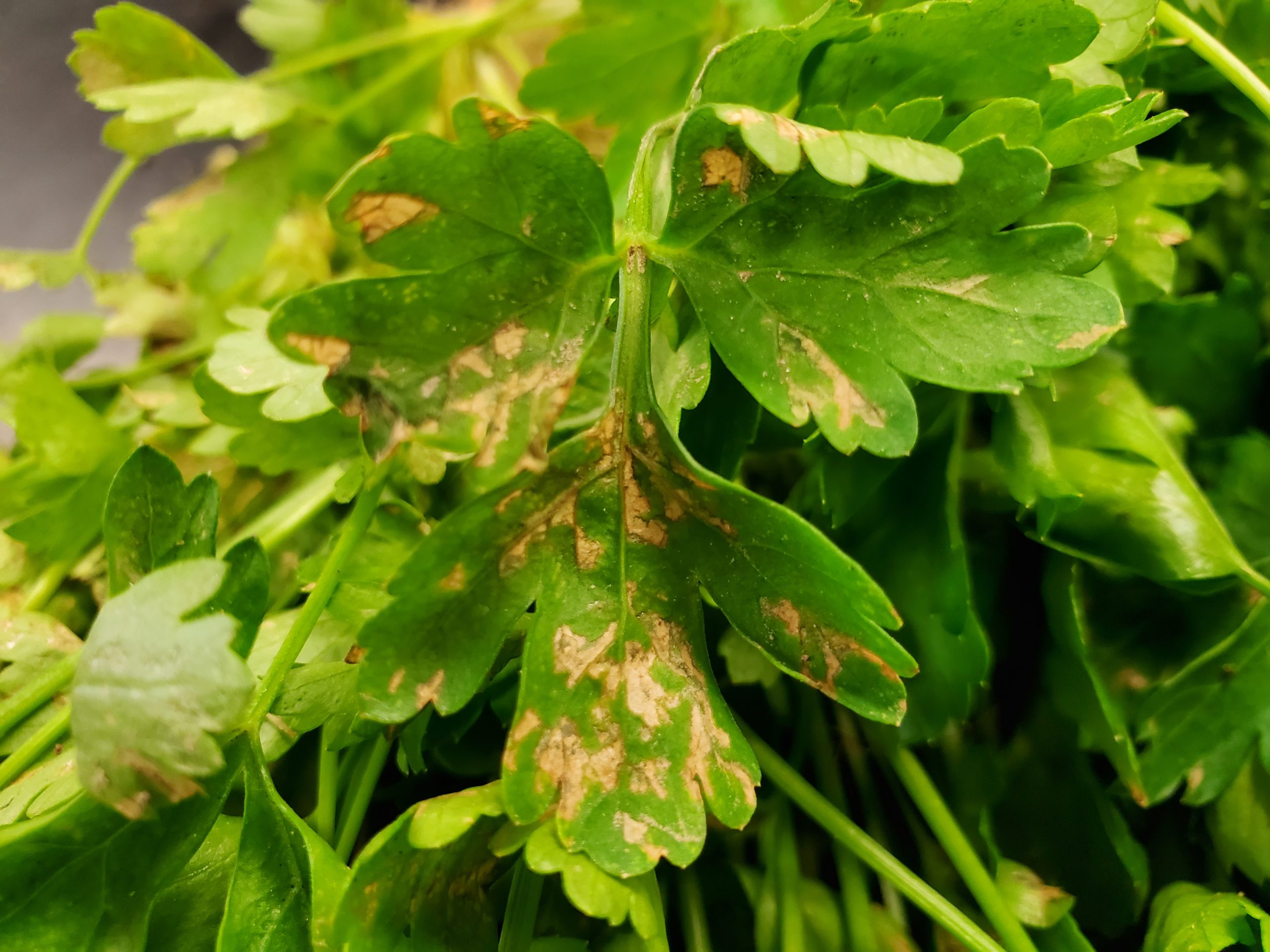
- Scouting and controlling Septoria leaf spot in parsley.
- Bacterial leaf blight in Cilantro was reported in southern New Jersey.
- Cold weather injury has been reported in numerous vegetable crops throughout the state.
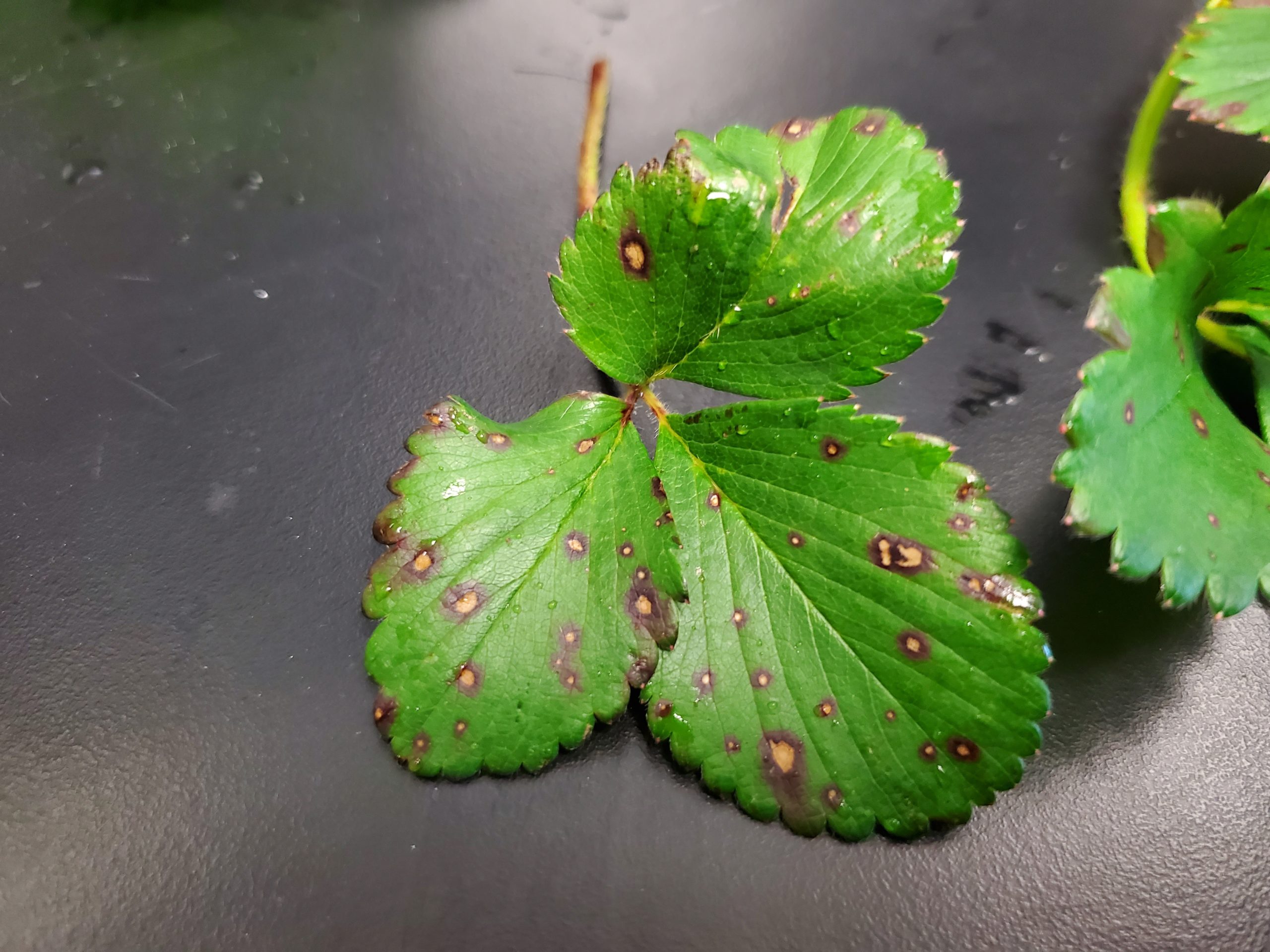
- Common leaf spot was reported in strawberry. For more information click here. Weather conditions have also been ideal for fruit rot infections. For more information on controlling fruit rots in strawberry please click here.
- The 2020/2021 Commercial Vegetable Production Recommendations Guide is available for free online! With many county offices running reduced hours or being closed this is the easiest way to obtain the newest recommendations.
- For a quick review on managing fungicide resistance development using tank mixes and fungicide rotations, and information on FRAC group 4, FRAC group 7, and FRAC group 3 and FRAC group 11 fungicides please click on hyperlinks.
May 12, 2020 Andy Wyenandt
Vegetable Disease Update – 5/12/20
May 6, 2020 Andy Wyenandt
Manage your transplant watering schedule
The weather this spring has been anything but normal with the up and downs in the temperature as well as the on and off again sunny days followed by many days of cloudy weather. These types of weather patterns can cause problems in transplant production in the greenhouse, especially when it comes time for watering. Hot days may require more than one watering, and cloudy days may require no water. In either case, growers need to anticipate their transplant water needs without over or under estimating watering. Of course, other factors include the growing media and the plant itself. Lets focus on media, for example, growers using a lighter soilless media, these will dry out much quicker than a heavier media and will require more daily watering (e.g., once in AM, afternoon, and evening). Growers using a heavier media may only have to water once a day, or early in the AM and maybe once more in the PM. Either type of media works fine as long as the weather doesn’t change and it fits the growers needs. Proper transplant watering is all about adjustment. If you have stuck to the same daily watering schedule this spring its very likely you have grossly over or under watered your transplants at some point. And, in all likelihood, grossly over or under watered trying to correct the situation. Uniformity is also key when it comes to proper transplant watering. If you find yourself spot watering out of schedule because some flats dry out quicker than others then most likely your uniformity is off. This is easily done when watering is done by hand with a wand. Poor uniformity can also be the result of transplant flats being set on uneven benches or uneven floors. Much like a field, low spots tend to collect the most water. All of this can lead to uneven transplant growth as well as disease and pest pressure, such as fungus gnat problems. If you are experiencing uneven transplant growth, then most likely your watering is uneven. For transplant growth to remain even, flats need to be watered each time to maximum water holding capacity, where each cell in the flat holds the maximum amount of water. An easy way to see this is to watch for water dripping out the bottom of the flat. As important, flats should also uniformly dry out. Below is an example of tomato transplants that have been pulled from the same flat. You can see the differences in plant height as well as root system formation as a result of uneven watering in a “heavy” soilless media. Cells that have remained on the wet side show poor growth and poor root system development because of a waterlogged cell; whereas cells that have been receiving the appropriate amount of water have much better growth and a nice root ball. The weight test. When was the last time you picked up a transplant tray? Picking up a transplant flat every once in a while will give you an idea of how well your watering schedule and uniformity is! Everyone has picked up a tray that has felt like it has the weight of a rock or the tray breaks apart because of the weight, or when you pick it up and it feels as light as a feather. Doing this is a good way to determine if your soilless media is “heavy” – holds more water than you think or if you have been overwatering on days you shouldn’t be or if you have not watered enough. Consistency is key when watering. Going from an extremely wet to an extremely dry transplant tray is not what you want for the transplant production season. You want consistent soil moisture as much as possible, thus proper transplant watering is all about the proper adjustments and knowing your media.
Differences in soil moisture across a single flat of tomato transplants.
Roots of tomato transplants in a flat that has irregular soil moisture.
April 30, 2020 Andy Wyenandt
Vegetable Disease Update – 4/30/20
- Tomato and pepper transplanting has begun in southern New Jersey. With the on and off again heavy rains we have been getting all growers should consider applying at-transplanting fungicides for root rot control. Please click here to see this article from last week.
- Root rot in pea has been reported. Infected plants will wilt and collapse, especially in wet, low areas of the field. Look for black stem lesions at the base of the plant at the soil line. In general, Pythium infections won’t extend beyond one inch above the soil line in infected plants. Under ideal conditions a white, cottony growth may be present and is a diagnostic feature. In Pythium infected plants, the outer cortex of the root can easily be pulled off. For, more information on damping-off please click here.
- Scouting and controlling Septoria leaf spot in parsley.
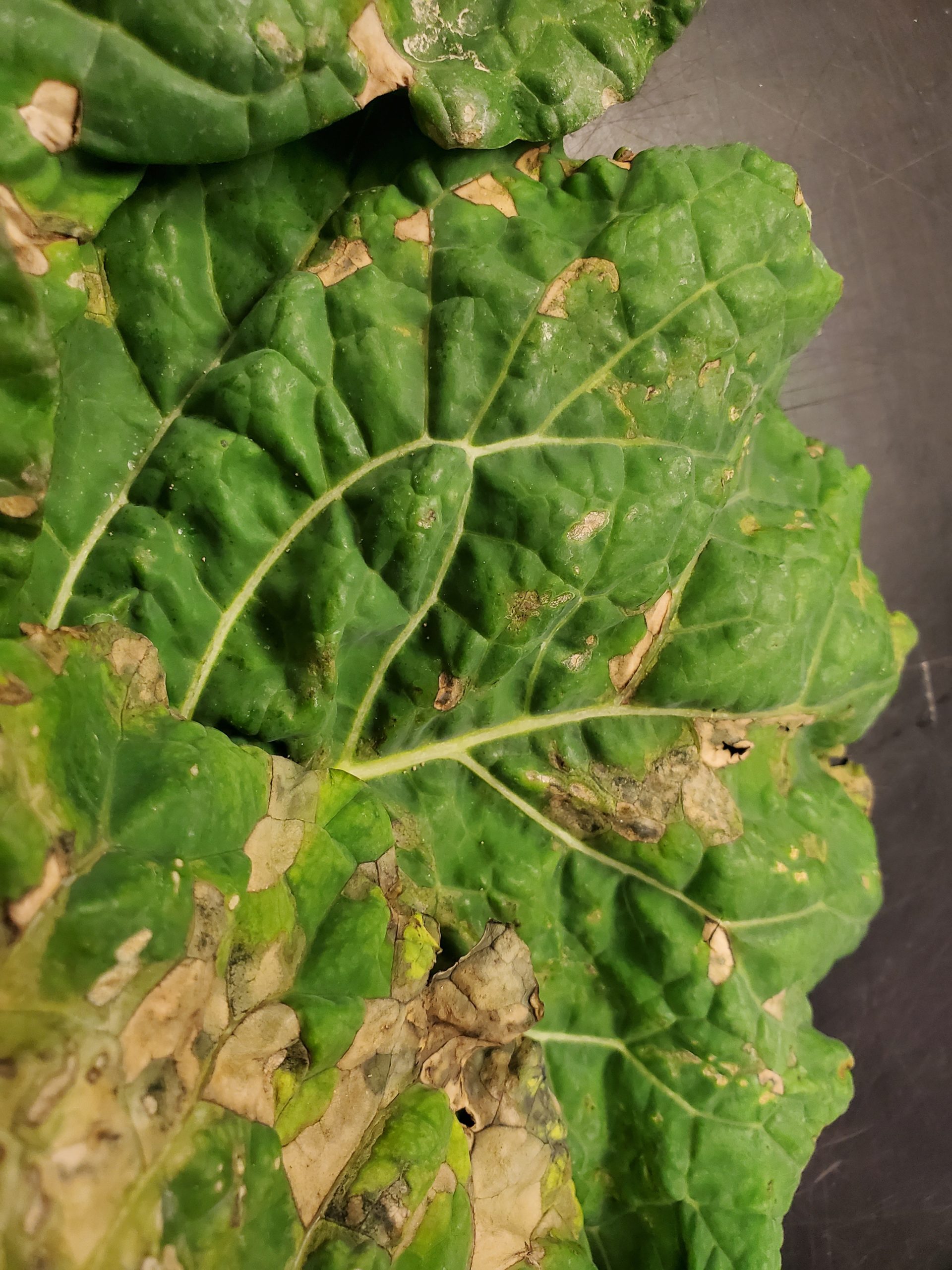
- Bacterial leaf spot has been reported on savoy cabbage in southern New Jersey.
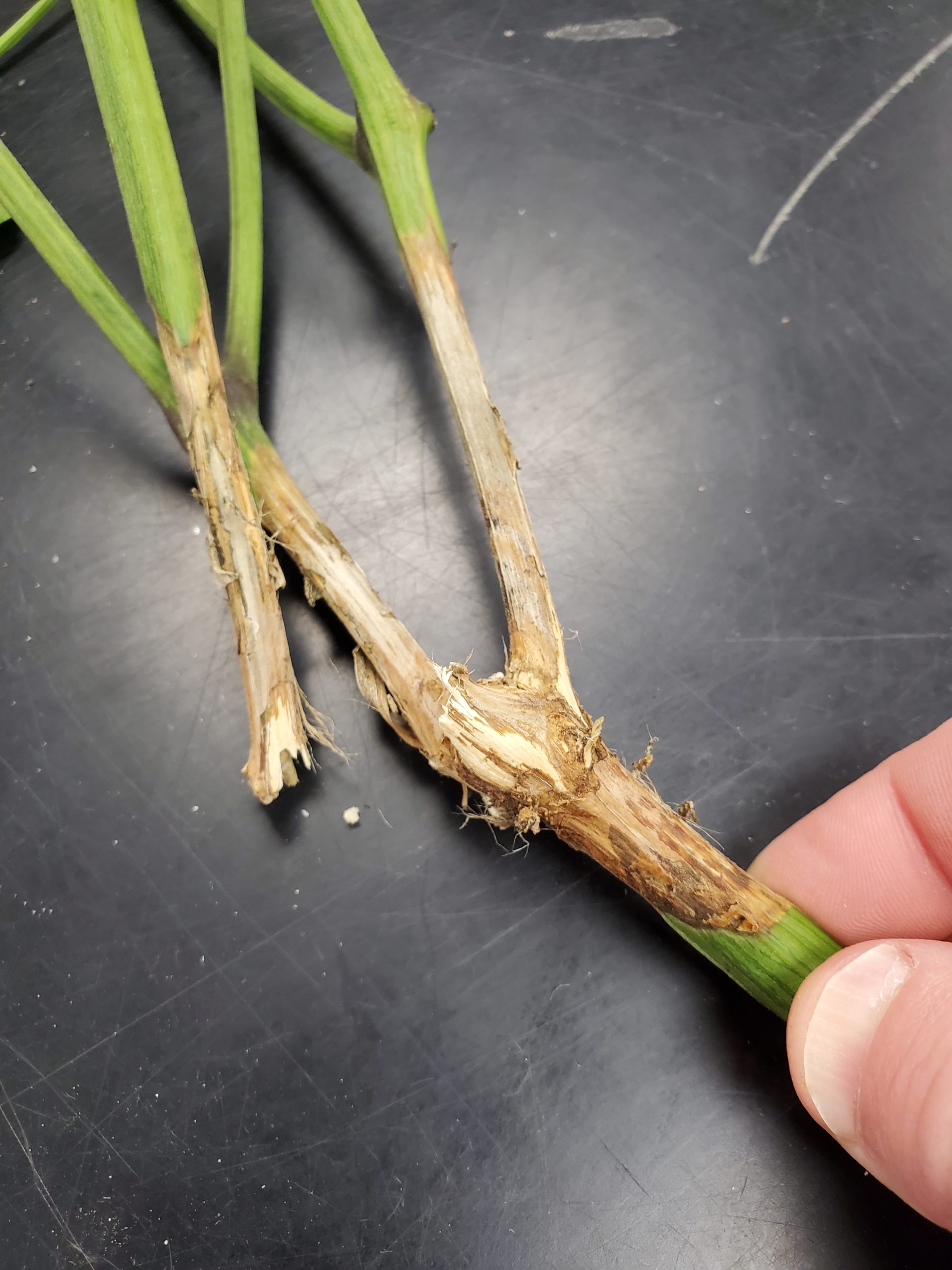
- Timber rot has been reported in greenhouse pepper in southern New Jersey. For more information on white mold on tomato and pepper click here.
- Cold weather injury has been reported in numerous vegetable crops throughout the state.
- Bacterial leaf blight in Cilantro was reported in southern New Jersey.
- Common leaf spot was reported in strawberry. For more information click here. Weather conditions have also been ideal for fruit rot infections. For more information on controlling fruit rots in strawberry please click here.
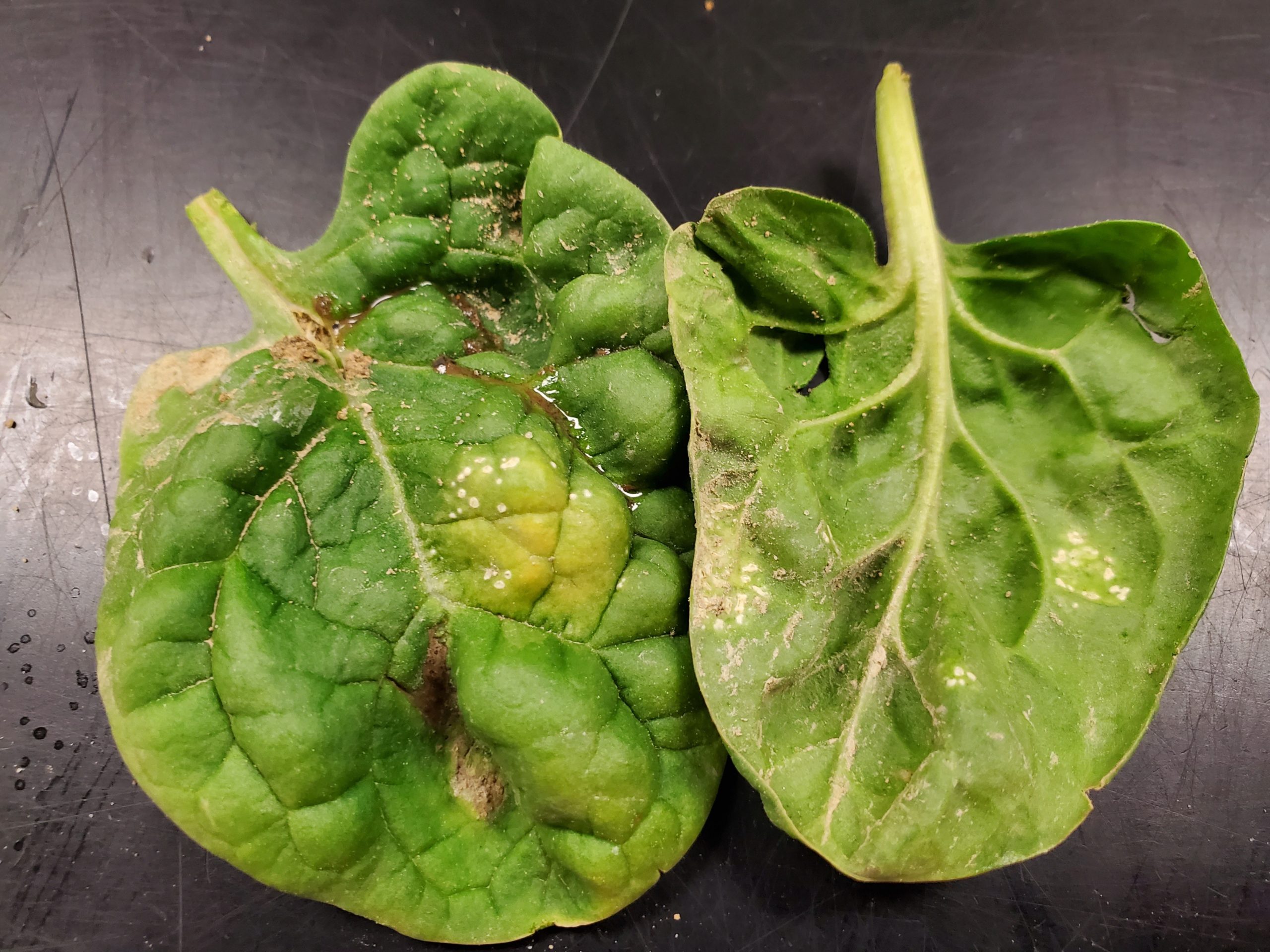
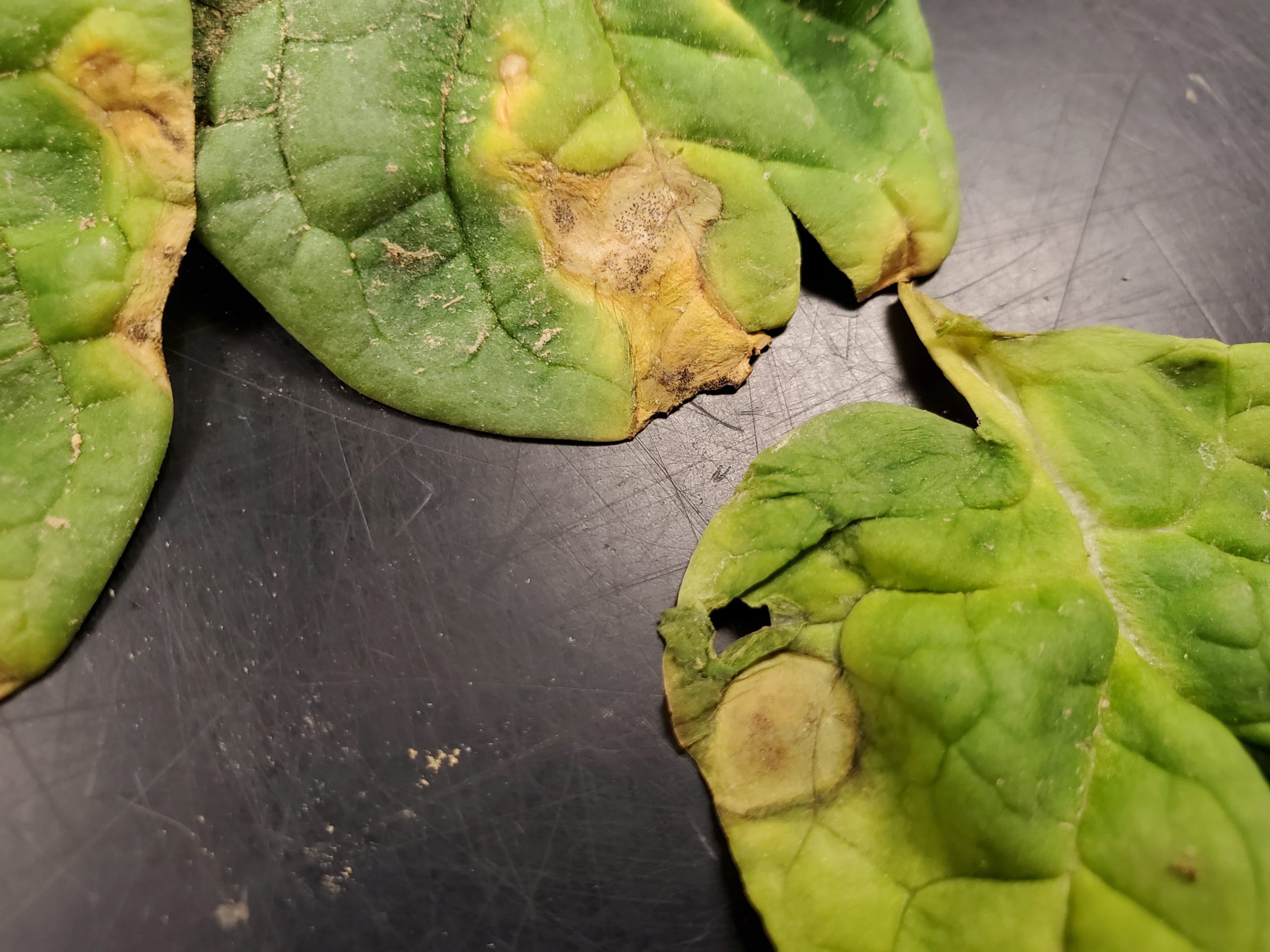
- White rust and anthracnose have been reported in spinach over the past few weeks. For more information click here
- For the updated list of fungicides for use in the control of important diseases in the greenhouse please click here.
- Transplant producers need to remember to vent their structures to reduce relative humidity buildup going into the evenings to help reduce leaf wetness during the overnight.
- The 2020/2021 Commercial Vegetable Production Recommendations Guide is available for free online! With many county offices running reduced hours or being closed this is the easiest way to obtain the newest recommendations.
- For a quick review on managing fungicide resistance development using tank mixes and fungicide rotations, and information on FRAC group 4, FRAC group 7, and FRAC group 3 and FRAC group 11 fungicides please click on hyperlinks.
April 23, 2020 Andy Wyenandt
Understanding phenylamide (FRAC group 4) fungicides
The phenylamide fungicides (FRAC group 4) are a highly active class of fungicides that target oomycete pathogens such Phytophthora and Pythium spp. FRAC group 4 fungicides are also highly effective against downy mildew pathogens such as Pseudoperonospora cubensis (cucurbit downy mildew), Phytophthora infestans (Late blight), and basil downy mildew (Peronospora belbahrii) and many other important pathogens in vegetable production. Like other fungicide classes, FRAC group 4 fungicides have a high-risk for fungicide resistance development. The phenylamides (PA) inhibit ribosomal RNA (rRNA) biosynthesis in oomycete pathogens which inhibits several life stages in oomycetes including hyphal growth, haustoria and sporangia formation. The exact mechanism for resistance is not completely understood although research has shown that PA resistance is control by a single incompletely dominant gene although multiple mutations or mechanisms may be involved in PA resistance development. Pathogens such as cucurbit downy mildew, late blight, and basil downy mildew can be disseminated over vast geographic distances in any given year, thus this migration can be responsible for the introduction of new pathogen genotypes (including PA resistant) to new locations along with local selection pressure due to PA fungicide use resulting in changes in the pathogen population. Additionally, pathogens such as P. infestans and P. capsici (Phytophthora blight) are highly sexually active at the local level, because of the potential presence of two mating types (A1 and A2), you have a “recipe” that is always evolving. Resistance development to PA fungicides is often described as sensitive, intermediate, or resistant based on EC50 (Effective Concentration) values of the different fungicides needed to kill 50% of the pathogen in laboratory assays. This type of collected information is useful in determining what proportion of a given local, or wide geographic pathogen population, may be PA resistant. Recommended resistance management guidelines developed FRAC have not changed since 1997and are intended as general recommendations that must be adapted to respective pathosystems, fungicide use and patterns, and resistance levels.
The following are general recommendations for PA fungicide use as stated by FRAC.
- PA fungicide should be used on a preventative basis; and not used as a curative or on a eradicative basis
- As foliar applications, PA fungicide should always be tank mix with a unrelated fungicide from a different FRAC group
- The total number of PA applications per season should be limited to 2 to 4 depending on label requirements
- PA sprays are recommended for use earlier in the production season during active vegetative growth
- PA should not be used as soil treatments against foliar disease development
Resistance development in P. capsici to mefenoxam has been known for many years in southern New Jersey. This is most likely to the widescale and overuse of mefenoxam in its early days because of the lack of an alternative chemistry, as well as a result of crop rotations where susceptible crops were planted in the same field for many years. In the past decade, there have been several new fungicides from different FRAC groups labeled for oomycete control. These include: Orondis Gold (oxathiapiprolin + mefenoxam, FRAC groups 49 + 4), Previcur Flex (propamocarb, 28), Ranman (cyazofamid, 21), Presidio (fluopicolide, 43), and Phosphites (33) for field use. Ranman, Previcur Flex, and phosphites have greenhouse use labels for Pythium control. Ranman and Previcur Flex can be applied in the transplant water. Orondis Gold, mefenoxam, metalaxyl, and the phosphites are the most systemic of the group and should readily be taken up the by plant via application through the drip. Presidio has locally systemic and translaminar activity and offers protection of the root system via drip. Ranman has protectant-like activity and thus will offer root system protection. Growers with a known history of mefenoxam-insensitivity on their farm should use Presidio, Previcur Flex, or Ranman plus a Phosphite fungicide in rotation in their drip application programs. Importantly, if mefenoxam has not been used in particular fields on any crop for a number of years (more than 5+) the fungus may revert back to being mefenoxam-sensitive and control with these products may return.
For more information please see specific fungicide labels, crops sections, and greenhouse uses in Table E-11 in the 2020/2021 Mid-Atlantic Commercial Vegetable Production Recommendations Guide.
Reference:
Hermann, D.C., McKenzie, D., Cohen, Y., and Gisi, U. 2019. Phenylamides: Market trends for resistance evolution for important oomycete pathogens more than 35 years after product introduction (FRAC code 4). Chapter 6 in: Fungicide Resistance in North America, 2nd Ed. Katherine L. Stevenson, Margaret T. McGrath, and Christian A. Wyenandt (eds). The American Phytopathological Society, St. Paul, MN.
Additional resources:
Damping-off: Identifying and Controlling Early-Season Damping-off Pathogens
Understanding Damping-off Pathogens During Seeding and Transplanting
April 22, 2020 Andy Wyenandt
Understanding the SDHI (FRAC group 7) Fungicides
The SDHI (succinate dehydrogenase inhibitor) fungicides belong to FRAC group 7 which have been on the market since the late 1960s. Third generation SDHIs have been available since 2003 with release of boscalid (penthiopyrad). Examples of FRAC group 7 fungicides used to control important vegetable diseases include: flutolanil ( year introduced,1986), boscalid (2003), penthiopyrad (2008), fluxapyroxad (2011), fluopyram (2013), and pydiflumetofen (2016). All fungicides in FRAC group 7 inhibit complex II of the fungal mitochondrial respiration by binding and blocking SDH-mediated electron transfer from succinate to ubiquinone. The SDHI fungicides work much like the FRAC group 11 fungicides, just at a different site in mitochondrial respiration. Much like FRAC group 11 fungicides, they are also at-risk for fungicide resistance development because of their specific modes of action. Research has shown there are numerous single point mutations that can lead to resistance development to FRAC group 7 fungicides. Although all SDHI fungicides share the same target site, sensitivity to the different fungicides within the FRAC group may vary. Thus, this variation in sensitivity among different SDHI fungicides leads to confusion on what the term “cross-resistance” means. With cross-resistance, once a pathogen develops resistance to one fungicide within the FRAC group, it becomes resistant to all others (e.g., strobilurin resistance in FRAC group 11 fungicides). However, in FRAC group 7 fungicides, there seems to be differences in sensitivity between fungicides within the group after resistance has been detected in one particular fungicide. The good news is that other FRAC group 7 fungicides may retain there efficacy even if resistance is detected in one particular fungicide. “The practical implications for resistance management would be the recommendation of mixtures of SDHIs, alternations of SDHIs, or even the substitution of members of the SDHI fungicide class. However, this would be counterproductive in protecting this mode of action.” (Klappach and Stammler, 2019). The important point, switching exclusively to another SDHI fungicide after resistance has been found in one is not a good resistance management strategy. As with all fungicide resistance management strategies, growers should focus on rotating as many different FRAC groups into their fungicide programs as possible, and limit the total amount of any one FRAC group during the production season.
Additional resources:
Theories on tank mixing and rotating fungicides in different FRAC groups
April 21, 2020 Andy Wyenandt
Vegetable Disease Update – 4/21/20
- Bacterial leaf spot has been reported on savoy cabbage in southern New Jersey.
- Timber rot has been reported in greenhouse pepper in southern New Jersey. For more information on white mold on tomato and pepper click here.
- Cold weather injury has been reported in numerous vegetable crops throughout the state.
- Bacterial leaf blight in Cilantro was reported this week in southern New Jersey.
- Common leaf spot was reported in strawberry this past week. For more information click here.
- White rust and anthracnose have been reported in spinach over the past few weeks. For more information click here.
- Damping-off has been reported in pepper transplants this past week. For more information click here
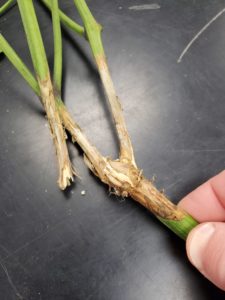
Timber rot in greenhouse pepper
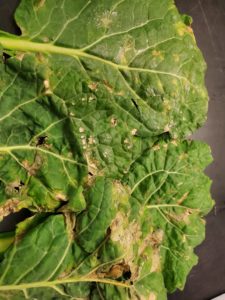
Bacterial leaf spot in savoy cabbage
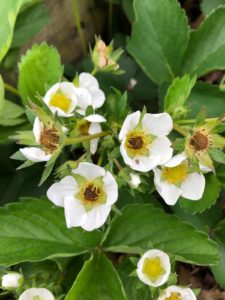
Frost damage in strawberry (photo: T. Besancon)