Verticillium wilt has been reported in eggplant this summer. It is a common soil-borne fungal pathogen that once it has infested soil can remain for a very long time. Verticillium wilt is caused by either Verticillium albo-atrium or Verticillium dahlia and has a wide host range (over 200 plant species). Both pathogens can survive (overwinter) as microsclerotia in the soil. Verticillium wilt prefers cooler weather and drier soils and can be more severe in neutral to alkaline soils. Solanaceous weeds such as Nightshade may harbor the pathogen. [Read more…]
May 26, 2024 Andy Wyenandt
Diagnosing Verticillium Wilt in Eggplant
Verticillium wilt has been reported in eggplant this summer. It is a common soil-borne fungal pathogen that once it has infested soil can remain for a very long time. Verticillium wilt is caused by either Verticillium albo-atrium or Verticillium dahlia and has a wide host range (over 200 plant species). Both pathogens can survive (overwinter) as microsclerotia in the soil. Verticillium wilt prefers cooler weather and drier soils and can be more severe in neutral to alkaline soils. Solanaceous weeds such as Nightshade may harbor the pathogen. [Read more…]
July 3, 2023 Andy Wyenandt
Diagnosing Verticillium Wilt in Eggplant
Verticillium wilt has been reported in eggplant this summer. It is a common soil-borne fungal pathogen that once it has infested soil can remain for a very long time. Verticillium wilt is caused by either Verticillium albo-atrium or Verticillium dahlia and has a wide host range (over 200 plant species). Both pathogens can survive (overwinter) as microsclerotia in the soil. Verticillium wilt prefers cooler weather and drier soils and can be more severe in neutral to alkaline soils. Solanaceous weeds such as Nightshade may harbor the pathogen. [Read more…]
May 26, 2021 Andy Wyenandt
Diagnosing Verticillium Wilt in Eggplant
Verticillium wilt is a common soil-borne fungal pathogen that once it has infested soil can remain for a very long time. Verticillium wilt is caused by either Verticillium albo-atrium or Verticillium dahlia and has a wide host range (over 200 plant species). Both pathogens can survive (overwinter) as microsclerotia in the soil. Verticillium wilt prefers cooler weather and drier soils and can be more severe in neutral to alkaline soils. Solanaceous weeds such as Nightshade may harbor the pathogen. [Read more…]
July 2, 2020 Andy Wyenandt
Diagnosing Verticillium Wilt in Eggplant
Verticillium wilt is a common soil-borne fungal pathogen that once it has infested soil can remain for a very long time. Verticillium wilt is caused by either Verticillium albo-atrium or Verticillium dahlia and has a wide host range (over 200 plant species). Both pathogens can survive (overwinter) as microsclerotia in the soil. Verticillium wilt prefers cooler weather and drier soils and can be more severe in neutral to alkaline soils. Solanaceous weeds such as Nightshade may harbor the pathogen.
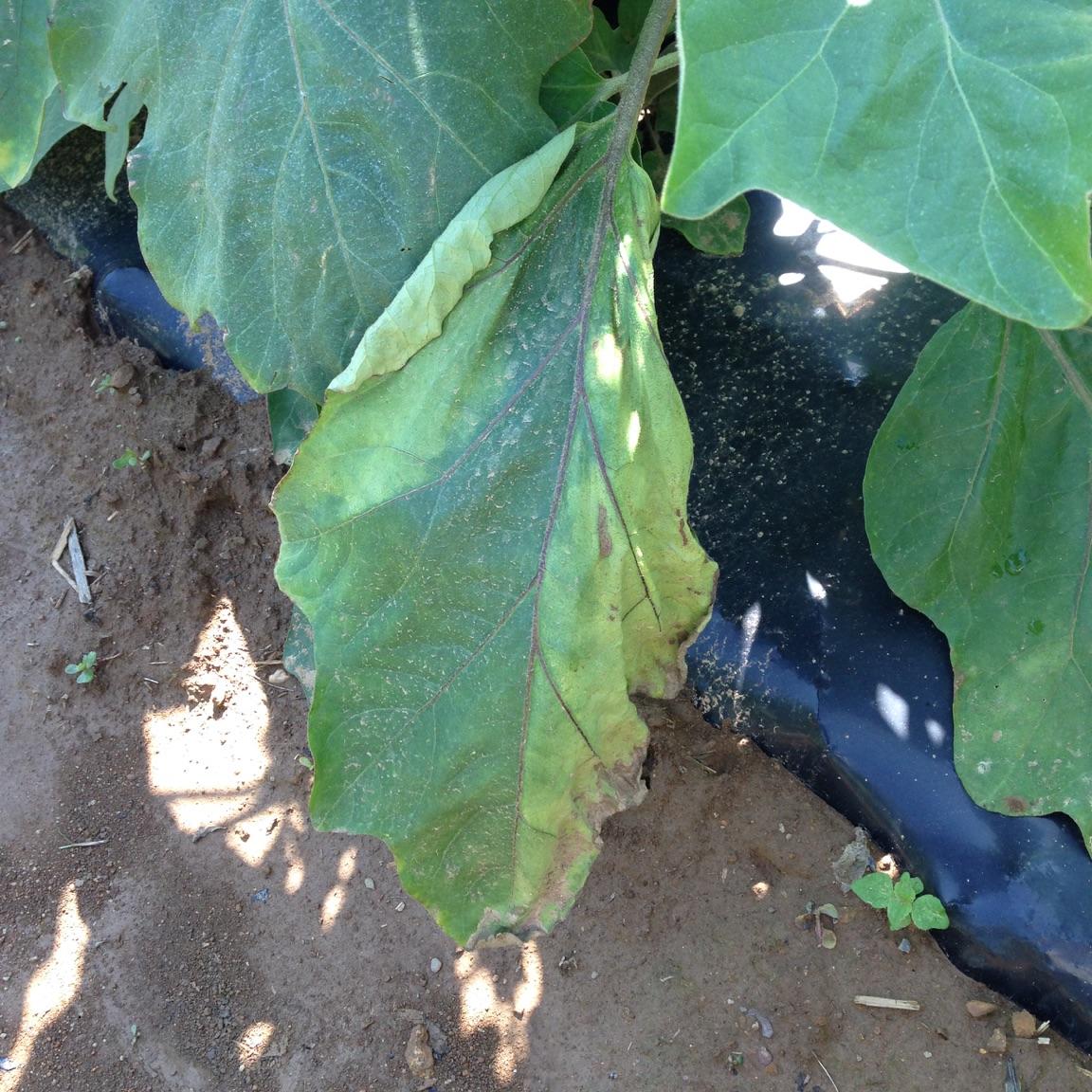
Diagnostic symptoms of Verticillium wilt in eggplant
Photo by Kris Holmstrom
April 17, 2020 Andy Wyenandt
Verticillium Wilt in Eggplant
Verticillium wilt is a common soil-borne fungal pathogen that once it has infested soil can remain for a very long time. Verticillium wilt is caused by either Verticillium albo-atrium or Verticillium dahlia and has a wide host range (over 200 plant species). Both pathogens can survive (overwinter) as microsclerotia in the soil. Verticillium wilt prefers cooler weather and drier soils and can be more severe in neutral to alkaline soils. Solanaceous weeds such as Nightshade may harbor the pathogen.
Diagnostic symptoms of Verticillium wilt in eggplant
Photo by Kris Holmstrom
