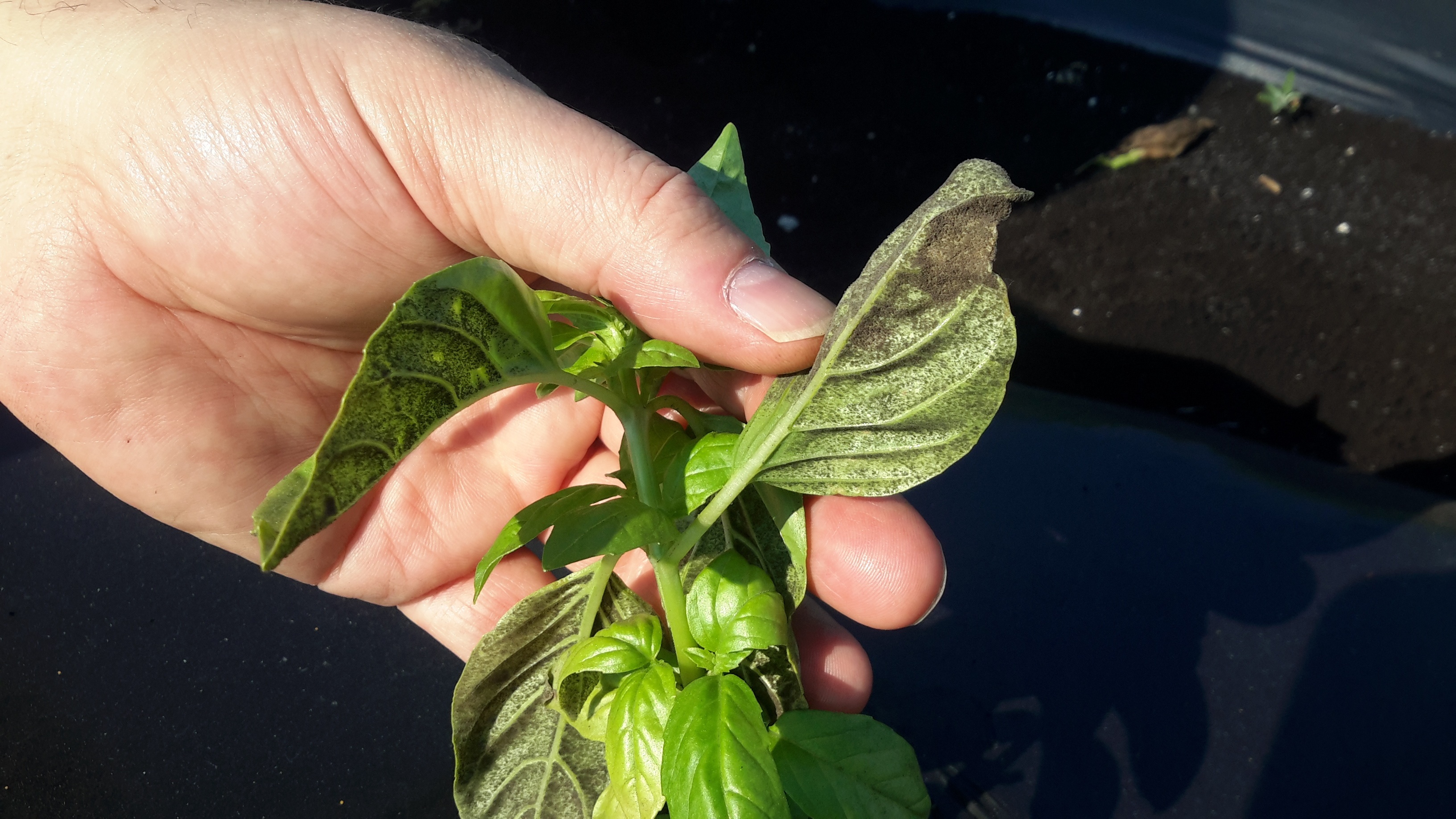
Copper resistance has been detected in bacterial leaf spot of tomato and pepper and in Pseudomonas chicorii, the causal agent of bacterial leaf spot in basil, in New Jersey. While not surprising, copper resistance has been known to develop for decades now; however, this is the first time it has been confirmed in vegetable crops in New Jersey. [Read more…]
Survey continuing for bacterial leaf spot and copper resistance in 2021 growing season
2020/2021 Mid-Atlantic Commercial Vegetable Production Recommendations available on-line
The 2020/2021 Mid-Atlantic Commercial Vegetable Production Recommendations guide is still available for FREE on-line. The complete 2020/2021 Vegetable Production Recommendations guide or specific sections can be downloaded depending on your production needs.
Controlling Cercospora leaf spot in beet
Cercospora leaf spot (CLS), caused by Cercospora beticola, is an important and emerging disease in beet and swiss chard production in New Jersey. Efforts to control this disease has become more difficult in the past few years in some areas of southern New Jersey. [Read more…]
Diagnosing Verticillium Wilt in Eggplant
Verticillium wilt is a common soil-borne fungal pathogen that once it has infested soil can remain for a very long time. Verticillium wilt is caused by either Verticillium albo-atrium or Verticillium dahlia and has a wide host range (over 200 plant species). Both pathogens can survive (overwinter) as microsclerotia in the soil. Verticillium wilt prefers cooler weather and drier soils and can be more severe in neutral to alkaline soils. Solanaceous weeds such as Nightshade may harbor the pathogen. [Read more…]
Preparing for Anthracnose and Alternaria Leaf Blights in Cucurbit Crops
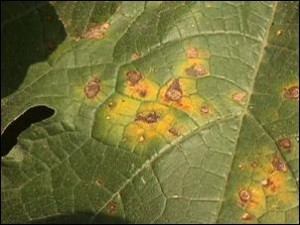
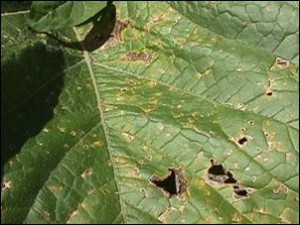
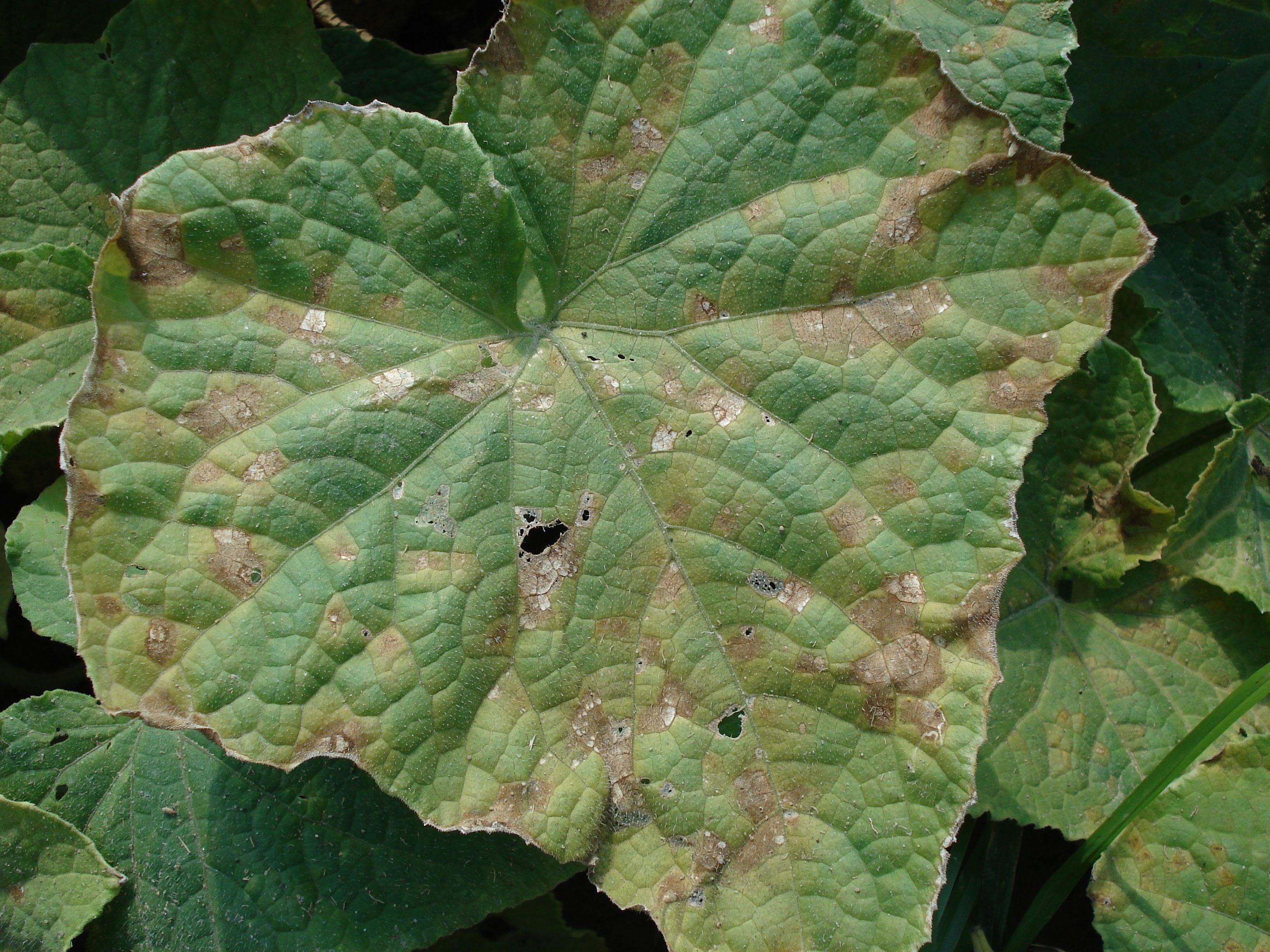
Anthracnose and Alternaria leaf blight can become problematic in cucurbit crops during long periods of wet, humid weather. Both can cause significant losses if not controlled properly. With the production season in full swing, now is a good time to review a few of these important diseases. [Read more…]
Identifying and controlling botrytis in high tunnel and greenhouse tomato production
Botrytis, or gray mold, caused by the fungus, Botrytis cinerea, can cause significant losses in high tunnel and greenhouse tomato production if not controlled properly. The pathogen can rapidly spread during periods when structures are closed and when relative humidity remains high for long periods of time. This often occurs when outside weather remains cool and damp while heating is needed. Gray mold is favored by temperatures from 64° to 75°F and requires only high humidity (not leaf wetness) to become established. The pathogen has a large host range and once established in an enclosed structure it can be very difficult to control (UMASS). The fungus can survive/overwinter as mycelia or sclerotia in plant debris and in organic soil matter (NCSU).