Search Results for: sare

SARE Farmer Grants for 2023 – Webinar on October 4th

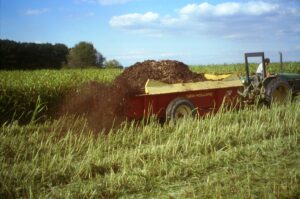
Truck spreading fertilizerMultiple Northeast SARE (Sustainable Agriculture Research and Education) grant recipient Tommye Lou Rafes, of T.L. Fruits and Vegetables in West Virginia, is sharing her experiences to help other farmers experiment with new ideas through the Farmer Grant program.

At noon on October 4th, 2022, Rafes will join Northeast SARE Grant Coordinator Candice Huber for an informational webinar to assist farmers interested in applying for up to $30,000 in funding for projects beginning in March 2023. Registration is required and participants are encouraged to submit questions ahead of the event. The Call for Farmer Grant Proposals is currently available and the online system for submitting applications is opening soon. Applications are due November 15, 2022.

Northeast SARE Farmer Grants are perfect for farmers looking to grow through new practices. Rafes first learned about SARE while attending a Good Agricultural Practices (GAP) training. One of the professors hosting the meeting was a SARE reviewer who invited the attendees to apply for a grant. Rafes knew sustainable practices like using renewable-powered high tunnels to extend growing seasons could be good for business as well as the planet. “Growing in the winter months is a completely different way than you do in the summer months,” she said. “I decided to test varieties that were successful during the winter months as well as growing conditions that could be improved so that people would be more successful.”

Grant Coordinator Candice Huber says Farmer Grants are an opportunity for farmers to try things that could improve their operations. SARE funds can cover the farmer’s time on the project, any farm workers time spent on the project, supplies that are not capital purchase, technical support, soil testing and other budgeted items. Farmer grant projects generally are for one year.

If you have an idea and you need resources to really explore it, a Farmer Grant can connect you with those resources. This webinar will be a good starting point and participants must pre-register. See below.

To sign up for the October 4th webinar at 12:00PM go to https://us02web.zoom.us/webinar/register/6516611235851/WN_RoG_IkMmSDGsduZwmFgKkA

For information about the application for SARE Farmer grants see https://www.sare.org/wp-content/uploads/Northeast-SARE-Farmer-Grant-Call-for-Proposals.pdf

For general information about Northeast SARE go to Northeast SARE Home Page – SARE Northeast
2023 Farmer Grant Proposals from Northeast Sustainable Agriculture Research and Education (SARE)

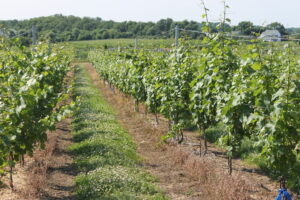
Do you hGrapevinesave an idea you would like to try on your farm that is related to sustainable agriculture? Stephen Komar, Rutgers SARE Coordinator and Sussex County Agricultural Agent, would like to announce that Northeast SARE will open the website for 2023 applications for Farmer Grants on October 1st. Approximately $750,000 has been allocated to fund projects for this grant cycle. Individual awards typically range from $5,000 to $30,000, depending upon a project’s complexity and duration. Projects must be related to sustainable agriculture and results are to be shared through a final report to SARE along with some type of outreach by the farmer as part of the project. 
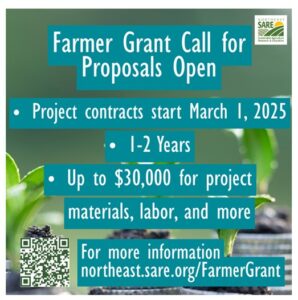
The online system for submitting proposals will open on Oct 1, 2022. Proposals are due no later than 5:00 p.m. EST on November 15, 2022. Go to Northeast-SARE-Farmer-Grant-Call-for-Proposals.pdf for more information. 

Northeast SARE Farmer Grants provide the resources farmers need to explore new concepts in sustainable agriculture conducted through experiments, surveys, prototypes, on-farm demonstrations or other research and education techniques. Projects address issues that affect farming with long-term sustainability in mind. Northeast SARE funds projects in a wide variety of topics, including marketing and business, crop production, raising livestock, aquaculture, social sustainability, climate-smart agriculture practices, urban and indigenous agriculture and more.

The goals of SARE Farmer Grants are to help farmers try new things that could improve their operations and to share that information with others. There are also some other restrictions for budget items. Funds can be used to conduct the research project including paying farmers for their time, for project-related materials, for project costs like consulting fees or soil tests, and any communications or outreach expenses associated with telling others about project results. This grant program is not meant to help start or expand farm businesses. Farmer Grant funds cannot be used for capital costs associated with building a barn, greenhouse, or other major farm fixture, nor can funds be used to start a farm, purchase durable equipment like tractors or computers, or for any utility, telephone, or other costs that would be there in the absence of the project.

Farmer and employee wages can be included in a Farmer Grant budget for work done specifically on the grant project. Applicants should include a reasonable wage for their work on a grant project. In New Jersey, the current adverse wage rate used for the H2-A farm worker program is currently $15.54 per hour and could help gauge wages for employees time on the project. For farmer/project manager) wages, the rate to use would be higher and could be based on the complexity of the tasks on the project. 

In addition, each project must include a technical advisor to assist with the project. Technical advisors can be anyone who is an agricultural service provider, such as your local cooperative extension agricultural agent, USDA personnel, an agricultural consultant, etc. In New Jersey and other states, SARE Coordinators are not eligible to be technical coordinators due to a conflict of interest of leadership in the program. Therefore, Agricultural Agents, Stephen Komar (Rutgers SARE Coordinator) and Michelle Infante-Casella (Rutgers SARE Assistant Coordinator) are not able to be technical advisors to grants. However, if you have questions about the grant process, they both can help answer questions or point farmers in the right direction to identify technical advisors. 

A SARE Farmer Grant informational webinar featuring Tommye Lou Rafes, who has received multiple SARE Farmer Grants, will take place at 12:00 p.m. on October 4, 2022. This webinar information will help farmers thinking of applying for a SARE grant to learn about the process and types of projects that fit this program. To register for the webinar go to northeast.sare.org/farmergrantwebinar

The Northeast region includes Connecticut, Delaware, Maine, Massachusetts, Maryland, New Hampshire, New Jersey, New York, Pennsylvania, Rhode Island, West Virginia, Vermont, and Washington, D.C. Like other SARE Grants, Farmer Grants are competitive and will be judged against other applicants in the region.

To learn more about SARE project in New Jersey see New Jersey State Fact Sheet (sare.org) 

SARE Partnership Grant Applications Announced

The Northeast Sustainable Agriculture Research and Education Program (SARE) has released its 2022 call for Partnership Grant program proposals.
Applicants are invited to request up to $30,000 in funding to address a topic related to sustainable agriculture. Proposed projects should seek innovative solutions to challenges or explore new opportunities that affect agricultural production, marketing and/or household and community well-being in Northeast farming and food systems. They must be conducted in one of the New England states, Delaware, Maryland, New Jersey, New York, Pennsylvania, Washington, D.C. or West Virginia and strengthen working partnerships with farmers to advance sustainable agriculture.
Proposals are due online by 5 p.m. ET on April 12
for more information, please visit

NE SARE Grants Info Webinar

Join Northeast SARE grants coordinator Carol Delaney for a lunchtime webinar on Friday, October 10th at Noon regarding Farmer Grants and Partnership Grants. Carol will cover topics ranging from the application process, designing a budget, choosing a technical advisor (for farmer grants) and the review process. There will be plenty of time for Q&A. Register online.

This year, Michelle Infante-Casella takes over the reins from Jack Rabin as Northeast SARE coordinator for New Jersey. Visit NE SARE, New Jersey webpage for information on programs and priorities.

Farmer Health and Wellness Services Available for Burlington, Camden, Gloucester, and Atlantic Counties

Could your farm or a local agricultural event benefit from free health and wellness services? The Pinelands Alliance, in partnership with NOFA-NJ and Virtua Health, was awarded a SARE grant entitled “Mobilizing for Farmer Wellness” which aims to bring health screenings and education to farmers and farmworkers in Burlington, Camden, Gloucester, and Atlantic Counties.

The following health and wellness services could be provided at individual farms or at community events. If you are interested or would like to learn more, please contact Annie Preston from the Pinelands Alliance at annie@pinelandsalliance.org or 301-675-0729.

Virtua Health Services (need 30 to 60 days advance notice)

  • Eat Well Mobile Grocery Store and Mobile Farmers Market – accepts SNAP, sometimes can be a free produce giveaway
  • Mobile Pediatric Screening Units: Screenings for children 6 and under: vision, hearing, dental, developmental; School and sports physicals for birth -12th grade; Flu vaccinations for all ages, including adults; Blood lead level screening for children under 6 and pregnant or lactating people
  • Women’s Cancer Screening for insured and uninsured patients – need a minimum of 15 people to pre-register
  • Cancer education
  • Stop the Bleed First Aid and Tourniquet Trainings (class for up to 24 people at a time)
  • Dietitians and nutrition educators
  • Blood pressure, cholesterol, and A1c screenings (A1c needs temperature-controlled environment).
  • Health Education and Stress First Aid
  • Speakers representing a variety of medical specialties (subject to availability)

 Cherry Hill Free Clinic (need 2 weeks advance notice)

  • Men’s Cancer Screenings
  • Hepatology
  • Diabetes care
  • Vaccines (Gardasil, pneumovax, Shingrix).
  • 20 medical specialties (subject to availability)
  • Patients can use their Uber business account to book rides to the clinic, lab, and imaging appointments
  • Remote patient monitoring including at-home glucometer kits, BP cuffs, and blood glucose implants. Good for up to 2 weeks before changed out.
  • Vaccines (Gardasil, pneumovax, Shingrix).
  • They can bring a Doctor/nurse practitioner who can write a prescription for meds on site.

Ag Drone Webinar, Tuesday, April 28th 7:00PM

Using Drones in Agriculture
Webinar
Date: April 28, 2026
Time: 7:00-8:30 PM

This program will highlight research projects, and real-world uses of drones in agricultural operations and will foster discussion and networking for anyone interested in using drones in their agricultural operation.

7:00 PM Drone Technology: A Tool for Crop Production and Management
– Stephen Komar, ANR Agent /Rutgers SARE Coordinator
7:25 PM Getting Started with Drones: Regulatory Compliance and Other Practical Considerations
– Adam Kyle, Warren Co. Com. College, Teaching Administrator, Precision Agriculture
7:50 PM Trusting the Data: Ground Truthing for Monitoring with Drones
– Michelle Infante-Casella, ANR Agent/Rutgers SARE Coordinator
8:15 PM Questions

TO JOIN THE WEBINAR PLEASE USE THE LINK OR QR CODE

https://go.rutgers.edu/agdrones