Archives for April 2025

NJ DEP issues Open Burn Permit from April 6 through April 12, 2025

To Agriculture and Agribusiness Representatives:

The New Jersey Department of Environmental Protection (DEP) is issuing this notice concerning open burning due to colder spring overnight temperatures presently forecasted for areas of New Jersey from April 6 (Sun), through April 12 (Sat), 2025, which could adversely affect fruit, vegetable, and floriculture crops in bloom or near bloom around the state. The DEP intends to exercise its authority and discretion under the Air Pollution Control Code, N.J.A.C. 7:27, et seq., and other applicable authorities to permit the following procedure for open burning or the use of smudge pots to assist farmers in protecting their crops in low temperatures. These cold events could adversely affect some of the fruit, vegetable, and floriculture crops. 

Note: The NJDEP and New Jersey Forest Fire Service caution all farmers and agriculture businesses with respect to the use of open burning in high wind velocity conditions. Please take note that farmers are encouraged to utilize smudge pots is warming as necessary during higher wind conditions. Use of open burning when wind velocity is greater than 5mph is strictly prohibited, may contribute to wildfire risk, and can carry significant penalties.

For the Burn Permit Application form, please see: https://www.state.nj.us/dep/parksandforests/fire/docs/ag-permit.pdf

The DEP intends to exercise its authority and discretion under the Air Pollution Control Code, N.J.A.C. 7:27, et seq., and other applicable authorities to permit the following procedure for open burning or the use of smudge pots to assist farmers in protecting their crops in low temperatures. Procedures for Open Burning and the Use of Smudge Pots Pertaining to New Jersey Fruit, Vegetables, and Floriculture

  • Facilities that believe they will conduct open burning or use smudge pots must provide notice to the DEP 24-hour Communications Center at 1-877- WARN DEP (1-877-927-6337) prior to the use of either technique. • Facilities should notify DEP if they believe they may need to use either technique. • Where DEP cannot be notified in advance, a facility must notify DEP the following morning no later than 9:00 a.m. • The following information must be provided to DEP upon each notification:
  1. Name of the individual deciding to conduct the open burning or use of smudge pots.
  2. Name of the farm or facility
  3. Actual street address of the facility on which either technique will be used.
  4. Contact person and telephone number at the facility.
  5. Predicted temperature (in F) at facility anticipated when the technique will be used.
  6. Predicted wind speed at facility anticipated when the technique will be used.
  7. Predicted hours of open burning or use of smudge pots
  8. Predicted material to be used for open burning or use of smudge pots.
  • Upon completion of the open burning or the use of smudge pots, the facility must provide the following information within 2 business days to the DEP 24-hour Communication Center at 1877-WARN DEP (1-877-927-6337):
  1. The DEP Communications Center incident number
  2. Ambient orchard(s) temperature (in F) at the time the technique was used.
  3. Actual wind speed at the orchard(s) location at the time the technique was used.
  4. A statement that all restrictions in the open burning or use of smudge pots were followed. The restrictions are noted below.

RESTRICTIONS

  • NO OPEN BURNING WILL BE PERMITTED UNLESS: 1. The temperature within the orchard area is at or below the critical temperature for the bud stage. The attached report lists the critical temperatures for New Jersey crops. -AND 2. The wind velocity is less than 5 miles per hour.
  • Authorized open burning material may consist only of either the following materials: clean scrap lumber (untreated), felled trees, prunings, hedgerows or firewood.
  • ABSOLUTELY NO refuse, trade waste, tires, garbage, or other solid waste may be added to the authorized open burning material. Introduction of any unauthorized material into an authorized open burn is a violation of environmental laws and may carry significant penalties.
  • Smudge pots are only permitted when the temperature within the orchard area is at or below the critical temperature for the bud stage (wind velocity restriction does not apply).
  • Smudge pots must be fueled only with either kerosene or No. 2 fuel oil.
  • Failure to abide by these provisions and restrictions may result in enforcement action.
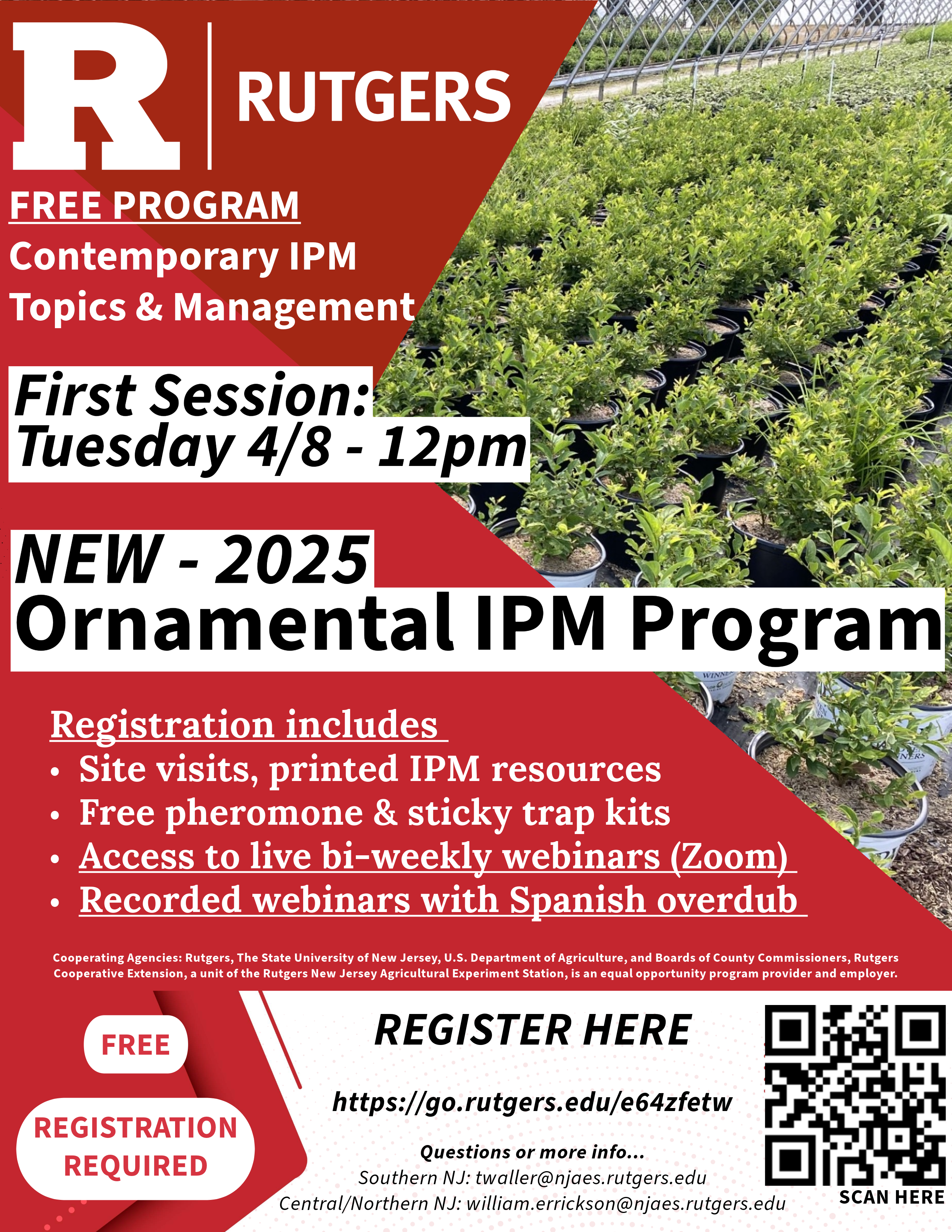


Register for the NEW – 2025 Ornamental IPM Program (including Christmas Tree Farmers)

Ornamental IPM 2025 v1 flyer

Attention Christmas Tree Growers – This is ALSO FOR YOU

Topics applicable to Christmas Tree Production in the first session include:

  • Balsam twig aphid
  • Cooley Spruce Gall Adelgid
  • Eastern Spruce Gall Adelgid
  • Pine Bark Adelgid
  • European pine sawfly
  • Hemlock Rust Mite
  • Spruce spider mite

We are trying to make these seminars as applicable as possible to as many different ornamental crop producers.

Please consider signing up for the NEW 2025 – Rutgers Ornamental IPM Program.

The focus of this program is to provide timely updates on pest, disease, and weeds impacting commercial ornamental producers. The webinars will focus on the most important pests for a 2 week interval, will be recorded, and will be shared shortly thereafter with Spanish overdub (spoken word). The trap packages are in an effort to find grower led solutions for monitoring economically important pests throughout the multiple regions of New Jersey. Please consider joining this program for its inaugural year.

Registration includes:

  • Site visit to your ornamental nursery/farm from Rutgers agents
  • Delivered printed IPM resources (Guides, factsheets, bulletins)
  • Free pheromone & sticky trap kit + guidance on setup/monitoring
  • Access to live bi-weekly webinars (Zoom)
  • (First session NEXT TUESDAY 4/8 @ 12PM)
  • Every Second and Fourth, Tuesday, April through September
  • Webinars will be recorded – posted later with Spanish overdub

This program is free, however registration is required.

click here to Register

Tree Fruit IPM Report April 3, 2025

Tree Fruit Phenology:  

Tree fruit phenology is advancing in southern counties based on historical observations. In southern counties some early blooming varieties are about 50 % bloom. Redhaven was pink on March 30, about 6 days earlier than the median observation date. Red Delicious was at ¼” green tip on March 24, about 8 days earlier than the median observation date. Most apples are at tight cluster, and pears are about white bud to early bloom. Plums are full bloom.  

Peach: 

Brown Rot: Blossom infections from the brown rot fungus can occur whenever pistils are exposed and a favorable climate exists. Infections can occur during any wetting period when temperatures are between 41 and 86 °F. However, optimum conditions for infection occur with wetting and temperatures in the mid 70’s. During long wetting periods (several days or more) blossoms can be infected regardless of temperature. Generally, infections that occur when conditions are sub optimal are less severe. Blossoms and fruitlets will remain susceptible until the pistil dessicates (sometime between petal fall and shuck split). Initiate coverage for blossom blight starting at pink for short petaled varieties and 5-10% bloom for showy flowers. See the NJ Commercial Tree Fruit Production Guide for recommended materials and rates. 


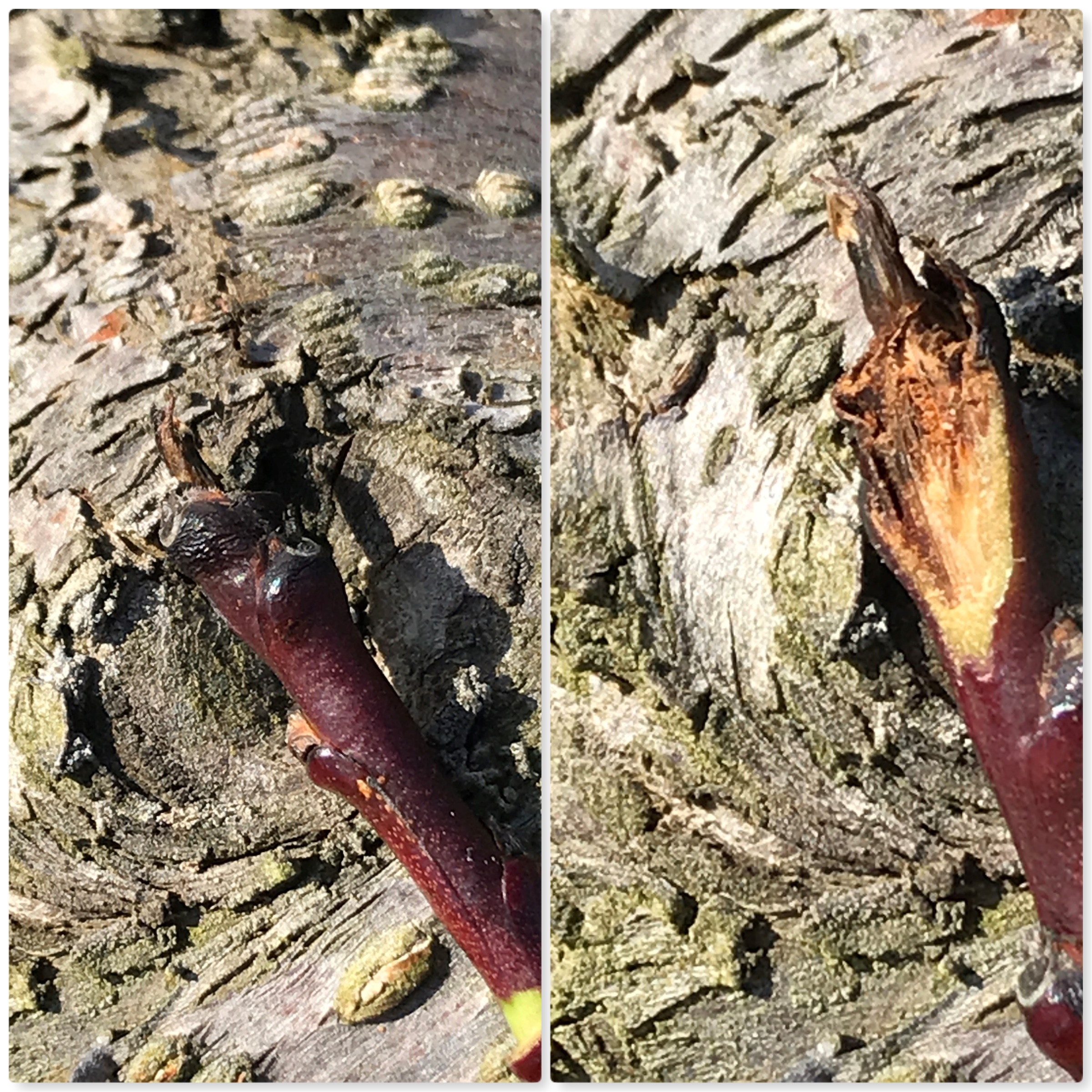
Fig. 1 Tip die back likely caused by bacterial spot (photo D. Schmitt).


Bloom Cankers: Bacterial Spot is a key pest of Peach, Nectarine and Plum and in some years can cause significant losses. It is caused by the bacterium Xanthomonas arbicola pv. pruni. Black tip cankers caused by bacterial spot usually appear during or just after bloom. Typical symptoms are a gradual blackening of the tip with dead tissue moving down the twig and is often observed on highly susceptible cultivars (Fig. 1). Tip die back may also occur from abiotic factors such as frost. Tip die back from frost is often accompanied by blind wood usually 6-8 inches below the tip where leaves and flowers have fallen off after being killed by a freeze. Spring cankers that are caused by bacterial spot may also form around flower buds and may be confused with constriction canker or brown rot (see below) Spring cankers are not commonly observed in our region. 


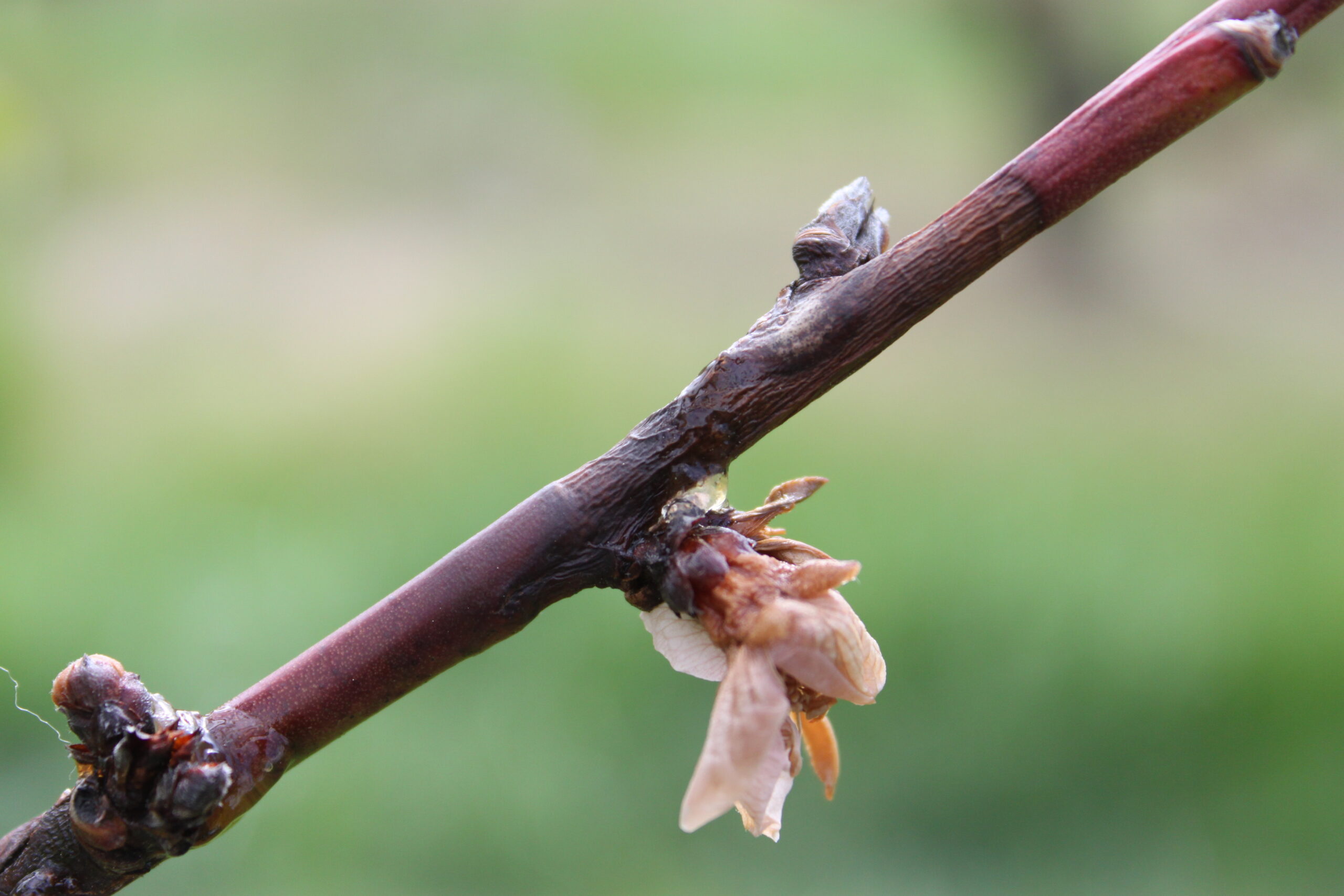
Fig. 2a Dead bud from constriction canker

In some cases the twig may appear healthy and a shoot begins growing from the tip only to die back after leafing out and flowering. This is often a symptom of fall infections of leaf scars by constriction canker. Many times a bud that was infected in the fall and never leafed out may be found just below the new shoot that is dying (Fig. 2a). Mild gummosis around the dead bud may also be observed. These symptoms may be more prevalent in old trees that have a history of the disease. Growing tips may also be killed if the leaf scar was infected and may be confused with black tip from bacterial spot. 

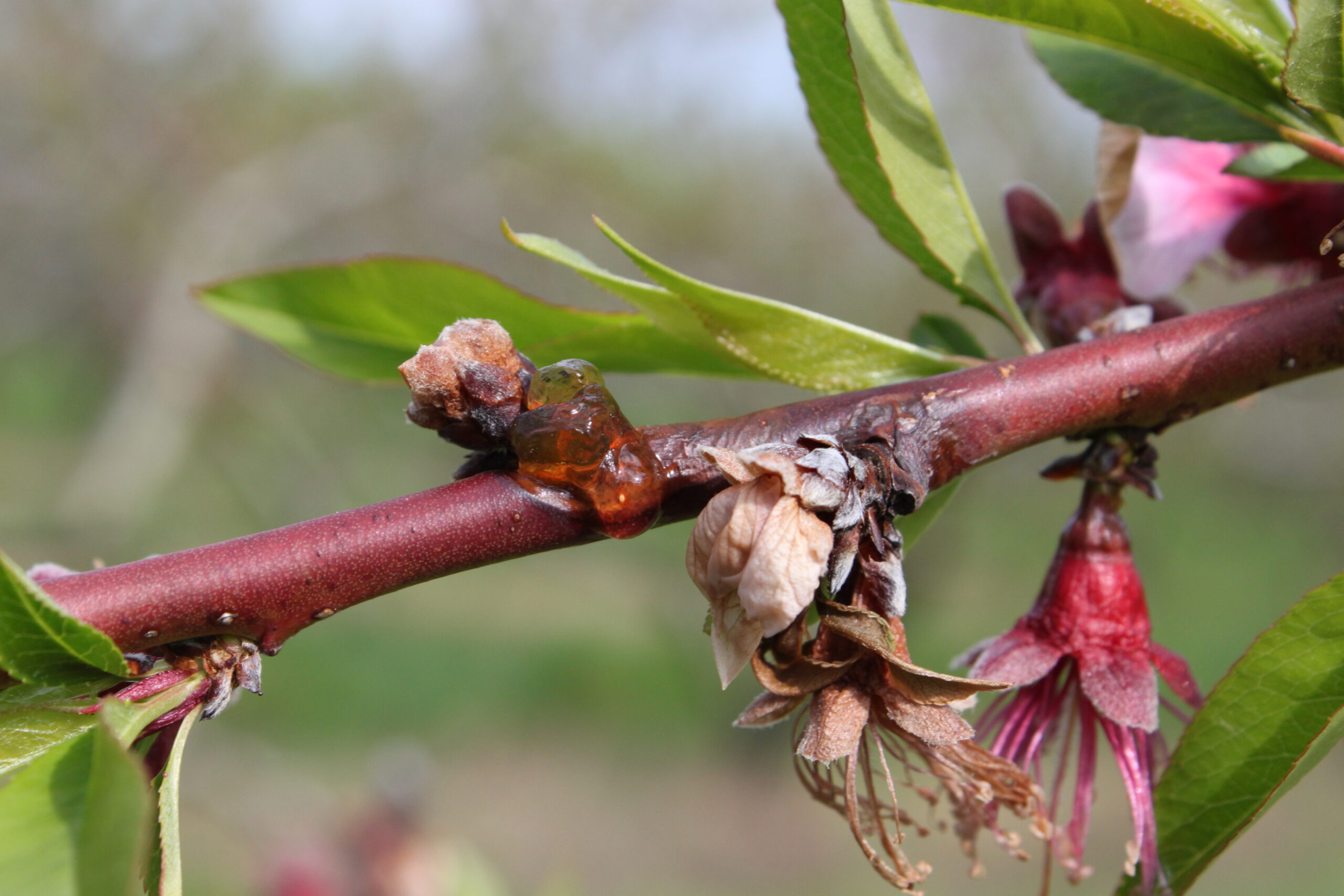
Another disease that causes cankers on flower buds is Monolinia fructicola, the cause of brown rot blossom blight. During bloom flowers that are infected by the brown rot fungus will rapidly dessicate and form a canker around the bud similar to late winter or ea

Fig 2b. Dead bud and canker from fall infection by constriction canker. (photo D. Schmitt)

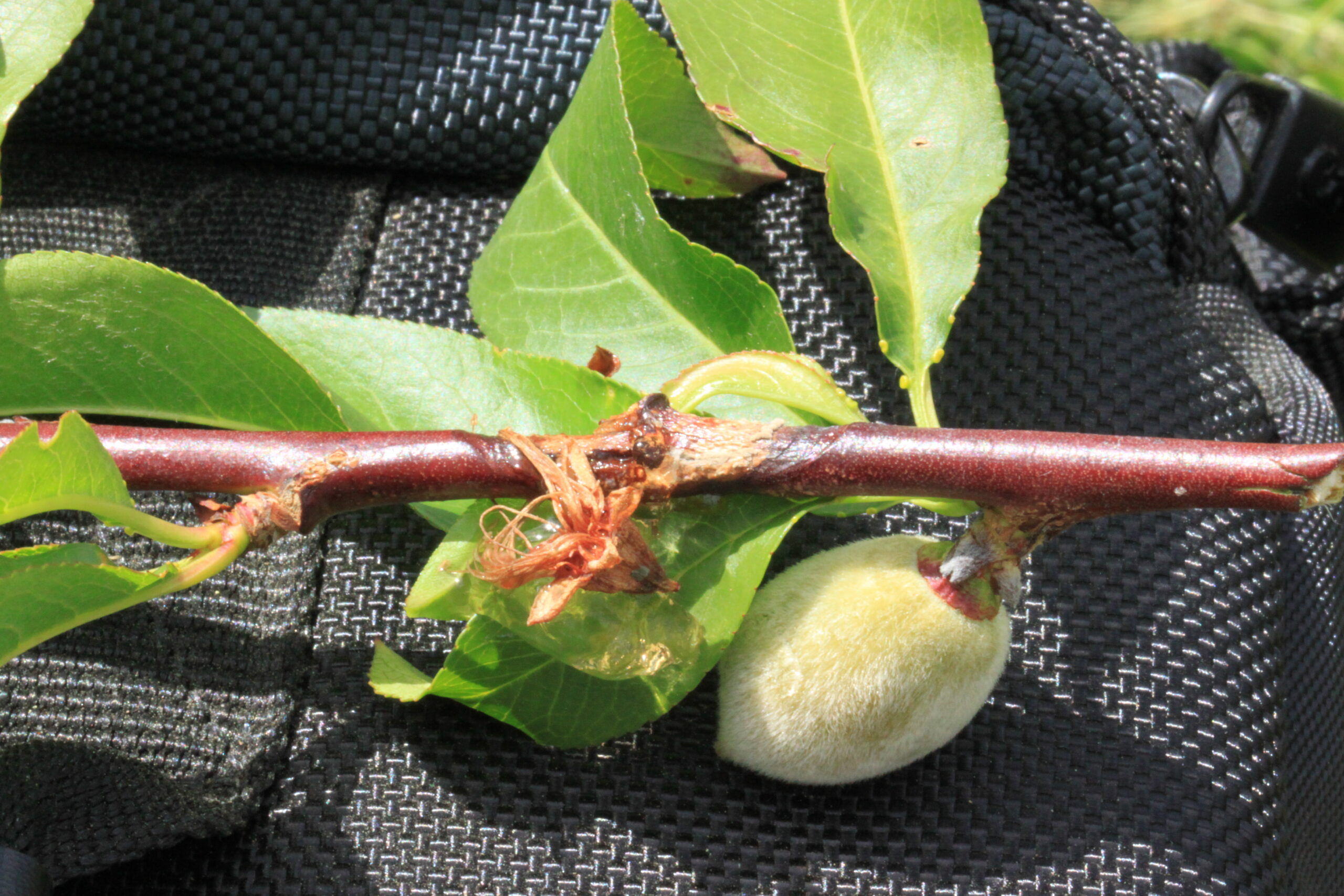
rly spring infections by constriction canker (Fig 2b.). These can be distinguished from blossom blight by waiting a few days to see if the brown rot sporulation appears on the canker. Symptoms of brown rot also differ from constriction canker in that excessive gummosis will appear at the canker site (Fig. 3).

Fig. 3 Blossom blight canker. Note sporulation and excessive gumming around detached flower. (Photo D. Schmitt)


Oriental Fruit Moth: A biofix point for OFM was set on 4/2 in southern counties. OFM biofix is defined as the first sustained trap captures (2 or more consecutive days of trap captures of more than one adult.) It usually coincides with full bloom (about 4/13 in southern counties) but can start as early as late March. The first insecticides for first generation Oriental Fruit Moth control should be applied at 170-200 degree days (base 45 deg F) after biofix. This timing generally coincides with petal fall in peaches. Timings can be calculated using the degree day calculator at the NEWA website by choosing the weather station nearest your farm, entering the biofix date as the start date, and choosing base 45 in the “degree day type” menu. Mating disruption may be substituted for insecticide applications by placing dispensers or initiating sprayable formulations of pheromone in the orchard anytime before biofix. See the NJ Commercial Tree Fruit Production Guide for more information. 

 Green Peach Aphid: GPA colonies begin forming sometime during bloom. Examine trees for the presence of colonies from pink to shuck split. Count the number of colonies on ten trees and use a treatment threshold of 2 colonies/tree at petal fall for peach, and 1 colony/tree for nectarine. The best way to scout for aphids during bloom is with a beating tray. Blossoms may also be collected, opened, and examined for the presence of aphids using a hand lens. See the NJ Commercial Tree Fruit Production Guide for recommended materials and rates. 

Tarnished Plant Bugs and Other Catfacing Insects:  Catfacing insects cause little damage at this time of the year. Catfacing insects will become more of an issue as temperatures warm and mowing and other ground cover activities become more common after bloom. Insecticide applications are not recommended until after all petals are off. 

 Scale Insects: Oil applications may be safely applied up to pink on peach. Other options include Centaur, Sivanto Prime, Esteem, and Venerate. These products can be combined with oil or applied alone. See the apple section below for more information. 

Apple: 

Diseases: Fire Blight, Apple Scab, Rust diseases, and Powdery Mildew are the main targets at this stage. The NEWA apple scab model is estimating about 11% ascospore maturity as of 4/22 in southern NJ with 6% of cumulative ascospores discharged. The model estimates about 10% ascopsore maturity for Northern Counties with 8% ascospores released. Primary apple scab spores are released during any substantial infection period. Between tight cluster and first cover include products effective for powdery mildew and cedar apple rust. To manage Fire Blight in both apples and pears, consider using Kasumin at bloom. Kasumin is an antibiotic like Streptomycin and Oxytetratracycline. It contains Kasugamycin which is a different chemistry. Kasumin is only labeled for bloom and petal fall applications while strep and oxytet are labeled for post bloom use (Note that Fireline 45 is only labeled for 1 post bloom application on apple.). Using 3 different chemistries in rotation allows for resistance management while extending the protection into the post bloom period when late blossoms typically appear which ever material you use, the addition of Actigard, Lifegard, or other plant defense elicitors may improve control. 

 Rust Diseases: The two most common rust diseases that affect pome fruit are Quince Rust and Cedar Apple Rust. In some years these diseases can be troublesome in commercial orchards. Most disease control programs for scab will also control rust. In organically managed blocks in the east options are limited for approved materials that are effective for rust. Potassium Bicarbonate products have shown good efficacy for rust diseases in trials performed in Virginia. Organic growers should seek out and plant rust resistant cultivars. Cultural controls are not practicable due to the widespread presence of alternate host Junipers both wild and cultivated. Rust disease development on junipers should now be producing large spore releases during wetting periods. See this link for pictures of rust on pome fruit and juniper. 

Scale and Rosy Apple Aphid: One sees many recommendations for mixing materials efficacious for scale such as the insect growth regulators (Centaur; Esteem) with delayed dormant oil applications. The general consensus from data review seems to be that the addition of scale insecticides to oil do not significantly improve control over oil applied alone. Recent tests performed by Dr. Neilsen’s lab indicate that Sivanto Prime, Centaur and Venerate when applied alone in the pre-bloom period are comparable to dormant oil for scale control. Esteem has good efficacy for scale when applied up to to 1/2″ green. Closer has some efficacy against scale, however it has not been evaluated for control of overwintering scale. Esteem, Closer, Sivanto Prime, and a new product: Versys, applied either alone or with oil at 1/4″ to 1/2″ green all have good to excellent ratings for rosy apple aphids. See the NJ Commercial Tree Fruit Production Guide for more information. Note that the Virginia Spray Bulletin for Commercial Tree Fruit Growers lists syllit as incompatible with centaur. 

 European Red Mite; San Jose Scale: Oil applications for mite suppression and scale control should start at 1/4” green. Apply 2% dilute or 4-6 gals oil/acre concentrate at 1/4”green to tight cluster; 1% dilute or 2-3 gals/acre concentrate at tight cluster to pink. Oil should not be applied if temperatures are expected to dip into the mid 30’s within 48 hours of application, and captan or sulfur should not be applied within 14 days of any applications of oil or oil based formulations. Check the product labels for additional phytoxicity precautions. 

 Pear: 

Pear Psylla:  Dormant oil applications should have already been started to deter psylla egg laying. At the green cluster stage a pyrethroid is generally included with oil to knock down adults migrating into the orchard.  In lieu of oil, Surround may also be applied starting at swollen bud and continued through bloom. If using Esteem for psylla control make one application delayed dormant through popcorn or two applications; one at delayed dormant through popcorn and one at petal fall. Centaur is also effective and one application may be made pre-bloom or at petal fall. Sivanto Prime is also labeled for early season applications and should be combined with oil. 

Pear Diseases: Copper for fire blight suppression should not be applied past the green tip stage if fruit russet is a concern. Include effective materials such as Ziram or EBDC formulations for Pear Scab and beginning at the cluster bud stage. At white bud use products effective for rust, pear scab, and fabrea leaf spot. Particular attention should be paid to rust on asian varieties. Start planning for blossom sprays using antibiotics. For both apples and pears, consider using Kasumin at bloom. Kasumin is an antibiotic like Streptomycin and Oxytetratracycline. It contains Kasugamycin which is a different chemistry. Kasumin is only labeled for bloom and petal fall applications while strep and oxytet are labeled for post bloom use. Using 3 different chemistries in rotation allows for resistance management while extending the protection into the post bloom period when late blossoms typically appear. Whichever material you use, the addition of Actigard, Lifeguard or other plant defense elicitors during bloom may improve control.