Archives for May 2024

Webinars: Don’t Sweat Heat Stress in Agriculture

The New Jersey Legislature is currently reviewing identical bills (A3521/S2422) which would establish an occupational heat stress standard and “Occupational Heat-Related Illness and Injury Prevention Program” under the NJ Department of Labor and Workforce Development. As we monitor the progress of these bills, the Farm Health and Safety Working Group of Rutgers Cooperative Extension has launched an educational program on heat stress mitigation in agriculture which includes weekly “Beat the Heat” articles published in the Rutgers Plant and Pest Advisory E-Newsletter, an update to the Rutgers factsheet “Preventing Heat Stress in Agriculture” and a webinar series.
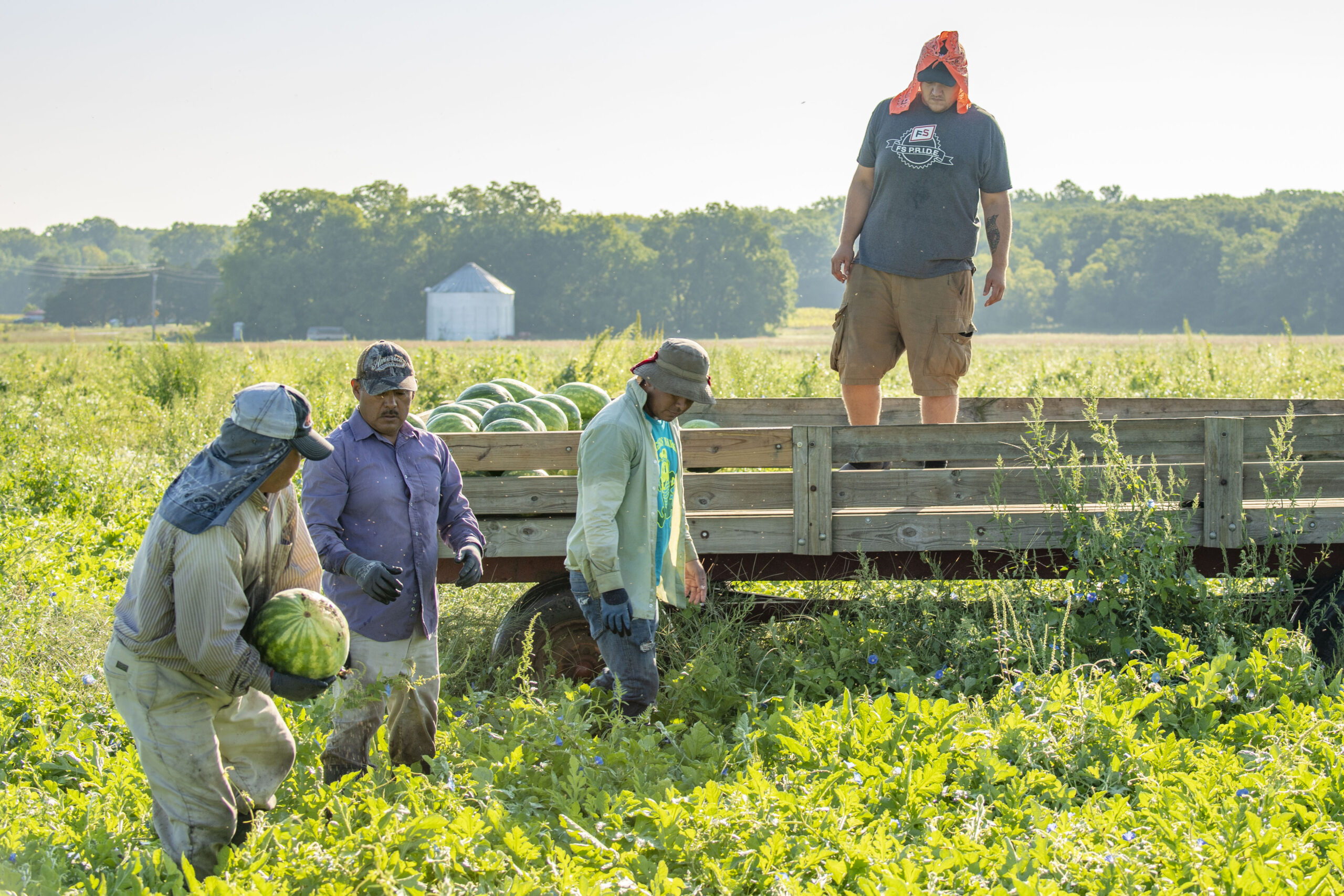
A farmworker has harvested a watermelon and prepares to pass it along to other workers who will place it on the harvest truck.

USDA photo by Preston Keres. 

In partnership with New Jersey Farm Bureau, we invite you to join us for a two-part webinar series titled “Don’t Sweat Heat Stress in Agriculture”.

  • Wednesday, June 5 from 7:00-8:00 PM
    • An introduction to heat stress issues in agriculture. We will also share tools farmers can use to evaluate heat risk and recommended resources for guidance on heat stress prevention.
  • Wednesday, June 12 from 7:00-8:00 PM
    • An overview on signs of heat stress and corresponding first aid, as well as strategies for heat stress prevention. A panel of farmers will discuss their currently used strategies for employee management during periods of high heat.

You must register to attend these webinars by visiting https://go.rutgers.edu/heat-stress-in-ag

Questions? Contact Kate Brown, County ANR Agent with RCE-Somerset County, at 908-526-6293 x4 or kbrown@njaes.rutgers.edu.

Tree Fruit IPM Report for May 8, 2024

Peach:

Bacterial Spot: Copper formulations should be used starting at petal fall to suppress bacterial spot. Generally we recommend starting at 0.5 ozs metallic copper and gradually lowering the rate as the season progresses. The rate applied will depend on the formulation. Dr. Lalancette published a chart listing common copper formulations and rates for peach and nectarine applications. Avoid combining copper with captan especially if it has been overcast for several days. Also avoid acidic spray solutions when applying copper. Dr. Lalancette has published a handy guide for copper applications in early covers. Antibiotics containing oxytetracycline may also be used and may offer slightly more residual activity during long wetting periods. We have not seen any bacterial spot symptoms as of this writing except for one location in a northern county.

Oriental Fruit Moth: A biofix point for OFM was set on 4/10 in both northern and southern counties.  The first of two insecticide timings for first generation Oriental Fruit Moth control fall at 170-200 degree days base 45 after biofix. This timing generally coincides with 100% petal fall in peaches. Timings are updated below: Note that timings have been pushed back from last week due to cooler than forecast weather. Do not apply insecticides until all bloom is off. No Insecticides for OFM are needed where Mating Disruption is implemented.

OFM 1st Generation Timing
Insecticide Type
County/Region Degree Days by  5/7 base 45 Conventional

170-200, 350-375

Diamide

100-150, 300-350

Gloucester – Southern 393 1st –past

2nd – 5/5-5/6

1st –past

2nd –past

Middlesex – Northern 309 1st –past

2nd –5/9-5/11

 1st – past

2nd –5/7-5/9

Green Peach Aphid: GPA colonies begin forming sometime during bloom. Examine trees for the presence of colonies from pink to shuck split. Count the number of colonies on ten trees and use a treatment threshold of 2 colonies/tree at petal fall for peach, and 1 colony/tree for nectarine. The best way to scout for aphids during bloom is with a beating tray. Blossoms may also be collected, opened, and examined for the presence of aphids using a hand lens. This is particularly important for nectarine blocks. Check 10 trees per block with the beating tray. Collect 50 blossoms per block and examine for the presence of aphids. If more than 1 colony of aphids are found in nectarines, or 2-3 colonies are found in peaches, an insecticide for aphids will be needed when all petals are off. See the NJ Commercial Tree Fruit Production Guide for recommended materials and rates. The first aphid colonies curling leaves was noted in southern counties the week of 4/22.

Plum Curculio; Tarnished Plant Bugs; and Other Catfacing Insects: Plum Curculio start to move into orchards at about 88-100 degree days base 50 after January 1. Applications for PC should be initiated once all petals are off, with a second application made with ovicidal materials at 379-402 DD. Currently we have accumulated about 331 DD base 50 in southern counties, and 237 DD base 50 in northern counties. Growers can monitor degree day development at their site by finding the nearest weather station and using the degree day development tool at NEWA. Catfacing insects are active now and can cause injury.

Scale Insects: White peach scale crawlers have not yet emerged but usually begin emergence about the third week of May and continue emergence until about the middle of June. San jose scale crawlers typically begin emergence about late May or Early June and continue emergence for up to 6 weeks. Control options during crawler emergence include Neonicitiniods (suppression only), and the IGR’s Esteem and Centaur. See the NJ Commercial Tree Fruit Production Guide and the product labels for more information.

Lesser and Greater Peach Tree Borers: Growers using mating disruption for borer control can begin placing dispensers around the end of April and should have them in place by mid-May.

Apples and Pears:

Diseases: Now that primary scab is nearing the end, or has ended, the focus turns toward summer diseases such as fruit rots (esp. Bitter rot), and sooty blotch and fly speck. Bitter rot control has been difficult at best in recent years even where management programs have been rigorous. Research has suggested Products such as Merivon, Luna Sensation, Inspire Super, and Aprovia may be effective, and longtime reliable broad spectrum fungicides such as omega, captan and ziram should provide control. Experience has suggested that the addition of phosphorous acid products such as Prophyt or Rampart to captan sprays may improve control. Observations are that these products improve control of other summer diseases such as sooty blotch and flyspeck, and may help suppress scab infections where present.

Fire Blight: Infections can still occur post bloom so covers with antibiotics when infection events are forecast using the NEWA fire blight model may be beneficial. Remember to rotate streptomycin and oxytetracycline products. If symptoms appear, it is generally recommended to cut out infected limbs however this is a practical decision that must be made. This blog post from Michigan State may be helpful to decide whether it is worth cutting out infected tissue.

Codling Moth: A Codling Moth Biofix was set in Southern counties on 4/22. See the NJ Commercial Tree Fruit Production Guide for recommended materials and rates. Where Mating Disruption has been employed, supplemental Madex applications should be made at the timings listed below.

Codling Moth Degree Day Timing
Application and Insecticide Type
County Area Biofix Rimon:

75-100DD + 14-17 days later


Intrepid

150 + 450 DD

Diamides – Altacor, Voliam mixes: (150-200 DD)

Madex

250 DD + every 7-9 days during brood hatch (later if first spray is an IGR)

Standard Insecticides –  Delegate, Avaunt, OP’s, carbamates, pyrethroids

250 DD + 550 DD


DD 75 100 150 450 250 250 550
Southern April 22 past past 5/8 Too far off May 14 May 14 Too far off
Northern  May 1 5/7 5/9 5/14 Too far off Too far off Too far off Too far off

Scale Insects: Dormant oil applications are standard recommendations for scale control but in some years when conditions are not optimal for oil application scale control may be less than desired. Where oil was not applied or in orchards where scale is a recurring problem, an application of Centaur at petal fall or Movento between petal fall and first cover should “clean up” problem blocks. Centaur is recommended at 34.5 ozs./ac and Movento should be applied at 6-9 ozs./ac. A penetrant must be included to Movento as per the product label. Movento will also control apple aphids, including Wooly Aphid, when used at this timing. In pears Movento may also control aphids and 2nd generation pear psylla (if eggs or recently hatched nymphs are present).

Rosy Apple Aphid:  If a pre-bloom application was not made, monitor for colonies during bloom and use a treatment threshold of 1 colony/tree at petal fall. Rosy aphid colonies were noted in a few southern county orchards last week.

Wooly Apple Aphid (WAA); Green Apple (Spirea) Aphids (GAA): GAA colonies are beginning to appear in some apple blocks. GAA is generally a pest that can be tolerated since they do little direct damage. Treatment thresholds for GAA are if 50% of the shoots are infested with no beneficial insects present. WAA aerial colonies are also beginning to form in southern counties. This is about a month earlier than usually observed. In most years these are controlled by beneficials however in some years like 2022, serious outbreaks can occur. The best control for WAA is Movento applied before or when the first colonies appear. Diazinon is also effective at knocking down infestations. Movento will also control GAA and should control san jose scale when applied in mid-May, and suppress scale when applied in late May or early June.  Do not combine Diazinon with Captan.

Ambrosia Beetle : Trap captures continue at precious week’s levels. Infested trees should be showing signs of stress or will be soon. Once these beetles bore into the trunk, they will form a gallery in the heartwood of the tree to lay their eggs and farm the ambrosia fungus to feed themselves and their larvae. Once the female lays her eggs, it will take about 30 days for them to become adults and emerge from their host tree to begin the second flight. If you have had a history of this pest in your orchard, you should begin scouting for damage and remove any trees that have been attacked. It may be beneficial to leave attacked trees in the orchard for a few weeks before removal so they can act as trap trees to reduce populations. Beetles generally do not leave the host tree once they’ve attacked it. They will attract other beetles to the stressed tree and adjacent trees so they tend to stay in one area rather than spread throughout the orchard.

Pear Psylla:  Second generation pear psylla have not appeared yet, but usually begin hatching mid-late May. Options for control include spynosyn products such as Delegate and Entrust, and the neocitinoids (IRAC group 4A). The addition of 0.25-1 gal of summer oil may improve control. Other options include Movento, and products containing abamectin. Be sure to read and follow the label instructions regarding the addition of penetrants for these products.

 Grapes Grapes: The most important diseases to manage at this time are Phomopsis and Powdery Mildew. At 3″ growth start managing for Black Rot. More information about early season disease control can be found in this blogpost from Virginia Tech. SLF have started hatching in southern counties and will continue to hatch over the next few weeks. There is no need to control SLF at this time.

Phenology Table: Based on annual observations made in Gloucester County.

Pest Event or Growth Stage Approximate Date 2024 Observed Date
 Bud Swell (Redhaven/PF-17)  March 23 +/- 15 Days March 13
1/4″ Green Tip Red Delicious March 31 +/- 13 Days March 18
Pink Peach (Redhaven/PF-17) April 4 +/- 15 Days March 18
Tight Cluster Red Delicious April 9 +/- 13 Days March 30
Full Bloom Peach (Redhaven/PF-17) April 9 +/- 14 Days April 5
Pink Apple (Red Delicious) April 14 +/- 12 Days April 9
Full Bloom Apple (Red Delicious) April 22 +/- 11 Days April 20
Petal Fall (Redhaven) April 22 +/- 10 Days April 15
Petal Fall (Red Delicious) April 27 +/- 13 Days  May 3
Shuck Split (Redhaven) April 30 +/- 11 Days  April 22
Pit Hardening June 15 +/- 9 Days


Tree Fruit Trap Captures – Southern Counties

STLM TABM-A CM BMSB OFM-A DWB OFM-P TABM-P LPTB PTB
3/23/2024 70 0
3/30/2024 29 0 0
4/6/2024 421 0 0
4/13/2024 415 7 1
4/20/2024 900 7 0
4/27/2024 312 2 22  1
5/4/2024 137 2 8 27 1 5

Tree Fruit Trap Captures – Northern Counties

STLM TABM-A CM BMSB OFM-A DWB OFM-P TABM-P LPTB PTB AMBROSIA BEETLE
3/23/2024
3/30/2024
4/6/2024 0 0
4/13/2024 3.25 37.6
4/20/2024 11.75 93
4/27/2024 0 19 50
5/4/2024 1 16 19 124

RU Ready to Farm Equipment Demo Day at Specialty Crop Research Farm – Cream Ridge

Register here or use the QR code:
https://go.rutgers.edu/RUReadytoFarmEquipmentDemo

RU Ready to Farm Equipment Demo May 18, 2024 flier


Webinar on the FSMA Final Rule on Pre-Harvest Agricultural Water – MAY 20, 2024 – Time: 1:00 PM – 2:00 PM ET

The U.S. Food and Drug Administration (FDA) invites the public to registerExternal Link Disclaimer for a webinar on the Standards for the Growing, Harvesting, Packing, and Holding of Produce for Human Consumption Relating to Agricultural Water (Agricultural Water Final Rule). The purpose of this webinar is to provide an overview of the final rule and answer pre-submitted and live questions.

Background

The final rule replaces certain pre-harvest agricultural water requirements for covered produce (other than sprouts) in the 2015 Produce Safety Rule with requirements for systems-based agricultural water assessments to determine and guide appropriate measures to minimize potential risks associated with pre-harvest agricultural water. Specifically, this rule:

  • Establishes requirements for agricultural water assessments that evaluate a variety of factors that are key determinants of contamination risks associated with pre-harvest agricultural water; this includes an evaluation of the water system, water use practices, crop characteristics, environmental conditions, potential impacts on water from adjacent and nearby land, and other relevant factors;


  • Includes testing pre-harvest agricultural water as part of an assessment in certain circumstances;


  • Requires farms to implement effective mitigation measures within specific timeframes based on findings from their assessments. Hazards related to certain activities associated with adjacent and nearby land uses are subject to expedited mitigation; and


  • Adds new options for mitigation measures, providing farms with additional flexibility in responding to findings from their pre-harvest agricultural water assessments.

The rule also finalizes the dates for compliance with the pre-harvest agricultural water requirements for non-sprout covered produce as follows:

  • For very small farms: 2 years, 9 months (April 5, 2007)
  • For small farms: 1 year, 9 months (April 6, 2026)
  • For all other farms: 9 months (April 7, 2025)

 Registration

The May 20 webinar is a virtual event. Registration is free and will be open through the day of the webinar. Persons interested in attending the public meeting must register at: FSMA Final Rule on Pre-Harvest Agricultural Water Webinar

If you have questions about the final rule that you wish to submit for possible discussion during the webinar, please note them during registration. All questions must be received by May 15, 2024, to be considered for discussion.

Manage your transplant watering schedule

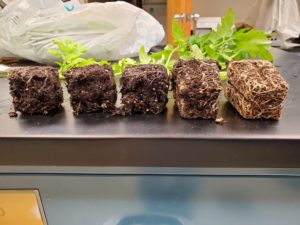
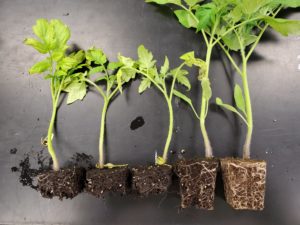
The weather this spring has been relatively wet with a few hot days sprinkled in between. Unfortunately, these weather patterns can cause problems in transplant production, especially when it comes time for watering. Hot days may require more than one watering, and cloudy days may require no water. In either case, growers need to anticipate their transplant water needs without over or under estimating watering. Of course, other factors include the growing media and the plant itself. Lets focus on media, for example, growers using a lighter soilless media, these will dry out much quicker than a heavier media and will require more daily watering (e.g., once in AM, afternoon, and evening). Growers using a heavier media may only have to water once a day, or early in the AM and maybe once more in the PM. Either type of media works fine as long as the weather doesn’t change and it fits the growers needs. Proper transplant watering is all about adjustment. If you have stuck to the same daily watering schedule this spring its very likely you have grossly over or under watered your transplants at some point. And, in all likelihood, grossly over or under watered trying to correct the situation. Uniformity is also key when it comes to proper transplant watering. If you find yourself spot watering out of schedule because some flats dry out quicker than others then most likely your uniformity is off. This is easily done when watering is done by hand with a wand. Poor uniformity can also be the result of transplant flats being set on uneven benches or uneven floors. Much like a field, low spots tend to collect the most water. All of this can lead to uneven transplant growth as well as disease and pest pressure, such as fungus gnat problems. If you are experiencing uneven transplant growth, then most likely your watering is uneven. For transplant growth to remain even, flats need to be watered each time to maximum water holding capacity, where each cell in the flat holds the maximum amount of water. An easy way to see this is to watch for water dripping out the bottom of the flat. As important, flats should also uniformly dry out. Below is an example of tomato transplants that have been pulled from the same flat. You can see the differences in plant height as well as root system formation as a result of uneven watering in a “heavy” soilless media. Cells that have remained on the wet side show poor growth and poor root system development because of a waterlogged cell; whereas cells that have been receiving the appropriate amount of water have much better growth and a nice root ball. The weight test. When was the last time you picked up a transplant tray? Picking up a transplant flat every once in a while will give you an idea of how well your watering schedule and uniformity is. Everyone has picked up a tray that has felt like it has the weight of a rock or the tray breaks apart because of the weight, or when you pick it up and it feels as light as a feather. Doing this is a good way to determine if your soilless media is “heavy” – holds more water than you think or if you have been overwatering on days you shouldn’t be or if you have not watered enough. Consistency is key when watering. Going from an extremely wet to an extremely dry transplant tray is not what you want for the transplant production season. You want consistent soil moisture as much as possible, thus proper transplant watering is all about the proper adjustments and knowing your media.

Root growth in tomato transplants

Differences in soil moisture across a single flat of tomato transplants.

Root growth in tomato transplants

Roots of tomato transplants in a flat that has irregular soil moisture.

Identifying and Controlling Pathogens at Transplanting in 2024

It is extremely important to know which pathogen is causing damping-off problems and which fungicide to properly apply. The key to controlling damping-off is being proactive instead of reactive. Always refer to the fungicide label for crop use, pathogens controlled, and application rates.

Damping-off is caused by a number of important vegetable pathogens and is very common at transplanting. Common pathogens that cause damping-off include Pythium, Phytophthora, Rhizoctonia and Fusarium spp.

Control of damping-off depends on a number of factors. First, is recognizing the conditions which may be leading to the problem (i.e., watering schedule/greenhouse growing conditions) and second, identifying the pathogen causing the problem. Reducing the chances for damping-off always begins with good sanitation practices prior to transplant production.

Conditions Favoring Damping-off

Although all four pathogens are associated with damping-off, the conditions which favor their development are very different. In general, Phytophthora and Pythium are more likely to cause damping-off in cool, wet or overwatered soils that aren’t allowed to dry out due to cloudy weather or cooler temperatures. Conversely, Rhizoctonia and Fusarium are more likely to cause damping-off under warmer, drier conditions especially if plug trays are kept on the dry side to help reduce transplant growth. [Read more…]