Archives for August 2023

Snyder Farm Twilight Tour & Meeting, Wed. August 23, 2023

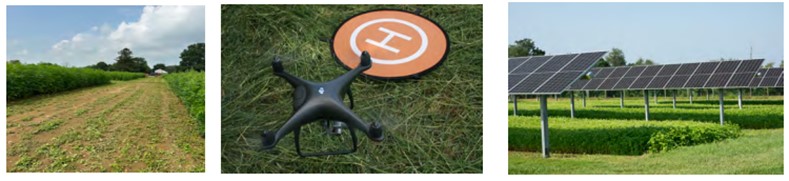
collage of hemp, a drone and agrivoltaic installation at Rutgers Snyder Farm

Twilight Tour and Meeting*
Fiber Hemp Production
Drones in Agriculture
Agrivoltaics Research

Date/Time:
Wednesday, August 23, 2023
6:00 – 8:00 PM

Location:
Snyder Research and Extension Farm
140 Locust Grove Rd.
Pittstown, NJ 08867

This program is offered to assist producers, and anyone interested in learning more about Fiber Hemp Production and current Agrivoltaics research in NJ.

Topics Include:

  • Tour of Rutgers Fiber Hemp Plots
    See what the hemp is going on with production and management. Is hemp viable in NJ?
  • Drone sprayers and ground driven sprayers in agriculture
    Learn how drones can be used in agricultural production. Learn the requirements for applying pesticides using drones.
  • Tour of Rutgers Agrivoltaics Research Plot
    Learn about current and planned agrivoltaics research at Rutgers. Are agriculture and solar energy production compatible?

For more information contact:  RCE, Sussex County  973-948-3040

*Pesticide credits pending
Soil Fertility from Non-Commercial Nutrient Sources

All essential plant nutrients cycle through the ecosystem of soil, water, air, plant, microbe, and animal.  Agronomic information about the composition and beneficial use of waste materials and how the nutrients can be recycled can help growers reduce the need to purchase soil fertility inputs.  Many different types of non-commercial nutrient sources are available in New Jersey.  Examples include horse manure with bedding, shade tree leaves, lawn clippings, wood chips, food waste, coffee grounds, eggshells, wood ash and more.

With 43,000 horses in New Jersey, there is an abundance of horse manure produced.  One horse can produce about 65 pounds of manure plus bedding per day.  The quantity of horse manure is substantial on a statewide basis.  Unfortunately, sometimes horse manure goes to landfills when it should be used to build and sustain soil fertility.

The Soil Profile Newsletter 2023 issue posted at Rutgers NJAES explains how to build and maintain soil fertility harnessing the nutrient supplying ability of horse manure and many other types of non-commercial materials.  The chemical composition and soil fertility value of each material is presented for beneficial use.  Available on the web at Rutgers NJAES ‘The Soil Profile’: https://njaes.rutgers.edu/soil-profile/pdfs/sp-v28.pdf

‘Fields of Devotion’ premiers on NJ-PBS on Saturday, August 19th at 5 PM.

Portions of this story are courtesy of Rutgers School of Environmental and Biological Sciences

 Fields of Devotion, the science-in-action film featuring Rutgers University plant biologists developing disease-resistant food crops, is bringing farmers and university researchers together to discuss ways to jointly tackle New Jersey’s food production challenges. 

The film, directed by Rutgers School of Environmental and Biological Sciences (SEBS) science communications researcher Dena Seidel, will air on New Jersey PBS on August 19 at 5:00 p.m. and will be available for streaming on the platform Kanopy on Monday, August 21. Kanopy is free for university staff, faculty, and students, or anyone with a public library card. You can view the trailer for the film here.

Fields of Devotion highlights the process of identifying genes for disease resistance in commercial basil, a high-profit crop that small family farmers depend on, thanks to research led by SEBS Distinguished Professor Jim Simon and Andy Wyenandt, Professor, Extension Specialist in Vegetable Pathology, both in the Department of Plant Biology, who are featured in the documentary.

Simon and his team used innovative and traditional plant breeding technologies to identify particular genes in basil that they then used to breed disease- and climate-resistant varieties, including one called Rutgers Devotion DMR (downy mildew resistant), which was bred to withstand the deadly pathogen BDM (basil downy mildew). In order to combat future strains of downy mildew, Rutgers plant biologists continue their basil breeding to increase the plants’ resiliency, thanks in part to the work of graduate students and many other faculty and the introduction of CRISPR-gene editing technology to the process.

Rutgers’ Office for Research, whose mission is to support the research, mission, and creative endeavors of all Rutgers faculty, collaborated with Simon by helping him license the novel varieties of basil.

“Conducting science is incredibly complex, and Dena’s model of documenting our research over time and then shaping it into a science-in-action story to communicate what we do in a way that is relatable to broader audiences is phenomenal,” said Simon. “Fields of Devotion is having an incredible impact in helping scientists and farmers listen to each other and imagine ways of working together to strengthen our food system.”

“Professor Simon is a fantastic example of ‘Rutgers excellence,’” said Deborah Perez Fernandez, executive director of Rutgers Technology Transfer. “He has been at the forefront of important agricultural work by developing basil varieties that can survive extreme weather and devastating diseases and helping to re-grow the New Jersey basil industry.”

“NJ PBS is committed to presenting local stories about and for New Jersey,” said NJ PBS Vice President and General Manager, Joe Lee. “Fields of Devotion is at home on our network as it spotlights the agricultural industry that makes this the Garden State, how innovation by our state university keeps it growing, and how its research benefits the entire country.”

Fields of Devotion was first screened to a full house at the New Jersey Agriculture Convention in March 2023. Augustine Wuillermin, a vegetable farmer from Atlantic County, attended the screening.

“I feel that Fields of Devotion represents me. This is a film all growers should see, and the public should see, to better understand where our food comes from. It really needs to be shown to our political leaders too, so they see the challenges we farmers face and all the hard work done at the university and experiment station (New Jersey Agricultural Experiment Station) to help solve agriculture problems,” said Wuillermin.

Bill Hlubik is department head of Rutgers Cooperative Extension of Middlesex County. He leads the Rutgers Beginner Farmer Training Program and sees the film as an invaluable teaching tool.

Fields of Devotion provides a powerful visual tool that allows farmers and researchers to learn from each other and imagine new ways to work together. As an extension agent, it is my intention to bring Fields of Devotion into the community to share it with our agriculture leaders and beginning farmers who are facing many challenges in today’s changing climate,” said Hlubik.

So far, Fields of Devotion has been accepted into nine film festivals. It has received positive reviews, winning three film festival awards, to date.

Executive Director of the Northeast Organic Farming Association of New Jersey, Devin Cornia, is among those who see the value of this kind of compelling, in-depth storytelling about science and research in a relatable way.

Fields of Devotion is a captivating and comprehensive look into the hard work of plant breeding, which is costly, often spans decades, and is relatively out of view of farmers and the public,” said Cornia.

“This film illuminates the importance and impact of plant breeding and sows seeds of gratitude for the researchers and scientists keeping our food supply resilient in an ever-changing, invariably challenging landscape,” he added.

The Hunterdon County Board of Agriculture, The Nature Conservancy, and the American Society for Horticultural Science (ASHS) all requested in-house screenings of the 30-minute film as part of convening on how agricultural science can be of service to food producers in the midst of climate change. Viewers at the ASHS showing rated the film 5/5.

After watching Fields of Devotion, Rutgers alumna Penny Pray (DC’70) says she was so proud of Rutgers scientist Jim Simon and his team, and their years of hard work seeking a “cure to downy mildew affecting the very important basil production in New Jersey and then making a documentary to show all the steps.”

Penny and her husband, Don, were so moved after viewing Fields of Devotion that they donated funds for a science-in-action film screening for alumni audiences in the fall.

It is definitely something the whole Rutgers community and our hundreds of thousands of alumni should know about,” she added.

FSMA PSR Qualified Exempt? Keep Up with Your Paperwork!

If your farm is considered qualified exempt from the FSMA Produce Safety Rule you have probably needed to provide paperwork to the NJDA at least once.  Farms should be reviewing and updating their documentation that proves qualified exemption status annually and be prepared to show this again to the NJDA when required. Guidance and template forms are available online. Need a refresher on what a qualified exemption is? See below!

Under the FDA Food Safety Modernization Act (FSMA) Produce Safety Rule, farms are eligible for a qualified exemption and associated modified requirements if they meet certain criteria:

The farm’s food sales averaged less than $610,182 (adjusted for inflation) per year during 2020-2022; and
The average value of the farm’s sales to qualified end-users exceeded the average value of the farm’s sales to all others during the previous three years. A qualified end-user is either (a) the consumer of the food or (b) a restaurant or retail food establishment that is located in the same state or the same Indian reservation as the farm or not more than 275 miles away.
Because of COVID-19, state and local governments across the United States had instituted public health orders that resulted in many restaurants and retail food establishments either closing or significantly limiting their operations, leaving many farmers without their usual buyers during the 2020-2022 period. The guidance intends to allow affected farmers to shift their sales away from qualified end-users while still being considered eligible for the qualified exemption. Specifically, under the temporary policy announced in the guidance, farms that are currently eligible for the qualified exemption and associated modified requirements will still be considered eligible, even if they shift sales away from qualified end-users, so long as they continue to meet the requirement that their average food sales during the previous three years total less than $610,182 (adjusted for inflation). This temporary policy is intended to remain in effect only for the duration of the public health emergency, after which the FDA intends to issue additional guidance.

Qualified exempt farms must comply with modified requirements under the Produce Safety Rule, which include establishing and keeping certain records and prominently displaying their name and business address on food packaging or at the point of sale. Farms are responsible for ensuring that the food they produce is not adulterated under the Federal Food, Drug, and Cosmetic Act (FD&C Act) and they should use good agricultural practices to ensure the safety of their produce.

Vegetable IPM Update 8/16/23

Sweet Corn

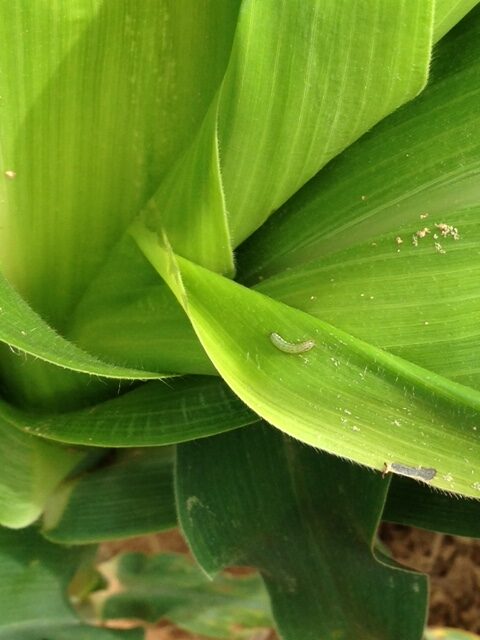
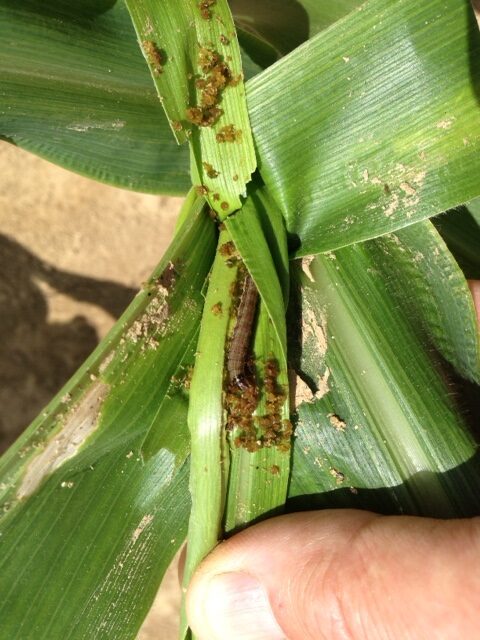
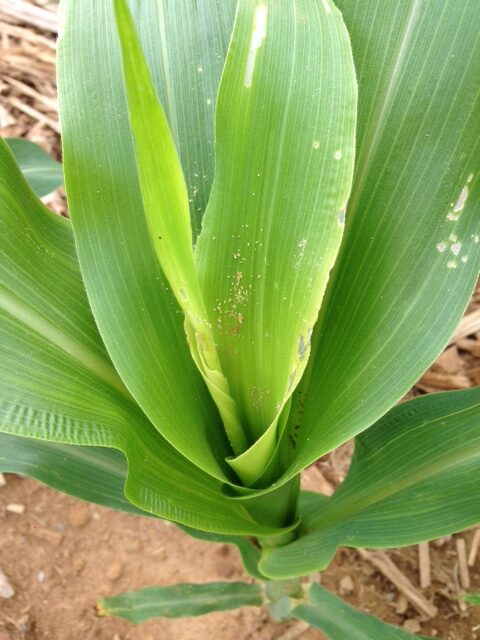
 Fall armyworm (FAW) infestations in whorl stage plantings remain a presence.  In scouted fields, some infestations in whorl corn are in excess of 20%, and are likely much higher in the southern coastal areas.   Growers are advised to check whorl and seedling stage corn plantings weekly for signs of FAW.  Consider treating if infestation rates exceed 10%.  This pest is capable of significant injury to sweet corn plants, resulting in severe stunting and failure to produce viable ears.  Note that growers of Attribute II type genetically engineered corn are unlikely to see damage from FAW.

Infested plantInfested plantNewly hatched FAW larvae cause holes and scratches on leaves that are similar to European corn borer (ECB) feeding, except that they tend to be more concentrated and always lead down into the whorl  (see photos at left).  As the larvae grow, the feeding becomes more destructive, with large ragged holes and obvious droppings deposited in the whorl (see photo at right)Infested plant

We will provide updates on new FAW appearances and severity as reports come in.  FAW are resistant to synthetic pyrethroids.  Effective sprays should include IRAC grp. 5 (spinosyns) or IRAC grp. 28 (diamides).  The carbamate (IRAC grp. 1A) Lannate is also still effective.  Sufficient water should be used in the applications to allow the solution to penetrate the layer of droppings that may have formed above the caterpillar.


[Read more…]

NJDA Ag Recycling Program — 1 CORE Credit Award: See Dates for Atlantic, Monmouth, & Salem Sites

Pesticide container disposal is offered to agricultural, professional, and commercial pesticide applicators who hold a NJDEP pesticide license. One core credit will be given to pesticide license holders who follow required processing steps and bring their license with them at time of collection.  The program accepts non-refillable, high-density polyethylene #2 (HDPE) containers that are no […]