Pest Scouting Update – 25 to 150 GDDs Plus Printable resources!

Additional resource: SLF EGG MASS GUIDE – USE FOR TRAINING (click here to download)

We have compiled the GDD resources into one single document – please download and print multiple copies of this for yourself and employees in efforts to best scout for these insect pests. These guides do not dictate when to spray, rather they inform scouting ranges for insect pests, vulnerable life-stages, and overlapping timeframes for multiple troublesome pests.

Please Download these resources:

Nursery and Landscape Pest Scouting Guide 2022 PDF (note this contains conifer pests as well)

Conifer Pest Scouting Guide 2022 PDF

Refer to this post “Obtaining your local growing degree-days” for additional information 

We will be making regular announcements throughout the season, however we wanted you to have this beta-version of the compiled growing-degree day information. This will be updated and modified throughout the season – PLEASE let me know what difference you are seeing in the field so we can continue to make this resource better for all of us.   

Contact: twaller@njaes.rutgers.edu (or call the Cumberland County Extension Office – 856-451-2800)

Growing degree-days as of writing this 3/22/22 (using USPEST.org weather station codes):

  • Southern (NJ50): 74
  • Central (NJ10): 72
  • Northeastern (Greater NYC Metro area (D6302): 41
  • Northwestern (NJ59): 21
  • Crop type Common Name Scientific Name GDD Min (50F) GDD Max (95F) Reference Developmental / Target Stage
    Conifer Zimmerman pine moth Dioryctria zimmermani 25 100 3 1st larvae
    Conifer Cooley spruce gall adelgid Adelges cooleyi 25 120 3 Spring control of overwintering stage
    Conifer Eastern spruce gall adelgid Adelges abietis 25 100 3 Spring control of overwintering stage
    Conifer Northern pine weevil Pissodes approximatus 25 100 4 1st adults active
    Conifer Zimmerman pine moth Dioryctria zimmermani 25 100 3 1st larvae active
    Conifer Cooley spruce gall adelgid Adelges cooleyi 25 120 3 Spring control of overwintering stage
    Conifer White pine weevil Pissodes strobi 25 220 4 1st adults active
    Shade trees European fruit lecanium Parthenolecanium corni 35 145 2 Spring control of overwintering stage
    Many, evergreen Euonymus scale Unaspis euonymi 35 120 2 Spring control of overwintering stage
    Conifer European pine sawfly Neodiprion sertifer 35 145 1 Hatched larvae
    Conifer Fletcher scale Parthenolecanium fletcheri 35 148 2 Spring control of overwintering stage
    Conifer European pine shoot moth / borer Rhyacionia buoiana 50 220 4 1st larvae active
    Maples Maple bladdergall mite Vasates quadripedes 58 148 2 Spring control of overwintering stage
    Honeylocust Honeylocust plant bug Diaphnocoris chlorionis 58 246 2 Nympths / adults active
    Conifer Pine tortoise scale Toumeyela parvicornis 58 148 2 Cralwer activity
    Conifer Pine bark adelgid Pineus strobi 58 618 2 Spring control of overwintering stage
    Conifer Balsam twig aphid Mindarus abietinus 60 100 4 Egg hatch
    Many Southern red mite Oligonychus ilicis 69 157 RU Spring hatch
    Conifer Eastern pine shoot borer Eucosma gloriola 75 200 4 1st adults active
    Malus, Prunus, many Eastern tent caterpillar Malacosoma americanum 90 190 2 Larvae treatment before tents apparent
    Many Gypsy moth Lymantria dispar 90 448 RU Larvae treatment (early instars)
    Conifer Cooley spruce gall adelgid Adelges cooleyi 90 180 4 1st adults active – Douglas fir
    Malus, Prunus, many Eastern tent caterpillar Malacosoma americanum 90 190 2 Larvae treatment before tents apparent (near 150-GDD50)
    Malus, Prunus, many Eastern tent caterpillar Malacosoma americanum 90 190 2 Larvae treatment before tents apparent (near 150-GDD50)
    Conifer Balsam twig aphid Mindarus abietinus 100 150 4 Stem mothers present (control target)
    Conifer Pine engraver (Ips bark beetle) Ips spp. 100 150 4 1st adults active
    Conifer European pine sawfly Neodiprion sertifer 100 195 4 1st larvae active
    Pieris Andromeda lace bug Stephanitis takeyai 115 279 RU Nymphs (1st generation)
    Azalea Azalea lace bug Stephanitis pyrioides 118 372 RU Nymphs (1st generation)
    Conifer Larch casebearer Coleophora laricella 120 150 4 Egg hatch
    Elm, Service berry Woolly elm aphid Eriosoma americana 121 246 2 (6) Control target
    Elm, Service berry Woolly elm aphid Eriosoma americana 121 246 2 (6) Control target
    Birch Birch leafminer Fenusa pusilla 123 290 RU Adults – egg laying
    Many Gypsy moth Lymantria dispar 145 200 4 Egg hatch, 1st larvae
    Holly Holly leaf miner Phytomyza ilicis 147 265 RU Adults – egg laying
    Many Cankerworms, inch-worms, loopers (many) 148 290 2 Larvae treatment
    Lilac, ash, privet, many Lilac / Ash Borer Podosesia syringae 148 299 2 Adult flight
    Yews, Rhododendrons, many Black Vine Weevil Otiorhynchus sulcatus 148 400 2 Pupation / Adult emergence
    Dogwood, many Dogwood Borer Synanthedon scitula 148 700 2 Adult activity
    Conifer Spruce spider mite Oligonychus ununguis 150 175 4 1st egg hatch
    Conifer Spruce needleminer Endothenia albolineana 150 200 4 1st larvae active
    Conifer Balsam gall midge Paradiplosis tumifex 150 300 4 Adults laying eggs
    Conifer Hemlock woolly adelgid Adelges tsugae 150 150 RU Eggs and 10% hatch
    Conifer Spruce spider mite Oligonychus ununguis 150 175 4 1st egg hatch
    Conifer Spruce needleminer Endothenia albolineana 150 200 4 1st larvae active
    Conifer Balsam gall midge Paradiplosis tumifex 150 300 4 Adults laying eggs
    Conifer Hemlock woolly adelgid Adelges tsugae 150 150 RU Eggs and 10% hatch
    Conifer Spruce spider mite Oligonychus ununguis 150 175 4 1st egg hatch
    Conifer Spruce needleminer Endothenia albolineana 150 200 4 1st larvae active
    Conifer Balsam gall midge Paradiplosis tumifex 150 300 4 Adults laying eggs

References:

RU Rutgers Cooperative Extension – Landscape IPM Notes
2 http://ccetompkins.org/resources/using-growing-degree-days-for-insect-management
3 https://extension.psu.edu/ipm-basics-for-christmas-trees#section-2
4 https://www.canr.msu.edu/ipm/agriculture/christmas_trees/gdd_of_conifer_insects
5 https://www.agriculture.nh.gov/publications-forms/documents/landscape-pests.pdf
6 https://extension.umd.edu/ipm/pest-predictive-calendar-landscapenursery
7 https://www.canr.msu.edu/ipm/agriculture/christmas_trees/gdd_of_landscape_insects
Unv. Del. Coorespondance with Dr. Kunkel (University of Delaware)-evolving GDD ranges
Compiled by – Timothy J. Waller, Ph.D. – Rutgers Cooperative Extension, Cumberland County Nursery Crops – twaller@njaes.rutgers.edu


Action required NOW to safeguard Nursery shipping – SLF egg mass guide, additional resources, permitting

EXTREMELY  IMPORTANT – PLUS EGG MASS VISUAL GUIDE

Crippling load-by-load phytosanitary requirements are a very REAL concern for the nursery industry this spring.

WE as an industry are in this together, in order to safeguard our industry please do the following:

  1. SLF Training Permits for hang-tags (click here) are required for each company driver who delivers your plants out-of-state. This training is relatively simple and you can also obtain Training materials to educate your employees (click here)
  2. Scout every plant for ANY SLF life stages – from dead adults to egg masses. REMOVE any egg masses prior to shipment and train employees to know the various appearances of SLF egg masses.
  3. Use this guide – SLF EGG MASS GUIDE – USE FOR TRAINING (click here to download) (print and hang up / distribute to personnel)
  4. Refer to this great resource from Penn State: Spotted Lanternfly Management Guide (click here)
    1. An excerpt pertaining to the use of Dormant/Hort oils to suffocate egg masses (note this is not enough for plants about to be shipped (scraping required!), rather this may be considered for plants with SLF that are not being shipped this spring)Ovicides to Kill Egg Masses
      Experiments have shown that some insecticide sprays can kill SLF eggs. So far, all experiments were done between February and April using egg masses that had intact protective coverings. The most effective insecticides tested that are registered for use on ornamentals were horticultural and dormant oils. When oils were applied directly to the egg masses at a concentration of at least 3 percent, they were effective in killing up to 75 percent of treated eggs. Labels must be followed to prevent plant damage, and not all plants should be sprayed due to phytotoxic damage potential.These experiments suggest that registered insecticidal oils may provide some control of eggs if they are applied between February and April in high enough volumes to get excellent coverage. Oils offer a lower-toxicity option and may provide some control of egg masses that are not accessible for scraping or smashing. However, for egg masses that are within a reachable area, scraping or smashing will provide greater efficacy than currently available ovicides. We are actively researching other ovicides that could provide increased control, and we encourage you to stay up to date on our progress.

Please be diligent in this matter. Early season sprays to target nymphs will be discussed soon, but for now remove ANY and ALL signs of SLF in ANY SHIPMENTS! 

Use this guide – SLF EGG MASS GUIDE – USE FOR TRAINING (click here to download)


The following is an alert and reminder from NJDA and NJNLA, and Nick Polanin’s prior post…

Grower Alert: Don’t Let Spotted Lanternfly Impact Spring Shipping

The spring shipping season is upon us, and Spotted Lanternfly (SLF) should be one of your top concerns. You are probably well aware of the shipping disruptions that could occur if any life stage of Spotted Lanternfly is found on outbound deliveries from NJ growers.

No doubt many of you heeded the NJ Dept. of Agriculture’s recommendations last fall and implemented control measures to prevent the spread of neighboring infestations into your nursery or greenhouse facility. To the extent that those efforts might have come up short, you would be well advised to begin scouting and removing any egg masses (and adult carcasses) from your crops – especially as items are being loaded for shipment. Otherwise, you run the risk of contaminated shipments being fully rejected by the vigorous inspections that are planned at out-of-state retail and landscape destinations this season.

Even though you may disagree with these measures, be advised that it remains within the discretion of any state to impose crippling load-by-load phytosanitary requirements on future deliveries.

Load-rejections that occurred last fall underscore the seriousness of the Spotted Lanternfly situation and the far-reaching impact it might have on your business and the NJ industry at large.

Additionally, Spotted Lanternfly training permits are required for each company driver who delivers your plants out-of-state. This training is relatively simple and available online by clicking HERE.

Should you have any questions, please feel free to reach out to NJNLA (609-291-7070) or the NJ Department of Agriculture Plant Diagnostic Lab (609-406-6939).

Joseph Zoltowski, NJDA; Ed Overdevest and Lori Jenssen, NJNLA

Grower Alert: Don’t Let Spotted Lanternfly Impact Spring Shipping

The following is an alert and reminder from NJDA and NJNLA

The spring shipping season is upon us, and Spotted Lanternfly (SLF) should be one of your top concerns. You are probably well aware of the shipping disruptions that could occur if any life stage of Spotted Lanternfly is found on outbound deliveries from NJ growers.

No doubt many of you heeded the NJ Dept. of Agriculture’s recommendations last fall and implemented control measures to prevent the spread of neighboring infestations into your nursery or greenhouse facility. To the extent that those efforts might have come up short, you would be well advised to begin scouting and removing any egg masses (and adult carcasses) from your crops – especially as items are being loaded for shipment. Otherwise, you run the risk of contaminated shipments being fully rejected by the vigorous inspections that are planned at out-of-state retail and landscape destinations this season.

Even though you may disagree with these measures, be advised that it remains within the discretion of any state to impose crippling load-by-load phytosanitary requirements on future deliveries.

Load-rejections that occurred last fall underscore the seriousness of the Spotted Lanternfly situation and the far-reaching impact it might have on your business and the NJ industry at large.

Additionally, Spotted Lanternfly training permits are required for each company driver who delivers your plants out-of-state. This training is relatively simple and available online by clicking HERE.

Should you have any questions, please feel free to reach out to NJNLA (609-291-7070) or the NJ Department of Agriculture Plant Diagnostic Lab (609-406-6939).

Joseph Zoltowski, NJDA; Ed Overdevest and Lori Jenssen, NJNLA

Spotted Lanternfly Summit 2022 (USDA-NIFA + collaborators) – Most up-to-date research from across the region

Next week, many of the researchers focused on the invasive Spotted Lanternfly will be presenting their findings at the 2022 Spotted Lantern Fly Summit.

(Quote from stopSLF.org) “Funding was provided by the Northeastern IPM Center to form a working group in summer of 2018 with Penn State as the lead institution. The working group met several times and submitted a successful proposal to the USDA-NIFA Specialty Crop Research Initiative in December 2018 to study the biology, ecology, and management of spotted lanternfly.”

Rutgers and many other universities, Federal, and State research groups from all SLF impacted areas are set to share their most up-to-date findings. Topics will cover various commodities, and will be research heavy, however, these sessions may prove valuable to you and your constituents.

Click here to register for this free event – 2022 Spotted Lanternfly Summit – Updates on research 


SLF Adults Are Here (again)

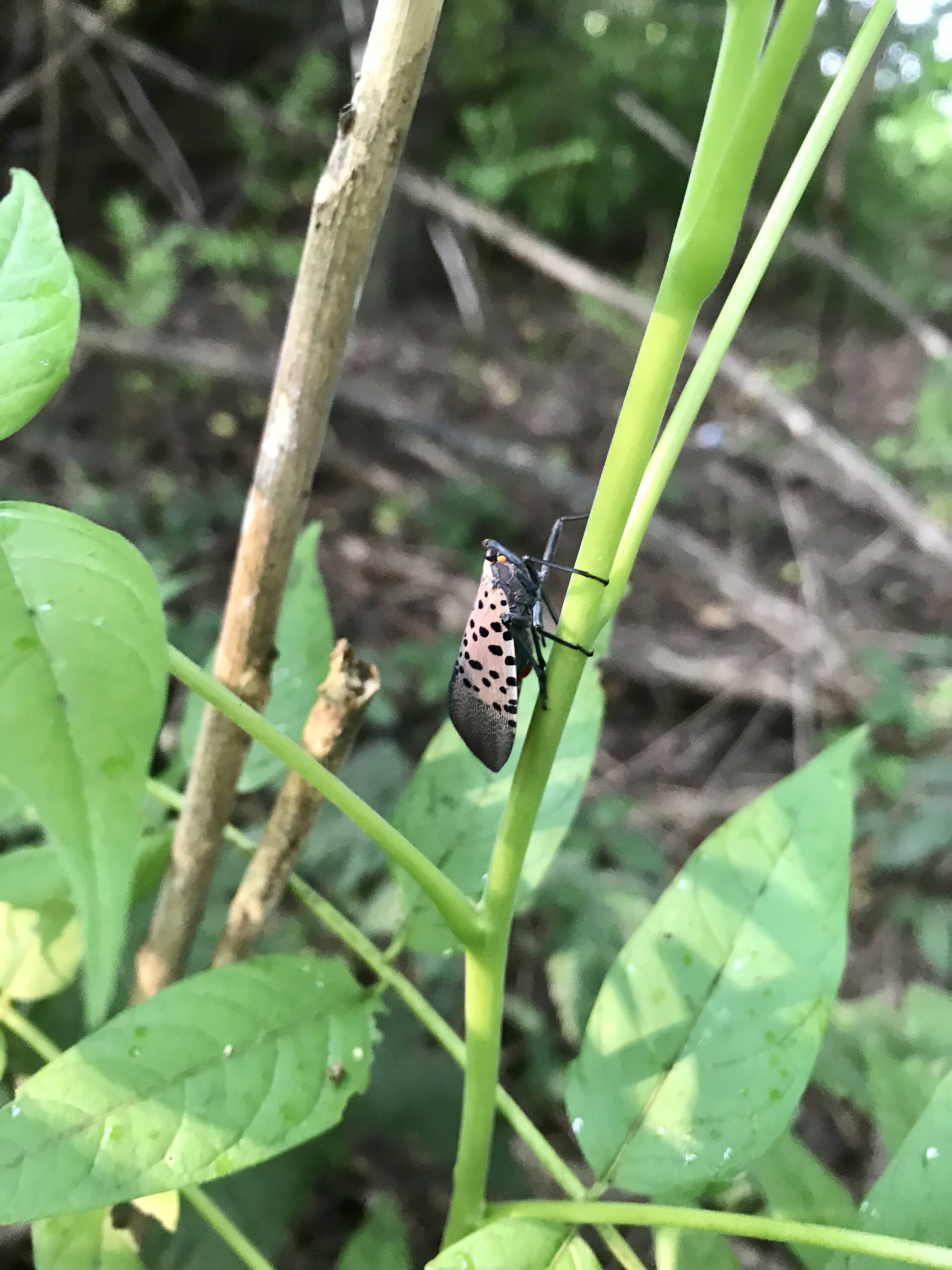
Right on time with last year’s observations, adult spotted lanternflies (SLF) were found in Pilesgrove (Salem County) NJ. In 2020 adults at the same location were found on July 23 so despite the earlier hatch observed in May, the phenology is right on track.
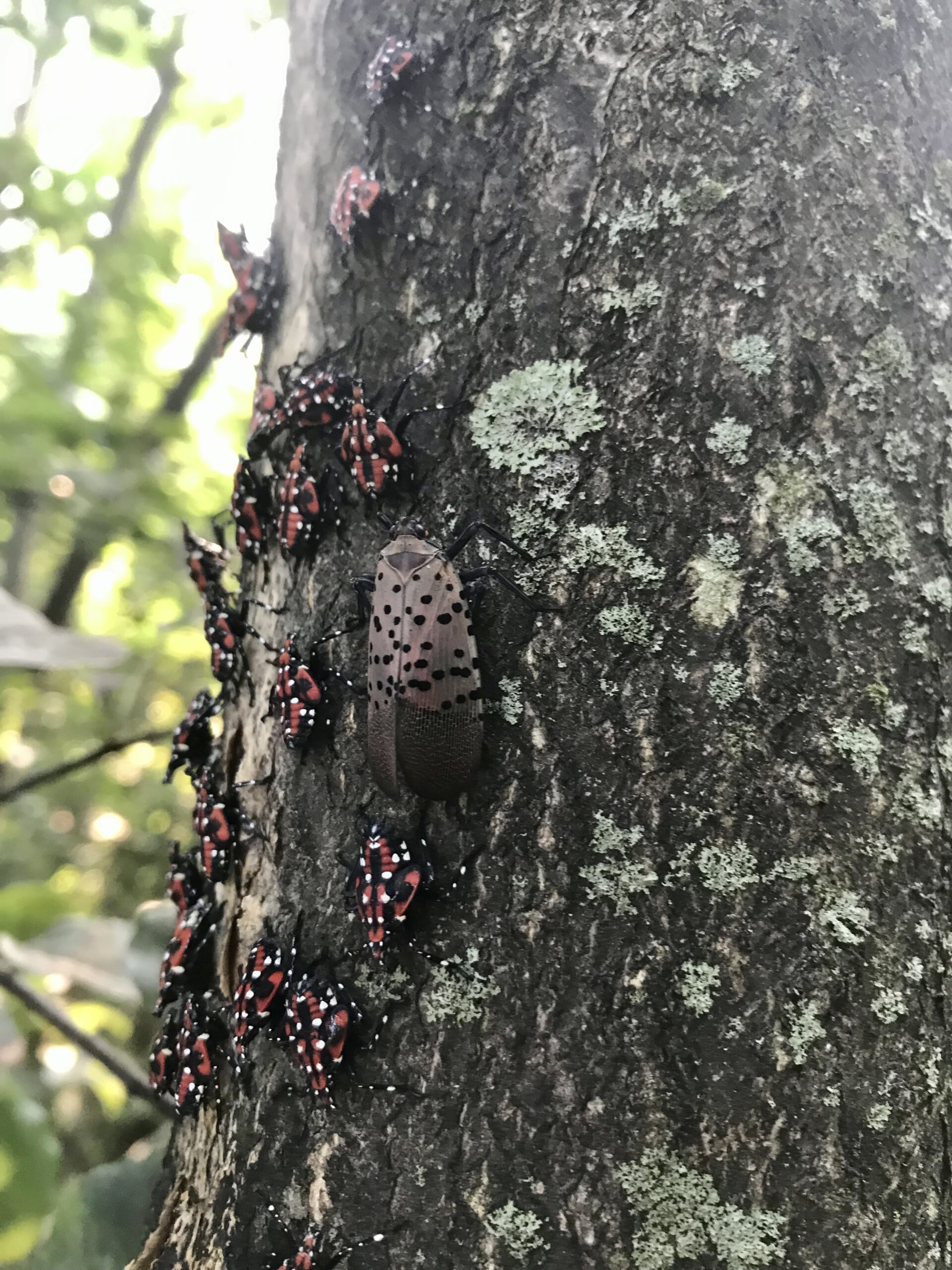
Adults were not the dominant life stage, mostly fourth instars were observed. Now is a critical time for management efforts as even these young adults will not become reproductive until September. Adults will congregate on trees, feeding in groups to access the phloem. At this time of year they prefer black walnut and tree of heaven and will gradually move towards red maples, willow, river birch, and sycamore. There are other hosts, these are just the ones we have consistently found high numbers of adults on in NJ.


In 2020, adults dispersed in large numbers to commercial vineyards around September 4. I think this dispersal is a combination of depletion of resources (they are literally sucking the sap out of trees) and density. As NJ populations of SLF increase, they are depleting food resources faster. I expect this movement from wooded areas to vineyards will happen earlier this year, likely mid August. There will be a few bugs here and there, but commercial vineyard managers should wait to apply insecticides until you see the larger influx. Across sites, the 10 adults/vine threshold was reached around the same time last year – although some vineyards had much larger numbers per vine – so this is a good threshold to use for now. I will post management recommendations for the adults soon!

Spotted Lanternfly Hatch

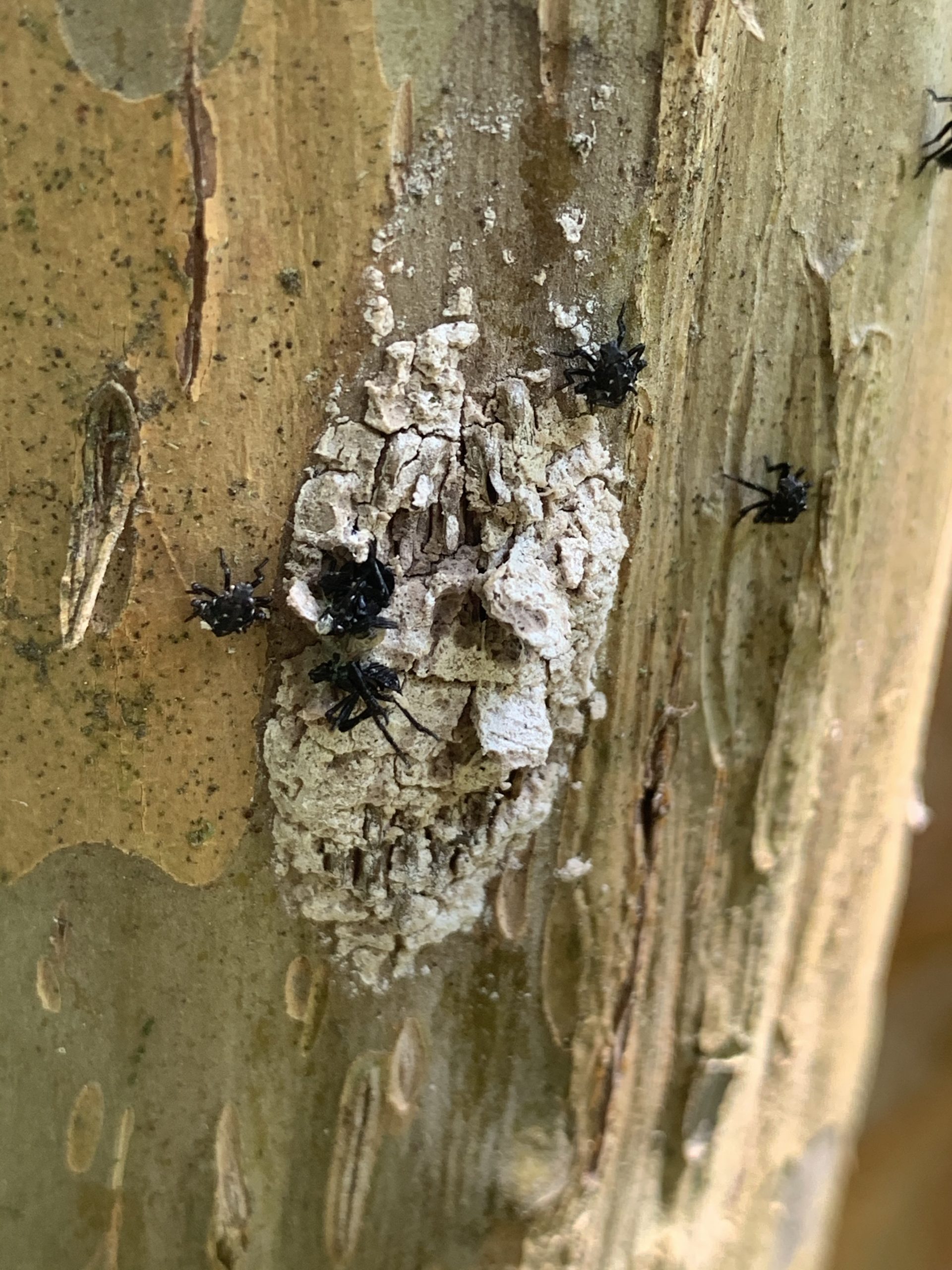
Spotted lanternfly nymphs

photo by Autumn Angeles

Spotted lanternfly nymphs are hatching throughout the state and first instars are present in multiple vineyards. Lanternfly overwinters in the egg stage and hatch is quite protracted, likely depending on the microhabitat where eggs are laid. In our surveys in 2019-2020, we identified a 2 year delay from the time SLF adults are first identified in the woods bordering vineyards and movement of the adults into the vineyard and laying eggs at levels that require management.

While it may seem counterintuitive, management is not needed as soon as SLF hatches. There is currently no evidence that the nymphs cause any yield loss or plant injury. However, this is an invasive species that requires management and there is no threshold for management against the nymph stage.

Best management practices against SLF nymphs in vineyards are to time management with other key insect management such as grape berry moth or Japanese beetle. This will not only save on insecticide costs but will also allow for all of the nymphs to hatch from the egg masses. See the table below on efficacy of materials targeting multiple vineyard pests.

Trade name Active ingredient Class Rate per acre Days of activity SLF GBM JB
Brigade 10WSB bifenthrin Pyrethroid 16 oz. 14 E E
Actara 25WDG thiamethoxam Neonicotinoid 3.5 oz 7 E G
Assail 30SG acetamiprid Neonicotinoid 5.3 oz <7 G G F
Carbaryl 4L carbaryl Carbamate 2 qt 7 E G G
Avaunt 30DG indoxicarb Oxadiazine 6 oz 7 E G G
Danitol 2.4EC fenpropathrin Pyrethroid 21.33 fl oz 7 E E E
Belay clothianidin Neonicotinoid 6 oz. G G G
Baythroid cyfluthrin Pyrethroid 3.2 oz 7 E E

E = excellent control
G = good control
F = fair control